Showing posts with label Maitreya Buddha. Show all posts

Wednesday, May 20, 2026

Ksitigarbha: guardian of the dead, savior


Ksitigarbha Bodhisattva
Kṣitigarbha
[Sanskrit क्षितिगर्भ, Chinese 地藏, Pinyin Dìzàng, Japanese 地蔵, Rōmaji Jizō, Korean 지장 (地藏), Romaja Jijang, Vietnamese Địa Tạng (地藏), Standard Tibetan ས་ཡི་སྙིང་པོ་, Wylie sa yi snying po] is a bodhisattva (being bent on supreme buddhahood) primarily revered in East Asian Buddhism and usually depicted as a Mahayana Buddhist monk.
 
His name may be translated as "Earth Treasury," "Earth Store," "Earth Matrix," or "Earth Womb." 

Kṣitigarbha is known for a vow to take responsibility for the instruction of all beings in the six worlds [a condensed grouping of the 31 Planes of Existence the historical Buddha outlined] between the final nirvana of the historical Gautama Buddha and the future rise of Maitreya Buddha, as well as a vow not to achieve buddhahood until all hells are emptied.

He is therefore often regarded as the bodhisattva of hell-beings as well as the guardian of children and patron deity of deceased children and aborted fetuses in Japanese culture.

Usually depicted as a monk with either a halo or a crown bearing images of the Five Tathāgatas around his shaved head, he carries a staff to force open the gates of hell and a wish-fulfilling jewel to light up the darkness. More

Ksitigarbha Bodhisattva
STATUE: Ksitigarbha Bodhisattva
(Jizō Bosatsu, 地蔵菩薩) is a Japanese wood and bronze statue of about 1175 in the late Heian period, which is now in the permanent Asian collection at the Indianapolis Museum of Art.

The statue depicts Jizō (Sanskrit Ksitigarbha), who in Japanese Buddhism is the bodhisattva of the earth and is considered a protector of children and travelers.

He is also a rescuer of beings in all hells and is considered a guardian of spirits for children who have died before their parents [1].

Description: Jizō is garbed in traditional Buddhist monk's attire, lacking ornate jewelry or adornments typically seen on images of bodhisattvas [2], many of which represent the historical Buddha before his great enlightenment, at which time he became the Buddha, and the Future Buddha Maitreya. More

Tuesday, March 11, 2025

When can we expect Female Messiah?


Female Messiah? What Church tried to erase

(MorgueOfficial) Started streaming March 10, 2025 (during Women's History Month) Dawn of the New Earth (The Neogenian Dawn). Ancient texts speak of a mysterious, powerful figure — a female Messiah — whose wisdom was hidden, suppressed, and nearly lost. Was she the true Christ (Kristos, "Annointed One," drugged with entheogens or venoms in the mystery school, according to Dr. Ammon Hillman)?


The Gospel of Mary, attributed to Mary Magdalene, offers a unique perspective on salvation through self-knowledge and inner exploration. Contrary to traditional Christian teachings, this ancient text challenges the concept of sin, framing it as an illusion tied to the physical body. It reveals a vision of spiritual authority where wisdom is accessible beyond institutional limits. Rooted in Gnosticism, this work highlights the diverse landscape of early Christianity, advocating for a personal connection with the divine.

Is there a Buddhist Messiah? Is it Maitreya?
I'd better flatter women so that they'll know they're loved (statustown.com)
.
Prajna Paramita of Java
Who will it be, who will rescue the humans and gods (devas) from the blights of greed, hatred, and delusion? The world sleeps under the pall of delusion, and it is high time we awaken. But we can't rouse ourselves. Someone arrives to help. This special being was predicted long ago and named "Friend" or maitri. This Maitreya or Metteyya may be the origin of the Western world's "Messiah"). Might it be a woman? Ancient tradition seems to have been altered to exclude women in a worldwide sexist push that erased much of their contributions, leaving half the population as a sidenote. Indeed, there have been powerful women.

Prajna Paramita Devi, Tibet
In Buddhist lore there is the great Prajna Paramita, a goddess personification of the "Perfection of Wisdom" and the Goddess of Compassion Kuan Yin, a Mother Mary figure for the worldwide Mahayana tradition, which accounts for 90 per cent of Buddhists today. In the past, in Early Buddhism, there was great recognition of the female enlightened ones:

KhemaUppalavanna, the Buddha's foster mother Queen Pajapati Gotami, Bhaddha Kaccana (Princess Yasodhara, Bimba Devi, Rahulamata, mother of the Buddha's son, Rahula Bhadda or "Lucky Fetter"), and many others still found recorded in the Therigatha, the "Psalms of the Enlightened Sisters."

Madonna and child: Pajapati and Siddhattha

But the question really comes down a savior figure, a reviver of the Dharma, a future buddha like Maitreya. Can it be a woman?

Vajra-yogini from a thangka - wrathful deities
Now the Teachings have been construed to say no in Theravada and Vajrayana traditions, but Mahayana holds out that there are many powerful female deities, the Taras, the dakinis, protectors (lokapala) and wrathful guardian spirits, and though no "Cosmic Buddha" like Amitabha or Vairocana are ever depicted as female, the caveat is always that a being determining to become a supremely awakened (samma-sam) buddha will transform into a male before achieving that ambition.

So many females and males take bodhisattva vows with the stated goal of delaying their own liberation (nirvana) to save all other sentient beings, as messiahs are won't to do. It may be a useful mindset if not an achievable goal.
If I'm reborn as a woman, I want to be sexy hot.
But as the Dalai Lama once joked, "Any woman can become a buddha...so long as she becomes a man first." Why he thought this was funny, that we may never know. (Endemic sexism and androcentrism in an all-boys monastic club in the imperial Potala Palace?)

Asherah Virgin Mary, Queen of Heaven
Nevertheless, none of us are really male or female but have the potential to express the best qualities of both. In the derivative Catholic/Christian faith, there may still be hope or recovering the Mother Goddess (Queen of Heaven AsherahGod’s Forgotten Wife, or Miriam, the Son-God's mother, a restored and reappointed Eve or Mary Magdalene. We can all see how openminded the God of those Abrahamic traditions is, so amenable to being talked into things like the divine rapport emphasized in Judaism, but we won't be holding our breath).

Is the Blessed Virgin Mary Chinese Guanyin?
Marco Lazzarotti, Aug. 2023
Virgin/Guanyin in Chinese dress (researchgate.net)
In this book the author describes "Ancestors’ Ceremonies" as practiced in the Taiwanese Catholic Church. The author’s point is to demonstrate how the Chinese symbolic universe made a deep translation of the "new" symbolic system represented by Catholic doctrine. At the same time the effort of the Catholic Church in order to adapt the Gospels’ message to the local situation built up a particular phenomenon that the author defined as cultural dialogue. It is this dialogic relationship the process that the author defines as Culture.


...[The] most usual and popular representation of this Goddess is a beautiful and gracious woman, who holds a child in her arms [Maya and Siddhartha rather than Mary and Jesus] and wears a rosary [mala] around her neck. This iconography has been reused in order to paint the image of the Blessed Virgin Mary at a point where it is hard sometimes to distinguish between the two figures (Figures 3a and 3b).

My point is not that Catholic people consider the Blessed Virgin Mary as the Christian reference of Guanyin [Kwan Yin, the Mahayana Buddhist "Goddess of Compassion"], but I want to stress that, when honoring the "new" supernatural figure, Taiwanese Catholics still maintain the forms they learned through their involvement in popular religious practices from an early age, which are linked to the cultural system they inhabit. God Jesus and the Ancestors: An Ethnography of the Ancestors’ Rites in the Taiwanese Catholic Church

📚 Explore Morgue's books and read his NEW books: amzn.to/4fJztSQ. Listen to audiobook: amzn.to/3BPabTM 🧪 Unlock PDFs for self-transformation FREE for members or available for purchase: patreon.com/collection/96... 🎙️ Follow podcast stream on Spotify: open.spotify.com/show/3qYG2pk... 🎥 Access exclusive videos; become a member or support here: patreon.com/morgueofficial 🛍️ Get official merch; shop now: morgueofficial.com #gnostic #enlightenment #occult #esoteric #spirituality #god #biblesecrets #exchristian
  • MorgueOfficial; Wise Quotes, Oct. 10, 2024; CC Liu, Pat Macpherson, Dhr. Seven (eds.), Wisdom Quarterly

Monday, July 15, 2024

"Jesus" is an amalgamation of other figures


Mithras (like Maitri = Maitreya = Messiah)
Why is "Jesus Christ" so famous? Could it be that it's because he is unreal and an amalgamation of many historical (and mythological) figures? Who would those be?
  • Mithras (previously worshiped in the center of Rome in a place now dedicated to Jesus called the Vatican grounds, a tiny country officially called the Holy See, a city-state within Italy's Rome, now center of the Holy Roman Empire known as the Catholic Church),
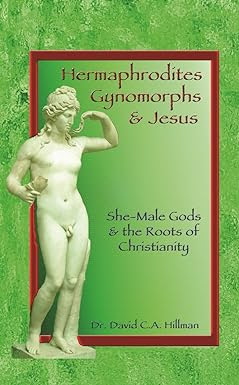
  • Hermaphrodites...& Jesus
    Maitreya Buddha (or the "Messiah" to come), Horus, and
  • many other astrotheological figures, who are anthropomorphic projections of astronomical and astrological information.
Jesus has been propped up, made white (a kind Thor, Zeus, Odic Nordic war god), and given stories and associated with circumstances made famous by others.
Christspiracy: priests rule
The story of Jesus Christ [christ being a drug term, according to biologist and classicist Dr. David C. Ammon Hillman, Ph.D., author of Chemical Muse, as a means "anointing" or dabbing on drugs to penetrate cut skin] has many fascinating similarities with ancient mythological figures, revealing common themes of a "virgin birth," resurrection (rebirth, reappearance), divine parentage, and savior or messianic roles.

The ancients used many drugs
These parallels, evident in mythologies from ancient Egypt to Greece and beyond, underscore a universal human fascination with divine narratives. Studying figures like Horus, Mithras, Dionysus, Krishna, the Buddha, and Osiris enriches understanding of Jesus’s [phony, synthetic] narrative within global mythology.
Jesus Never Existed
Scholar of Christianity Dr. Reza Aslan made a very clear distinction in his book. Zealot, about two different figures -- Jesus Christ of history and Jesus Christ of popular fantasy (biased theology, apology, and soteriology). Dr. Aslan attempted to get at the historical figure and leave aside all the myths built up on purpose (by the Church) and by natural human speculation about who this godman figure could have or might have been.

Jesus of Tyana or Apollonius of Nazareth?

Friday, July 12, 2024

Is Golden Ratio real? What does it mean?


  • Maybe "beauty" is symmetry
    spiral patterns in sunflowers, pinecones, and seashells
  • growth patterns of certain plants, like the arrangement of leaves around a stem
  • proportions of limbs, fingers, and facial features in the human body (such as idealized depictions of the Future Buddha known as the "Friend" Maitreya (shown at right).
But what is it?
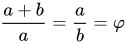
In mathematics, two quantities are in the "golden ratio" if their ratio is the same as the ratio of their sum to the larger of the two quantities. Expressed algebraically, for quantities 𝑎 and 𝑏 with 𝑎 > 𝑏 > 0, 𝑎 is in a golden ratio to 𝑏 if


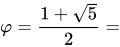
𝑎 + 𝑏/𝑎 = 𝑎/𝑏 = 𝜑, where the Greek letter phi (𝜑 or 𝜙) denotes the golden ratio [Note a]. The constant 𝜑 satisfies the quadratic equation 𝜑 2 = 𝜑 + 1 and is an irrational number with a value of [1]
1.618033988749.... Golden ratio

Huh, Eggheads? WTH is this gobbledygook supposed to mean? Can it be restated for the innumerate and artists with good taste? Let's see. What makes flowers and the nautilus shell so pretty?

Pretty shells and petals
What is prettier than a pattern?
The chambered nautilus (pictured above) builds roomier chambers in a spiral pattern based on the Golden Ratio.

Other examples include flower petals, seed heads, pinecones, shells, spiral galaxies, hurricanes, and DNA molecules. Learn more:
  1. Unraveling the Enigma of the Golden Ratio in Nature… (abakus-center.com)
  2. Nature's Golden Ratio | Geophysic… (gi.alaska.edu).
  3. The Golden Ratio in Nature – Overview (quantumgravityresearch.org)

Wednesday, April 3, 2024

Gnosticism: Cosmic Buddha-Messiahs

The Essene Gnostic Yeshu (Jesus Christ, Saint Issa), Redeemer?
The Buddha-to-come: the Maitreya ("Friend") Buddha, the Messiah

Cosmic Conspiracy: Gnostic Cosmology of the Buddha-Messiahs

The best book on the historical teachings of the real Jesus (Yeshu) and the mystic inner teachings is this one: amazon.com/Gospel-Jesus-O...
  • Amor Russell, Dec. 31, 2023; Pat Macpherson, Ashley Wells (eds.), Wisdom Quarterly

Friday, March 29, 2024

Kishitigarbha saves (beings from hell)


Kṣitigarbha is in Sanskrit क्षितिगर्भ, Chinese 地藏, pinyin Dìzàng, Japanese 地蔵, rōmaji Jizō, Korean 지장 (地藏), romaja Jijang, Vietnamese Địa Tạng (地藏), Standard Tibetan ས་ཡི་སྙིང་པོ་, Wylie sa yi snying po.

This name translates as "Earth Treasury," "Earth Store," "Earth Matrix," or "Earth Womb."

He is a bodhisattva primarily revered in East Asian Buddhism (rather than the Theravada of South and Southeast Asia) and usually depicted as a Buddhist monk.
Overview
Kwan Yin is the Bodhisattva of Compassion
Kṣitigarbha is one of the four principal bodhisattvas along with Samantabhadra, Manjusri, and Avalokiteśvara (transformed into Kwan Yin, the Buddhist goddess of compassion) in East Asian Mahayana Buddhism.

At the pre-Tang dynasty grottos in Dunhuang and Longmen, this figure is depicted in classical bodhisattva form. After the Tang, he became increasingly depicted as a monk, carrying Buddhist meditation prayer beads and a staff.

Goddess of Compassion
Kṣitigarbha is famous and revered for his vow to take responsibility for the instruction of all beings in the six worlds [a Mahayana condensation of the 31 Planes of Existence the historical Buddha outlines] between the final nirvana of the Buddha Gautama and the eventual rise of Maitreya Buddha.

Moreover, he made a vow refrain from achieving supreme buddhahood until all hells are emptied. He is therefore often regarded as the bodhisattva of hell-beings, as well as the guardian of children and patron deity of deceased children and aborted fetuses in Japanese culture.

Usually depicted as a monk with a halo around his shaved head, he carries a staff to force open the gates of hell and a wish-fulfilling jewel to light up the darkness.

The Ksistigarbha Bodhisattva Mantra
  • CC Liu, Dhr. Seven, Pat Macpherson (eds.), Wisdom Quarterly Wiki edit

Monday, December 25, 2023

The Buddha's Second Coming: The Maitreya

Wisdom Tellers, Nov. 24, 2023; Eds., Wisdom Quarterly

The Future Buddha: The Tale of Bodhisattva Maitreya
(Wisdom Tellers) Discover the incredible story of Maitreya, the future Buddha known for boundless love and wisdom! Follow his journey towards enlightenment and learn about his teachings that promise hope and kindness. Let's uncover the legacy of this compassionate figure and his impact on the world.

#Maitreya #Metteyya #MílèPúsa #MirokuBosatsu #MireukBosal #JampéGönpo #Buddha #Compassion #Enlightenment #wisdom

Messianic Buddhism?
Apocalyptic Buddhists await the Maitreya
Could there really be a Messianic Buddhism? There certainly is. (Tibetan Buddhism, for example, is obsessed with the Future Buddha and not so much interested in the historical one and his Teachings, even though they'll be the same Teachings).

There is a belief in the Buddha's "second coming." Of course, this is an oversimplification because it is not the historical Buddha Shakyamuni returning so much as it is another bodhisattva ("being bent on supreme enlightenment") arising. That buddha's name will be Maitreya, the "Messiah" of sorts, the Buddha-to-come.

In the Pali canon of Theravada Buddhism, pejoratively referred to as Hinayana or "Lesser Vehicle" Buddhism, which it is not, he is known as Metteyya. The last Hinayana tradition was the Sarvastivada, which was destroyed by Mahayana Buddhism.

Ninety percent of the Buddhism in the world today is of the Mahayana sort, with only ten percent being Theravada or "Teaching of the Earliest Enlightened Elders" of the Buddha's time. Theravada is a back to basics revivalism of what the historical person taught, whereas Mahayana is a kind of catholicism or universalist teaching, more Hinduism than Gautama-Buddha-Dharma.

Wednesday, October 26, 2022

Visiting the Future Buddha in Meditation

CC Liu, Amber Larson, Dhr. Seven (eds.), Wisdom Quarterly Wikipedia edit
When will the Future Buddha Maitreya come? When the Dharma is no longer practiced.
Great Himalayan statue of the Future Buddha Maitreya, welcoming him from Tusita

.
There are sensual and supersensual heavens.
Tuṣhita (Sanskrit) or Tusita (Pāli) is one of the six sensual worlds of the shining ones (devas) within the Sensual Sphere (kāma dhātu), located between two celestial worlds or heavens called Yāma and the Nirmāṇarati.
Like the many other heavens, Tuṣita is said to be reachable through meditation (in particular the attainment and mastery of jhana or meditative absorption).

Tusita is the heaven world where the Bodhisattva ("Being-bent-on-supreme*-enlightenment") Śvetaketu (Pāli Setaketu or "White Banner") resided before choosing to be reborn on Earth -- because the circumstances were suitable to continue his mission to find perfect enlightenment (i.e., full awakening with all of the factors necessary for the supreme capacity to teach) as Prince Siddhartha Gautama, the historical Buddha, the "Sage of the Scythians" or Shakyamuni.
  • *"Supreme" buddhahood (samma-sam-bodhi) refers to the same full enlightenment as disciples of a buddha but with the added psychic powers, knowledges, mastery of language, and abilities to teach and establish the Dharma and a monastic Sangha at a time when these have disappeared from the world. An arahant is a kind of "personal buddhahood," a pacceka buddha has the powers and knowledge of a supreme buddha but not the capacity to effectively teach others a path to awaken. Buddhas of the past differ in their capacity and thus the length of time the Dharma or that Sangha (practicing community, particularly as monastics) endures.
It is, likewise, the heaven where the Bodhisattva Nātha ("Protector") currently resides, who will later be reborn as the next supremely-enlightened teaching buddha, Maitreya (a kind of Messiah or beneficial "friend" in the future).

Most Buddhist literature holds that Queen Maya, the historical Buddha's biological mother, passed away seven days after the birth of her son Prince Siddhartha (who would later become the Buddha).

When this happened, she was reborn in Tusita. [It is said that she was a deva in Tusita when the Bodhisattva was encouraged by the other devas there to take rebirth on Earth, as the circumstances were suddenly suitable, so s/he volunteered to precede him and give birth to him, which is odd because he looked down from Tusita and beheld a woman, Maha Maya Devi or Queen Maya, suitable as a vessel for rebirth).

To thank and repay his mother, the Buddha set an intention to teach her the liberating Dharma. Seven years after the Buddha's great awakening (maha bodhi), she traveled from Tusita down to Tavatimsa (the World of the Thirty-Three), where the Buddha later preached the "Ultimate Doctrine" or Abhidharma to her and the other devas present [1].

Descriptions
Like all heavenly celestial realms in Buddhism, Tuṣita is the residence of divine beings or devas. According to the Visakhuposatha Sutta of the Pali canon [2], time runs much differently in these higher worlds than on Earth:

"Visakha, that which among humans is 400 years is one night and day of the Tusita devas, their month has 30 of those days, their year 12* of those months; the lifespan of the Tusita devas is 4,000 of those heavenly years...
  • [*One might think 13, as with the phases of the moon on earth with four weeks per month or moonth for 28 days times 13 full moons = 364 days with one transitional reset day for 365 days for a year, according to Wisdom Quarterly's speculative calculations of earth-time by the moon as its natural moon clock.]
Mahayana view
The Buddha dealing with Mara the Temptor and daughters
In Mahayana Buddhist thought, Tuṣita is where all bodhisattvas destined to reach supreme enlightenment in their next life dwell for a time before taking that final rebirth.

One such reference can be found in the "Larger Sutra of Immeasurable Life," an apocryphal Mahayana text:

"Each of these bodhisattvas, following the virtues of the Mahasattva Samantabhadra, is endowed with the immeasurable practices and vows of the Bodhisattva Path and firmly dwells in all the meritorious deeds.

"That person freely travels in all the ten quarters [directions] and employs skillful means of emancipation. One enters the treasury of the Dharma of the Buddhas and reaches the Other Shore [Nirvana].

"Throughout the innumerable worlds one attains Enlightenment. First, dwelling in the Tusita Heaven, one proclaims the true Dharma. Having left the heavenly palace, one descends into a mother's womb."

Tuṣita heaven is therefore closely associated with Maitreya (the Future Buddha), and many Buddhists vow to be reborn there as devas so that they can hear the teachings of the current Bodhisattva residing there and ultimately be reborn with him as humans when he becomes a buddha.

Other bodhisattvas dwell in this heavenly realm from time to time. Tuṣita is part of the same world-system as Earth, so it is relatively close, whereas the Pure Land of Amitabha [Cosmic] Buddha is treated as being in a separate world-system entirely. More