Do I lack self-discipline? Addiction
But how could mental play acting be bad karma (action), bro?

The same is true for dosa, not intense "hatred" but the entire range of meaning under the rubric of "aversion." That, very importantly, includes fear (bhava), an expression of aversion. Whereas in English "hate" may mean the things we want to attack and wipe out, it is the same motive for what we fear, which are the things we want to turn away from, run from, and away from or put at a distance.
A mouse in the kitchen, for example, may provoke aversion that expresses itself, depending on the predominant tendency of the kitchen owner, a desire to kill the mouse or to jump on a chair until it goes away or to run away and leave the mouse far behind. We yell or we scream, motivated by the same aversion, but one moving toward to attack and the other moving us away from and disgusted.
Moha is the worst motive and the most prevalent, for it gives rise to the other two and gets us in so much trouble, life after life, aeon after aeon, if there were such things as past lives and aeons (kalpas). It means delusion, ignorance (avijja), nescience, wrong view (miccha-ditthi), confusion, not knowing or understanding, you know, that state of mind/heart we spend most of our time, the great "cloud of unknowing."
It is on account of not seeing things as they really are that we take them to be another way, often exactly the way they are not. We take the impermanent to be lasting, the disappointing to be our greatest hope of fulfillment and satisfaction, the impersonal to be "me, my-self, and mine." Because we think it (things, phenomena) is this way, not seeing it as it truly is, we want (crave) it.
 |
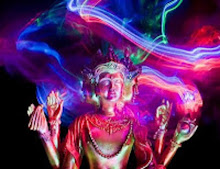
| How did the Buddha's brain get so serene? |
We go for what fleeting, confused that it endures. We crave and go for it because we think it can finally fulfill us and complete us and satisfy our endless craving. We crave and go for it because we think it's real, that it is what it seems to be, not seeing its empty (shunyata) and impersonal (anatta) and, most crucially, its composite nature.
It is not what it seems (a whole, a compact, a thing in itself) because it is composed of parts. But we've strayed too far afield. We have already answered the first ("karma") and second word, the "mental."
Karma (deed, intentional action, what we send around) produces results (fruit, welcome and unwelcome consequences, a comeuppance). And that karma is of three kinds (bodily, verbal, or MENTAL). And that karma is of six kinds (motivated by greed, hatred, delusion, nongreed, nonhatred, or nondelusion), making it "good" or "bad."
Simulation: NPCs are alive in GTA game?
(Sonny Evans) Do GTA 6 NPCs (non-playable characters) actually have lives
In the mind PROCESS, as a mind moment enacts, there is a mental formation called intention (cetana) that determines the quality of that act. We lift a hand with a knife and bring it down. Are we killing a living being or freeing a fish from a line? It's the exact same physical action, and it is the MOTIVE or volition behind it -- what we intend -- that gives it its characteristic of being unskillful or skillful.
"Good" here means "producing pleasant, welcome, wished for results now and in the future when the deed comes to fruition, is ready to harvest." Harvest? There is that old saying, biblical and prebiblical, "You reap what you sow," which is to say, "we harvest what we plant." A bitter fruit, of course, will be bitter no matter how much we wish it were otherwise; similarly bad fruit from a bad seed we planted will be bad (tasting). That's just the way it is.
The Buddha didn't make it this way. He simply pointed out the connection of the natural world, explicating which actions should be avoided by someone wishing to avoid suffering (dukkha). Good will produce good whether we want it to or not.
"Bad" here means "producing unpleasant, unwelcome, unwished for results now and in the future when the deed comes to fruition, is ready to harvest." A sweet fruit, of course, will be sweet no matter how much we wish it were otherwise; similarly good fruit from a good seed we planted will be good (tasting).
That's just the way it is. There is no "Karma God" making it so. This is a natural functioning of the world, universe, samsara, this simulation or whatever it is we are currently in. The Buddha saw through it, made it known, was released to freedom and taught others to find release and be completely free.
ANSWER: What is the motive behind practicing grand theft auto (stealing or carjacking vehicles), murder, sexual misconduct, deception, and intoxication, all of which are available on a game console near you? If "karma" refers not only to our bodily doing (which is sitting around staring at a screen and operating the controls) but also the WILLING, INTENDING, WISHING, PRACTICING and so on involved in MENTAL DOING then, obviously, playing GTA VI or any similar first-person shooter game full of mayhem and the doing of things that if done in the tangible, visible, physical world would get us into endless trouble will be unskillful, harmful, bad karma.
- If one says, "It's just a game," which means it's NOT in the reality of the mean streets of GTA Town, one is not considering that mental acts take place in the mind and move out into the social world, the consensus reality. Whatever deed (good or bad karma) the body or mouth does, it begins in the mind. That is MENTAL karma. Never mind what one is missing -- work, family, society, nutrition, or whatever -- in the "real" world while stealing cars in the "virtual reality" of the game. Ask Dr. Robert Lustig, MD about the hacking and hijacking of our American minds for how we got addicted to a mere game we can't stop playing, being affected by, or obsessing about.
Why? I didn't make reality. The Buddha didn't make reality. Thems is the rules of the game whether we want them to be or not. So if we play, the rules will apply to us whether we know them or not, whether it's (our definition of) fair or not. It is what it is, to put a mind-numbing tautology to good use.
WHY is it that way? One could answer very philosophically and penetratingly -- or one could go back and reread or pull out the Kalama Sutta if one needs motivation from the Buddha -- but it is perhaps best to bring this session of Wisdom Quarterly's Karma Class to a conclusion with the words of a famous rock 'n roll icon, "because it is that way."
Need the Buddha to explain it better? He does in an explanation of why being a soldier is such a BAD idea. One does not become a killer soldier at the moment of killing the first victim (enemy, other soldier, opponent) but begins racking up BAD karma long before that, EVEN if no one ever gets killed. This is a powerful example of bad mental karma.
- Dhr. Seven (text) edited by Amber Larson, Ashley Wells as taught to videogame aficionados Pfc. Sandoval, Seth Auberon, Ananda (Dharma Buddhist Meditation), Wisdom Quarterly