Showing posts with label Zarathustra. Show all posts

Monday, September 16, 2024

Nikola Tesla references the Buddha


Nikola Tesla's lost interview: Deep Space SECRETS (2024)
(Pep Talk) Sept. 13, 2024: Dive into the extraordinary world of Nikola Tesla in the video "Nikola Tesla's Lost Interview (100 Years Old): Deep Space SECRETS (2024)."

Nikola Tesla still communicates
This groundbreaking discovery reveals previously unseen footage of the legendary inventor discussing his visionary ideas about spirituality [speaking like Edgar Cayce during a reading or a shaman on entheogens], deep space, and the universe.

What secrets did Tesla uncover about electricity, energy, technology, and the cosmos that are still relevant today?

Whether one is a Tesla aficionado, a space enthusiast, or curious about the mysteries of the universe, this video is a must-watch.
Who was Tesla?
Wisdom Quarterly Wiki edit
"Tesla" is now a personal robot built by Elon Musk's company for home use and probably sex.
.
Nikola Tesla (July 10, 1856–Jan. 7, 1943) lived to be 86. He was a Serbian-American [3, 4] born in modern day Croatia. He was an experimental scientist and very much a mystic, who became famous as an inventor, engineer, and futurist.

He is well known for his contributions to the design of the modern alternating current (AC) electricity supply system [5].

Born and raised in the Austrian Empire, Tesla first studied engineering and physics in the 1870s without receiving a degree.

He then gained practical experience in the early 1880s working in telephony and at Continental Edison in the new electric power industry. In 1884, he immigrated to the United States, where he became a naturalized citizen.

He worked for a short time at the Edison Machine Works in New York City before he struck out on his own. With the help of partners to finance and market his inventions, Tesla set up laboratories and companies in New York to develop a range of electrical and mechanical devices.

His AC induction motor and related polyphase AC patents, licensed by Westinghouse Electric in 1888, earned him a considerable amount of money and became the cornerstone of the polyphase system, which that company eventually marketed.

Attempting to develop inventions he could patent and market, Tesla conducted a range of experiments with mechanical oscillators/generators, electrical discharge tubes, and early X-ray imaging. He also built a wirelessly controlled boat, one of the first ever exhibited.

Tesla became well known as an inventor and demonstrated his achievements to celebrities and wealthy patrons at his lab and was noted for his showmanship at public lectures.

Throughout the 1890s, Tesla pursued his visions for wireless lighting and worldwide wireless electric power distribution in his high-voltage, high-frequency power experiments in New York and Colorado Springs.

In 1893, he made pronouncements on the possibility of wireless communication with his devices. Tesla tried to put these ideas to practical use in his unfinished Wardenclyffe Tower project, an intercontinental wireless communication and power transmitter, but ran out of funding before he could complete it.

After Wardenclyffe, Tesla experimented with a series of inventions in the 1910s and 1920s with varying degrees of success. Having spent most of his money, Tesla lived in a series of New York hotels, leaving behind unpaid bills. He died in New York City in January 1943 [6].

Tesla's work fell into relative obscurity following his death, until 1960, when the General Conference on Weights and Measures named the International System of Units (SI) measurement of magnetic flux density the "tesla" in his honor.

There has been a resurgence in popular interest in Tesla since the 1990s [7].
Early home, now the Nikola Tesla Museum
  • Tesla's birth house (parish hall) was rebuilt in the church where his father served as an Eastern Orthodox priest in Smiljan, Croatia. The site was made into a museum about him [8].
I didn't get to be The Richest by morality
[When Tesla passed away in New York, the U.S. government confiscated his papers, effects, devices, and made them secret to benefit private interests or appropriate advanced technology with possible military applications for U.S. arsenals and secret laboratories, making Tesla's revelations the opposite of his intentions to benefit the world and every being in it.]

Elon Musk is the anti-Nikola Tesla making $$$.
Nikola Tesla was born into an ethnic Serb family in the village of Smiljan, within the Military Frontier, in the Austrian Empire (present-day Croatia).

Tesla's father, Milutin Tesla (1819–1879) [11], was a priest of the Eastern Orthodox Church [12, 13, 14, 15]. His father's brother Josif was a lecturer at a military academy who wrote several textbooks on mathematics [11].

Musk and Tesla could hardly be more different.
Tesla's mother, Georgina "Đuka" Mandić (1822–1892), whose father was also an Eastern Orthodox Church priest [16], had a talent for making home craft tools and mechanical appliances and the ability to memorize Serbian epic poems. She never received a formal education. Tesla credited his eidetic [photographic] memory and creative abilities to his mother's genetics and influence [17, 18].

Tesla was the fourth of five children. He had three sisters -- Milka, Angelina, and Marica -- and an older brother Dane, who was killed in a horse-riding accident when Tesla was six or seven [19].

In 1861, Tesla attended primary school in Smiljan where he studied German, arithmetic, and religion.

In 1862, the Tesla family moved to the nearby town of Gospić, where Tesla's father worked as parish priest. More

TIME STAMPS
Musk is using my good name to sell.
  • 0:00 Introduction
  • 00:00:14 Tesla is recognized for his profound understanding of the cosmos and questioned about his identity.
  • 00:00:48 He's celebrated as the mind behind the 20th and 21st centuries, with futurists praising his inventions.
  • 00:01:11 Industry hails Tesla as a supreme saint, recognizing his contributions to physics, chemistry, and technological advancements.
  • 00:01:18 Despite remarkable achievements, Tesla expresses a sense of unfulfillment, having not yet reached his ultimate goal.
  • 00:01:47 His dream was to illuminate the entire Earth, harnessing the limitless power of electricity.
  • 00:02:04 Tesla believes in tapping into diverse energies, including positive mental energy from music and art, to elevate humanity.
  • 00:02:20 He envisions a world where Earth's natural energies foster joy, peace, and love.
  • 00:02:30 Tesla spent years researching how energy impacts humanity, seeking to harness its potential for positive change.
  • 00:02:42 He outlines three key areas of scientific inquiry: providing food for the hungry, eradicating suffering, and harnessing the universe's light.
  • 00:03:23 He discovered a star that could vanish without disrupting the universe, showcasing the vastness and mystery of the cosmos.
  • 00:03:36 Tesla challenges Einstein's theory of relativity, advocating for understanding the universe's harmony.
  • 00:03:51 He believes in the potential for humans to achieve a higher spiritual state.
  • 00:04:07 Tesla's ambition extends beyond inventions, aiming to awaken humanity's innate potential for growth and transcendence.
  • 00:04:24 He views "empty space" as teeming with untapped energy, waiting to be harnessed.
  • 00:04:40 His connection with birds reflects his belief in humanity's latent ability for flight and spiritual elevation.
  • 00:05:08 Tesla discusses his views on love and relationships, choosing a path of solitude, and dedication to his work.
  • 00:05:33 He perceives illness as a transformative process, leading to purification of mind and body.
  • 00:06:02 Tesla sees the universe as inherently moral, surpassing human comprehension.
  • 00:06:35 He experiences the universe as a symphony of light and energy, transcending conventional human senses.
  • 00:07:10 He claims to possess heightened senses, perceiving sounds and colors beyond normal human perception.
  • 00:08:27 He describes hearing cosmic music and seeing unique colors, demonstrating his extraordinary perception of reality.
  • 00:08:51 Tesla's imagination fuels his inventions, blurring the line between reality and vision.
  • 00:09:22 He shares ten conditions for achieving higher consciousness and spiritual growth. 00:10:28 Tesla views his body as a well-understood machine, advocating for mindful eating and sleep.
  • 00:11:02 A humorous anecdote involving Mark Twain illustrates the importance of balance and moderation.
  • 00:11:34 Tesla stresses emotional control and harnessing sexual energy for spiritual development.
  • 00:12:12 Memory is essential, but he prioritizes accessing knowledge when needed, not just remembering.
  • 00:12:34 All experiences are stored as light particles, accessible through his visualization abilities.
  • 00:13:30 Tesla's heightened senses allow him to perceive phenomena beyond the normal range.
  • 00:14:00 He sees illness as a purification process, aiding spiritual growth.
  • 00:14:20 Tesla's "illusions" offer glimpses into dimensions beyond the physical world.
  • 00:14:44 He recounts a childhood experience that shaped his understanding of the universe's interconnectedness.
  • 00:15:33 The ultimate adjustment is finding joy and playfulness in life and work.
  • 00:16:35 Tesla challenges the notion of stealing fire from the gods, viewing lightning as a natural wonder.
  • 00:17:02 He reiterates that everything is electricity, the fundamental energy of existence.
  • 00:17:41 Tesla advocates for embracing life's rhythm and finding harmony with the universe.
  • 00:18:11 He emphasizes the interconnectedness of all beings and celestial bodies.
  • 00:19:02 He urges us to be receptive to the universe's messages and learn its language.
  • Nikola Tesla communicates with Fran from the afterlife
Rare earth mineral mining and coal-generated electric plants pollute the world worse than gas
Elon Musk is a fraud to appropriate the name "Tesla" to profit from the discoveries given from Venus (or Aldebaran) to a sensitive man from Croatia who, like those beings sending the communication, wanted to save the world with free energy.
Remember to like, comment, and subscribe for more content exploring the intersection of science, technology, and the extraordinary.
  • Pep Talk, 9/13/24; Pat Macpherson and Dhr. Seven (eds.), Wisdom Quarterly

Monday, January 1, 2018

Fire worship: backstory to "The Fire Sermon"

G.P. Malalasekera (Pali Proper Names), Dhr. Seven, Amber Larson, CC Liu, Wisdom Quarterly


.
About the Fire Sutra
You're not enlightened nor on the path.
"All is burning!" But what is the "all" that is burning? This is the third recorded sutra of the Buddha. It was delivered at Gayāsīsa in Gayā, India, after he converted tebhātika-jatilā (three ascetic brothers: Uruvela Kassapa, Nadī Kassapa, and Gayā Kassapa).

Our senses are burning with lust, anger, ignorance, and the anxieties of birth, decay, death, and so on. Knowing this, the follower of the Noble Eightfold Path feels revulsion towards them. And passion -- by seeing their true nature -- fades out. One ultimately attains supreme freedom. 

Modern Christian fire worship Jerusalem, 2017
At the end of this discourse, the 1,000 recently ordained Buddhist monks who had been listening, who were former matted-hair yogi wandering ascetics (jatilas) living along the river, realized full enlightenment (Vin.i.34-5; J.i.82; iv.180).

It is said that this sutra was given on the Pitthipāsāna at Gayāsīsa (AA.i.166; ThagA.i.435). It is also called the Āditta Sutta. (See Āditta Sutta 3).

Sadhus and sadhvis of India, wandering ascetics who practice magic and many things.

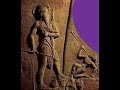
Indo-Parthian stone palette, illustrating a fire worship, possibly Zoroastrian (wiki).
 
The backstory
Amateur "fire worship" can get carried away, particularly in modern California.
.
We are jatilas who tend the sacred fire (W).
Three fire-worshipper brothers named Kassapa were yogi ascetics with matted hair, tebhātika-jatilas, who lived on the banks of the Nerañjarā river.

Uruvela-Kassapa lived at Uruvelā with 500 disciples, and further down the river lived his two brothers, Nadī-Kassapa with 300 disciples, and Gayā-Kassapa with 200. These are the 1,000 ascetics in the sutra.

The Buddha visited Uruvela-Kassapa and took lodging for the night where their sacred fire was kept, in spite of Kassapa's warning that the spot was inhabited by a fierce dragon or nāga. The Buddha using his magical powers overcame first this nāga then another. They both vomited fire and smoke.

Uruvela-Kassapa was pleased with the Buddha's exhibition of magic power (iddhi), so he undertook to provide the Buddha with his daily alms food.

Devas loved the Buddha
Meanwhile, the Buddha stayed in a grove nearby, waiting for the time when Uruvela-Kassapa might be ready to be converted to the Dharma and enlightened. Here the Buddha was visited by the Four Great Sky Regents, Sakka King of the Devas, Brahma, and others.

The Buddha spent the entire rainy season there performing 3,500 miracles of various kinds, reading the thoughts of Kassapa, splitting firewood for the ascetics' sacrifices, heating stoves for them to use after bathing in the cold weather, and so on.

Still Uruvela-Kassapa persisted in the thought, "This great ascetic has great magic power, but he is not enlightened like I am."
 
It's not an all-boys club. There are sadhvis.
Finally, the Buddha decided to startle Uruvela-Kassapa by declaring: "You are not enlightened! Nor do you follow a path that can possibly lead to enlightenment."
 
Thereupon, Uruvela-Kassapa admitted it. Then he reverently asked the Buddha for ordination as a Buddhist monk. The Buddha asked him to first consult with his pupils.

When he did they cut off their long dreadlocks (jatas) and threw them into the Neranjara river along with their sacrificial utensils. And they all ordained as Buddhist monks.

When they saw the hair and utensils floating down river, Uruvela-Kassapa's brothers, Nadī-Kassapa and Gayā-Kassapa, came to Uruvela-Kassapa's encampment to inquire what had happened.

They, too, decided to ordain under the Buddha along with their pupils, for a total of 1,003 wandering ascetics. Because they had been fire worshipers, the Buddha decided to give them a discourse later dubbed "The Fire Sermon." And as a result of hearing it, they all attained full enlightenment. More

Wednesday, May 14, 2014

"Persepolis" or Persepolis? (video)

Eds., Wisdom Quarterly; Marjane Satrapi ("Persepolis"); Discovery.com "Persepolis"

.
Ancient Persia
The remnants of a great empire
One of the most impressive settlements in the ancient world, Persepolis was destroyed and burned by invader Alexander the Great in 330 BCE. It lay forgotten for over 2,000 years. This documentary travels to modern Iran to bring Persepolis back to life and investigate the complexities of the Persian Empire that was responsible for creating this astonishing city.

The Spread of Buddhism from its origins in Afghanistan (Gandhara) and India (Magadha) to Iran, where two counter-movements arose in Zoroastrianism (Asuras, Parsis) and Islam (Muslims, Sufis) that then rolled into India and Buddhist strongholds in East and Far East Asia.
.
"Persepolis," Iran
WATCH FREE: FULL FILM NOW
Religion is mostly a horrible thing. "Persepolis" is the poignant story of a young girl in Iran during the Islamic Revolution.
 
It is through the eyes of precocious and outspoken 9-year-old Marjane that we see a people's hopes dashed as fundamentalists take power -- fomented by the West who is enriched in the process of creating a terrorist dictatorship to rob the resources of a nation -- forcing the veil on women and imprisoning thousands.
 
Ancient India used to include modern Iran
Clever and fearless, Majrane outsmarts the "social guardians" and discovers punk rock, ABBA (pop), and Iron Maiden (heavy metal). Yet, when her uncle is senselessly executed and as bombs fall around in the capital of Tehran during the Iran-Iraq war, the daily fear that permeates life in Iran is palpable.

As she gets older, Marjane's boldness causes her parents to worry over her continued safety. So at age 14, they make the difficult decision to send her abroad to school in Austria. Vulnerable and alone in a strange Western land, she endures the typical ordeals of a teenager.

Map of Buddhist Central Asia and India
In addition, Marjane has to combat being equated with the religious fundamentalism and extremism she fled her country to escape. Over time, she gains acceptance, and even experiences love. But after high school she finds herself alone and horribly homesick.

Though it means putting on the veil and living in a tyrannical/hypocritical society, Marjane decides to return to Iran to be close to her family.
 
Like Buddhist Asokan Edict: Cyrus Cylinder
After a difficult period of adjustment, she enters art school and marries, all the while continuing to speak out against the hypocrisy she witnesses. At age 24, she realizes that while she is deeply Iranian, she cannot live in Iran.

She then makes the heartbreaking decision to leave her homeland for France, optimistic about her future, shaped indelibly by her past.
 
(LY)  Discovery: Did the oldest civilization on Earth exist in Persia?

Persepolis' Marjane Satrapi's new film "The Voices"

Thursday, September 30, 2010

The Hidden History of the Buddha

WARNING: Historical evidence and theories presented here are controversial and do not serve the vested interests of Nepal, India, or Iran. Truth eventually prevails.

Photo of the Buddha, Sage of the Sakyas, whose appears far more Aryan (i.e., Iranian) than east Indian. He was from a "neighboring land," referred to himself as descended from the "Solar race" with blue eyes and "golden" skin (Wisdom Quarterly).

Zarathustra and Gautama in a Non-Jonesian Framework
Pre-edited text by [renegade historian] Dr. Ranajit Pal

The blunder of Palibothra by Sir William Jones [the Jones in Jonesian] and the forgery of Lumbini by Dr. A. Fuhrer[1] have not only wrecked Indology but also [distorted] world history... Jones’ false theory has inundated even the history of Jesus Christ [St. Issa], whose link with Seistan remains unnoticed.

Another casualty was Zoroaster [Zarathustra]... W. B. Henning writes: "…there is scarcely a point on which there is unanimity; Zoroaster’s time and place, the religion he inherited from his forefathers, the message he brought, his aim, his community, the development of his church, the history of the Avesta -- each scholar will dissent from his fellows on one point or another."[2]

Long before Henning, the great Orientalist M. Rostovtzeff of Yale, wrote in 1922, “We know but little of the history and archaeology of Central Asia and of the Iranian world.”[3]

The actual shape of the Indian empire is unknown. It was in constant flux with influence as far west as the Near East and as far east as the South China Sea (WQ).

And even after 80 years, this remains essentially true with regard to history, if not archaeology.

R. N. Frye candidly admits failure[4]: "Zarathustra, or Zoroaster as the Greeks called him, presents many problems, and it is discouraging that after so many years of research we do not know when or where he lived or even precisely his teachings."

However, the learned Harvard scholar is unaware that a British forgery lies at the root of the malady. Sanity cannot be brought back to Iranian history without noting that India and Iran were once interlinked geographically. A similar reform is needed in Indology[5].

The Buddha was fair ("golden") in contrast to many of his followers in Magadha (WQ).

D. Chakrabarti of Cambridge has written about some failings of colonial Indology[6]. But he is unaware that the most damaging legacy from the colonial era, which affects the histories of both India and Iran, is Sir William Jones’ false identification of Palibothra.

A study of the Iranian and Indian texts including the Buddhist Jataka Tales in a non-Jonesian framework merges the histories of Zoroaster and Gotama [Siddhartha Gautama, the historical Buddha] and points at the existence of an ancient holy land in Seistan.

Ancient "India" (Bharat in the Mahabharata) was a vast, loosely aligned amalgamation of clans, kingdoms, and territories linked by trade and cultural exchanges (WQ).

An India within Iran
Vedic scholars like Hillerbrandt and Brunnhofer realized that in regard to the ancient era, the term Indo-Iranian is often preferable to "Indian" or "Iranian." But a similar awareness is lacking vis-à-vis the Avesta [Zoroastrian scriptures, avesta.org].

Iranian researchers have justly rejoiced over the stunning archaeological finds at Jiroft[7]. But they seem to be unaware that Alexander the Great had found Indians in this area and defeated them.

The common heritage of the Indians and Iranians goes back to their nomadic past[8]. Yet it is important to note that even in the 4th century BC, during Alexander's expedition southeast, Iran was called India.

This India within Iran was known to Herodotus, who wrote that there were Indians in the Gedrosia area. Eminent scholars like Arnold Toynbee and Sir Charles Eliot were also aware of the geographical overlap.

Eliot wrote[9], "Our geographical and political phraseology about India and Persia obscures the fact that in many periods the frontier between the two countries was uncertain or not drawn as now."

Toynbee was a historian of the world and noted the shifting nature of India’s boundary: "...and we can already see the beginnings of this progressive extension of the name ‘Indian’ in Herodotus’ usage."

That Gedrosia and Carmania were within greater India was stressed by Vincent Smith. Eliot clearly saw a role of Iran in early Buddhism.


He boldly suggested that the Buddhist paradise Sukhavati may be linked to the Avestan land of Saukavastan.

G. Gnoli reckons that the oldest areas known to the Iranians were Afghanistan and areas to its east[10], which can only be partly true in view of the great antiquity of Jiroft. Like Frye, Gnoli misses that India and Iran were once interlinked.

A corollary of Gnoli’s claim is that the Avesta is related not only to the RigVeda but also to Buddhist texts.

G. Azarpay of Berkeley has described a Sasanian silver plate depicting a Buddhist Jataka Tale. The Jatakas are a common cultural heritage of both the Indian and Iranians [called Aryans in ancient times].

Dr. D. B. Spooner’s statement that Gotama and Chandragupta were from Iran[11] created a sensation in 1915. But this was rejected by uninformed Jonesian writers.

In this context it is crucial to note that the linking of Gotama with Eastern India was a forgery with no archaeological basis.

Once Gotama, whose title was Sakya, is de-linked from the East, he turns out to be the same as Gaumata[12] of Sakyavati (Sikayavatish) mentioned in the Behistun record.

Even with detailed descriptions of Kapilavastu, the Buddha's far off Sakyan birthplace, its location remains uncertain: Nepal wants to be on the Buddhist tourist circuit, whereas Muslims prefer infidels not come to Kuh-i Khwaja in Seistan (WQ).

Fuhrer's Fraud: Epigraphy and Archaeology of India and Nepal
In any sober history it is crucial to eliminate falsification by ancient authors, misjudgment by historians, loss of artifacts due to earthquakes and floods, and most importantly, archaeological fraud.

Prof. Kyle McCarter, an eminent paleographer at Johns Hopkins University, warns of a “forgery hysteria” that has gripped archaeology circles in Israel[13]. But the problem is far more serious in Indian and Nepalese archaeology[14].

Here even artifacts "unearthed" in professional excavations a century ago need scrutiny [15].

Alarmingly Fuhrer, an editor for Epigraphia Indica, went on rampage with numerous archaeological frauds that have destroyed the very basis of Indian archaeology.

Recently, the British scholar T. A. Phelps[16] has boldly exposed Fuhrer's crimes linked to his so-called discovery of Lumbini [the Buddha's alleged birthplace in Eastern India, modern Nepal].

In his official Progress Report as Archaeological Surveyor that year, Fuhrer copied large slabs of text from a report by Buhler on Sanchi inscriptions, transposing both text and inscriptions, almost verbatim, into the report on his own excavations at a completely different site.

Astonishingly, this wholesale and extensive plagiarism appears to have passed completely unnoticed during this period (including, apparently, by Buhler himself, with whom Fuhrer was soon afterwards in correspondence).

He also -- and more ominously, perhaps, in the light of later events -- fraudulently incised a Brahmi inscription on to a stone statue in the Lucknow Museum at this time, an event which also passed unnoticed.

Phelps rightly suspects that Fuhrer's crimes were exploited by the British Imperialists for subverting history. More>>

Bharat

World

Monday, October 27, 2008

Dawn of Religion Pt. I


Hammurabi [Manu] receiving the "Code of Laws" from the Sun God [Surya/Sol].

"Dawn of Religions in the Paradise on Earth"
Dr. Ranajit Pal (ranajitpal.com)

Of Paradise or EDEN: this had been
Perhaps thy Capital Seat, from whence had spread
All generations, and had hither come
From all the ends of th' Earth, to celebrate
And reverence thee their great Progenitor...
-- Milton's "Paradise Lost"

The discovery of agriculture freed primitive men and women from the woes of food-gathering and [there] grew the first cities. The emergence of copper and bronze gave birth to industry and then came the epoch-making invention of writing[Note 1], which totally transformed society and ushered in what we fondly term civilization[2].

Another great leap forward was the advent of the wheel, which brought nations closer together and broadened the political and cultural horizons of people. Finally, the smelting of iron marked another phase in the story of humankind that has had fateful consequences.

In this "new" world arose the modern idea of God together with a sharpened notion of human selfhood. This phase is discernible in all the ancient religious texts of the world, the RgVeda[3], the Avesta[4], as well as the Old Testament[5] and has been roughly dated to the mid-eighteenth century BC[6] when the patriarch Abraham left Ur and migrated to Palestine.

The Old Testament has often stood on [a] thin line between history and myth. That many of the outstanding archaeological discoveries in Assyria and Sumer were in part inspired by references in this ancient text is a glowing tribute to its authenticity. It has also stimulated groundbreaking works of world literature like Milton's "Paradise Lost."

Incidentally, before he became a celebrated poet, Milton (1608–1674) was an ardent political activist who not only took part in the making of history but also had a considerable familiarity with the historical literature of his day[7]; yet today not all pre-historians or archaeologists would agree with his claim that [all] mankind spread from Eden[8], which was in the East as stated in the Book of Genesis. However, his concomitant assertion that even after the fall, Eden remained a principal religious center where people from the ends of the earth came "to celebrate and reverence thee" deserves to be examined with greater care. This statement cannot be dismissed as mere reverent circumlocution as it has echoes in many other independent sources.

Archaeological and historical considerations indicate that the ancient Paradise was in Seistan, which may be seen as the original home of all the ancient religions[9] of the world. More>>
--
NOTES
1. The earliest evidence of writing comes from the fourth millennium BC Sumerian tablets which were not religious invocations but temple book-keeping records. From the later documents we get a fairly vivid picture of the ancient cults - of the myths and songs for propitiation of the Gods, for warding off the evil spirits, for celebration of harvests and weddings, and lamentations of death and defeat. The dying and subsequent reincarnation of the shepherd-God Dumuzi played a very important role in the lives of common people of Uruk and other Sumerian cities. His wife Innana was also a very powerful figure who had astral associations and was the Goddess of procreation and war.

2. What are the driving forces behind this process of civilisation, it is hard to say. A related question is why did the Stone Age people abandon the way of life that had served them well for millennia? Is it that blind monster of history or fate, the ever-increasing thirst for material goods, a mystical awareness of the supernatural and the cosmos, or a combination of all of these factors? Today there is an ever-growing realization that with the progress of civilisation our environment is continually being threatened by man-made perils. The nostalgia for the lost habitat, therefore, has now become almost an instinctive response.

3. The date of the RgVeda has been variously given as 1200BC to 1500BC by the German scholar Max Muller, 2000-1400BC by the American Sanskritist Whitney and 2400-1400BC by Haug. The date given by Max Muller is now generally thought to be rather late. The contention that Vedic society was pastoral having no knowledge of agriculture is baseless.

4. The root of the name Avesta is said to be "vid," that is, "to see," which is also the root of the name RgVeda. The extant Avesta is said to be only a part of a much larger body of scripture that existed before. It is apparently Zoroaster's transformation of the ancient tradition. There are very large overlaps between the Avesta and the [Vedas?] which is likely to have been similar to the RgVeda. Alexander the Great is said to have destroyed the sacred books of the Zoroastrians. Despite several attempts the date of Zarathustra cannot be ascertained with any certainty. This is probably due to the fact that the name signifies the holder of an office. There were many Zarathustras. Herzfeld wrote that Gomata's adversary was Zarathustra.

5. History as narrated in the Old Testament is not written from a secular viewpoint. As in the [Buddhist] Jataka [Birth-] stories, the events are seen as revealing the presence and power of God. Nevertheless, owing to the absence of a fictive Jonesian superstructure, it is more useful as a [series of] stories of real tribes in real geographical settings.

6. Don Cupitt, After God, Weidenfeld & Nicolson, 1997, p.28.

7. David Lowenstein, Milton and the Drama of History: Historical Vision, Iconoclasm, and the Literary Imagination, Cambridge University Press, 2004.

8. Mankind had spread from the Eden.

9. From the earliest times in history, religion must have played an important part in the lives of men and women and in this sense the idea of a precise dawn of religions is not a clear-cut one. Even in the Stone Age (500,000 BC to 10,000 BC) when there were no trappings of civilization, men and women believed in a hidden magical world inhabited by the spirits of their ancestors, animals, birds, and trees. Some of the these animistic beliefs and practices made their way into later religions. The transformation to agrarian society can perhaps be dated to about the 6th millennium BC, and the beginnings of the Bronze age to about... The discovery of iron has left imprints in the religious practices of all civilized nations, and it is possible to visualize a beginning of this phase.

Dawn of Religion: Buddhism in Indo-Arya

Buddhism is far older and more wisdespread than previously imagined. Here in an unrelated photo monks visit a relic of a Tang Dynasty pagoda at Huayuan, NW China's Xinjiang Uygur Autonomous Region, 9/9/06.

Max Müller and The Ur-Heimat of Religions
Ranajit Pal

More than one hundred years have passed since the great German scholar Max Müller (1823-1900) first initiated the study of the history of religions on a cross-cultural basis, not limited only to biblical religion. Max Müller's approach was characterized by a deep commitment to the methods of empirical science and his compilation of the critical edition of the RgVeda marks a new age in Indology.

(berzinarchives.com)

The approach of the Dutch scholars C. P. Tiele and P. D. Chantepie de la Saussaye was similar, and it soon became apparent that despite widely different external manifestations, there are extraordinary parallels between the basic thoughts in the great ancient religions. From his profound comparative study of Eastern and Western mysticism, Rudolf Otto drew attention to close similarities between the writings of the medieval Hindu philosopher Shankara and the medieval German mystic Meister Eckehart.

The renowned art critic and theologian Ananda Coomaraswamy pointed to close similarities between the work of Christian writers such as St. Thomas, Ruysbroek, and Boehme, and passages in Vedic literature -- similarities which are so striking that many sentences from the Christian writers can be taken as almost literal translations of Sanskrit sentences.

The famous scholar of Buddhism, T. W. Rhys Davids, drew attention to close parallels between Buddhist and Christian doctrines. Coomaraswamy saw this as an expression of basic unity of the great religions. And Max Müller wrote that this cannot be attributed to chance alone.

In his view the real reason was more profound but still mundane -- there must have been an early historical contact between ancient peoples in an Ur-Heimat [German, "original homeland"]. Max Müller's enthusiasm was not shared by the next generation of scholars like Otto and the Dutch phenomenologist Gerardus van der Leeuw, who decried the reliance on high scientific ideals[10]. However, a careful study seems to vindicate Max Müller.

Recent archaeological discoveries in southeastern Iran, Baluchistan, and Afghanistan point to the existence of a terrestrial "Heaven" in Seistan, which was the cradle of nearly all the great religions: Hinduism, Zoroastrianism, Judaism, Buddhism, and perhaps also Christianity.

Gotama's Birthplace Kapilavastu was in Seistan
The biggest hurdle in the reconstruction of the [proper] history of religions is the location of Gotama Buddha's birthplace, Kapilavastu, in modern Nepal, far from Seistan.

That this is a fraud by a crafty forger, Dr. Anton Fuhrer, has been shown by T. A. Phelps[11]. About the endless disputes centering the identification of Kapilavastu, Vincent Smith remarked, "The mystery of Kapilavastu will continue for many years to be the sport of unverified conjecture." No primary relic of Gotama has been unearthed from eastern India except his ashes, which were probably brought from the northwest.

As the work of Sir Aurel Stein and others has shown, Buddhist manuscripts are all from Central Asia and Ceylon. Not a single manuscript has been found in modern India. Again Indian-Buddhist finds are all post-Asokan with no trace of Gotama or Chandragupta. Even Gotama's mortal remains are mostly from the Northwest.

Northwest Roots
To solve the problem one has to turn to the northwest -- to Kuh-i-Khwaja in Seistan, near the Afghan border, where Stein discovered a Buddhist shrine. Even during Alexander's day this area was densely populated and was the granary of Iran.

While all the ancient sites of Iran are in the west, Kuh-i-Khwaja is the only site of the East. Since the Bible alludes to an "ancient east," this must have been a center of great importance. Gotama was a contemporary and namesake of Gomata. And stalwarts like Olmstead, Toynbee, and Dandamayev realized that Darius had lied in the Behistun inscription: Gomata was not an impostor. His immense popularity is attested to by Herodotus' report that the whole of Asia rose in revolt in his support.

He was a great benefactor who abolished taxes and freed slaves; his Palace was at Sikayauvati, which links him to Sakya, Gotama's title; he proscribed Zarathustra just as Gotama had banished Devadatta. And Al-beruni stated that the Zoroastrians drove the Buddhists eastward.

In the highly authentic Ajanta caves, the child Siddhartha is shown dressed as a foreigner. Thus, Bagapa, Viceroy of Babylon during Darius' reign, was surely Gotama, whose title was "Bhagava" [Sanskrit honorific, Bhagwan]. Bagapa must have been the chief priest of E-Sagila.

Before his death Gotama lamented his happy days at the Isigili mount, which is the E-Sagila. There is a reference in the Persepolis Fortification tablets (PF 756) to Gaumata in a religious context which indicates that Bardiya was killed, not Gaumata. After Darius-I's death, Gotama was probably banished by his son Xerexes, who crushed the Daevas [Devas] or Buddhists.

Gotama's mortal remains were also found mostly from the Northwest, which must have been his arena.

Alexander in an Abode of Prophets
The large number of "Alexandrias" founded by Alexander in Asia and Africa were his greatest gift to humanity, wrote Bertrand Russell. Of these one in southeastern Iran has a very curious sounding name -- Alexandria Prophthasia.

The eminent Hellenic and Oriental scholar Sir William Tarn located Alexandria Prophthasia (the city was renamed, not founded by Alexander) at Kuh-i-Khwaja in Seistan. Since "Prophtes" in Greek means "Prophet," it must have been named after a Prophet. Who was this Seer of Kuh-i-Khwaja?

Only Jones' folly obscured that this sage was Gomata the Maga, who was Gotama [the Buddha] himself. The name "Prophthasia" may also be a memory of other Prophets including Abraham and Nebuchadrezzar. Alexander was greatly inspired by NebuChandressar and the same may be true of Gotama.

It turns out that both the names Babil and the Bible echo the name of a very ancient city in Seistan -- Kapilavastu or Babil. Babylon later continued the holy tradition of Babil. To understand the Asokan Edict at Ruminidei one has to note that Ashoka followed Alexander who had exempted the Ariaspians of Kapilavastu from taxes. The Ariaspians are the Hariasvas of the [Hindu religious texts the] Puranas. The Mahabharata [literally, "Greater India," another set of texts] refers to king Hariasva, who was a strict vegetarian.

NOTES
10. The classicist Gilbert Murray has termed it as "the failure of nerve" in the academic study of religion.
11. See
http://www.lumkap.org.uk. Not a single archaeological find corroborates Jones' so-called discovery of Palibothra at Patna, yet Indologists trudge on wearily.
Pal, R., "Gotama Buddha in West Asia," Annals of Bhandarkar Oriental Research Institute, vol.77, p.67-120