Showing posts with label avalokita. Show all posts

Friday, July 31, 2026

Avalokitesvara Enlightenment Day (8/1)


Avalokitesvara Bodhisattva
This weekend (either Saturday or Sunday), Hsi Lai Temple will be conducting a noontime offering to the great Kwan Yin Pusa (Guanyin Bodhisattva), who began as the male deva Avalokita (Avalokitesvara).

It is unknown which day it will be because it is officially posted as "Sunday, 8/1, at 10:00 am, but Sunday is 8/2, Aug. 2, 2026. So maybe it starts on Saturday at 10 and culminates with noontime offerings at 12 the next day? Call the temple for proper details.
It will be located in the Hsi Lai Temple main shrine at the top of the steps near the giant incense cauldron that looks like the Liberty Bell. Fortunately, for the Fo Guang Shan (lit. "Buddha's* Light Mountain") Movement Buddhists of the world and others, there will be a Livestream (live from Los Angeles):


Buddha's Light Mountain
Fo Guang Shan (FGS, Chinese 佛光山, Pinyin Fó guāng shān, lit. "Buddha's Light Mountain") is an international Chinese Mahāyāna Buddhist organization and monastic order. It is based in Taiwan and practices Humanistic Buddhism, whose roots are traced to the Linji School of Chan Buddhism.

The headquarters, Fo Guang Shan Monastery, is located in Dashu District, Kaohsiung, Buddhist Taiwan, and is the largest Buddhist monastery in the island country .

[Of course, mainland China lays claim to Taiwan as an integral part of the PRC (People's Republic of China) just as it insists that Bon/Vajrayana Buddhist Tibet and similarly oppressed Muslim Xinjiang Uyghur Autonomous Region in the northwest are part and parcel of the nominally communist actively capitalist post-kingdom].
The organization is also one of the largest charity organizations in Taiwan. Its counterpart for laypeople is known as the Buddha's Light International Association. Founded in 1967 by Hsing Yun, the order promotes Humanistic Buddhism and is known for its efforts in the modernization of Chinese Buddhism.

The modernist order is famous for its use of technology, and its temples are often furnished with the latest equipment [1, 2]. Hsing Yun's stated position for Fo Guang Shan is that it is an "amalgam of all Eight Schools of Chinese Buddhism." More
  • (*Sadly, while it sounds like one big, united Buddhist family, in fact the Buddha in the title refers to the "Cosmic Buddha" Amitabha, as in Amitofu, not the historical one from Earth, who is lovingly called the Sage of Scythian Shakya/Saka Clan, Shakyamuni, Siddhartha Gautama) 
  • Hsi Lai Temple, Los Angeles; CC Liu, Crystal Q. (eds.), Wisdom Quarterly Wiki edit FGS

Wednesday, June 24, 2026

Heart Sutra: Buddha's Mother: Perfect Wisdom

Perfection of Insight, Prajnaparamita (LACMA)
All hail the Goddess (DeviPrajna Paramita (of Java), the Mother of the Perfection of Wisdom, the most tremendous, the most excellent of the Ten Perfections (paramitas) which the historical Buddha cultivated for aeons as the Bodhisatta (the "being bent on supreme enlightenment").

The Heart Sutra is the world's most popular Buddhist sutra. Sadly, from a young age, even I recognized something in its magical wording (Edward Conze translation). It had a small tract of it in English and Chinese, and I would approach Chinese friends to translate some of the incomprehensible parts -- one line in particular: "until we come to."

Sveta Sofia (Wisdom) of Bulgaria
What in the world? It turns out that was just Conze's way of saying "...". And other parts were explained to me as having been written in an archaic form of Old (liturgical) Chinese few people spoke, which they were very embarrassed to admit. The Berkeley Zen Center was even more forthcoming, suggesting it was just something to chant, not something one could hope to make sense of, like a Sanskrit seed-mantra. So they just chanted it, on the one hand, rote, mindlessly, thoughtlessly, with no investigation that it might actually mean something sensible. I, on the other hand, was tenacious, spending years making sense of it. And every year it made more and more sense.

The lost meaning has been recovered. 
My Theravada study of it revealed exactly what it was all about after a few years due to some key phrases that do not make sense on their own but make perfect sense as references to ancient Buddhist texts, such as lists of the BASES (ayatanas). The final crowning explanation came from Alan Watts* making sense of the strange wording, which might trip one up for years. I attribute this to a flexible way of translating any Sanskrit or Pali word, all of which have much wider valence, admitting to a range of translations, not one fixed English word to serve all situations.
  • A bodhisattva helping living beings
    The key secret is to realize that Śūnyatā ("Emptiness," void) is synonymous with the Pali suññatā ("impersonal" = anatta). Then everything else falls into place.
  • This is because what the Heart Sutra (Prajñā-pāramitā-hṛdaya Discourse) is talking about are the Five Aggregates clung to as self, pointing out that every "heap" -- each one of the Five Aggregates -- is actually devoid of self. It is impersonal and is in that sense "empty." It has no "independent existence." What kind of existence does it have? It has a dependently-originated one. It is foolish to think there is nothing there at all as if all things were the void: There is no thing there, but there is something, some stuff, something is appearing. In the ultimate sense, "things" (dhammas, dharmas, phenomena) have an existence and so are called "things." The one thing that is not a thing is nirvana (the deathless, amata/amritathe unconditioned element). Nirvana, being free of conditions, does not bear the (three universal) marks of "things." This "self" we cling to is just such a "thing," a conglomeration of other "things" (aggregates, groups, heaps), bearing the universal marks of being impermanent, unsatisfactory, and impersonal.
  • Avalokitesvara (in basalt)
    "Self" arises in this way, not as a real entity but an illusion brought about by the presence of the aggregates. When one grasps that all there has ever been are phenomenal aggregates -- impermanent, disappointing, and impersonal -- then the heart naturally lets go with no prompting and becomes free of all clinging and all further suffering.
  • It is called the "Heart" (hṛdaya) Sutra not because of emotions or sweetness but because it comes as the culmination, the brief summary, the pith, the essence of 100,000 lines or verses of detailed explanation. It is the essence of perfected wisdom. It is the key to stream entry, that which when not grasped keeps us as ordinary worldling but when grasped causes a "change of lineage" (gotrabhu) to the noble ones. The Buddha himself said it. There are not enlightened disciples to be found in other traditions, at least not in the Buddhist sense of the term bodhi ("awakened," "enlightened," "liberated") because nowhere else is this Doctrine of No-Self ever taught, ever revealed, ever explained, although all popular religions seem to have an innate understanding that being egoless is far wiser than being full of ego. For example, in popular Christianity, in the eyes of God, what is the worst sin? Pride.
Beloved Kwan Yin (Guanyin)
Better than [the Goddess of Compassion] Kwan Yin (the feminine form of Avalokiteshvara)? More beloved than [the Cosmic Buddha of Light] Amitabha? No, probably not, but what is higher and more exalted than wisdom?

The Buddha himself noted how popular and beloved Ananda was, whereas the monastics did not seem to realize the kalyana-mitta (noble/enlightening friendship) potential of Ven. Sariputta, the male monastic he declared foremost in wisdom. One can easily imagine the same thing must have happened among the females with the Buddha highlighting the value of the great bhikkhuni Ven. Khema, the nun he declared foremost in wisdom.

Sariputta and MM become disciples
Now, one may ask, Why is Avalokiteśvara -- who is later transformed into the Goddess or Personification of Compassion (Kwan Yin/Guanyin) -- addressing Ven. Sariputra of all people in this most famous of all apocryphal "discourses"?

UCLA Prof. Robert E. Buswell Jr. (who ordained as a monk in Korean Zen then Sri Lankan Theravada before becoming a Western academic) explained the reason to us in class. Brahminical/Chinese Mahayana is holding up the monk disciple (shravaka) the Buddha declared "foremost in wisdom" as a scarecrow, stick figure, or punching bag to mock his supposed "wisdom," as if he were a mere intellect, a clueless egghead, a Brahmin nerd, a clueless dork compared to their god (deva, deity) Avalokita, whom they declare an "enlightenment being" (bodhi-sattva) and "great being" (maha-sattva, a Mahayana maha-sthamaprapta).
How to make the Heart Sutra simpler?
Rewrite it in modern English so readers get it

Holding lotus, symbol of blossoming
Wow, this perfection of wisdom is cool! It's eye-opening!

Avi, awake and wanting to awaken others, was reviewing the wisdom that has gone beyond. He looked down from on high and saw just five heaps, saw that in and of themselves they are impersonal, NOT A SELF, empty.

Herein, Sali, form implies emptiness, and emptiness implies form. Emptiness is not different than form, and form is not different than emptiness. They are mutually dependent. Anything that is empty, impersonal, and not-self is form.
  • The Zen ensō (zero, circle)
    [Conze translates these famous line as: "Form is emptiness, and the very emptiness is form; emptiness does not differ from form; form does not differ from emptiness; whatever is emptiness, that is form; [whatever is form, that is emptiness;] the same is true of feelings, perceptions, impulses (cetana, volitions), and consciousness."
  • What in the world does it mean? "Form" (Rūpa) and "Emptiness" (Pali Suññatā, Sanskrit Śūnyatā), Alan Watts explains in the video below, go together, are inseparable, are relational, one revealing the other, making no sense without the other. The instant one comes into being (arises), the other necessarily comes into being at the same time, for one cannot be without the other, just as opposite pairs depend on one another: being/nonbeing, birth/death, origin/cessation, yin/yangfigure/background. One would be meaningless without the other, for the other provides contrast and give it its definition.
  • So it would, in fact, be more sensible (better for meaning) to translate this line as, "Form (shape, color) reveals (exactly is, is inseparable from, always goes with, is inseparably related to) emptiness..." or "Form (solidity, density, tangibility) is not (designated, defined, found) without emptiness (a hollow or void) because they co-arise mutually. "One (exhibits) brings out the fact of the other.]
  • What is an Enso? (Lion’s Roar)
And the same is true of [of the other four heaps/aggregates] sensations, perceptions, formations, and consciousnesses.
Herein [here within this Doctrine], Sali, all phenomena are impersonal. They bear the mark of being impersonal, empty: They are not produced and not stopped, not dirty and not clean, not missing something and not full.

So you see, Sali, in the impersonal, there is no form (no body composed of the Four Elements), nor sensations, nor perceptions, nor formations, nor consciousnesses.

Avalokiteśvara Bodhisattva as "Avi"
There are no bases for these things [that are all dependently originated]: no eye, ear, nose, tongue, body, mind, nor the things that impinge on them: forms, sounds, smells, tastes, tangibles, or objects of mind, nor the things these sense depend on for their sensitivity: no element (sensitive tissue) of sight, and so forth, until we come to: no element (sensitive tissue) at the heart of consciousness.

[Why? It is because, after all, all things are impersonal, empty, not a self, so a bunch of them together don't make a self either).]

Devi Prajnaparamita of Java
Likewise, really, there is no ignorance, so there is no end of ignorance [since it doesn't really exist except as an illusion), and so forth, until we come to: There is no aging and death, no end of aging and death. There is no disappointment, no coming into being, no extinction, and no path to the extinction of disappointment. There is no knowing, no attainment, and there is no non-attainment of this realization.

And so, Sali, because of one's not-attaining anything that a being-bent-on-enlightenment, perfecting this wisdom that has gone beyond, dwells free of discursive thoughts. In their absence, one is free of trembling. One has overcome all that can upset and so realized nirvana.

Sophia (Library of Celsus)
All those who appear as supremely awakened teachers the three periods of time -- past, present, and future -- fully awake to this utmost realization, right and perfect awakening because they have perfected the wisdom that has gone beyond.

So, Sali, everyone should know this perfection of wisdom as a kind of mantra, the mantra of great knowing, the utmost mantra, the unequalled mantra, the allayer of all disappointment and ill. It's true; I mean, what could really go wrong except that it be an illusion?

By perfecting the wisdom that has gone beyond, this mantra becomes clear, and it runs like this:

Gate gate paragate parasamgate bodhi svaha!
("Gone, gone, gone beyond, gone altogether beyond, oh what an awakening, it's true!")

This is indeed the pith of perfect wisdom.

Self, in the ultimate analysis, does not exist
(Khenpo Sodargye's Teachings) If there is no self, who reincarnates? | National Taiwan U Q&A

*Alan Watts: "Form is emptiness, AND emptiness is form." Why?

We were happy just to CHANT it
Is enlightenment possible for everyone?
 
Icon of Holy Wisdom (Vologda)
(Dalai Lama) Can everyone be enlightened? Moksha ("liberation," vimutti, "freedom" from samsara and suffering, "deliverance," salvation) is of two kinds, two levels, a happy life here and now [with possibly a heavenly rebirth for moral behavior hereafter] or attaining liberating-insight and final emancipation here and now in this very life through moral behavior, stillness (samadhi, settled calm, concentration), and vipassana (comprehending and cultivating Dependent Origination sufficient in theory and complete in practice).

Wednesday, May 6, 2026

Om Mani Padme Hum (Tibetan chanting)

(Om Mantra Style) This Tibetan mantra changes our state - Himalayan Buddhist meditation for nervous system healing
  • Om mani padme hum ("all hail the jewel in the lotus," perhaps referring to the shining adamantine core wrapped in delicate sheaths or koshas, a "soul" or spirit in a corporeal body) is a Sanskrit chant uttered for its vibrational power rather than literal meaning
(Soulful Energy)

Avalokiteśvara as Kwan Yin
Oṃ maṇi padme hūm̐
 
[1] (Sanskrit ॐ मणि पद्मे हूँ) is a six syllable Sanskrit mantra particularly associated with the four-armed Shadakshari form of Avalokiteśvara (later transformed into Kwan Yin), the Bodhisattva of Compassion.

It first appeared in the Mahayana Kāraṇḍavyūha Sūtra, where it is also referred to as the sadaksara (Sanskrit षडक्षर, the "six syllabled") and the paramahrdaya or "innermost heart" of Avalokiteśvara [2].

In that text the mantra is seen as the condensed form of all Buddhist teachings [3]. The precise meaning and significance of the particular words remain much discussed by Buddhist scholars.

The literal meaning in English has been expressed as "praise to the jewel in the lotus" [4] or as a declarative aspiration, possibly meaning "I in the jewel-lotus" [5].

Padma is Sanskrit for the Indian lotus (Nelumbo nucifera) and mani means "jewel," as in a type of spiritual "gem" or "treasure" widely referred to in Buddhism [6].

The first word, om (aum), is a sacred syllable [bija or seed mantra] in various Indian religions, and hum represents the spirit of enlightenment [7], though it is the sound of the throat chakra.

In Tibetan Vajrayana Buddhism this ubiquitous mantra and its recitation is a popular form of religious practice, performed by laypersons and monastics alike. It is an ever-present feature of the landscape, commonly carved onto rocks, known as "mani stones," painted into the sides of hills, or written on prayer flags and giant rotating prayer wheels [8].

(Mantraon)
 
The mantra is also popularly used in East Asian Buddhist traditions, where it is mainly associated with the Bodhisattva Kwan Yin (Guanyin), who is the female East Asian manifestation (version) of Avalokiteśvara.

In Chinese Mahayana Buddhism, the recitation of the mantra remains widely practiced by both monastics and laypeople, and it plays a key role as part of the standard liturgy utilized in many of the most common Chinese Buddhist rituals performed in monasteries [9, 10, 11].

It is common for the Chinese hanzi transliteration of the mantra to be painted on walls and entrances in Chinese Mahayana Buddhist temples, as well as stitched into the fabric of particular ritual adornments used in certain rituals.

The mantra is also recited in the standard liturgies of temples belonging to the Vietnamese and Japanese Ōbaku Zen Buddhist traditions as well. The mantra has also been adapted into Chinese Taoism [12], which is not Buddhist at all though it came to form the basis of Zen philosophy. More

Thursday, March 13, 2025

Dalai Lama on Trump, hot girl rebirth

Ooh, you so hot, girl! If I weren't a monk... Dalai Lama quotes on women (QuotesGram)

Dalai Lama shares controversial views on hot women and talks about 'immoral' Trump
Are you hot enough to be the next Dalai Lama? (Sam Littlefair | Medium.com)
.
(SBS News) SBS is an Australian public broadcast service. In a rare interview with the 14th Dalai Lama, he shares his views on world politics and his thoughts on having a female successor, which would be him returning, as the lore of the dalai lama system is that it is the successive reincarnations of the Goddess of Compassion Chenrézik (Guanyin), which is a metamorphosis of the male deva Avalokiteśvara. #SpecialBroadcastingService sbs.com.au/news #SBSnewsAU

Who's the Dalai Lama? John Oliver finds out

Tuesday, April 23, 2024

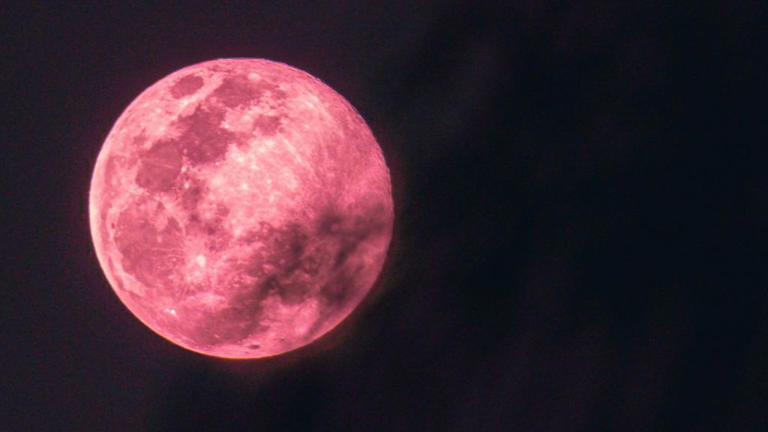
Pink full moon Buddhist lunar observance

A pink full moon in the dark night sky (© InspireMore via msn.com)
.
Let’s keep our eyes on the skies tonight. We don’t want to miss the pink full moon.

According to The Old Farmer’s Almanac, we’ll be able to get the perfect view around 7:49 pm ET. That’s when “peak illumination” occurs.

As full moon peeks above the horizon, it’ll be at its brightest and most vibrant to our eyes.

Where should we go in order to get the best experience during the pink full moon? The Old Farmer’s Almanac suggests heading somewhere with a generous view of the open sky. Find a place where the horizon isn’t obscured by tall buildings or trees.

What’s in a name?

Although the pink full moon will certainly be a beautiful sight, it unfortunately isn’t actually as colorful as it sounds. It will have a rich amber tone at first, but it will fade to the usual silvery white as it rises into the night sky.

One might be wondering why it’s called a "pink moon" if it doesn’t look pink. USA Today reminds us that many of the full moon names we use today come from much older Native American traditions. These names were usually connected to what was happening in nature that month.

What to know about Tuesday night's pink moon? April happened to be the time of year when Phlox subulata, also called creeping phlox or moss phlox, started to bloom. These rosy-hued blossoms were also sometimes called “moss pink,” which is how the pink full moon earned its title.

In February, we watched the “snow moon” ascend into the sky. Last month brought the “worm moon,” whose slightly less appealing name comes from the appearance of worms in nature during early spring.
According to Space.com, next month will bring us the “flower moon.” May's full moon is so named for the many blooms we’ll see during this phase of spring.
Ready to get a good look at the pink full moon tonight? Find a prime viewing spot and keep all eyes peeled at 7:49 pm ET. Find the source of this story’s featured image here. The post Don’t Miss The Pink Full Moon Tonight! Best Times To Watch & More appeared first on InspireMore. Follow on MSN.

In Brief: The Lunar Observance Day
Bhikkhu Bodhi (trans.), Saṁkhitt-ūposatha-Sutta, Aṅguttara Nikāya, "The Book of the Eights" (AN 8.41); edited by Dhr. Seven and Crystal Q., Wisdom Quarterly

If Budai were a buddha, would he fast?
Thus have I heard. On one occasion the Blessed One (the Buddha) was dwelling at Sāvatthī in Jeta’s Grove in the millionaires (Anāthapiṇḍika)’s Park. There the Blessed One addressed the meditators:

“Meditators!”

“Venerable sir!” they replied. The Blessed One said: “Meditators, observed complete in eight factors, the lunar observance (uposatha) is of great fruit and benefit, extraordinarily brilliant and pervasive. And how is it observed complete in eight factors so that it is of great fruit and benefit, extraordinarily brilliant and pervasive?

(1) “Here [within this Doctrine and Discipline], meditators, a noble disciple reflects: ‘As long as they live the fully enlightened (arahants) abandon and abstain from the destruction of life; with the rod and weapon laid aside, conscientious and kindly, they dwell compassionate toward all living beings. Today, for this night and day I, too, shall abandon and abstain from the destruction of life; with the rod and weapon laid aside, conscientious and kindly I, too, shall dwell compassionate toward all living beings. I will imitate the fully enlightened in this respect and observe the fasting day.’ This is the first factor it possesses.

(2) “‘As long as they live the arahants abandon and abstain from taking what is not given; they take only what is given, expect only what is given, and dwell honestly without thoughts of theft. Today, for this night and day, I too shall abandon and abstain from taking what is not given; I shall accept only what is given, expect only what is given, and dwell honestly without thoughts of theft. I shall imitate the fully enlightened in this respect and observe this fasting day.’ This is the second factor it possesses.

(3) “‘As long as they live the fully enlightened abandon sexual activity and observe celibacy, living apart, abstaining from sexual intercourse, the common person’s practice. Today, for this night and day I, too, shall abandon sexual activity and observe celibacy, living apart, abstaining from sexual intercourse, the common person’s practice. I will imitate them in this respect and observe.’ This is the third factor it possesses.

(4) “‘As long as they live they abandon and abstain from false speech; they speak truth, adhere to truth; they are trustworthy and reliable, not deceivers of the world. Today, for this night and day I, too, shall abandon and abstain from false speech; I shall speak truth, adhere to truth; I shall be trustworthy and reliable, not a deceiver of the world. I will imitate them in this respect and observe.’ This is the fourth factor it possesses.

(5) “‘As long as they live they abandon and abstain from liquor, wine, and intoxicants, the basis for heedlessness. Today, for this night and day I, too, will abandon and abstain from liquor, wine, and intoxicants, the basis for heedlessness. I will imitate them in this respect and observe.’ This is the fifth factor it possesses.

(6) “‘As long as they live they eat once a day, abstaining from eating at night and from food outside the proper time. Today, for this night and day I, too, will eat once a day, abstaining from eating at night and from food outside the proper time. I will imitate them in this respect and observe.’ This is the sixth factor it possesses.

(7) “‘As long as they live they abstain from dancing, singing, instrumental music, and unsuitable shows, and from adorning and beautifying themselves by wearing garlands and applying scents and creams. Today, for this night and day I, too, shall abstain from dancing, singing, instrumental music, and unsuitable shows, and from adorning and beautifying myself by wearing garlands and applying scents and creams. I will imitate them in this respect and observe.’ This is the seventh factor it possesses.

(Dylan Sauerwein/Unsplash/InspireMore)
(8) “‘As long as they live they abandon and abstain from the use of high and luxurious beds; they lie down on a low resting place, either a small bed or a straw mat. Today, for this night and day I, too, will abandon and abstain from the use of high and luxurious beds; I will lie down on a low resting place, either a small bed or a straw mat. I will imitate them in this respect and observe this fasting day.’ This is the eighth factor it possesses.

“It is in this way, meditators, that the fasting day is observed complete in eight factors, so that it is of great fruit and benefit, extraordinarily brilliant and pervasive.”
  • Bianca Wooden, InspireMore via MSN.com, April 23, 2024; Bhikkhu Bodhi (suttacentral.org); Dhr. Seven, Crystal Q., Seth Auberon (eds.), Wisdom Quarterly

Sunday, February 4, 2024

How a chicken can fly: path to enlightenment

Gary Larson (art); Dhr. Seven (poem), Ashley Wells, Amber Larson (eds.), Wisdom Quarterly

A flood? Why didn't you fly? - I lost the balloon.
"Oh, how sad, Chicken Bob, to see you try.
They call you Fryer, but you're meant to fly."
He muttered, I thought, asked, "Hey, what the cluck?"
I sat and I pondered: What could be up?

My eyes lifted as thought-balloon drifted.
Wide pupils shifted, reading, it's scripted:
How bright the idea that balloon brought!
Better the bulb than the darkness of thought.

Now what if he rows as I provide lift?
I get him to float, won't he flap his wings?
Now "what if" is no way to live a life.
For what if I ask, and he but denies?

So sinched at the waist, a string through his strut,
Seatbelt fitted in haste, he levitates up!
The helium balloon wafted him high.
I said, "Daft bird, see, it's better to try!"


Analysis
What is at the very heart of wisdom?
-So, Seven, you're saying, through symbolism and Gary Larson's comic strip, that we should figure out a novel solution and try it?

Poetry is not symbolic. I'm just telling a story about a scared bird, Chicken Bob, who thought he couldn't. Then with a little help he could. It's like when I try to meditate, I can't. But with a little help, who knows. Once my teacher applied peppermint essential oil to my upper lip to keep my attention at the breath as it goes in and out (anapanasati bhavana). It worked. It was subtle, but peppermint is brightening and kept me awake and vigorous, yet not too excited as green tea might do. I would never have thought of that. "Plant helpers" can go a long way to bring us to the verge of samadhi and insight. But without a deva to point that out, it's hard for a fledging sitter or an old bird set in his ways to make progress.

O, hail, Kwan Yin, Goddess of Compassion!
-Ingenius! So you're saying everyone should try peppermint to advance their sitting practice.

I'm saying no such thing. I'm just telling a story about a scared bird, Chicken Bob, who thought he couldn't.

-Is he "Chicken Little," symbolically?

No, he's Chicken Bob.

-Ah, and is "flying" meditation?

No, meditation is meditation, generally of two kinds, initial calming and subsequently systematic practice with a purified mind to know-and-see.

-Know-and-see what?

Ultimate materiality (kalapas) and mentality (cittas).

-What does that mean?

There are particles of perception, and discreet mind-moments that form the stream of consciousness we take to be one thing when it's really part of an impersonal PROCESS going on. We take this process to be a "self," and we cling to it.

-Isn't it a "self"?

Heart of Perfect Wisdom (Prajna Paramita)
No, it's not-self. The Heart Sutra makes this clear: form, feeling, perception, mental formations, and consciousness are the Five Aggregates or "Heaps" clung to as self. But they are not self.
  • Isn't it a self that clings to self? 
  • -No, a "self" doesn't cling; ultimately speaking, form clings to form, feeling to feeling, perception to perception, mental formations to mental formations, and consciousness clings to consciousness. The whole entanglement is ignorance, avidyaand snapping out of it to wisdom, knowing-and-seeing, and right view is "awakening" or bodhi).
-What ARE they then?

They are impermanent, disappointing, impersonal (empty) phenomena arising and passing away. When we see that directly, we can let go.

-If we let go, is that flying?

Letting go is freedom. Enlightenment is possible in this very life, right here right now, because there's only now, right?

-The past is not real? The future is not real?

One is a memory, one is a dream, and all that's real is right now. This present moment is real and it's all that's ever been real. Forget the rest. Be at your best RIGHT NOW.

-Is that what Ram Dass (Harvard's Dr. Richard Alpert) was saying when he famously said, "Be here now"?

I don't know. But it's good advice. Be. Here. NOW.

-Isn't that Eckhart Tolle's advice?

I think it might be Byron Katie's advice. Do The Work, asking the Four Questions. That'll bring you into the present moment, that is this NOW.

-Then who needs help?

Sometimes we need help. People weren't just spontaneously awakening until the Buddha arose and pointed the Way, revealed the Path, gave step-by-step instructions to make an end of all suffering right now.

-Those instructions still exist?

Yes, they do. Each teacher might put a spin on them unique to each individual's capacity and unique experience, but the fundamentals are right there in the ancient texts.

-Which texts?

The Pali canon is pretty reliable. Pa Auk Sayadaw has renewed their vitality and cleared the cobwebs and so has awakened students like Beth Upton, Ven. Dhammadipa, Sayalay Susila, Sayalay Dipankara, Tina Rasmussen, Stephen Snyder, and my own erstwhile teacher. Even Ayya Khema and her student Leigh Brasington, with the help of a Sri Lankan meditating monk, made it back to the original right-stillness (samma-samadhi) practices for calm. Vipassana is a little more involved.

-But the Heart Sutra is in Sanskrit not Pali!

It is, and isn't it amazing that it is the mostly widely read "discourse" in Mahayana Buddhism, yet no one gets what it's about?

-What's it about?

Ven. Sariputra, foremost in wisdom
"Emptiness" (shunyata). The mark of things is that they are all impersonal. All composite "things" (dharmas) are anatta, "not self." The "perfection of wisdom" is the direct realization that all things are impersonal -- particularly those five things clung to as a "self": form (body) [arrangements of the Four Elements or characteristics of materiality]; feeling (sensation), perception (all we perceive), mental formations (all the other psychological stuff), and the hat trick consciousness (awareness) [the four characteristics of mentality].

-And that made you think up a bird poem?!

No, there's no symbolism. I'm just telling a story about a scared bird, Chicken Bob, who thought he couldn't.