Showing posts with label virtue. Show all posts

Tuesday, September 1, 2026

What's wrong with drinking alcohol?

(Typical Life Stories) The habit/addiction that took everything


Liquid ignorance tastes bad.
FIFTH PRECEPT
: Surā meraya majja pamā daṭṭhānā veramaṇī sikkhā padaṃ samā diyāmi, which means, "I undertake the training-precept to abstain from consuming intoxicants that may occasion heedlessness."

The fifth precept prohibits the use of intoxicants that occasion heedlessness such as alcohol, drugs, or other means. Its virtues are mindfulness and self-responsibility [12, 13] applied to food, work, behavior, and with regard to reality [132] and the true nature of life.

Awareness, meditation, and heedfulness can also be included here [125].

Let's drink this and start breaking other precepts.
The most famous Buddhist commentator in the Pali canon Buddhaghosa writes that whereas violating the first four precepts may be more or less blameworthy depending on the person or animal affected, the fifth precept is always "greatly blamable" because it hinders one from understanding the Buddha's Teachings and may lead one to "madness" [18], which is the karmic result in the future of indulging in alcohol now.


It's a natural product of rotten sugar.
In ancient China, Daoshi described alcohol as the "doorway to laxity and idleness" and as a cause of suffering. Nevertheless, he did describe extraordinary circumstances when drinking might be considered less bad than what it prevents. For example, there's the case of a queen who distracts the king using alcohol to prevent him from murdering.

However, Daoshi was strict in his interpretations. For example, he allowed medicinal use of alcohol only in extreme cases [152].

Early Chinese translations of the Three Baskets or Collections (the Tripitaka of Sutras, Disciplinary Code, and the Higher Doctrine) describe negative consequences for people breaking the rule on drinking, for themselves and their families.

The Chinese translation of the Upāsikaśila Sūtra, as well as the Pāli language version of the Sigālovāda Sutta, speak of terrible consequences from intoxication such as the
  • loss of wealth,
  • ill health,
  • a bad reputation,
  • being accused of misdeeds,
  • "stupidity" [in future rebirths],
  • culminating with rebirth in hell [18, 153].
I need a swig every night to be regular in my poo.
The Dīrghāgama adds to that that alcohol leads to quarreling, negative states of mind, and damage to one's intelligence.

The Mahāyāna Sanskrit version of the Net of All-Embracing Views Discourse (Brahmajāla Sūtra) [Note 6] describes the dangers of alcohol in very strong terms, including the crime of selling alcohol [154], which is listed among one of the forms of wrong livelihood proscribed in the Noble Eightfold Path.

Similar arguments against alcohol are found in Nāgārjuna's writings [155]. A strict interpretation on the prohibition of alcohol consumption in Buddhism can be supported by the Upāli Sūtra's statement that a disciple of the Buddha should avoid drinking alcohol "even [so much as] a drop on the point of a blade of grass."

However, in the writing of some Abhidharma commentators, alcohol consumption was condemned depending on the intention with which it was consumed. For example, an intention that was not condemned was taking alcohol in a tiny amount as a form of medicine [156] or because it is used in the extraction and preservation of plant medicines (syrups, potions, decoctions, concoctions, etc.)

Sanity and sobriety in practice
A little "water of life" never hurt nobody. *Burp*
The fifth precept against consuming alcohol is regarded as extremely important because drinking alcohol leads to lack of self-control and sluggishness [72, 157], which is extremely likely to lead to breaking the other precepts [18] that one would normally if sober avoid breaking.

In Spiro's field studies, violating the fifth precept was seen as the worst of all the five precepts by half of the monks interviewed, citing the harmful consequences [18].

Nevertheless, in practice abstention from alcohol is often disregarded by lay people [158]. In Theravada Buddhist Thailand, drinking alcohol is fairly common, even to the point of drunkenness [159].

Do all bad things as "crazy wisdom," Dummies!
Among Tibetan Vajrayana Buddhists, drinking beer is common, partly because it is very weak and only slightly alcoholic [155].

Medicinal use of alcohol is generally not frowned upon [145], and in some countries like Thailand and Laos, smoking tobacco is usually not regarded as a violation of the precept to avoid intoxicants.

Thai and Laotian Buddhist monks have been known to smoke as part of their culture, but monks who have received more training in Buddhism are far less likely to smoke [43, 160].

Let's live it up, steal, and break things. Woo-hoo!
On a similar note, as of the year 2000, no Buddhist country prohibited the sale or consumption of alcohol, though in Sri Lankan Theravada Buddhist revivalists unsuccessfully attempted to become prohibitionist by getting full prohibition passed in 1956 [43].

Moreover, pre-communist Tibet used to prohibit smoking in some areas of the capital, Lhasa. Monks were prohibited from smoking, and the import of tobacco was banned [43].

Vietnamese Zen Buddhist Thich Nhat Hanh included even mindful consumption in this precept, which consists of unhealthy food, unhealthy entertainment, and unhealthy conversations, among others [137, 161]. More

What about the dollar, Dr. Jeffrey Sachs?

Thursday, July 10, 2025

Buddhist Sabbath: Full Buck Moon

What is the Buck Moon? Biggest, farthest, orangest full moon

The Buddhist Sabbath Day: Uposatha

What's the big deal? There's sila, dana, samadhi
The Uposatha day is a Buddhist day of observance, in existence since the Buddha's time (600 BCE) and still being kept today by sincere practitioners of Buddhism [1, 2]. The Buddha taught that the Uposatha day is for "the cleansing of the defiled mind (heart)," resulting in inner calm and joy [3]. On this day, both lay and ordained members of the Sangha (spiritual community) intensify their practice, deepen their knowledge of the practice, and express communal commitment through millennia-old acts of lay-monastic reciprocity. On these days, Buddhist lay followers make a conscious effort to keep the Eight Precepts or, as the tradition suggests, the Ten Precepts (or keeping perfectly the everyday Five Precepts). It is a day for putting into intensive practice the Buddha's teachings and meditation. More


CAUTION! JULY 10th FULL MOON will make WISHES come TRUE…but there's a catch!
(Eye of Wisdom) The full moon on July 10th is not just a light in the sky, it’s a manifestation magnifier. This moon pulls our desires to the surface, reflects them back at us…and amplifies them into reality. But there's a catch...

⚠️ This full moon is karmic, magnetic, and emotionally revealing. Our energy, our thoughts, our frequency, all of it is being reflected back at us in high definition.

✨ In this video:
  • Why this Full Moon unlocks manifestation energy (with a twist)
  • What thoughts and intentions we MUST get clear on now
  • This is our early warning: July 10 isn’t “just another moon.”
It’s a spiritual amplifier. Whatever we’re broadcasting, this moon is listening.

📃 Relevant sources 📖
  • Tolle, Eckhardt (1997) — The Power of Now: A Guide to Spiritual Enlightenment. Namaste Publishing.
Virtues of the Buddhist Lunar Observance
  • #spirituality #astrology #astronomy #universe #FullMoonJuly2025 #July10FullMoon #ManifestationWarning #MoonEnergy #SpiritualAwakening #FullMoonManifestation #EnergyUpdate #ChosenOnes #KarmicMoon #MoonRituals
  • Eye of Wisdom, July 8, 2025; CC Liu, Crystal Q. (eds.), Wisdom Quarterly

Thursday, July 25, 2024

What is 'Right Action' in Eightfold Path?


Presence versus presents
Like right speech, there is a very simple way to think about right action: It is action (karma, conduct, deeds of mind, speech, and body, behavior) that gives rise to peace and happiness in self and others.

In the same way, right action is simply right intention as applied to action.

The Buddha provides useful practical guidelines. He defined right action as abstinence from three things: killing, stealing, and sexual misconduct [1].

The combination of right speech and right action gives rise to a set of guidelines that the Buddha recommends for ethical and wholesome behavior called the Five Precepts [2]. These Five Precepts form the center of ethics and morality in Buddhism.

The precepts apply to monastics and lay practitioners.  The Five Precepts are:
  1. To abstain from killing
  2. To abstain from stealing
  3. To abstain from sexual misconduct
  4. To abstain from bearing false witness
  5. To abstain from intoxicants that occasion heedlessness.
Hey, Bean, is our radio show right speech? - FU!
The first three precepts are the practice of "right action." The fourth item, right speech, is so important that the Buddha named it as a precept of its own. The first four precepts might seem obvious while the fifth precept may surprise some

In one sutra delivered to a large group of monastics and laypeople, the Buddha explained the purpose of abstinence from intoxicants in this verse:

Because of intoxication
foolish people do harmful deeds,
and they make other heedless folk do such deeds.
One should avoid this basis of demerit,
delightful to fools, causing madness and delusion [3].

Wake and bake, Bro. Let's go to Goenka's and smoke out to be able to sit better. Huh huh huh
.
Shut up, you hor. I'm drunk! I'll knock you out.
In modern terms we avoid intoxicants because intoxication makes people do very harmful things.  However, beyond that, there is a deeper reason for this precept. That is the keen awareness in Buddhism of the close interrelationship between the mind, behavior, and suffering. For this reason, keeping the mind unclouded and uncompromised is an essential part of Buddhist practice.

There is a beautiful way to look at these ancient (pre-Buddhist) Five Precepts, and that is as gifts. The Buddha considers observing the Five Precepts a way of giving five great gifts to ourselves and others.

By observing the precepts, he says, “the noble disciple gives to an immeasurable number of beings freedom from fear, enmity, and affliction. One in turn enjoys immeasurable freedom from fear, enmity, and affliction” [4].

In that spirit, modern Buddhist teachers emphasize the active aspects of the precepts. Each precept is a call to refrain from harmful actions and also an opportunity to practice beautiful qualities.

The great Vietnamese Zen Master Thich Nhat Hanh, for example, lovingly encouraged one to use
  1. the first precept (abstaining from killing) as an opportunity to practice compassion,
  2. the second precept (abstaining from stealing) as an opportunity to practice generosity,

  3. the third precept (abstaining from sexual misconduct) as an opportunity to practice true love,
  4. the fourth precept (abstaining from lying) as an opportunity to practice loving speech and deep listening, and
  5. the fifth precept (abstaining from intoxication) as an opportunity to practice nourishment and healing [5].

In other words, the Five Precepts are an opportunity for beautiful living.

But wait, there’s more. The Five Precepts are the core of virtue (sila), and virtue is a gift that keeps on giving. For laypeople, the Buddha lists five benefits of being virtuous:
  1. A virtuous person does not lose wealth because of heedlessness.
  2. A virtuous person gains a good reputation.
  3. A virtuous person approaches any assembly confident and composed.
  4. A virtuous person dies unconfused.
  5. A virtuous person, after death, is reborn in a good destination [6].
  6. For those reasons, the Buddha declares a lay person who possess the five precepts as one who dwells in self-confidence [7].
Do as I say, not as I do. And don't talk back!
Students of religion may be tempted to equate the Five Precepts with “moralistic strictures,” standards of conduct set for people by God. However, being nontheistic, there is no such thing as moralistic strictures in Buddhism, given that there is no God to impose anything upon us.

Instead, the reason we practice virtue in Buddhism is because virtue is highly conducive to our own happiness and good fortune, our progress and contentment here and now.

Western Buddhist monk and author Ajahn Munindo has a beautiful way of putting it. Paraphrasing the Buddha, he states:

“It is wisdom that enables
letting go of a lesser happiness
in pursuit of a happiness
which is greater” [8].

In Buddhism, the practice of virtue is precisely that, having the wisdom to let go of the lesser happiness of nonvirtuous indulgence for the greater bliss of blamelessness and confidence, and as you shall see later, the even greater bliss coming from compassion, samadhi (profound stillness in meditation), and nirvana.
  1. Saṃyutta Nikāya 45.8.
  2. Pali term: pañca-sīla.
  3. Dhammika Sutta (Sutta Nipāta 2.14).
  4. Aṅguttara Nikāya 8.39.
  5. Thich Nhat Hanh’s Five Mindfulness Trainings on (learnreligions.com/thich-nhat-hanhs-five-mindfulness-trainings-449601).
  6. Aṅguttara Nikāya 5.213.
  7. Aṅguttara Nikāya 5.171.
  8. This is Ajahn Munindo’s rendering of Dhammapada Verse 290, which reads, “If by renouncing a lesser happiness one may realize a greater happiness, let the wise person renounce the lesser, having regard for the greater.”
  • Chade-Meng Tan, Buddhism for All (buddhism.net), Dec. 24, 2023, featured image by Colin Goh; edited by Seth Auberon, Ashley Wells (eds.), Wisdom Quarterly

Tuesday, April 23, 2024

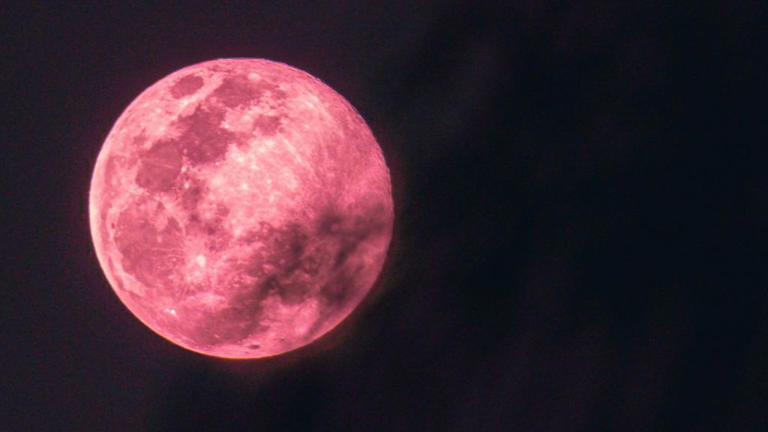
Pink full moon Buddhist lunar observance

A pink full moon in the dark night sky (© InspireMore via msn.com)
.
Let’s keep our eyes on the skies tonight. We don’t want to miss the pink full moon.

According to The Old Farmer’s Almanac, we’ll be able to get the perfect view around 7:49 pm ET. That’s when “peak illumination” occurs.

As full moon peeks above the horizon, it’ll be at its brightest and most vibrant to our eyes.

Where should we go in order to get the best experience during the pink full moon? The Old Farmer’s Almanac suggests heading somewhere with a generous view of the open sky. Find a place where the horizon isn’t obscured by tall buildings or trees.

What’s in a name?

Although the pink full moon will certainly be a beautiful sight, it unfortunately isn’t actually as colorful as it sounds. It will have a rich amber tone at first, but it will fade to the usual silvery white as it rises into the night sky.

One might be wondering why it’s called a "pink moon" if it doesn’t look pink. USA Today reminds us that many of the full moon names we use today come from much older Native American traditions. These names were usually connected to what was happening in nature that month.

What to know about Tuesday night's pink moon? April happened to be the time of year when Phlox subulata, also called creeping phlox or moss phlox, started to bloom. These rosy-hued blossoms were also sometimes called “moss pink,” which is how the pink full moon earned its title.

In February, we watched the “snow moon” ascend into the sky. Last month brought the “worm moon,” whose slightly less appealing name comes from the appearance of worms in nature during early spring.
According to Space.com, next month will bring us the “flower moon.” May's full moon is so named for the many blooms we’ll see during this phase of spring.
Ready to get a good look at the pink full moon tonight? Find a prime viewing spot and keep all eyes peeled at 7:49 pm ET. Find the source of this story’s featured image here. The post Don’t Miss The Pink Full Moon Tonight! Best Times To Watch & More appeared first on InspireMore. Follow on MSN.

In Brief: The Lunar Observance Day
Bhikkhu Bodhi (trans.), Saṁkhitt-ūposatha-Sutta, Aṅguttara Nikāya, "The Book of the Eights" (AN 8.41); edited by Dhr. Seven and Crystal Q., Wisdom Quarterly

If Budai were a buddha, would he fast?
Thus have I heard. On one occasion the Blessed One (the Buddha) was dwelling at Sāvatthī in Jeta’s Grove in the millionaires (Anāthapiṇḍika)’s Park. There the Blessed One addressed the meditators:

“Meditators!”

“Venerable sir!” they replied. The Blessed One said: “Meditators, observed complete in eight factors, the lunar observance (uposatha) is of great fruit and benefit, extraordinarily brilliant and pervasive. And how is it observed complete in eight factors so that it is of great fruit and benefit, extraordinarily brilliant and pervasive?

(1) “Here [within this Doctrine and Discipline], meditators, a noble disciple reflects: ‘As long as they live the fully enlightened (arahants) abandon and abstain from the destruction of life; with the rod and weapon laid aside, conscientious and kindly, they dwell compassionate toward all living beings. Today, for this night and day I, too, shall abandon and abstain from the destruction of life; with the rod and weapon laid aside, conscientious and kindly I, too, shall dwell compassionate toward all living beings. I will imitate the fully enlightened in this respect and observe the fasting day.’ This is the first factor it possesses.

(2) “‘As long as they live the arahants abandon and abstain from taking what is not given; they take only what is given, expect only what is given, and dwell honestly without thoughts of theft. Today, for this night and day, I too shall abandon and abstain from taking what is not given; I shall accept only what is given, expect only what is given, and dwell honestly without thoughts of theft. I shall imitate the fully enlightened in this respect and observe this fasting day.’ This is the second factor it possesses.

(3) “‘As long as they live the fully enlightened abandon sexual activity and observe celibacy, living apart, abstaining from sexual intercourse, the common person’s practice. Today, for this night and day I, too, shall abandon sexual activity and observe celibacy, living apart, abstaining from sexual intercourse, the common person’s practice. I will imitate them in this respect and observe.’ This is the third factor it possesses.

(4) “‘As long as they live they abandon and abstain from false speech; they speak truth, adhere to truth; they are trustworthy and reliable, not deceivers of the world. Today, for this night and day I, too, shall abandon and abstain from false speech; I shall speak truth, adhere to truth; I shall be trustworthy and reliable, not a deceiver of the world. I will imitate them in this respect and observe.’ This is the fourth factor it possesses.

(5) “‘As long as they live they abandon and abstain from liquor, wine, and intoxicants, the basis for heedlessness. Today, for this night and day I, too, will abandon and abstain from liquor, wine, and intoxicants, the basis for heedlessness. I will imitate them in this respect and observe.’ This is the fifth factor it possesses.

(6) “‘As long as they live they eat once a day, abstaining from eating at night and from food outside the proper time. Today, for this night and day I, too, will eat once a day, abstaining from eating at night and from food outside the proper time. I will imitate them in this respect and observe.’ This is the sixth factor it possesses.

(7) “‘As long as they live they abstain from dancing, singing, instrumental music, and unsuitable shows, and from adorning and beautifying themselves by wearing garlands and applying scents and creams. Today, for this night and day I, too, shall abstain from dancing, singing, instrumental music, and unsuitable shows, and from adorning and beautifying myself by wearing garlands and applying scents and creams. I will imitate them in this respect and observe.’ This is the seventh factor it possesses.

(Dylan Sauerwein/Unsplash/InspireMore)
(8) “‘As long as they live they abandon and abstain from the use of high and luxurious beds; they lie down on a low resting place, either a small bed or a straw mat. Today, for this night and day I, too, will abandon and abstain from the use of high and luxurious beds; I will lie down on a low resting place, either a small bed or a straw mat. I will imitate them in this respect and observe this fasting day.’ This is the eighth factor it possesses.

“It is in this way, meditators, that the fasting day is observed complete in eight factors, so that it is of great fruit and benefit, extraordinarily brilliant and pervasive.”
  • Bianca Wooden, InspireMore via MSN.com, April 23, 2024; Bhikkhu Bodhi (suttacentral.org); Dhr. Seven, Crystal Q., Seth Auberon (eds.), Wisdom Quarterly

Tuesday, April 2, 2024

Porn stars dying: sex work exploitation


AI knows all states: what must it think of Cali?
When asked what I want to be when I grow up, I always say the same thing: "Famous."

"For what?" people ask me. Even Dr. Drew asks that. Well, anything really or, better yet, for nothing at all. I'd like to be a comedian, but I don't really know any interesting anecdotes, just one-liners. Like, "Q: What did the father buffalo say to his boy as he went off to college? A: Bison." Okay, no one said I was Gary Steinfeld over here. All the rest of them are vulgar and puerile, exciting prurient interest, not exactly Buddhist right speech, you know.

Dead porn stars are flooding our feeds.
I guess, if pressed, I always thought I would be famous for rock, EDM, or rap lyrics and music (beats on the computer), or porn (beats on the computer), all interesting pastimes for American youths. It's the beat, the beat, the beat. I think I could do it. Hoops, maybe? If I could be an Internet Influencer making TikToks or YouTube content, that might be good. I should probably take music lessons or learn to use my cell phone for making movies. Porn is out, too dangerous. They're all dying:

Why so many porn stars are dying

(It's Blanko) This year (2024) has been a curse for the adult film industry. With all the porn stars dropping like flies, there seems to be a pattern. Let's take a look as to why.
  • It's Blanko, March 25, 2024; Bela, Amber Larson, Dhr. Seven (eds.), Wisdom Quarterly

Saturday, February 24, 2024

Eight Precept Lunar Observance (Sabbath)

Ven. Kantasilo (trans.), Uposatha Sila, written by Somdet Phra Buddhaghosacariya (Ñanavara Thera) (accesstoinsight.org); Amber Larson and Dhr. Seven (eds.), Wisdom Quarterly
.
Lunar Observance Discourse (Uposatha Sutta)
Let's read the words of the Buddha.
Thus have I heard: At one time the Blessed One [the Buddha] was residing in Jetavana, the monastery of Anathapindika, near Savatthi. At that time the Blessed One, having called all the bhikkhus [meditators, monastics, monks] together, addressed them thus: "Meditators!" The monks answered in assent: "Venerable sir!" (The meditators then prepared themselves for the following teaching.) The Blessed One then gave the following teaching on Uposatha [the Sabbath Day observed each week according to the phases of the moon].


"Meditators, the Lunar Observance (Uposatha) is comprised of eight factors, which the noble (Ariyan) disciple observes, the observance of which brings glorious and radiant fruit and benefit.

"Meditators, what is the Lunar Observance which, observed by the noble disciples, brings glorious and radiant fruit and benefit?"

1. "Meditators, noble disciples in this Doctrine [Dhamma, Teaching, Doctrine-and-Discipline] reflect thus:

Killing is cool in Zionist-Judaism. Just ask Gal.
"'All enlightened ones (arahants), for as long as life lasts, have given up the intentional taking of life (panatipata). The club and sword have been laid down. They have shame (of doing wrong, doing harm) and are compassionate towards all beings.'

"All of you have given up the intentional taking of life, have put down all weapons, are possessed of shame (of doing wrong) and are compassionate towards all beings.

"For all of this day and night, in this manner, you will be known as having followed the fully enlightened, and the Lunar Observance will have been observed by you. This is the first factor of the Lunar Observance."

2. "Meditators, noble disciples in this Doctrine reflect thus:

Amazon's not stealing, Leo. - No, Jeff, yer girl
"'All enlightened ones, for as long as life lasts, have given up taking what has not been given (adinnadana). They take only what is given, are intent on taking only what is given. They are not thieves. Their behavior is spotless.'

"All of you have given up the taking of what has not been given, are ones who do not take what is not given, are intent on taking only what is given, are not thieves. Your behavior is spotless. For all of this day and night, in this manner, you will be known as having followed the enlightened one, and the Lunar Observance will have been observed by you. This is the second factor of the Lunar Observance."

3. "Meditators, noble disciples in this Doctrine reflect thus:

But sex and war turn the world we live in.
"'All enlightened ones, for as long as life lasts, have given up [sexual intercourse or] that which is an obstacle to the supreme-faring (abrahma-cariya). Their practice is like that of a divinity (brahma). They are far from sexual intercourse, which is a practice of lay people.'

"All of you have given up that which is an obstacle to the supreme-faring and behave like a divinity. Your behavior is far from sexual intercourse. For all of this day and night, in this manner, you will be known as having followed the enlightened ones, and the Lunar Observance will have been observed by you. This is the third factor of the Lunar Observance."

New breathtaking CGI from the Moon
4. "Meditators, noble disciples in this Doctrine reflect thus:

"'All enlightened ones, for as long as life lasts, have given up the telling of lies (musavada = false speech).
  • [It is not lies alone but "false speech," which elsewhere is more fully defined as 1) bearing false witness, 2) harsh speech, 3) divisive speech, and 4) idle or frivolous speech, all of which seems to earn it the shorthand label "lying." Full definition at the "Ten Courses of Unwholesome Karma"].
"'They utter only the truth and are intent on the truth [honesty, accuracy, factuality]. Their speech is firm and is composed of reason. Their speech does not waver from that which is a mainstay for the world.'

To deceive the world is a terrible thing.
"All of you have given up the telling of lies. You speak only the truth and are intent only on that which is true. Your speech is firm and with reason. Your speech does not waver from that which is a mainstay for the world. For all of this day and night, in this manner, you will be known as having followed the enlightened ones, and the Lunar Observance will have been observed by you. This is the fourth factor of the Lunar Observance."

5. "Meditators, noble disciples in this Doctrine reflect thus:

Nah, it's alright, Man, it's legal and I ani't drunk.
"'All enlightened ones, for as long as life lasts, have given up the taking of liquor and intoxicants (sura-meraya-majja-pamadatthana), of that which intoxicates, causing carelessness [negligence, heedlessness, leading to regrettable deeds]. They are far from intoxicants.'

"All of you have given up the taking of liquors and intoxicants. You abstain from drink which causes carelessness. For all of this day and night, in this manner, you will be known as having followed the enlightened ones, and the Lunar Observance will have been observed by you. This is the fifth factor of the Lunar Observance."

6. "Meditators, noble disciples in this Doctrine reflect thus:

What? But it's morning. Dawn has broken.
"'All enlightened ones, for as long as life lasts, eat at one time only and given up partaking of food in the evening [eat only during one period of the day, now set between daybreak and noon], but it was not always this way, and Buddhist monastics used to be allowed to eat in the evening until that was deemed too troublesome for donors and alms seekers]. They abstain from food at the 'wrong time' (vikala bhojana).'

"All of you eat at one time only [delimiting the span of time during which to eat not the number of meals, which usually includes breakfast and lunch] and do not partake of food in the evening. You abstain from food at the 'wrong time.' For all of this day and night, in this manner, you will be known as having followed the enlightened ones, and the Lunar Observance will have been observed by you. This is the sixth factor of the Lunar Observance."

7. "Meditators, noble disciples in this Doctrine reflect thus:

What's wrong with lettin' loose?
"'All enlightened one, for as long as life lasts, have given up singing and dancing, the playing of musical instruments and the watching of [base] entertainments, which are stumbling blocks to that which is wholesome. Nor do they bedeck themselves with ornaments, flowers, or cosmetics.'

"All of you have given up singing and dancing, the playing of musical instruments and the watching of [base] entertainments, which are stumbling blocks to that which is wholesome. You do not bedeck yourselves with ornaments, flowers, or cosmetics. For all of this day and night, in this manner, you will be known as having followed the enlightened ones, and the Lunar Observance will have been observed by you. This is the seventh factor of the Lunar Observance."

8. "Meditators, noble disciples in this Doctrine reflect thus:

"Large" means with space for more than one.
"'All enlightened ones, for as long as life lasts, have given up lying on large or high beds. They are content with low beds or bedding made of grass.'

"All of you have given up lying on large or high beds. You are content with low beds or beds made of grass. For all of this day and night, in this manner, you will be known as having followed the enlightened ones, and the Lunar Observance will have been observed by you. This is the eighth factor of the Lunar Observance."

What is enough to sleep on and be healthy?
"Meditators, the Lunar Observance is comprised of these eight factors, which the noble disciple observes, and it is [karma] of great and glorious fruit and benefit."

Thus the Blessed One spoke on the Lunar Observance. The meditators were delighted and rejoiced at his words. CONTINUED (EXPLANATION OF SUTRA WITH Q&A)