Showing posts with label restraint. Show all posts

Wednesday, July 1, 2026

Hindu: Why sex means suffering (ISKCON)


Why Sex Means Suffering
Lord Krishna loves Radha, gopis
भक्ति विकास स्वामी - Bhakti Vikasa Swami(भक्ति विकास स्वामी - Bhakti Vikasa Swami) Oct. 21, 2025: #misery #sex #bvks #sex #misery. Recorded on October 1, 2025, in Vellore, Tamil Nadu, India. Practice brahmacharya (spiritual "celibacy") for Ayurveda, avoiding sinfulness (pāpa). For thousands of ISKCON (Int'l Society of Krishna Consciousness) talks on the Bhagavad-gita, Srimad Bhagavatam, Caitanya-caritamrta, and Bhajans, please see cross platform apps:
Brahmacari (celibacy over chastity for students of the Dharma)

Lovers Radha and Krishna
Krishna's consorts: Radha, Rukmini, Satyabhama, Jambavati, and five other chief queens, plus 16,000 to 16,100 junior queens [8] [Note 2].

On the one hand, Radha is seen as Krishna's lover-consort (although in some beliefs Radha is considered to be Krishna's married consort).

On the other hand, Rukmini and Krishna's many other consorts are already said to be married to him.

Polygynist Lord Krishna had eight chief wives, known as ashtabharyas. Regional texts vary in the identity of Krishna's wives (consorts), some presenting them as Rukmini, some as Radha, all gopis ("milkmaids"), and some identifying all as different aspects or manifestations of the goddess Lakshmi [8, 9].

Our Republican president and politicians

Wednesday, November 20, 2024

Ajahn Chah - Struggles - Sexual Desire


(dhammatube) Feb. 12, 2008: Battles to overcome sexual desire. All videos of this series are available at: ajahnchah.org/videos.htm

How to stop sexual thoughts in the mind | Buddhist story on how to control lust
(Words of Wisdom) April 13, 2024: Buddha Life Stories. If we keep thinking about sex all the time then we can become victims of hypersexuality. Hypersexuality can make us addicted to pornography and masturbation. But if we want to overcome excess sexual thoughts in our mind then here is advice.

This Buddhist story of a Zen master and a young boy can teach us how to overcome sexual thoughts in the mind. These wise tips of the Buddha can help us rid our minds and bodies of sexual addiction and masturbation.

#sexuality #lust #overcomeaddiction #howtocontrolmind #desire #controlemotions #buddhastory Twitter: wordsofwisdom_5 WOW Instagram: wordsofwisdom.motivation. Personal Instagram: shaill03 Facebook: words-of-wisdom-quotes-stories-11062425731... Explore the podcast 86 episodes Buddha Life Stories Words of Wisdom

Tuesday, April 23, 2024

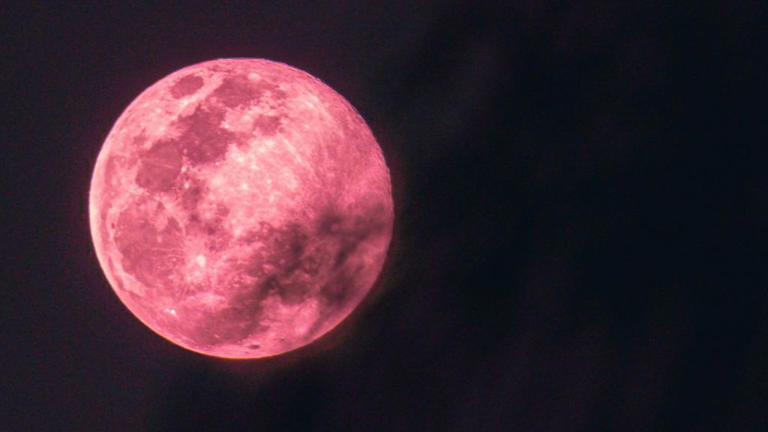
Pink full moon Buddhist lunar observance

A pink full moon in the dark night sky (© InspireMore via msn.com)
.
Let’s keep our eyes on the skies tonight. We don’t want to miss the pink full moon.

According to The Old Farmer’s Almanac, we’ll be able to get the perfect view around 7:49 pm ET. That’s when “peak illumination” occurs.

As full moon peeks above the horizon, it’ll be at its brightest and most vibrant to our eyes.

Where should we go in order to get the best experience during the pink full moon? The Old Farmer’s Almanac suggests heading somewhere with a generous view of the open sky. Find a place where the horizon isn’t obscured by tall buildings or trees.

What’s in a name?

Although the pink full moon will certainly be a beautiful sight, it unfortunately isn’t actually as colorful as it sounds. It will have a rich amber tone at first, but it will fade to the usual silvery white as it rises into the night sky.

One might be wondering why it’s called a "pink moon" if it doesn’t look pink. USA Today reminds us that many of the full moon names we use today come from much older Native American traditions. These names were usually connected to what was happening in nature that month.

What to know about Tuesday night's pink moon? April happened to be the time of year when Phlox subulata, also called creeping phlox or moss phlox, started to bloom. These rosy-hued blossoms were also sometimes called “moss pink,” which is how the pink full moon earned its title.

In February, we watched the “snow moon” ascend into the sky. Last month brought the “worm moon,” whose slightly less appealing name comes from the appearance of worms in nature during early spring.
According to Space.com, next month will bring us the “flower moon.” May's full moon is so named for the many blooms we’ll see during this phase of spring.
Ready to get a good look at the pink full moon tonight? Find a prime viewing spot and keep all eyes peeled at 7:49 pm ET. Find the source of this story’s featured image here. The post Don’t Miss The Pink Full Moon Tonight! Best Times To Watch & More appeared first on InspireMore. Follow on MSN.

In Brief: The Lunar Observance Day
Bhikkhu Bodhi (trans.), Saṁkhitt-ūposatha-Sutta, Aṅguttara Nikāya, "The Book of the Eights" (AN 8.41); edited by Dhr. Seven and Crystal Q., Wisdom Quarterly

If Budai were a buddha, would he fast?
Thus have I heard. On one occasion the Blessed One (the Buddha) was dwelling at Sāvatthī in Jeta’s Grove in the millionaires (Anāthapiṇḍika)’s Park. There the Blessed One addressed the meditators:

“Meditators!”

“Venerable sir!” they replied. The Blessed One said: “Meditators, observed complete in eight factors, the lunar observance (uposatha) is of great fruit and benefit, extraordinarily brilliant and pervasive. And how is it observed complete in eight factors so that it is of great fruit and benefit, extraordinarily brilliant and pervasive?

(1) “Here [within this Doctrine and Discipline], meditators, a noble disciple reflects: ‘As long as they live the fully enlightened (arahants) abandon and abstain from the destruction of life; with the rod and weapon laid aside, conscientious and kindly, they dwell compassionate toward all living beings. Today, for this night and day I, too, shall abandon and abstain from the destruction of life; with the rod and weapon laid aside, conscientious and kindly I, too, shall dwell compassionate toward all living beings. I will imitate the fully enlightened in this respect and observe the fasting day.’ This is the first factor it possesses.

(2) “‘As long as they live the arahants abandon and abstain from taking what is not given; they take only what is given, expect only what is given, and dwell honestly without thoughts of theft. Today, for this night and day, I too shall abandon and abstain from taking what is not given; I shall accept only what is given, expect only what is given, and dwell honestly without thoughts of theft. I shall imitate the fully enlightened in this respect and observe this fasting day.’ This is the second factor it possesses.

(3) “‘As long as they live the fully enlightened abandon sexual activity and observe celibacy, living apart, abstaining from sexual intercourse, the common person’s practice. Today, for this night and day I, too, shall abandon sexual activity and observe celibacy, living apart, abstaining from sexual intercourse, the common person’s practice. I will imitate them in this respect and observe.’ This is the third factor it possesses.

(4) “‘As long as they live they abandon and abstain from false speech; they speak truth, adhere to truth; they are trustworthy and reliable, not deceivers of the world. Today, for this night and day I, too, shall abandon and abstain from false speech; I shall speak truth, adhere to truth; I shall be trustworthy and reliable, not a deceiver of the world. I will imitate them in this respect and observe.’ This is the fourth factor it possesses.

(5) “‘As long as they live they abandon and abstain from liquor, wine, and intoxicants, the basis for heedlessness. Today, for this night and day I, too, will abandon and abstain from liquor, wine, and intoxicants, the basis for heedlessness. I will imitate them in this respect and observe.’ This is the fifth factor it possesses.

(6) “‘As long as they live they eat once a day, abstaining from eating at night and from food outside the proper time. Today, for this night and day I, too, will eat once a day, abstaining from eating at night and from food outside the proper time. I will imitate them in this respect and observe.’ This is the sixth factor it possesses.

(7) “‘As long as they live they abstain from dancing, singing, instrumental music, and unsuitable shows, and from adorning and beautifying themselves by wearing garlands and applying scents and creams. Today, for this night and day I, too, shall abstain from dancing, singing, instrumental music, and unsuitable shows, and from adorning and beautifying myself by wearing garlands and applying scents and creams. I will imitate them in this respect and observe.’ This is the seventh factor it possesses.

(Dylan Sauerwein/Unsplash/InspireMore)
(8) “‘As long as they live they abandon and abstain from the use of high and luxurious beds; they lie down on a low resting place, either a small bed or a straw mat. Today, for this night and day I, too, will abandon and abstain from the use of high and luxurious beds; I will lie down on a low resting place, either a small bed or a straw mat. I will imitate them in this respect and observe this fasting day.’ This is the eighth factor it possesses.

“It is in this way, meditators, that the fasting day is observed complete in eight factors, so that it is of great fruit and benefit, extraordinarily brilliant and pervasive.”
  • Bianca Wooden, InspireMore via MSN.com, April 23, 2024; Bhikkhu Bodhi (suttacentral.org); Dhr. Seven, Crystal Q., Seth Auberon (eds.), Wisdom Quarterly

Saturday, February 24, 2024

Eight Precept Lunar Observance (Sabbath)

Ven. Kantasilo (trans.), Uposatha Sila, written by Somdet Phra Buddhaghosacariya (Ñanavara Thera) (accesstoinsight.org); Amber Larson and Dhr. Seven (eds.), Wisdom Quarterly
.
Lunar Observance Discourse (Uposatha Sutta)
Let's read the words of the Buddha.
Thus have I heard: At one time the Blessed One [the Buddha] was residing in Jetavana, the monastery of Anathapindika, near Savatthi. At that time the Blessed One, having called all the bhikkhus [meditators, monastics, monks] together, addressed them thus: "Meditators!" The monks answered in assent: "Venerable sir!" (The meditators then prepared themselves for the following teaching.) The Blessed One then gave the following teaching on Uposatha [the Sabbath Day observed each week according to the phases of the moon].


"Meditators, the Lunar Observance (Uposatha) is comprised of eight factors, which the noble (Ariyan) disciple observes, the observance of which brings glorious and radiant fruit and benefit.

"Meditators, what is the Lunar Observance which, observed by the noble disciples, brings glorious and radiant fruit and benefit?"

1. "Meditators, noble disciples in this Doctrine [Dhamma, Teaching, Doctrine-and-Discipline] reflect thus:

Killing is cool in Zionist-Judaism. Just ask Gal.
"'All enlightened ones (arahants), for as long as life lasts, have given up the intentional taking of life (panatipata). The club and sword have been laid down. They have shame (of doing wrong, doing harm) and are compassionate towards all beings.'

"All of you have given up the intentional taking of life, have put down all weapons, are possessed of shame (of doing wrong) and are compassionate towards all beings.

"For all of this day and night, in this manner, you will be known as having followed the fully enlightened, and the Lunar Observance will have been observed by you. This is the first factor of the Lunar Observance."

2. "Meditators, noble disciples in this Doctrine reflect thus:

Amazon's not stealing, Leo. - No, Jeff, yer girl
"'All enlightened ones, for as long as life lasts, have given up taking what has not been given (adinnadana). They take only what is given, are intent on taking only what is given. They are not thieves. Their behavior is spotless.'

"All of you have given up the taking of what has not been given, are ones who do not take what is not given, are intent on taking only what is given, are not thieves. Your behavior is spotless. For all of this day and night, in this manner, you will be known as having followed the enlightened one, and the Lunar Observance will have been observed by you. This is the second factor of the Lunar Observance."

3. "Meditators, noble disciples in this Doctrine reflect thus:

But sex and war turn the world we live in.
"'All enlightened ones, for as long as life lasts, have given up [sexual intercourse or] that which is an obstacle to the supreme-faring (abrahma-cariya). Their practice is like that of a divinity (brahma). They are far from sexual intercourse, which is a practice of lay people.'

"All of you have given up that which is an obstacle to the supreme-faring and behave like a divinity. Your behavior is far from sexual intercourse. For all of this day and night, in this manner, you will be known as having followed the enlightened ones, and the Lunar Observance will have been observed by you. This is the third factor of the Lunar Observance."

New breathtaking CGI from the Moon
4. "Meditators, noble disciples in this Doctrine reflect thus:

"'All enlightened ones, for as long as life lasts, have given up the telling of lies (musavada = false speech).
  • [It is not lies alone but "false speech," which elsewhere is more fully defined as 1) bearing false witness, 2) harsh speech, 3) divisive speech, and 4) idle or frivolous speech, all of which seems to earn it the shorthand label "lying." Full definition at the "Ten Courses of Unwholesome Karma"].
"'They utter only the truth and are intent on the truth [honesty, accuracy, factuality]. Their speech is firm and is composed of reason. Their speech does not waver from that which is a mainstay for the world.'

To deceive the world is a terrible thing.
"All of you have given up the telling of lies. You speak only the truth and are intent only on that which is true. Your speech is firm and with reason. Your speech does not waver from that which is a mainstay for the world. For all of this day and night, in this manner, you will be known as having followed the enlightened ones, and the Lunar Observance will have been observed by you. This is the fourth factor of the Lunar Observance."

5. "Meditators, noble disciples in this Doctrine reflect thus:

Nah, it's alright, Man, it's legal and I ani't drunk.
"'All enlightened ones, for as long as life lasts, have given up the taking of liquor and intoxicants (sura-meraya-majja-pamadatthana), of that which intoxicates, causing carelessness [negligence, heedlessness, leading to regrettable deeds]. They are far from intoxicants.'

"All of you have given up the taking of liquors and intoxicants. You abstain from drink which causes carelessness. For all of this day and night, in this manner, you will be known as having followed the enlightened ones, and the Lunar Observance will have been observed by you. This is the fifth factor of the Lunar Observance."

6. "Meditators, noble disciples in this Doctrine reflect thus:

What? But it's morning. Dawn has broken.
"'All enlightened ones, for as long as life lasts, eat at one time only and given up partaking of food in the evening [eat only during one period of the day, now set between daybreak and noon], but it was not always this way, and Buddhist monastics used to be allowed to eat in the evening until that was deemed too troublesome for donors and alms seekers]. They abstain from food at the 'wrong time' (vikala bhojana).'

"All of you eat at one time only [delimiting the span of time during which to eat not the number of meals, which usually includes breakfast and lunch] and do not partake of food in the evening. You abstain from food at the 'wrong time.' For all of this day and night, in this manner, you will be known as having followed the enlightened ones, and the Lunar Observance will have been observed by you. This is the sixth factor of the Lunar Observance."

7. "Meditators, noble disciples in this Doctrine reflect thus:

What's wrong with lettin' loose?
"'All enlightened one, for as long as life lasts, have given up singing and dancing, the playing of musical instruments and the watching of [base] entertainments, which are stumbling blocks to that which is wholesome. Nor do they bedeck themselves with ornaments, flowers, or cosmetics.'

"All of you have given up singing and dancing, the playing of musical instruments and the watching of [base] entertainments, which are stumbling blocks to that which is wholesome. You do not bedeck yourselves with ornaments, flowers, or cosmetics. For all of this day and night, in this manner, you will be known as having followed the enlightened ones, and the Lunar Observance will have been observed by you. This is the seventh factor of the Lunar Observance."

8. "Meditators, noble disciples in this Doctrine reflect thus:

"Large" means with space for more than one.
"'All enlightened ones, for as long as life lasts, have given up lying on large or high beds. They are content with low beds or bedding made of grass.'

"All of you have given up lying on large or high beds. You are content with low beds or beds made of grass. For all of this day and night, in this manner, you will be known as having followed the enlightened ones, and the Lunar Observance will have been observed by you. This is the eighth factor of the Lunar Observance."

What is enough to sleep on and be healthy?
"Meditators, the Lunar Observance is comprised of these eight factors, which the noble disciple observes, and it is [karma] of great and glorious fruit and benefit."

Thus the Blessed One spoke on the Lunar Observance. The meditators were delighted and rejoiced at his words. CONTINUED (EXPLANATION OF SUTRA WITH Q&A)

Sunday, August 13, 2023

The Masturbation Sutras (Theravada Vinaya)

"My gun went off! My gun went off! Are we not supposed to play with our guns?"
.
What we are here calling "sutras" (Pali suttas) are actually origin stories for monastic rules. They are found in the Theravada Buddhist Monastic Disciplinary Code (Vinaya), where the Buddha established a rule only after an incident. The backstory was recorded along with the new rule. The Great Analysis (Mahāvibhaṅga) covers these offenses, one entailing suspension (saṅghādisesakaṇḍa) for monks [and another entailing confession, pācittiyakaṇḍa, for nuns].

1. The training rule on the emission of semen. Venerables [monks, nuns, novices, initiates, trainees, white clad ten precept holders], these 13 rules on suspension come up for recitation.

Origin story: First sub-story
You're not looking so good, Venerable. Have you been discontented with the monastic life?
.
At one time the Buddha was staying at Sāvatthī at Jeta's Grove, in the Multimillionaire’s Monastery. At that time Ven. Seyyasaka was dissatisfied with the spiritual life.

He looked pale, thin, and haggard with veins protruding all over his body. Ven. Udāyī saw him in this condition and said to him:

“Seyyasaka, you’re not looking well. You’re not by any chance dissatisfied with the spiritual life, are you?”

“I am,” Seyyasaka said.
  • Seyyasaka: A Buddhist monk from Sāvatthi who was found guilty of various Vinaya offences, who was therefore subjected to the Nissayakamma ("giving dependence"). Udāyī (Lāludāyi) was his friend and his evil genius. Vin.iii.110 f. (Dicionary of Pali Proper Names)
Just grab it just like this with my bare hand?
“Well, then, eat, sleep, and bathe as much as you like. And whenever you become discontent [inasmuch] as lust overwhelms you, just masturbate with your hand.”

“But is that allowable [within the Buddhist monastic rules]?”

“Yes. I do it myself.”

Then Seyyasaka ate, slept, and bathed as much as he liked, and whenever he became discontent and lust overwhelmed him, he masturbated with his hand.

After some time Seyyasaka [regained his glowing complexion and] had a good color, a bright face, clear skin, and sharp senses.

The monks who were his friends said to him: “Seyyasaka, you used to be pale, thin, and haggard with veins protruding all over your body. But now you have a good color, a bright face, clear skin, and sharp senses. Have you been taking medicine?”

The Theravada monks' life is a hard one...until one attains the meditative absorptions.
.
“No. I just eat, sleep, and bathe as much as I like, and whenever I become discontent [inasmuch] as lust overwhelms me, I masturbate with my hand.”

“Do you eat the food given in confidence (faith, conviction) with the same hand you use to masturbate?”

“Yes.”

The [contented] monks of few desires complained and criticized him: “How can Venerable Seyyasaka masturbate with his hand?” They rebuked Ven. Seyyasaka in many ways and then told the Buddha.


He didn't overdo it. He's a saint in samadhi.
The Buddha then had the Monastic Community (Sangha) gather and questioned Seyyasaka: “Is it true, Seyyasaka, that you do this?”

“Yes, venerable sir.”

The Buddha rebuked him: “Foolish person, it’s unsuitable. It’s improper. It’s unworthy of a monastic. It is not allowable. It is not to be done. How can you do this? Haven’t I given many teachings
  • for the sake of dispassion rather than passion,
  • for freedom from bondage rather than bondage,
  • for the sake of non-grasping rather than grasping?
That's not why I wear glasses. I'm innocent!
“When I have taught like this, how can you choose passion, bondage, and grasping? Have I not given many teachings for the fading away of lust, for the clearing away of [passionate] intoxication, for the removal of craving (lit. thirst), for the uprooting of clinging (attachment), for the cutting off of the round of rebirth (samsara), for the stopping of craving, for fading away, for ending, for extinguishment?

“Have I not given many teachings for the abandoning of sensual pleasures, for the full understanding of the perceptions of sensual pleasure, for the removal of thirst for sensual pleasure, for the elimination of thoughts of sensual pleasure, for the stilling of the fevers of sensual pleasure?

David Bowie wanted to be a Buddhist monk.
“Foolish person, this will affect people’s confidence (faith) and cause some to lose it.” Then, after rebuking Seyyasaka in many ways, the Buddha spoke in dispraise of [a monastic] being difficult to support…

“And, monastics, this training rule should be recited like this. Preliminary ruling: ‘Intentional emission of semen is an offense entailing suspension.’” (Variant: sukkavissaṭṭhi → sukkavisaṭṭhi).

In this way the Buddha laid down this training rule for male monastics.

[Wet dreams] Second sub-story
There was no conscious intention of emission.
Soon afterwards some monks ate fine foods, fell asleep absentmindedly and heedless, and emitted semen while dreaming [wet dream].

They became anxious, thinking: “The Buddha has laid down a training rule [not an arbitrary rule] that intentional emission of semen is an offense entailing suspension. We had an emission while dreaming, which is not without intention. Could it be that we’ve committed an offense entailing suspension?”

They told the Buddha. [He responded:] “It’s true, monastics, that a dream is not without intention, but it’s negligible. And so, monastics, this training rule should be recited in this way:

[Final ruling]
“‘Intentional emission of semen, except while dreaming, is an offense entailing suspension.’” Source

Definitions
  • Intentional: sañcetanikāti, knowing, perceiving, having intended, having decided, one transgresses.
  • Semen: Sukkanti. There are ten kinds of semen: (1) blue, (2) yellow, (3) red, (4) white, (5) the color of buttermilk (6) the color of water, the color of oil, the color of milk, the color of curd, the color of ghee.
  • Emission: Vissaṭṭhīti making it move from is what is meant by “emission.”
  • Except while dreaming: apart from that which occurs while dreaming.
  • An offense entailing suspension: Saṅghādisesoti only the Sangha gives probation for that offense, sends back to the beginning, gives the trial period, and rehabilitates — not several monks, not an individual. Therefore, it is called “an offense entailing suspension.”
  • “Gives the trial period” renders mānattaṁ deti. For the meaning of mānatta, see A Translation and Analysis of the Pātimokkha, by Bhikkhu Ñāṇatusita, p. 123.
  • The point here, which can only be understood from the Pali, is that the word saṅghādisesa (saṅgha + ādisesa) is derived from the fact that only the sangha can do the legal procedures required when a monastic commits this offense. This is the name and designation of this class of offense. Therefore, too, it is called “an offense entailing suspension.”
3. [This is] the training rule on stimulating [slapping, rubbing, hitting, massaging, pressing] with the palm of the hand (talaghātakasikkhāpada*).

Rule for nuns
They may be monastics but are not "nuns," only Eight or Ten Precept novices (samaneris).
.
Origin story
It wasn't my palm like men do. I used a lotus leaf.
At one time when the Buddha was staying at Sāvatthī in the Multimillionaire’s Monastery, two nuns plagued by lust entered their room and stimulated their genitals with the palm of their hands.
  • [Their? Whose room, whose genitals? It does not say "their own." The careful reader cannot help but notice that it may be mutual masturbation being denoted, connoted, or suggested here, as it is plural and simultaneous, along with their questioning and rebuke, as if they were not alone and separate in the act.]
Hearing the sound, other nuns rushed up and asked them: “Venerables, are you having sex with a man?”

“No, we’re not,” and they told them what had happened. The [contented] nuns of few desires complained and criticized them:

“How can nuns stimulate their genitals with their hands?”…

“Is it true, monks, that nuns did that?”

“It’s true, venerable sir.”

“How could nuns do that? This will affect people’s confidence [faith]…”

“And, monks, the nuns should recite this training rule in this way:

[Final ruling]
“‘If a nun stimulates her genitals with the palm of her hand, she commits an offense entailing confession.’” Source
Definitions
  • Slaps her genitals with the palm of her hand: Talaghātakaṁ nāma if, consenting to the contact, she hits [stimulates] her genitals, even with a lotus leaf, she commits an offense entailing confession.
*Pali is a very euphemistic language. Talaghātaka is translated as “slaps her genitals with the palm of her hand,” literally, “hits with the palm.” However, it seems from the origin story that this was a euphemism, an indirect and therefore more polite expression, referring to [stimulation of] the genitals. Sp.2.803 supports this interpretation: Talaghātaketi muttakaraṇatalaghātane, “Talaghātake: hitting the genitals with the palm of the hand.” “Talaghātake pācittiyan'ti.]
  • Bhikkhu Brahmali (trans), suttacentral.net; Ashley Wells, Dhr. Seven (eds.), Wisdom Quarterly

Saturday, June 3, 2023

Strawberry Moon Buddhist Observance

Strawberry Moon June 2023, a year with 13 full moons (The Old Farmer's Almanac)

This weekend's Strawberry Moon
(KTLA 5) June 3, 2023. June's full moon is ripe and ready for a star-filled harvest this weekend. Before it illuminates the sky, here's everything to know about the Strawberry Moon from L.A.'s very own KTLA Channel 5 News, keeping Southern Californians informed since 1947.

Now let's hear from the Buddha, keeping humans and shining ones (devas) informed for nearly 30 centuries:

This is the proper way to consider and think when observing Buddhism's Eight Precepts. [When is it observed? It is observed weekly at each of the four phases of the moon, but the full moon feels like a particularly significant for its observance.

SUTRA: "The Eight Factored Lunar Observance"
"The Lunar Observance with Eight Factors in Brief," Saṅkhittūposatha Sutta (AN 8.41)
Thus have I heard. At one time the Blessed One (the Buddha) was living in the City of Sāvatthī, in Jeta’s Grove, at the multi-millionaire Anāthapiṇḍika’s monastery. There the Blessed One addressed the meditators saying, “Meditators!”

“Venerable sir,” they replied. The Blessed One then said this:

“Meditators, the lunar observance (uposatha) with its eight factors is very beneficial, brilliant, and expansive. How should it be observed? 

1. “A noble [awakened] disciple thinks and considers, ‘As long as they live, the full enlightened (arahants) give up [abandon, avoid, abstain from] killing living beings, giving up the cudgel and sword. They are very kind and careful with their behavior and live full of compassion for all living beings. I, too, for this day and night shall give up killing [and causing others to kill] living beings, giving up the cudgel and sword. I shall be very kind and careful with my behavior and live full of compassion for all living beings. I shall keep the lunar observance by doing as the fully enlightened do in this way.’ This is the uposatha's first factor.

2. “A noble disciple thinks and considers, ‘As long as they live, the fully enlightened give up stealing. They take only what is given and expect only what is [freely] given. They keep themselves blameless by not stealing. I, too, for this day and night shall give up stealing. I shall take only what is given and expect only what is given. I shall keep myself blameless by not stealing. I shall keep the lunar observance by doing as the fully enlightened do in this way.’ This is its second factor.

3. “A noble disciple thinks and considers, ‘As long as they live, the fully enlightened give up noncelibacy. They are celibate, set apart, avoiding the low practice of sex. I, too, for this day and night shall give up noncelibacy. I shall be celibate, set apart, avoiding the low practice of sex. I shall keep the lunar observance by doing as the fully enlightened do in this way.’ This is its third factor.

4. “A noble disciple thinks and considers, ‘As long as they live, the fully enlightened give up lying [false speech, bearing false witness]. They speak the truth and keep to the truth. They are honest and trustworthy and do not trick the world with their words. I, too, for this day and night shall give up lying. I shall speak the truth and keep to the truth. I shall be honest and trustworthy and shall not trick the world with my words. I shall keep the lunar observance by doing as the fully enlightened do in this way.’ This is its fourth factor.

5. “A noble disciple thinks and considers, ‘As long as they live, the fully enlightened give up intoxicating drinks and drugs. I, too, for this day and night shall give up intoxicating drinks and drugs. I shall keep the lunar observance by doing as the fully enlightened do in this way.’ This is its fifth factor.

6. “A noble disciple thinks and considers, ‘As long as they live, the fully enlightened eat before noon, giving up eating at night and from eating food from midday until dawn the next day. I, too, for this day and night shall eat before noon, giving up eating at night and from midday until dawn the next day. I shall keep the lunar observance by doing as the fully enlightened do in this way.’ This is its sixth factor.

7. “A noble disciple thinks and considers, ‘As long as they live, the fully enlightened give up dancing, singing, music, seeing shows, beautifying and decorating themselves with flower garlands, perfumes, and makeup. I, too, for this day and night shall give up dancing, singing, music, seeing shows, beautifying and decorating myself with flower garlands, perfumes, and makeup. I shall keep the lunar observance by doing as the fully enlightened do in this way.’ This is its seventh factor.

8. “A noble disciple thinks and considers, ‘As long as they live, the fully enlightened give up luxurious and fancy seats and beds. They sleep in a low place, either a small bed or a straw mat. I, too, for this day and night shall give up luxurious and fancy seats and beds. I shall sleep in a low place, either a small bed or a straw mat. I shall keep the lunar observance by doing as the fully enlightened do in this way.’ This is its eighth factor.

“Indeed, the lunar observance with its eight limbs kept in this way is very fruitful and beneficial, brilliant and expansive.”