Showing posts with label intensive. Show all posts

Monday, June 29, 2026

Buddhist Lunar Observance (Uposatha)

(English Buddhist Monk) Second full moon uposatha (Buddhist "sabbath, Pagan-Wiccan "esbat," lunar observance): Best practice for lay Buddhists to develop (cultivate) equanimity
  • UposathaHISTORY: The word uposatha ("observance") derives from the Muluposatha Sutta (AN 3.70), in which a laywoman named Visakha (Migāramāta, the "Mother of Migara"), visits the Buddha and says she is observing the uposatha day. The Buddha replies that there are different uposatha days, then proceeds to tell her the best version of the day, which he calls the "Uposatha of the Noble Disciples." More

Thursday, July 24, 2025

Vassa: What is Buddhist Rains Retreat?


What is the Buddhist Rainy Season or Rains Retreat (Vassa)? What is the Rains Retreat or "Buddhist Lent"? Understanding the Vassa and Kaṭhina ceremonies
Each year, Theravāda Buddhist monastics all over the world make a determination to stay in a single monastery for a three-month period of the Rainy Season also known as the Vassa, the Rains Retreat. This year it begins July 10th.

One will hear the term “Vassa” often in this article, so please bear it in mind. Traditionally, it starts the day after the Full Moon Day in July or the day after the Āsāḷha full moon as it is known in the Pāḷi language.

If monks move around a lot and one needs to rely on a teacher, one can at least expect monks to stay at a single monastery for a full three months without moving around. Some make determinations to practice harder, while others who already follow a steady practice simply continue their daily routine as usual.

In this article, let's look at the origins of Vassa, the different types, the allowances to leave the Vassa on business or emergencies, if it affects the age of a monastic, and what happens at the end of the Vassa.

The Origins of Vassa
During the Buddha’s time, monastics (samanas or "wandering ascetics") wandered on foot between different monasteries (viharas), forests, groves, and villages. They would wander during all times of the year, even during the period or season of heavy rains. However, laypeople—especially farmers—began to complain:

“How can the Sakyan [Scythian, Saka, Shakyian] monastics go wandering in the winter, in the summer, and even during the rainy season? They’re trampling down the green grass shoots, oppressing one-sensed living being, and destroying many small creatures. Even the monastics of other doctrines (religions), with their flawed (imperfect) teachings, settle down for the rainy season. Even birds make a nest in the top of a tree and settle down for the rainy season. But not so the Sakyan monastics.”

Out of compassion and to match the culture of the time, the Buddha responded with a new instruction: Anujānāmi, bhikkhave, vassaṁ upagantun'ti. “I allow you, monastics, to enter the rains residence.”*

This rule brought the monastics the Rains Retreat period of three months that met the expectations of the lay communities during the time of the Buddha. It now inspires the practice and striving of monastics, as it has for generations, all the way to the present. Moreover, it inspires laypeople in the present.

Two Kinds of Vassa
The Buddha allowed for two entry points into the Rains Residence: Dvemā, bhikkhave, vassūpanāyikā: purimikā ca pacchimikā ca: “There are two entries, the earlier and the later.” Purimikā (First Vassa) begins the day after the Āsāḷha full moon. Pacchimikā (Second Vassa) begins one month later.

Sometimes referred to as “Second Vassa.” This allowance for two Vassas shows the Buddha’s practical wisdom and compassion because not everything goes right the first time, as will be discussed later. It should be noted that the determination to stay in one monastery for three months is actually the day after the full moon day. This is when the new month starts.

Although most monasteries have the Vassa ceremony on the full moon day and it is a time for a large gathering, that is just for laypeople because they have that day off. Monastics really make the official determination the next day. Most of laypeople will probably never know it really happens on the next day.

Leaving during Vassa: seven-day business rule
Monastics are expected to remain in their Vassa location for the full three months. However, issues may come up where a monastic needs to leave. The Buddha allowed what is called, Sattāhakaraṇīya or “seven-day business.” Some of the many valid reasons include: More

Wednesday, July 23, 2025

Temporary ordination for one Rains Retreat


.
(Nick Keomahavong) Many people are looking for the opportunity to become Buddhist monastics, especially Buddhist monks at Thailand's Wat Phra Dhammakaya.

Temporary ordination
All ordination is temp up to enlightenment
There is a specific program for international practitioners who want to become monastics for a few days or weeks is called IDOP, which is short for the International Dhammadayadas Ordination Program.

This program gives Westerners the opportunity to live and train as Theravada monastics. The program is in English and welcomes males from all over the world, not limiting itself to Buddhists.

Once the temporary 30-45 day ordination program is completed, the temporary monks enter the three months Rains Retreat or Phansa or Vassa at Prachinburi Province.

The Rains Retreat is a time for them to continue their monastic training, living a life of Dhamma and meditation.

Life for them slows down as they experience what it is like to truly live the life of a monk. This video was created to give an exclusive inside look and education into what is the annual three months Rains Retreat is like for all Theravada Buddhist monks.

American nun Ven. Tathtaaloka
Thailand also has maechis, or "Eight or Ten Precept Nuns," for females motivated to become monastics. These options are rarer than the traditional male samaneras and bhikkhus. But recent developments have restored even FULL ordination for women in Theravada Buddhist countries so that they can live out the life the Buddha made possible by establishing the Dhamma (Dharma) for their benefit just as well as that of males.

Sunday, August 18, 2024

Rains Retreat: Sunday Dharma talks, LA


The Mexican monk of NoHo, LA
The Vas or Buddhist Rains Retreat period ("Lent") for monastics has begun. In Southern California, although the weather is good and anything but rainy, Theravada monastics remain on a Southeast Asian seasonal calendar. This is the time when it is frequently raining due to the annual monsoon. The roads are muddy. The fields are flooded.

The Buddha planned for this in ancient Proto-India. Wandering ascetics would be blamed for walking around on alms or on journeys without considering the massive number of frogs, insects, fishes, bugs, crawlies, snakes, and others writhing on the renourished ground as water finally starts coming down after a dry spell.
  • Is it possible to learn Buddhism in English translation? Yes.
  • The Buddha spoke Pali (Magadhi, Prakrit, his Scythian/Gandharan language, and understood Sanskrit, an exclusively Brahmin liturgical language at that time), but Buddhism has spread in many other Asian languages over the centuries, into English and European languages due to British imperial scholarship. Now it is available in many tongues all around cosmopolitan LA.
  • ‘Buddhism in Spanish is here’: the Latino monks building unique community | Los Angeles | The Guardian
Fully ordained American Theravada Buddhist nuns in Los Angeles. The tradition lives.

What would the Buddha do?
The Buddha called for wanderers to choose a lodging, a vihara if available or some suitable natural residence like a cave or shelter, and stay there until the rains pass. That might be four months. This, then, becomes the ideal time for intensive meditation practice, study of the sacred texts, and helping lay practitioners to understand and apply the Dharma (Dhamma).

Monks read the Pali canon, present sutras, sermons, and question and answer periods. They chant to distribute blessings, engage in the development of loving-kindness, and attend to the needs of the abbey, monastery, convent, nunnery, temple, pagoda, or monastic center.

The tradition lives on in the megalopolis that is Los Angeles and around the country in Theravada temples from all countries.
City of Los Angeles
Dharma Vijaya Meditation Hall, Los Angeles
Closer to central Los Angeles (rather than deep in the suburbs of the SGV) another big Sri Lankan Buddhist temple exists with many services in English:

"The Theravada [Buddhist] tradition is the oldest and most authentic version of the Buddha's teachings now surviving." More

SERVICES: Monks begin the day at 6:00 am with services in the shrine room. First, there are offerings to the Buddha, then a recitation of a sutta to invoke blessings for the world, and finally a meditation on loving-kindness that extends good will and harmony to all beings.

MEDITATION: On Tuesdays and Fridays, 7:00 to 8:00 pm, instruction in meditation is given to beginners as well as those with more experience. Meditation is followed by a Dharma talk based on the teachings of the historical Buddha. From time to time, weekend intensive retreats are organized. On the first Sunday of each month, a one-day retreat is held. More
Rains Retreat English Dharma topics
Sundays from 5:00 pm to 6:30 pm. Meditation and Buddhist talks, perfect for those looking to deepen their spiritual practice. Weekly meditation classes and practice.
  • July 28: Candlelight Ceremony for World Peace and Meditation Session on the Buddha
  • Aug. 4: Introuction to Mindfulness Meditation
  • Aug. 11: Mindfulness of Breathing (Anapanasati)
  • Anger is punishment and also leads to misdeeds
    Aug. 18: Lovingkindness Meditation to Overcome Anger
     (Mettanussati) with Ven. Makadure Dhammapeethi Thero
  • Aug. 25: Witness the Truth for Sustainable Peace and Happiness (The Four Noble Truths and Three Characteristics of All States of Existence) with Ven. Unaleye Sirinanda Thero
  • Sept. 1: Mindfulness of Feelings (Vedananupassana)
  • Sept. 8: Mindfulness of Thoughts (Cittanupassana)
  • Sept. 15: Embodiment of Qualities of the Triple Gem and Divine Beings (Buddhanussati, Dhammanussati, Sanghanussati, and Devatanussati)
  • Sept. 22: Contemplation on Letting Go (Caganussati)
  • Sept. 29: Overcoming Barriers; Five Hindrances (Panca Nivarana) for Meditation
  • Oct. 6: Seven Pillars to Empower Meditation (Satta Bojjhanga, the Seven Factors of Enlightenment)
  • Oct. 13: The Five Aggregates (Pancakkhandha) Comprehensive Understanding of Human Life with Ven. Usgoda Dhammagaru Thero
  • Oct. 20: Dare at the End of Life (Maranussati or Mindfulness of Death) with Ven. Nepalaye Suwanna Thero
Monthly Lunar Observance Day
This month was celebrated Aug. 11
The Mindfulness Meditation Center is a Sri Lankan Theravada Buddhist monastery inside the Los Angeles Buddhist Vihara (in Covina, SGV). The four months between July and October is the Rains Retreat or Buddhist "Lent," a period of nonwandering, intensive meditation and teaching, so every Sunday from 5:00 pm to 6:30 pm features a Dharma talk and mindfulness meditation:

Sunday, July 21, 2024

Moon is weird, really. It does not make sense


Compilation: The Moon is weird, no, really. The Moon does not make sense
(The Why Files) July 20, 2024: Brought to you by the Hecklefish Moriarity for President campaign. Hecklefish: The Hero We Deserve. shop.thewhyfiles.com/collecti...

Moon Goddess Soma, Chandra, Luna
The Moon, Earth's constant companion, harbors secrets that challenge everything we think we know. This compilation explores mind-bending theories of the Moon's true nature and purpose. From claims of hollow interiors to allegations of being the home of alien bases, these ideas push the boundaries of conventional wisdom. Experts and researchers present evidence suggesting the moon might be artificially constructed or even a cosmic prison. Ancient myths and modern scientific anomalies intertwine, painting a picture of a lunar landscape filled with mystery. Some theorists propose the moon affects human behavior in ways we've yet to fully comprehend. Let's explore the Apollo missions, extraterrestrial involvement, and the Moon's role in human history. You're about to see the Moon in an entirely new light. #MoonMystery #LunarConspiracy #CosmicSecrets

Uposatha: The Lunar Observance
It is great karma and merit to observe it.
An Uposatha (Sanskrit Upavasatha) day is a Buddhist day of observance, often called a "fasting day," though one eats until noon and not the rest of the time until the next day. It has been in existence since before the Buddha's time (600 BCE) and is still being kept today by Buddhist practitioners [1, 2].

The Buddha taught that the Uposatha day is for "the cleansing of the defiled mind/heart," resulting in inner calm and joy [3]. On this day, both lay and ordained members of the spiritual community or sangha intensify their practice, deepen their knowledge of Buddhism, and express communal commitment through millennia-old acts of lay-monastic reciprocity.

On these days, the lay followers make a conscious effort to keep the Eight Precepts or as the tradition suggests the Ten Precepts rather than the regular Five Precepts kept all the rest of the time. It is a day for practicing the Buddha's teachings and meditation. More

EXECUTIVE PRODUCERS: Gino Gentile Jennifer Gentile AJ Gentile Patreon Members THANK YOU MODS: jengen13 (Mrs. Why Files) Victoria Young The Hybrid Paul Rohrbaugh Mischief Timothy Weal Messor SnowCrash RobinSparkles BeezySmeezy TrashPanda SmarmyNarwhal MaryJaneMcweed AC Sanzel DarkLighter Original Jim The Why Files Theme Lyrics by @straightjacketspaceman9223

Tuesday, April 23, 2024

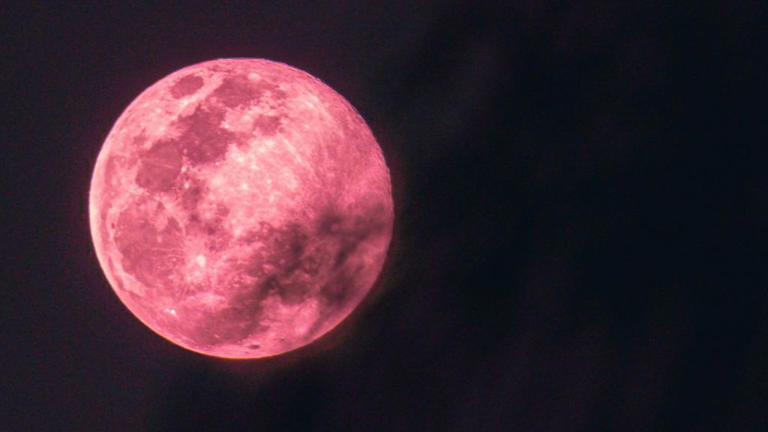
Pink full moon Buddhist lunar observance

A pink full moon in the dark night sky (© InspireMore via msn.com)
.
Let’s keep our eyes on the skies tonight. We don’t want to miss the pink full moon.

According to The Old Farmer’s Almanac, we’ll be able to get the perfect view around 7:49 pm ET. That’s when “peak illumination” occurs.

As full moon peeks above the horizon, it’ll be at its brightest and most vibrant to our eyes.

Where should we go in order to get the best experience during the pink full moon? The Old Farmer’s Almanac suggests heading somewhere with a generous view of the open sky. Find a place where the horizon isn’t obscured by tall buildings or trees.

What’s in a name?

Although the pink full moon will certainly be a beautiful sight, it unfortunately isn’t actually as colorful as it sounds. It will have a rich amber tone at first, but it will fade to the usual silvery white as it rises into the night sky.

One might be wondering why it’s called a "pink moon" if it doesn’t look pink. USA Today reminds us that many of the full moon names we use today come from much older Native American traditions. These names were usually connected to what was happening in nature that month.

What to know about Tuesday night's pink moon? April happened to be the time of year when Phlox subulata, also called creeping phlox or moss phlox, started to bloom. These rosy-hued blossoms were also sometimes called “moss pink,” which is how the pink full moon earned its title.

In February, we watched the “snow moon” ascend into the sky. Last month brought the “worm moon,” whose slightly less appealing name comes from the appearance of worms in nature during early spring.
According to Space.com, next month will bring us the “flower moon.” May's full moon is so named for the many blooms we’ll see during this phase of spring.
Ready to get a good look at the pink full moon tonight? Find a prime viewing spot and keep all eyes peeled at 7:49 pm ET. Find the source of this story’s featured image here. The post Don’t Miss The Pink Full Moon Tonight! Best Times To Watch & More appeared first on InspireMore. Follow on MSN.

In Brief: The Lunar Observance Day
Bhikkhu Bodhi (trans.), Saṁkhitt-ūposatha-Sutta, Aṅguttara Nikāya, "The Book of the Eights" (AN 8.41); edited by Dhr. Seven and Crystal Q., Wisdom Quarterly

If Budai were a buddha, would he fast?
Thus have I heard. On one occasion the Blessed One (the Buddha) was dwelling at Sāvatthī in Jeta’s Grove in the millionaires (Anāthapiṇḍika)’s Park. There the Blessed One addressed the meditators:

“Meditators!”

“Venerable sir!” they replied. The Blessed One said: “Meditators, observed complete in eight factors, the lunar observance (uposatha) is of great fruit and benefit, extraordinarily brilliant and pervasive. And how is it observed complete in eight factors so that it is of great fruit and benefit, extraordinarily brilliant and pervasive?

(1) “Here [within this Doctrine and Discipline], meditators, a noble disciple reflects: ‘As long as they live the fully enlightened (arahants) abandon and abstain from the destruction of life; with the rod and weapon laid aside, conscientious and kindly, they dwell compassionate toward all living beings. Today, for this night and day I, too, shall abandon and abstain from the destruction of life; with the rod and weapon laid aside, conscientious and kindly I, too, shall dwell compassionate toward all living beings. I will imitate the fully enlightened in this respect and observe the fasting day.’ This is the first factor it possesses.

(2) “‘As long as they live the arahants abandon and abstain from taking what is not given; they take only what is given, expect only what is given, and dwell honestly without thoughts of theft. Today, for this night and day, I too shall abandon and abstain from taking what is not given; I shall accept only what is given, expect only what is given, and dwell honestly without thoughts of theft. I shall imitate the fully enlightened in this respect and observe this fasting day.’ This is the second factor it possesses.

(3) “‘As long as they live the fully enlightened abandon sexual activity and observe celibacy, living apart, abstaining from sexual intercourse, the common person’s practice. Today, for this night and day I, too, shall abandon sexual activity and observe celibacy, living apart, abstaining from sexual intercourse, the common person’s practice. I will imitate them in this respect and observe.’ This is the third factor it possesses.

(4) “‘As long as they live they abandon and abstain from false speech; they speak truth, adhere to truth; they are trustworthy and reliable, not deceivers of the world. Today, for this night and day I, too, shall abandon and abstain from false speech; I shall speak truth, adhere to truth; I shall be trustworthy and reliable, not a deceiver of the world. I will imitate them in this respect and observe.’ This is the fourth factor it possesses.

(5) “‘As long as they live they abandon and abstain from liquor, wine, and intoxicants, the basis for heedlessness. Today, for this night and day I, too, will abandon and abstain from liquor, wine, and intoxicants, the basis for heedlessness. I will imitate them in this respect and observe.’ This is the fifth factor it possesses.

(6) “‘As long as they live they eat once a day, abstaining from eating at night and from food outside the proper time. Today, for this night and day I, too, will eat once a day, abstaining from eating at night and from food outside the proper time. I will imitate them in this respect and observe.’ This is the sixth factor it possesses.

(7) “‘As long as they live they abstain from dancing, singing, instrumental music, and unsuitable shows, and from adorning and beautifying themselves by wearing garlands and applying scents and creams. Today, for this night and day I, too, shall abstain from dancing, singing, instrumental music, and unsuitable shows, and from adorning and beautifying myself by wearing garlands and applying scents and creams. I will imitate them in this respect and observe.’ This is the seventh factor it possesses.

(Dylan Sauerwein/Unsplash/InspireMore)
(8) “‘As long as they live they abandon and abstain from the use of high and luxurious beds; they lie down on a low resting place, either a small bed or a straw mat. Today, for this night and day I, too, will abandon and abstain from the use of high and luxurious beds; I will lie down on a low resting place, either a small bed or a straw mat. I will imitate them in this respect and observe this fasting day.’ This is the eighth factor it possesses.

“It is in this way, meditators, that the fasting day is observed complete in eight factors, so that it is of great fruit and benefit, extraordinarily brilliant and pervasive.”
  • Bianca Wooden, InspireMore via MSN.com, April 23, 2024; Bhikkhu Bodhi (suttacentral.org); Dhr. Seven, Crystal Q., Seth Auberon (eds.), Wisdom Quarterly

Saturday, November 25, 2017

Meditation: Five Factors of Absorption


The Absorptions or Zen States
There are eight meditative states of "absorption" (Pali jhana, Japanese zen, Sanskrit dhyana, Chinese ch'an, Vietnamese seon), four material and four immaterial (and in the Abhidharma a ninth beyond feeling and perception).

Five "absorption factors" (jhana-anga) or temporary liberations are crucial to developing the states of meditation that result in profitable types of consciousness corresponding to higher form (rupa, "fine-material") and formless (arupa) worlds, beyond our sensual sphere. They are:
  1. initial-application of attention (vitakka)
  2. sustained-application (vicchara)
  3. joy, rapture, bliss, keen interest, enthusiasm (piti)
  4. happiness, ease (sukha)
  5. single-pointedness of mind (ekaggata)
These five factors are evident in most types of consciousness, even the sensual sphere consciousness of the human plane.

The Five Hindrances
The Five Hindrances (nivarana) are typical of very low, unprofitable states of consciousness and development -- such as the consciousness of animals (and other less favorably born beings), which is saturated with these factors:
  1. craving/clinging
  2. aversion (anger)/fear
  3. drowsiness/lethargy
  4. restlessness/worry
  5. skeptical doubt
    The presence of these hindrances means that mind is conditioned and manipulated by the variegated stimuli around it.

    In opposition to these Five Hindrances are the Five Factors of Absorption. The absorption factors counter and eventually eliminate the hindrances. We can reduce the controlling power of the hindrances to the extent we cultivate the absorption factors.

    The Crossroads
    I can do it this way or that.
    In a sense we are at a crossroads. All of these factors, hindering us or leading us to immediate absorption, are present in our minds/hearts. The question is, "Do we allow the mental hindrances to dominate, or do we develop the absorption factors?"

    The Five Factors of Absorption, or intensification, can liberate the heart/mind. The contest is important. As long as the hindrances predominate, we are likely to see the results in this life and the next. There's immediate woe and rebirth in unfavorable states.

    However, if consciousness is cultivated, raised, and tuned -- developing the absorption factors -- it effortlessly reaches higher levels of consciousness both here-and-now and in the future, wherever we may go.

    The lesson is to regard to the Five Hindrances as an inner or outer undisciplined animal versus a well-trained companion dissuaded from bringing us harm. Regarded in this way, the Five Factors of Absorption are immediately seen as friends, aides, and wondrous powers.

    Sunday, December 4, 2016

    What to do after the breakup?

    Ashley Wells, Wisdom Quarterly; Renewbreakupbootcamp.com

    Why do great women pick people who treat them poorly?
    Smart, beautiful, incredible individuals -- who give 110% to a person who in return is only half-vested, part-time, and approaches the relationship with a “me” not “we” mentality.

    While friends see that our relationship is unhealthy, as does the rational mind, we just can’t seem to get out.

    We know (deep down) that the person is not right for us, but we make justifications and excuses over and again. We stay. We try harder. We’re hooked.
     
    Why does this happen? More Well, it's time to move forward.

    RETREATS TO REWIRE THE HEART

    Going through a breakup?  Or have you experienced emotional distress from a heartache that hasn’t fully healed? 

    There is a "breakup bootcamp" to immerse in an intense and spiritual program designed to heal the heart and help you gain your personal power back. More

    Saturday, December 12, 2015

    Chan Meditation Retreat (Dec. 12 - Jan. 30)

    Lu Mountain Temple with Dharma Master YongHua (ChanPureland.org); Wisdom Quarterly

    Beginning Saturday, Dec. 12, 2015 9:00 PM and running for seven weeks is a free meditation intensive open to the public.

    Lu Mountain Temple (Bodhi Light International), which periodically displays one of the world's largest collections of Buddhist relics (shariras), is holding an intensive chan marathon sitting. 

    Chan is the Chinese pronunciation of the Buddhist term jhana (Sanskrit dhyana, Japanese zen, Vietnamese thiền, Korean seon, Tibetan bsam gtan). It refers to "meditative absorption."


    Left half of Lu Mountain meditation hall (WQ)
    Participants may follow as much of the meditation (nearly 24 hour) schedule as they care to, taking extra rest breaks as needed. Part-time is available (to practice after school or work) is available.

    Sits begin at 2:30 am and run to 11:30 pm with breaks for breakfast, lunch, optional dinner, instructions, rest periods, and restroom visits. More (for free Dharma talks and photos)
    Dharma Master YongHua shows devotees relics in glass container (mahastupa.org)
    Various śarīra from the Buddha and students in the collection of the Maitreya Project (wiki)
    The Buddha's tooth, which keeps growing, covered in colorful glass-like shariras (MS).

    Saturday, July 12, 2014

    VAS: Buddhist "Rains Retreat" period begins

    Wisdom Quarterly; Ven. Abbot Dhammarama, Los Angeles Buddhist Vihara LENT/VAS 2014
    How shall I spend the rainy season, hopping around or meditating? (onebigphoto.com)

    On Sunday, July 13, 2014 from 9:00 am to 4:30 pm, the Los Angeles Buddhist Vihara (LABV) temple will celebrate the commencement of the Rains Retreat period, often called "Buddhist Lent."

    It is a period of intensive practice for monastics and a time when lay practitioners visit temples, monasteries, and pagodas to hear the Dharma (Teachings), engage in devotional activities, meditate, and establish their ties with monastics.

    LABV will have weekly Dharma talks open to all on Sundays followed by Sri Lankan island cuisine. Many visiting monastics will deliver sermons, hold question and answer sessions, and be available to clarify points of controversy and uncertainty regarding the Buddha's teachings.
     
    Sunday is the Super Moon of the ancient month of Asala. The lunar observance for those dressed in white includes an all-day virtue (sila) program where visitors are invited to observe the Eight Precepts for the day according to ancient Indian tradition from at least the time of the Buddha.

    Rains Retreat


    According to the ancient Theravada Buddhist tradition, the Asalha Full Moon Day marks the beginning of the Vas (Vassana) Season. Supporters of the Los Angeles Buddhist Vihara will formally invite the resident monastics to observe Rains Retreat at 5:00 pm. Those observing the Eight Precepts earlier in the day are also invited to attend this auspicious and meritorious event.

    There will be an opportunity to listen to the Dharma and practice meditation to enhance every practitioner's direct knowledge of the  Dharma and develop inner peace during the three months of this season. Weekly programs during this period will be:
    • Dharma sermons,
    • Sutra discussions,
    • Meditation practice,
    • Bodhi devotional ceremonies,
    • Atavisi Buddha puja and more
    Los Angeles Buddhist Vihara
    920 N. Summit Ave., Pasadena. CA 91103
    (626) 797-6144

    But why?
    Wisdom Quarterly wiki edit
    Buddhist monks traversing Pongua Waterfalls in Vietnam (sun-surfer.com)
     
    The three-lunar-month annual retreat observed by Theravada practitioners during the Indian rainy season is called Vassa between July and October. In English, it is often glossed as Rains Retreat or Buddhist Lent, the latter by analogy to the Catholic/Christian Lent (which Buddhism predates by at least five centuries). For the duration of monastics reside at one monastery rather than traveling around. In some monasteries, they dedicate this time to teaching the Dharma or to intensive meditation. Some lay Buddhists choose to observe the period by adopting more ascetic practices, such as giving up alcohol, meat, and smoking if they are already engaged in these harmful activities. It may casually be called "Buddhist Lent," others object to this terminology. It is, after all, more of an obligation for monastics than lay Buddhists. How long someone has been a monk or nun is actually calculated not by calendar years but by how many Rains Retreats one has successfully observed. Most Mahayana Buddhists do not observe it, though many Seon/Thien monastics in Korea and Vietnam observe an equivalent retreat of three months of intensive practice in one location, and in Tibetan Buddhism this period of intensive retreat is called Yarne.