Showing posts with label life of the buddha cartoon. Show all posts
Showing posts with label life of the buddha cartoon. Show all posts
Thursday, August 7, 2025


Saturday, November 2, 2024
The Life of the Buddha (animation)
 |
| He was a real historical person? |
Born to luxury, kept safe and pampered, spoiled and loved, the prince comes to realize that there has to be more to it all. What is the meaning of life? Why are we here? Where are we going? And most pressing, why do living beings suffer?
Sujata saved Siddhartha from overdoing fasting
On account of needing to answer this final question, he sets off on a journey, a quest in search of the Truth. How could he be a leader of people, the Indo-Scythians (Sakas, Shakyas), if he can offer them no escape from the inevitabilities of birth, aging, sickness, death, and rebirth?
This is samsara. And somewhere is liberation (nirvana, moksha). He must set off to find it and bring it back to his family. And that he does. Only in the process, the size of his "family" grows to include all humans and devas and a goodly number of other beings.
- TEXT: Dhr. Seven, Amber Larson, Wisdom Quarterly
Saturday, July 6, 2024
The story of the Buddha in brief
The Story of the Buddha – Prince Siddhartha Gautama – complete

- See U in History
- Art: Marcus Aquino
- Color: Rod Fernandes #Mythology
- #SeeUinHistory #History #mythologyexplained
- Rest® | The Rest is Magic
- See U in History / Mythology, 2/17/24; Amber Larson (ed.), Wisdom Quarterly
Saturday, July 9, 2022
The Power of Life (The Life of Buddha)
Geethanjali Kids - Rhyme and Stories, 10/7/13; Dhr. Seven, Amber Larson (eds.), Wisdom Quarterly
The Buddha Stories: The Power of Life (in the Life of the Buddha)

The Buddha's ideas on freeing devas and humankind from sorrow form the basis of Buddhism.
The Buddha was born in the sixth century BC., into a royal family [likely in Gandhara in modern Afghanistan (ranajitpal.com).
Known as Prince Siddhartha Gautama, he realized that life is full of happiness and disappointment. He rediscovered a path to enlightenment and fulfillment. He is then known as "the Buddha," which means the "Enlightened or Awakened One."
For 45 more years, the remainder of his life, he traveled great distances teaching devas and people the "Middle Path" that avoids the extremes of hedonism and extreme austerities as the way to end all suffering.
As part of this he taught the Four Noble (or Ennobling) Truths:
- Things disappoint.
- There is a cause of this disappointment.
- There is an end of (all) suffering.
- There is a Path to accomplish that.
Here the Buddha comes across a heartless serial killer on a spree. He confronts him and converts him to peace, eventually bringing him all the way to complete enlightenment.
Thursday, July 7, 2022
The Great Battle to become the Buddha
NOTE: The details are all wrong, distorted by Hindu distortions and insertions and the taking of creative liberties by animators not familiar with the Buddha, who had blue eyes, curly hair, and a fine nose, living as he did in Saka or Indo-Scythia next to the future India, which had not yet come into existence. He would travel to Magadha, a kingdom, not "India." Mara, likewise, had three daughters, symbolic of Lust, Delight, and Neglect, but no sons at all. The story of the Buddha's life is well known, so there is little excuse for the errors and oversights. But the gist of the tale is present and quite delightful.
Sunday, June 26, 2022
Who was the ascetic Siddhartha saw?
Geethanjali Kids (animation); Dhr. Seven, Pat Macpherson, Ashley Wells, Wisdom Quarterly
 |
| There have always been nomadic hermits (sramanas) apart from conceited brahmanas. |
.
 |
| Herman Hesse echoes the tale. |
When the prince, living a luxurious sheltered life with his white pony (Kanthaka), three seasonal capitals and palaces, his beautiful young bride (Bimba Devi or Yasodhara), excellent education, and many friends, relatives, and fellow Scythians the Sakas, saw the Four Signs, he knew it was time to leave on a spiritual quest for proto-India.
- ("India" was not a thing until Buddhist Emperor Ashoka united many smaller kingdoms and territories into one country, the Roseapple Land, Jambudvipa, or Bharat. Great Bharat or Mahabharat is said to have long existed, according to the Mahabharata, thousands of years earlier in and around the Indus Valley Civilization, Harappa, Mohenjo-Daro, and a civilization around Gandhara).
 |
| With each rebirth, many troubles follow. |
But he saw a fourth sign (hermit, recluse, renunciate, wandering ascetic, monastic). The question arises, who in the heck was that guy? If the future Buddha, who would awaken seven years later and establish a monastic sangha or community of male and female wandering ascetics, had yet to create saffron robed monks, who was this person?
 |
| Scythian comb from Solokha, 4th century. Scythians were goldsmiths with numerous mines. |
,
It's not a flaw in the story. It's an indication how far back the tradition of wandering asceticism or shramanas (shamans, who seek direct experience of the divine, knowledge and vision). Even in those times and in that place Brahmins (the high caste temple priests of the Vedic religion, Brahmanism, and later Hinduism) existed.But here far in the northwest frontier of future-India, Brahmins were subordinated to nobles or warrior caste individuals like the Sakas, an exceedingly proud and haughty recently settled nomadic people from Sakastan in Scythia around modern Afghanistan (Bamiyan, Mes Aynak, and Kabul as likely the three seasonal capitals of what is collectively called Kapilavastu or Kapilavatthu, Kapil = Kabul. See ranajitpal.com).
So what was the ancient practice of spiritual nomads, the wandering ascetics that existed in the Scythia of the Sakas even before Prince Siddhartha (the future Buddha) was born?
Scythian religion
Who was this pre-Buddhism wandering ascetic (sramana) who inspired Siddhartha to seek the direct experience of Truth and set up an organization so that men and women could do the same and come to realization in this very life?

They inhabited Central Asia and the Pontic–Caspian steppe in Eastern Europe throughout Classical Antiquity, spoke the Scythian language (itself a member of the Eastern Iranian language family), and which included:
- the Alans,
- the Scythians proper,
- the Sarmatians,
- the Sindi,
- the Massagetae, and
- the SAKA (the Buddha's Sakas, Shakyas, Indo-Scythians, Indo-Sakas, speakers of Pali).
What little is known of the religion is drawn from the work of the 5th century Greek historian and ethnographer Herodotus. Scythian religion is assumed to have been related to the earlier Proto-Indo-Iranian religion, and to have influenced later Slavic, Hungarian, and Turkic mythologies, as well as some contemporary Eastern Iranian and Ossetian traditions. More
Wednesday, August 19, 2020
Bhikkhu Bodhi: The Buddha's Mission
True Tube (The Enlightenment of the Buddha); Bhikkhu Bodhi "The Buddha and his Dharma" (accesstoinsight.org) edited by Dhr. Seven, Pat Macpherson, Wisdom Quarterly
2. The Buddha's Mission
 |
| The Zen Awards (Bizarro by Pizarro) |
For we live at a time when Buddhism is exerting a strong appeal on an increasing number of people, particularly those whose level of education and capacity for reflection has made them indifferent to the claims of revealed religions.
I believe the remarkable success of Buddhism, as well as its contemporary appeal, can be understood principally in terms of two factors. One is the aim of the teaching, and the other is its methodological features.
(i) The Aim of the Teaching
Unlike the so-called revealed religions, which rely on faith in unverifiable doctrines, the Buddha formulated a teaching in a way that directly addresses the critical problem at the heart of human existence — the problem of suffering.
It promises that those who follow this path of practice to its culmination will directly realize here and now while alive the highest wisdom and security. All other concerns apart from this, such as dogmas, metaphysical subtleties, rituals, and rules of worship, the Buddha brushes aside as irrelevant to the task at hand, the unraveling of the problem of why we suffer.
This pragmatic thrust of the Dharma is clearly illustrated by an incident related in the texts. Once a Buddhist monk named Malunkyaputta was pondering the great metaphysical questions — whether the world is eternal or non-eternal, infinite or finite, and so on — and he felt unhappy because the Buddha had refused to answer them.
So one day Malunkyaputta went to the Buddha and told him, "Either you answer these questions for me or I leave the order!"
The Buddha then told Malunkyaputta that the spiritual life did not depend on answers to these questions, which were mere distractions from the real challenge of practicing the path.
The Buddha then compared the metaphysician to a person struck by a poisoned arrow. When relatives bring a surgeon, the person tells the doctor, " I won't let you remove the arrow until you tell me the name of the person who struck me, the type of bow used, the material from which the arrow was made, and the kind of poison used..."
That person would die, the Buddha said, before the arrow was removed. So, too, a metaphysician, struck with the arrow of suffering, will die without ever finding those answers or the path to freedom. [But with freedom also comes direct knowledge of these imponderable questions.]
The Buddha makes suffering the focus only because liberation from all suffering is the goal. It is the focus of this teaching. He deals with the problem of suffering in a way that reveals an extraordinary degree of psychological insight.
Like some kind of a psychoanalyst, the Buddha traces suffering (disappointment, unsatisfactoriness, lack of fulfillment) to its roots within our minds/hearts, to our craving and clinging, and shows that the cure, the final solution to the problem of suffering, is achieved in our minds.
To gain freedom from rebirth and suffering, it is futile to pray to the gods, to worship objects, to become attached to rituals and ceremonies.
Suffering arises from our mental defilements, so we have to purify our minds of these defilements, from greed, hatred, and delusion. This requires profound inner honesty. More
Friday, November 22, 2019
The Story of Amitābha Buddha (video)
Aputi via Dharmachakra Wheel of the Dharma; CC Liu, Dhr. Seven (eds.), Wisdom Quarterly
 This is the sutra of the historical Buddha’s alleged (apocryphal) teaching on Amitabha.
This film was completed in October 2011 by aputi.com. The Sutra of the Buddha’s Teaching on Amitabha (Part 1/5) is a high-quality production adopting new “3D+2D” animation technology with a total runtime of 30 minutes.
The Story of Amitābha Buddha (Part 1/5)
This is the sutra of the historical Buddha’s alleged (apocryphal) teaching on Amitabha.This film was completed in October 2011 by aputi.com. The Sutra of the Buddha’s Teaching on Amitabha (Part 1/5) is a high-quality production adopting new “3D+2D” animation technology with a total runtime of 30 minutes.
It was originally donated by several famous movie stars, such as the Chen Xiaoxu and other public figures. From 2005 to 2011 the makers overcame many difficulties and finally finished the first part of the film. Then work on the second part began. In the meantime the first part of the film was being remade being rendered in full high-definition to be a finer quality and more brilliant picture.
The filmmakers express sincere gratitude to the contribution of donors and agencies and also welcome more people to join the donor system for creating and printing discs. goo.gl/cD2R6c
- To donate and sponsor: goo.gl/NVYYpP
- Caption author Portuguese: Roberto Ferreira (Brazil)
Tuesday, February 13, 2018
"The Enlightenment of the Buddha" (video)
Animation by Ceiren Bell (TrueTube); Amber Larson, Ashley Wells, Wisdom Quarterly
 Why do we get old, get ill, and die? How can we escape suffering? This is the story of how Prince Siddhartha Gautama left a life of royal luxury to embark on a spiritual quest, a search for ultimate answers. This is how he eventually became the Buddha "the Awakened or Enlightened One."
Thursday, March 16, 2017
How to be a cartoon artist (animation)
Wikihow.com; IntrovArt; Crystal Quintero, CC Liu, Wisdom Quarterly

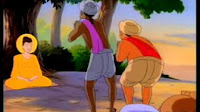 In the world of cartoons and drawing there are hundreds of styles and different types unique to the artist -- (like Butch Hartman or Craig McCracken or Lauren Faust. Then there's anime and manga, with the many styles that come along with them from Naruto to Bleach. If an artist likes all of these styles, and they are fun to duplicate and draw, how will you develop an independent style that is uniquely you? Well, it's easier than you think. More


How to Develop a Unique Cartoon Style
 In the world of cartoons and drawing there are hundreds of styles and different types unique to the artist -- (like Butch Hartman or Craig McCracken or Lauren Faust. Then there's anime and manga, with the many styles that come along with them from Naruto to Bleach. If an artist likes all of these styles, and they are fun to duplicate and draw, how will you develop an independent style that is uniquely you? Well, it's easier than you think. More
 |
| "The Republican Guide to Screwing the Working Class" (jensorensen.com) |

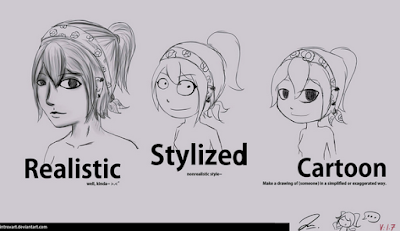
(IntrovArt) My art teacher told us to draw three different types of drawing styles: realistic, stylized, and cartoon. So this is what I've done with updates.. Maybe it's useful for someone to download as a reference or something. More

- Loud sound may pose more harm than once thought (AP) NY - Matt Garlock has trouble making out what his friends say in loud bars, but when he got a hearing test, the result was normal. Recent research may have found an explanation for problems like his, something called "hidden hearing loss."
- Criminal LA Sheriff's disgrace, ignominy -- case goes to jury, which will find him guilty on all counts Criminal, Latino, once a beloved public figure in Calfornia before he began engaging in corruption, protecting the common street crimes of his deputies, felonies under color of uniform, and lying about it. Thanks, double-scumbag, Sheriff Baca.
- California police use fire hose on man before killing him (AP) - OC Police in Southern California fatally murdered a man who they say pulled an unseen knife after he was forced from his locked vehicle by blasts from a fire hose and shot with less lethal projectiles. The man locked himself in the minivan...
- VIDEO: What if I want to Eat Pray Love?
 2 ex-Penn State officials plead guilty in child-sex scandal (AP) - Two former Penn State administrators accused of covering up child sexual abuse allegations against convicted child rapist Jerry Sandusky pleaded guilty to reduced charges Monday, more than five years after the scandal rocked the university and led to the downfall of football coach Joe Paterno.
Thursday, January 5, 2017
"Life of the Buddha" (cartoon)
Ashley Wells, Crystal Quintero (eds.), Wisdom Quarterly; Lasantha Roshan (video)

 |
| Are you a god, a human...? No, I am awake. |
This is an allegorical, legendary tale of how young [Scythian/Shakyian] Prince Siddhartha renounced the luxurious life of the palace to go on a quest to make an end of ALL suffering.
First he had to discover what "suffering" (dukkha) is, second its cause (ignorance, aversion, and greed, fear), third its solution (the path), and finally practice the path to full realization. The story of the Buddha has been embellished and mythologized all in the service of its message.
 |
| Oh, Ziggy, will you never learn!? |
It is not a historical documentary the way we would record it today, but instead an mystic and heroic of how we can all journey to discover that what the Buddha found is relevant to ALL who suffer and are motivated to make an end of all suffering.
The suffering is not happening by accident or chance. It is being caused. It will continue so long as it remains unseen and unaddressed. But just seeing the problem is not enough. One must take up the path-of-practice that leads to serenity and insight and culminates in enlightenment (bodhi) and nirvana (liberation).
A Young People's Life of the Buddha
Ven. Silacara, A Young People's Life of the Buddha (accesstoinsight.org)
A Young People's Life of the Buddha
Ven. Silacara, A Young People's Life of the Buddha (accesstoinsight.org)
- Birth
- Boyhood
- Youth
- Leaving Home
- Compassion
- First Endeavors
- Success
- Making Known the Teaching
- Sigala
- [Chief male disciples, counterparts to the nuns Khema and Uppalavanna] Sariputta and Moggallana
- [Hometown:] Kapilavatthu
- Daily Life
- [Foster mother/aunt] Maha Pajapati
- Wonder-working
- Discourses (sutras)
- The Kindness of the Buddha
- ["Judas" in-law] Devadatta
- [Final passing into nirvana] Mahaparinibbana
Friday, May 20, 2016
"The Life of the Buddha" (video)
QuanTheAmThienVien (video); G.P. Malalasekera (text); Teri Mei, CC Liu, Wisdom Quarterly
 |
| Buddha Hall in luminous rainbow colors (Tapas Ghosh/tapasphotography/flickr.com) |
 |
| The Buddha (theoracle-ejhamilton) |
The Buddha was the son of a ruler,
descendant of a long line of famous ancestors, chief of Kapilavatthu [Afghanistan, Central Asia, northwest of India].
His mother was Mahā Māyā Devi, Suddhodana's chief consort, and he belonged to the Gotama family.
Before being conceived he was reborn in Tusita heaven, waiting for the time for
his rebirth in his last life. Then, having made the "five investigations"
(pañcavilolcanāni), he took leave of his celestial companions and descended
to earth. (According to the Lalitavistara he appointed the Bodhisatta Maitreya [the future Buddha]
as king of Tusita in his place).
(National Buddhist Authority Srilanka) BBC documentary "The Life of the Buddha"
Many wondrous and marvelous events attended
his conception and birth. (Given in the Acchariyabbhutadhamma Sutra, M.iii.118f;
also D.ii.12f. A more detailed account is found in J.i.47ff; both the Lai. and
the Mtu.ii.14ff differ as to the details given here of the conception and the
birth).
 |
| Earliest human representation of the Buddha. |
The conception takes place on the full-moon day of āsālha, with the moon in
Uttarāsālha, and his mother Queen Maya has no relations with her husband the king. She has a marvelous
dream in which the Bodhisatta (Buddha-to-be) in the form of a white double tusker royal elephant enters her womb from the
side.
When the dream is mentioned to the Brahmin priests, they foretell the birth of a
son who will be either a world ruler (universal monarch) or a fully enlightened teacher (Buddha). An earthquake takes
place and 32 signs appear, presaging the birth of a great being. The
first of these signs is a boundless light flooding every corner of the
10,000 worlds. Everyone beholds its glory, even the fires in all the lowest (avici) hells
being extinguished.
Ten lunar months after conception, in the month of Vesak (Visākha),
Queen Māyā wishes to visit her parents in Devadaha. On the way there from
Kapilavatthu she passes the beautiful Lumbini Grove, where she desires to
wander. She goes to a great sal tree and seizes a branch in her hand; labor
pains start immediately, and, when her courtiers retire, having drawn a curtain
around her. While standing, she delivers the child. It is the day of
the full moon of Vesak; four Great Brahmas (Gods) receive the babe in a golden net, and
streams of water spontaneously rain down from the sky to wash him. More
Tuesday, December 10, 2013
"Buddha 2" of trilogy at The Louvre (video)
Dhr. Seven (trans.), CC Liu (ed.), Wisdom Quarterly; Louvre; AnimeAnime.jp; Yushi Makari (OtakuMode.com); Kevin Ouellette (Eigapedia); Domenico (Debris2008); Ashley Wells (ed.)


Tuesday, October 22, 2013
If I were the Buddha (video and cartoon)
Pat Macpherson, Ashley Wells, Dhr. Seven, Wisdom Quarterly
 |
| Great Buddha, central Buddhist Island, Kandy, Sri Lanka (Tam Church/flickr.com) |
 |
| Photog Tam Church in Sri Lanka |
If I were a buddha the first thing I would do is enjoy it. When the historical Buddha gained great enlightenment -- maha bodhi, the awakening of a supremely enlightened teacher rather than just the liberation of a disciple arhat -- he is reputed to have said:
"I who wept with all my brothers' tears laugh and am glad for there is liberty!" There is a way to the "end of all suffering," to nirvana.
There is a problem: things are unsteady, unreliable, aching, heart breaking, disappointing, unfulfilling, lacking any kind of lasting satisfaction. That is a big problem. Is there a bigger solution? If there is there has to be a cause(s) of all this disappointment (dukkha).
(SubscriptionFreeTV) David Grubin documentary, narrated by
Richard Gere, about the Buddha's life, full of great art and sculptures across two millenia. There are insights into the ancient narrative by contemporary Buddhists, including
Pulitzer Prize winning poet W.S. Merwin and the Dalai
Lama. Learn more about meditation, the history
of the Dharma, and how to incorporate the Buddha's teachings on
compassion and wisdom into daily life.
 |
| Buddha drawing (Arkiharha/flickr.com) |
The ascetic Siddhartha rediscovered that there is a cause (craving rooted in ignorance) and therefore a way out. There is a solution: nirvana, freedom, liberation (moksha), emancipation.
If I were a buddha, the second thing I would do is formulate my own Four Ennobling Truths. Real nobility is not a Boston Brahmin birthright. It is based on one's actions in this life. Some karma ennobles us, some debases, some is neutral and leaves us just the same.
Sanskrit, Pali, Prakrit, Magadhi -- the Buddha's languages and dialects might have readily understood negatives. English cannot. Their connotations are too pessimistic, gloomy, emphasizing the wrong thing. For example, when in English we say, "It's not that we don't like you..." we don't like you, even as we're saying we don't dislike you. Double negatives confuse the mind, which does not seem to happen in these Asian languages. So my Four Noble Truths would become:
- There is liberation from suffering.
- There is a Way to liberation.
- There is a big problem (suffering).
- There is a cause of the problem.
The medical establishment of the day, Ayurvedic or Allopathic, might not like it. But I think the people would appreciate the emphasis on liberty.
 |
| The Buddha cartoon |
The third thing I would do after enjoying it and formulating my Dharma dispensation in a nutshell is start kicking some reptilian (naga) butt and demonic (yaksha) derriere like Saint Sakka/Saint Michael, not violently but rather like Maha Moggallana's display to subdue a disgruntled dragon when the Buddha and others ascended into space.
Tuesday, October 1, 2013
Institute preserves the Dharma (cartoon)
Amber Larson, Dhr. Seven, Wisdom Quarterly; Chancellor Ashin Nanissara, S.I.B.A., Burma
(Bemineto99) Looking down from the Tusita world, the Bodhisat decides to take rebirth on Earth, strive for enlightenment, and establish the Dharma to relieve beings of suffering.
 |
| Burmese monastic (Perakman) |
During the intervening 45 years he taught, toured the “Middle Land” (Northeastern India) -- expounding the Dharma (Doctrine, sutras, Conventional Teachings), Abhidharma (Ultimate Teachings), and Vinaya (Disciplinary Code) for the benefit of all humans and devas.
Dharma forms the guiding light of daily practice. The Abhidharma is the systematic treatment of Buddhist psychology and physics in language more precise than the discourses. The Monastic Disciplinary Code is a collection of rules, their origin and explanations,
etiquette guidelines, and disciplinary (parliamentary, democratic) procedures for monastic living.
Long after the Buddha made an end of suffering, the Dharma,
Abhidharma, and Vinaya live on to guide others wishing to also make an end of all suffering. As long as they remain in practice, we to that extent a supremely wise teacher with us. The
Buddha taught by extraordinary perception, revealing what he directly
saw as helpful and harmful on the path to enlightenment (awakening from delusion) and liberation (nirvana).
This is of great benefit to all humankind and to beings on adjacent superior and inferior planes of existence. To promote the quality of conceptual understanding of sometimes very subtle teachings, he and later commentators taught the Abhidharma, which are the Ultimate Teachings abstracted and systematized from the conventional language of the discourses (sutras).
To help all who would help themselves overcome disappointment and misery and gain satisfaction and peace, the Buddha taught a path-and-practice we now call the Dharma [always capitalized to distinguish it from the multivalent Sanskrit term dharma]. Most of what we know about what the Buddha taught comes from ordinary discourses -- surviving in standardized form appropriate to oral transmission and memorization rather than writing and reading.
 |
| BotanischerGarten Hamburg, Germany, KleinFlottbek Buddha (JinxHH/flickr) |
These sutras -- recorded in Pali, Sanskrit, and Prakrit (Magadhi) -- often appear to us as stilted, artificial, and redundant tautologies more than actual instructions or natural threads (sutras, sutures, i.e., strings of related ideas). This is because they were never meant to stand alone the way a book might today. They were chanted, explained, and studied; they make sense as shorthand reminders of the teachings, which are much broader and detailed instructions the Buddha and early disciples provided.
The Nuns' Teachings

This is a tragedy because the Buddha designated two chief female disciples, Khema Theri and Uppalavana Theri, who must have taught just as his chief male disciples Sariputra Thera and Maha Moggallana Thera did.
- The Buddha brought people to the Path, then newly ordained monks were brought to stream entry by Sariputra and arhatship by Maha Moggallana. It then makes sense that the wise nuns Khema and Uppalavana served these functions for female disciples.
These three major collections are known as the “Three Baskets” (Tri-Pitaka). These divisions
have, in the absence of the Buddha, been rightly viewed and regarded as teacher,
trainer, mentor, and guide to enlightenment (bodhi) and the final end of suffering (nirvana). They may be likened to the invisible presence of the Buddha as a
universal teacher existing wherever these three are preserved and put into practice.
Those who esteem the Buddha are therefore well versed in these three main divisions of the teaching.
The Six Buddhist Councils
Three months after the Buddha's final nirvana,
the First Buddhist Council was convened in Rajagaha (Rajgir, India). The congress was attended by a large number
of monastics, all fully enlightened (arhats) with the additional
analytical knowledges (patisambhida). Maha Kassapa led this Council of Elders (theras and theris). He offered three major points:
 |
| Studying monk (ChristyB30/flickr) |
1) Teachings (Doctrine or Discipline) the Buddha not taught should not be offered by monastics. 2) Those teachings taught by the Buddha should neither be deleted, augmented, nor edited by monastics. 3) Those teachings the Buddha taught should be followed by monastics.
Therefore, the knowledge, belief, and practice of
strictly following the historical Buddha's Doctrine and Discipline became known as
Theravada (“Teaching or School of the Elders,” the “Elders” being the
enlightened monastics of the time. The Noble Sangha
is, of course, composed of many accomplished laypeople as well, but
these are not considered elders since they have not gone forth into
monasticism).
The Second Council was held in 100 B.C.E. in Vesali
and was attended by 700 monastics. It was co-led by Sabbakami Thera and Yasa Thera.
The Third Council took place in 236 B.C.E. in
Pataliputra (which Dr. Ranajit Pal places much farther to the west) and was attended by 1,000 monastics. It was led by Tissa Thera.
 |
| The Buddha, Indonesia (Luxquarta/flickr) |
The
first, second, and third of these councils
were held in greater India
and were attended exclusively by enlightened "Indian" monastics. (How
far did Greater India extend, did it encompass modern Iran or only come
up to its eastern border?)
The Fourth Council was held in Sri Lanka in 540 B.C.E. and was
attended by 500 monastics. It was
led by Dhammarakkhita Thera. Another
significant difference between the previous councils and the fourth one was
that up until this time, the monastics had put the Tripitaka (Three Baskets) down in
writing on bundled ola palm leaves.
In 240 B.C.E., the Fifth Council was held in Mandalay (Burma)
and was attended by 2,400 monastics. It was
led by Jagara Thera. The outstanding
fact was that there was no Sangayana for 2,000 years between the Fourth and Fifth Councils. During the Fifth
Council the three divisions of the Dharma were carved on giant marble slabs, filling
729 of them, each measuring six feet by four feet.
The Fourth Council had been attended only by Sri
Lankan monastics. The Fifth was attended
only by Burmese monastics.
Most of the modern literature that attempts to
explain the Buddha’s teachings is merely the interpretation and inference of respective a author(s). This is a great
loss for those who have never tasted the “authentic” teaching.
Consequently, Sitagu International Buddhist Academy (S.I.B.A.) has Romanized and translated the authentic Three Baskets of the Sixth Council, in which learned monastics from five Theravada countries participated along with monastics from some Mahayana countries. This has been done for worldwide dissemination for the benefit of those interested in tasting the essence of the Dharma.
Consequently, Sitagu International Buddhist Academy (S.I.B.A.) has Romanized and translated the authentic Three Baskets of the Sixth Council, in which learned monastics from five Theravada countries participated along with monastics from some Mahayana countries. This has been done for worldwide dissemination for the benefit of those interested in tasting the essence of the Dharma.
Sabbadanam Dhammdanam Jinati
"May knowledge, belief, and practice of the truth
shine forth in every corner of the world!"
S.I.B.A. - Sitagu International Buddhist Academy
S.I.B.A.
formed a governing board, a Board of
Admonishing Masters, consisting of 15 Burmese monks to provide
spiritual guidance: U Sobhita, U Kumara, U Vimalabhivamsa, U Supannindabhivamsa, U Pandita, U Vimalacara, U Acinna (the most venerable Pa Auk Sayadaw), U Janinda, U Agghiya, U Sumangala, U
Sajjanabhivamsa, U Samvarabhivamsa, U Narada, U
Jotikabhivamsa, and U Kavisara.
Subscribe to:
Posts (Atom)