Showing posts sorted by relevance for query michael pollan. Sort by date Show all posts

Friday, February 20, 2026

Michael Pollan on Consciousness (NPR)

Michael Pollan’s journey to understand consciousness through Zen and science

Author, explorer Michael Pollan
Science journalist [Buddhist meditator, and American Zen practitioner under Roshi Joan Halifax* at Upaya Zen Center in Santa Fe, New Mexico] Michael Pollan has written extensively about the therapeutic benefits of mind-altering psychedelics (lit., "mind-making" substances, which may also be entheogens, hallucinogens, and psychoactive drugs).

His new book, A World Appears: A Journey into Consciousness, asks the central question: What is consciousness?
  • Joan Halifax ( with now toxic Dalai
    Lama cropped out except for arm)
    *Joan Halifax collaborated on LSD research projects with her ex-husband Stanislav Grof in the 1970s, in addition to other collaborative efforts with Joseph Campbell and Alan Lomax. She is founder of the Ojai Foundation in California, which she led from 1979 to 1989. As a socially engaged Buddhist, Halifax has done extensive work (palliative care) with the dying through her Project on Being with Dying, which she founded. She is on the board of directors of the Mind and Life Institute, a non-profit organization dedicated to exploring the relationship of science and Buddhism.
“Consciousness has kind of become the secular substitute for the soul [Ancient Greek psyche as in psychology and psyche-delic],” Pollan tells interviewer Terry Gross.

Pollan also talks about current studies on consciousness and whether other animals, plants, bacteria, algae, and programmed hardware/software combinations known as "artificial intelligence" have or can eventually have consciousness. More + AUDIO
NEW BOOK: A World Appears: A Journey into Consciousness

A World Appears: A Journey Into Consciousness
Buddhist author Michael Pollan has a Number 1 best seller in Consciousness & Thought Philosophy. From the #1 New York Times bestselling author of How to Change Your Mind, a panoptic exploration of consciousness—what it is, who/what has it, and why—and a meditation on the essence of our humanity.

When it comes to the phenomenon that is consciousness, there is one point on which scientists, philosophers, and artists all agree: It feels [not thinks] like something to be us. Yet the fact that we have subjective experience (sentience) of the world remains one of nature’s greatest mysteries.

How is it that our mental operations are accompanied by [perceptions,] feelings, thoughts, and a sense of "self"?

American Joan Halifax
What would a scientific investigation of our inner life look like, when we have as little distance and perspective on it as fish do of water in the sea?

In A World Appears, Michael Pollan traces the unmapped continent that is consciousness, bringing radically different perspectives—scientific, philosophical, literary, spiritual and psychedelic—to see what each can teach us about this central fact of life.

When neuroscientists began studying consciousness in the early 1990s, they sought to explain how and why three pounds of spongy [tofu like] gray matter could generate a subjective point of view—assuming that the brain is the source of our perceived reality.

Pollan takes readers to the cutting edge of the field, where neuroscientists are entertaining more radical (and less materialist) theories of consciousness.

Plants are conscious, sentient
He introduces us to “plant neurobiologists” searching for the first flicker of consciousness in plants, scientists striving to engineer feelings into AI, and psychologists and novelists seeking to capture the felt experience of this slippery stream of consciousness.

In Pollan’s dazzling exploration of consciousness, he discovers a world far deeper and stranger than this everyday reality.

Eye-opening and mind-expanding, A World Appears takes us into the laboratories of our own brains and minds, hearts and feelings, ultimately showing us how we might make better use of the gift of awareness to more meaningfully connect with the world and what we assume to be our deepest selves. More: A World Appears

See all formats and editions for savings. Book comes out Feb. 24, 2026. Pre-order price guarantee. Named a "most anticipated book of 2026" by The New York Times, TIME, and Oprah Daily.
  • Guest Michael Pollan, Terry Gross, Tonya Mosley, Adam Staniszewski, NPR.org, Feb. 19, 2026; Dhr. Seven, Pat Macpherson, CC Liu (eds.), Wisdom Quarterly

Tuesday, May 15, 2018

The "new science" of psychedelics (NPR)

Michael Pollan, (NPR); Ananda M., Dhr. Seven, Jen B. (eds.), Wisdom Quarterly
Michael Pollan is out with a new book about the science behind psychedelics.

"Reluctant psychonaut" Michael Pollan embraces the "new science" of psychedelics
Host
Author Michael Pollan had always been curious about psychoactive plants, but his interest skyrocketed when he heard about a research study in which people with terminal cancer were given a psychedelic called psilocybin -- the active ingredient in "magic mushrooms" -- to help them deal with their distress.
Fresh Air"This seemed like such a crazy idea that I began looking into it," Pollan says.

Long-Term Effects Of Psychotropic Drugs Are 'Cloaked In Mystery'"Why should a drug from a mushroom help people deal with their mortality?"
 
Pollan, whose previous books include The Omnivore's Dilemma and In Defense of Food, started researching different experimental therapeutic uses of psychedelics, and found that the drugs were being used to treat depression, addiction and the fear of death.
The '60s Are Gone, But Psychedelic Research Trip ContinuesThen he decided to go one step further: A self-described "reluctant psychonaut," Pollan enlisted guides to help him experiment with LSD, psilocybin, and 5-MeO-DMT, a substance in the venom of the Sonoran Desert toad.
 
Each of Pollan's experiences with psychedelics was proceeded by worry and self-doubt. But, he says, "I realized later that was my ego trying to convince me not to do this thing that was going to challenge my ego."
 
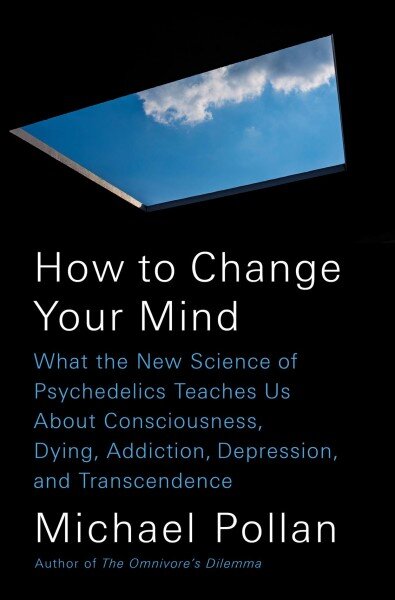
How to Change Your Mind
Pollan's new book, How to Change Your Mind: What the New Science of Psychedelics Teaches Us About Consciousness, Dying, Addiction, Depression, and Transcendence, recounts his experiences with the drugs and also examines the history of psychedelics as well as their possible therapeutic uses. More + AUDIO

Tuesday, July 6, 2021

Pollan: "This is your mind on [drugs as] plants"

Ananda (Dharma Buddhist Meditation), Pat Macpherson, Dhr. Seven (eds.) Wisdom Quarterly
.
This Is Your Mind on Plants (audiobook)
From number-one New York Times bestselling author and Berkeley graduate Michael Pollan comes a radical challenge to how we think about drugs.

This is an exploration into the powerful human attraction to psychoactive plants called entheogens rather than hallucinogens and the equally powerful taboos against them.

Of all the things we humans rely on plants for -- sustenance, beauty, medicines, fragrances, flavors, fibers -- surely the most curious is our use of them to change our consciousness to:
  • delude ourselves
  • stimulate ourselves
  • calm ourselves
  • fiddle with ourselves
  • completely alter the qualities of our mental experience...
Entheogens (psychedelicsangha.org)
Take coffee and tea, for example. People around the world rely on caffeine to temporarily sharpen their minds. But we do not usually think of caffeine as a “drug,” or our daily use as a chronic “addiction,” because it is legal and socially acceptable.

So, then, what is a “drug”? And why, for example, is making tea from the leaves of a tea plant acceptable, but making tea from the seedpod of an opium poppy a serious federal crime?


In This Is Your Mind on Plants, popular researcher and author Michael Pollan dives deep into three plant drugs: morphine (garden poppy opium), caffeine (tea leaves and coffee beans), and mescaline (San Pedro cactus and peyote cactus buds) -- and throws the fundamental strangeness, and arbitrariness, of our thinking about them into sharp relief, the:
  • upper (stimulant)
  • downer (sedative)
  • outer (hallucinogen).
The New Science of Psychedelics (M. Pollan)
Exploring and participating in the cultures that have grown up around these drugs while consuming (or, in the case of caffeine, trying not to consume) them, Pollan reckons with the powerful human attraction to psychoactive plants.

Why do we go to such great lengths to seek these shifts in consciousness, and why do we then fence in that universal desire with laws and customs and fraught feelings?

In this unique blend of history, science, and memoir, as well as participatory-journalism, Pollan examines and experiences these plants from several very different angles and contexts.

Harvard U's Dr. Timothy Leary tried to tell us.
He shines a fresh light on a subject that is all too often treated reductively as a drug -- whether licit or illicit.

But that is one of the least interesting things you can say about these plants, Pollan shows, for when we take them into our bodies and let them change our minds, we are engaging with Nature in one of the most profound ways we can.

Based in part on an essay published almost 25 years ago, this groundbreaking and singular consideration of psychoactive plants and our attraction to them through time holds up a mirror to
  • our fundamental human needs and aspirations,
  • the operations of our minds, and
  • our entanglement with the natural world. More + AUDIO
DETAILS
  • Listening length: 7 hours and 37 minutes
  • Author/Narrator: Michael Pollan
  • Release date: Today, July 6, 2021
  • Publisher: Penguin Audio
  • Program type: Audiobook
  • Version: Unabridged
  • Language: English
  • ASIN: B08RF1K2LD
  • Best sellers rank: #8 in Audible Books and Originals (See Top 100)
  • #1 in Religion & Spirituality (Books)
  • #1 in Ecology (Books)
  • #1 in Drug Dependency Recovery

Friday, June 1, 2018

How to Change Your Mind: Psychedelic Science

Michael Pollan (Change Your Mind); Ananda M., Dhr. Seven, C. Quintero, Wisdom Quarterly
How to Change Your Mind: What the New Science of Psychedelics Teaches Us About Consciousness, Dying, Addiction, Depression, and Transcendence (May 15, 2018)
.
Base of consciousness=heart
It's a #1 New York Times bestseller! From the acclaimed author of The Botany of Desire: A Plant's-Eye View of the World, The Omnivore's Dilemma, and Food Rules: An Eater's Manual, this is a brave and brilliant investigation.
 
It looks into the medical and scientific revolution taking place around psychedelic drugs -- and the spellbinding story of Michael Pollan's own life-changing psychedelic experiences.

When he set out to research how ENTHEOGENS like LSD and psilocybin (the active ingredient in magic mushrooms) are being used to provide relief.

They can be used to help people suffering from difficult-to-treat conditions such as depression, addiction, and anxiety, he did not intend to write what is undoubtedly his most personal book.

But upon discovering how these remarkable substances are improving the lives not only of the mentally ill but also of healthy people coming to grips with the challenges of everyday life, he decided to explore the landscape of the mind in the first person as well as the third.

So began a singular adventure into various altered states of consciousness, along with a dive deep into both the latest brain science and the thriving underground community of psychedelic therapists.

Pollan sifts the historical record to separate the truth about these mysterious drugs from the myths that have surrounded them since the 1960s.

That's when a handful of psychedelic promoters inadvertently catalyzed a powerful backlash against what was then a promising field of research.

A unique and elegant blend of science, memoir, travel writing, history, and medicine, How to Change Your Mind is a triumph of participatory journalism.

Electric Kool-Aid Acid, man. Thanks, CIA.
By turns dazzling and edifying, it is the gripping account of a journey to an exciting and unexpected new frontier in our understanding of the mind, the self, and our place in the world.
 
The true subject of Pollan's "mental travelogue" is not just psychedelic [psyche = mind or soul, delic = making] drugs but also the eternal puzzle of human consciousness and how, in a world that offers us both suffering and joy, we can do our best to be fully present and find meaning in our lives. More

Monday, March 22, 2021

Exploring the Frontiers of Psychedelics (video)


Michael Pollan: Exploring the Frontiers of Psychedelics
(Tim Ferriss, March 21, 2019) "An overactive ego is a tyrant." - Michael Pollan (@michaelpollan), the author of seven previous books, including Cooked, Food Rules, In Defense of Food, The Omnivore's Dilemma, and The Botany of Desire, all of which were New York Times bestsellers.

A longtime contributor to The New York Times Magazine, he also teaches writing at Harvard and the University of California at Berkeley where he is the John S. and James L. Knight professor of science journalism. In 2010, TIME magazine named him one of the 100 most influential people in the world.

His new book is How to Change Your Mind: What the New Science of Psychedelics Teaches Us About Consciousness, Dying, Addiction, Depression, and Transcendence.

Check out "Trip of Compassion," a compelling movie that documents one unusual approach to healing trauma that might astonish: an innovative treatment involving the psychoactive drug MDMA (commonly known as “ecstasy”). Seen firsthand, if therapy is well designed, true rebirth and transformation can happen in a matter of weeks.

Tuesday, August 16, 2022

Psychedelics change minds (Michael Pollan)

How to Change Your Mind 2022 | TV-MA | Season 1 | TV show based on book author Michael Pollan's How to Change Your Mind leads the way in this docuseries exploring the history and uses of psychedelics, including LSD (ergot or rye fungus), psilocybin (magic mushrooms), MDMA (ecstasy), and mescaline (San Pedro and peyote cacti). How to Change Your Mind | Netflix

Monday, May 6, 2024

The unseen world of plant intelligence (NPR)

Plant and fungi kingdoms are conscious and communicate? Yes! Once one said to me, "Go outside and sit in the dirt." I was inside a Buddhist meditation next to the garden that I could see through big windows. I didn't understand why it was so insistent. Then I realized that it sits.
.
The Light Eaters: How Unseen World of Plant Intelligence Offers New Understanding of Life on Earth
India's J.C. Bose gets too little credit for founding the scientific study of plant consciousness and intelligence. Fortunately, Paramhansa Yogananda documented Bose's scientific contributions in Chapter 8 of his famous book Autobiography of a Yogi. This eventually led to the publication of the mind-blowing The Secret Life of Plants.

More recently, Michael Pollan took a deep dive with This is Your Mind on Plants. Emma Farrell published Journeys with Plant Spirits about the details and real secrets of plants. Now there is more amazing science and shamanism looking at our plant cousins.

Author Zoë Schlanger releases an amazing book of botanical research tomorrow, May 7, 2024. Plants are aware and intelligent.  They have a secret life! We can hardly wrap our minds around the idea, but science reveals what many from the Buddha to St. Francis of Assisi to female scientists always intuited. This book is a #1 best seller in Ecology from pre-orders. The author appeared on NPR on May 6.
  • “A masterpiece of science writing.”
    –Robin Wall Kimmerer, author of Braiding Sweetgrass
  • “Mesmerizing, world-expanding, and achingly beautiful.”
    –Ed Yong, author of An Immense World
  • “Rich, vital, and full of surprises. Read it!”
    –Elizabeth Kolbert, author of Under a White Sky and The Sixth Extinction
  • “A brilliant must-read. This book shook and changed me.”
    –David George Haskell, author of Sounds Wild and Broken, The Songs of Trees, and The Forest Unseen
This forest is enchanted. I'm not alone here.
Award-winning Atlantic staff writer Zoë Schlanger delivers a groundbreaking work of popular science that probes the hidden world of the plant kingdom and reveals the astonishing capabilities of the green life all around us.

It takes tremendous biological creativity to be a plant. To survive and thrive while rooted in a single spot, plants have adapted ingenious methods of survival.

In recent years, scientists have learned about their ability to communicate, recognize their kin and behave socially, hear sounds, morph their bodies [like a space alien chameleon squid under the sea] to blend into their surroundings, store useful memories that inform their life cycle, and trick animals into behaving to their benefit, to name just a few remarkable talents.

The Light Eaters is a deep immersion into the drama of green life and the complexity of this wild and awe-inspiring world that challenges our very understanding of agency, consciousness, and intelligence.

Journeys with Plant Spirits (Emma Farrell)

Plants/shrooms are alive on another frequency.
In looking closely, we see that plants, rather than imitate human intelligence, have perhaps formed a parallel system.

What is intelligent life if not a vine that grows leaves to blend into the shrub on which it climbs, a flower that shapes its bloom to fit exactly the beak of its pollinator, a pea seedling that can hear water flowing and make its way toward it?

Zoë Schlanger (Heather Sten/Harper Collins)
Zoë Schlanger
takes us across the globe, digging into her own memories and into the soil with the scientists who have spent their waking days studying these amazing entities up close.
What can we learn about life on Earth from the living things that thrive, adapt, consume, and accommodate simultaneously?

More importantly, what do we owe these life forms once we come to understand their rich and varied abilities?
Examining the latest epiphanies in botanical research, Schlanger spotlights the intellectual struggles among the researchers conceiving a wholly new view of their subject, offering a glimpse of a field in turmoil as plant scientists debate the tenets of ongoing discoveries and how they influence our understanding of what a plant is.

We need plants to survive. But what do they need us for — if at all? An eye-opening and informative look at the ecosystem we live in, this book challenges us to rethink the role of plants — and our own place — in the natural world.

Healing with Medicinal Plants of the West (Chumash Cecilia Garcia, USC Prof. James Adams)
Plants know. Isn't this exactly what we've always been trying to tell the White Man?

Tuesday, May 15, 2018

Consciousness on Psychedelic "Medicines"

Michael Pollan, Terry Gross (NPR); Ananda, C. Quintero, CC Liu (eds.), Wisdom Quarterly
Your Brain On Psilocybin Might Be Less Depressed

What the New Science of Psychedelics Teaches Us About Consciousness, Dying, Addiction, Depression, and Transcendence
The way [psilocybin is] being used [by research scientists] is in a very controlled or guided setting.

Set and Setting
"...They [scientists] don't just give you a pill and send you home; you're in a room. You're with two guides, one male, one female. You're lying down on a comfortable couch.

What do you want, monsters?
"You're wearing headphones listening to a really carefully curated playlist of music -- instrumental compositions for the most part -- and you're wearing eye shades, all of which is to encourage a very inward journey.

"Someone is kind of looking out for you, and they prepare you very carefully in advance. They give you a set of "flight instructions," as they call them, which is what to do if you get really scared or you're beginning to have a bad trip.

What are you here to teach me, monster?
"If you see a monster, for example, don't try to run away.

"Walk right up to it, plant your feet and say, 'What do you have to teach me? What are you doing in my mind?'

"And if you do that, according to the flight instructions, your fear will morph into something much more positive very quickly."
 
On how psychedelics can help change the stories we tell about ourselves
"The drugs medicines foster new perspectives on old problems. One of the things our mind does is tell stories about ourselves.

"If you're depressed, you're being told a story perhaps that you're worthless, that no one could possibly love you, you're not worthy of love, that life will not get better.

"And these stories -- which are enforced by our egos really -- trap us in these ruminative loops that are very hard to get out of. They're very destructive patterns of thought.
"What the drugs plant-medicines appear to do is disable for a period of time the part of the brain where the self talks to itself.

"It's called the default mode network, and it's a group of structures that connect parts of the cortex -- the evolutionarily most recent part of the brain -- to deeper levels where emotion and memory reside.

Do drugs, mostly psychedelics, not too much. 
-Pollan's feared future tombstone engraving
Time travel
"And it's a very important hub in the brain and lots of important things happen there: self-reflection and rumination, time travel.

"It's where we go to think about the future or the past, and theory of mind, the ability to imagine the mental states of other beings and, I think, most importantly, the autobiographical self.

It's a whole new way to look at cyclic time.
"It's the part of the brain, it appears, where we incorporate things that happen to us, new information, with a sense of who we are, who we were and who we want to be. And that's where these stories get generated. And these stories can be really destructive, they trap us.

"...This network is downregulated [with psychedelics], it sort of goes offline for a period of time. And that's why you experience this dissolution of self or ego, which can be a terrifying or liberating thing, depending on your mindset.

"This is what allows people, I think, to have those new perspectives on themselves, to realize that they needn't be trapped in those stories and they might actually be able to write some new stories about themselves.

"That's what's liberating, I think, about the experience when it works.

On how psychedelics can help dying people face their deaths
How A Psychedelic Drug Helps Cancer Patients Overcome AnxietyProzac [a toxic fluoride SSRI synthetic antidepressant] doesn't help when you're confronting your mortality [susceptibility to death, being mortal].

"But here we have something [in entheogens] that occasions an experience in people -- a mystical experience [which Alan Watts describes as coming from the root word mu or mum, shush, that which can't be spoken] that somehow makes it easier to let go.

"And I think some of it has to do with the fact that you do experience the 'extinction' of yourself and it's kind of a rehearsal for [pleasant] death.

"And I think that may be part of what helps people, that they [these entheogenic substances] expand their sense of what is your self-interest. And your self-interest is something larger than what is contained by your skin. And when you have that recognition, I think dying becomes a little easier.... 
LSD Gets Another Look As Alcoholism Treatment
"There's no way to prove this, obviously, and it's a question that really troubled me as an old-fashioned materialist skeptical journalist.

"It's like, 'What if these drugs are inducing an illusion in people?' I got a variety of answers to that question from the researchers. One was, 'Who cares if it helps them?' And I can see the point of that.

"The other was, 'Hey, this is beyond my pay grade; none of us know what happens after we die.' And others say, 'Well, this is an open frontier.'...

"The experiences that people have are very real to them -- they're psychological facts. And one of the really interesting qualities of psychedelic experience is that the insights you have on them have a durability...

"This isn't just an opinion; this is revealed truth, so the confidence people have is hard to shake, actually.
On a Johns Hopkins study on the use of psilocybin to help people quit smoking
"Smoking is a very hard addiction to break [by design, thanks to the Tobacco Industry]. It's one of the hardest addictions to break.

"[I wanted to understand] how, after a single psilocybin trip, they could decide, 'I'm never going to smoke again' based on the perspective they had achieved."
"And they would say things like, 'Well, I had this amazing experience. I died three times. I sprouted wings. I flew through European histories. I beheld all these wonders [past life memories?].

"I saw my body on a funeral pyre on the Ganges. And I realized, the universe is so amazing and there's so much to do in it that killing myself seemed really stupid.'

"And that was the insight. Yes, killing yourself is really stupid -- but it had an authority it had never had. And that, I think, is the gift of these psychedelics.
 
On his own experience tripping on magic mushrooms

"I had an experience that was by turns frightening and ecstatic and weird. ...I found myself in this place where I could no longer control my perceptions at all.

"And I felt my sense of self scatter to the wind -- almost as if a pile of Post-Its had been released to the wind -- but I was fine with it. I didn't feel any desire to pile the papers back together into my customary self...."

Howard Bloom started '60s?
"Then I looked out and saw myself spread over the landscape like a coat of paint or butter. I was outside myself, beside myself, literally, and the consciousness that beheld this...was not my normal consciousness, it was completely unperturbed. It was dispassionate. It was content, as I watched myself dissolve over the landscape.

"What I brought back from that experience was that I'm not identical to my ego, that there is another ground on which to plant our feet, and that our ego is kind of this character that is chattering neurotically in our minds.

"And it's good for lots of things. I mean, the ego got the book written, but it also can be very harsh, and it's liberating to have some distance on it. And that was a great gift, I think."
  • Sam Briger and Seth Kelley produced and edited this interview for NPR broadcast. Bridget Bentz, Molly Seavy-Nesper, and Scott Hensley adapted it for the Web.