Sit with it. With what? With whatever arises. Notice it. Label it dispassionately, disinterestedly, without getting caught up in "subject-object fixations," as Pema Chodron calls them.
What is "objective" reality while sitting? We don't know. What is subjective reality? That we know.
We react to what we think is objective. That's our subjective interpretation, ultimately unreal, based on our mental fabrications (sankhara) and storehouse of cognitions.
Witness how mind arises -- resisting and swatting at the unpleasant, grasping at and clinging to whatever's pleasant, and being bored by (spacing out, falling asleep, dissociating from) anything neither-pleasant-nor-painful (neutral).
This is mindfulness meditation. Detach a little. It's impersonal anyway. Combined with serenity, such meditating leads to bliss (piti), which is beyond all sensuality and effervescent/energizing like levitating. Watch it without attachment until equanimity manifests.
Q: My menstrual period is uncomfortable, and it can be messy and disheartening. Can I meditate through it?
A: Yes. We feel you. Disposable tampons are no solution. Pads with "wings" are little better. We tried menstrual (deva) cups and reusable pads, which work. But they, like tampons, need application (shoving). Ugh.
Now we use common red shop rags folded and placed inside briefs; they're easy to wash cotton and really cheap by the dozen, like cloth diapers but more discreet. Now there's something even more convenient.
What's the answer to this refreshing time?
Period underwear or "Thinx" [like Spanx for the thinking gal] now come in styles that absorb up to four tampons’ worth. Just look at models posing in while wearing hi-waist style underwear. There's even a Love Your Period Set, featuring three crush-worthy undies.
How do Thinx work? These period undies look and feel like regular underwear but are built to absorb.
Try them risk-free. Period better. There's free shipping on the first order with an account and a 60 day money-back guarantee with free, no-hassle returns. Get started with a few favorites from other people with periods.
How much? Hiphugger ($34) holds up to two regular tampons' worth, as do the Boyshort ($39) and Hi-Waist ($38).
Let’s period better together. Get period inspiration, see new styles, and smash the taboo with SheThinx.com on Instagram (@shethinx). What does a period with Thinx look like? Share your experience using #Thinx.More
Laura Newberry, James Queally (Los Angeles Times, latimes.com, Feb. 24, 2020 9:15 am); Ashley Wells, Seth Auberon, Crystal Quintero, CC Liu (eds.), Wisdom Quarterly
Weinstein, the convicted rapist, was immediately hauled off to jail hospital (Toronto Times).
.
Harvey Weinstein found guilty of rape in sexual assault trial
But I haven't been convicted in L.A. yet.
NEW YORK, New York - Harvey Weinstein was found guilty of rape and a felony sex crime today (Feb. 24), marking a climactic end to a [very rape-centric] high-profile case that in some ways serves as vindication of the #MeToo Movement.
Those two counts were connected to individual allegations made by Mimi Haley, a former Weinstein Co. production assistant, and Jessica Mann, a once-aspiring actress.
Weinstein was acquitted on the two most serious charges of predatory sexual assault, which each carried a potential life sentence.
Weinstein, 69, appeared to be staring ahead while a half-dozen court officers surrounded him just after the verdict was delivered. The movie producer struggled to get up from his seat as he was handcuffed and escorted out of the courtroom.
I can't believe I have to go to jail right away.
Judge James Burke ordered Weinstein to be held in custody until his sentencing March 11.
Manhattan District Attorney Cyrus Vance Jr. listed the names of the six accusers who testified during the trial, as well as the prosecutors who brought Weinstein to justice, Joan Illuzzi-Orbon and Meghan Hast.
“These are eight women who pulled our justice system into the 21st century,” Vance told a swarm of reporters.
Weinstein’s lead attorney, Donna Rotunno, said Weinstein was “shocked” and that he would appeal the decision.
The jury deliberated for five days after listening to weeks of emotional testimony from a half-dozen women who said that the fallen Hollywood titan used his influence and the promise of potential acting roles to lure them to isolated locations, where he then forced himself on them after they resisted his advances.
One in hand, how many still in bush?
Prosecutors did not have forensic evidence or corroborating witnesses to any of the assaults, and Weinstein’s defense attorneys had insisted each alleged encounter was consensual. But after a case that was in many ways considered the culmination of the #MeToo movement, the jurors ultimately chose to believe the women’s accusations over the protestations of their alleged rapist.
Though the charges were based on the allegations of two women, the shadow of the many others who had come forward loomed over the case from the start. Jurors were chosen specifically for their professed ability to ignore media coverage and decide the case based only on evidence heard in court.
During the six-week trial, a physically diminished Weinstein shuffled in and out of a 15th-floor courtroom with the aid of a walker. He appeared stoic as six accusers testified; they faced hours of cross-examination, and some broke into tears as they recounted their alleged encounters with the once formidable movie producer.
Weinstein did not testify in his own defense, so prosecutors were unable to interrogate him about his alleged conduct. More
(MARCA) Ruptly is live from Los Angeles today (Monday, February 24, 2020) as over 20,000 fans arrive at the Staples Center for a planned tribute to NBA legend Kobe Bryant and his daughter Gianna, who lost their lives in a helicopter crash last month with seven others.
"The Celebration of Life for Kobe and Gianna Bryant" saw nearly 90,000 people apply for tickets, outstripping supply four-fold, and the L.A. Police Department has threatened strongly advised the public to avoid the downtown area as the memorial service takes place. Tributes have flooded in for Bryant from across the world since the January 26th helicopter crash, which also claimed the lives of six other passengers and one pilot, who seems to be at fault. An investigation into the crash has been launched by two federal government agencies, with focus expected to fall on bad weather, mechanical failure, or pilot error. Suscríbete al canal de Marca (bit.ly/2J0YIm6).
New video shows Kobe Bryant's helicopter before crash
CBS Los Angeles is on all Kobe Bryant news.
Federal investigators are looking at new clues about the final moments of the ill-fated helicopter flight that ended in tragedy for nine people, including former Lakers' basketball player Kobe Bryant. They say all the wreckage has been removed from the crash site and is being sent out of state for analysis.
Newly surfaced video taken before the crash appears to show the aircraft in mid-flight, before it crashed into the Calabasas hillside. Whether the copter crashed on that hillside or the next, it was doomed due to the way the pilot was speeding in blinding fog and descending at 184 MPH points out Kris Van Cleave, who reports on the ongoing investigation. CBS This Morning (Facebook).
(DD News) Well hated U.S. President Donald John Trump joins beloved right wing Hindu nationalist leader Prime Minister Nerendra Modi in addressing #NamasteTrump at Motera Stadium in Ahmedabad, India. Trump believes this is the largest gathering in the history of India, when it is less than 1% of the size of India's largest, the Kumbha Mela events, which are the largest human gatherings for any purpose. But don't tell Trump, as his ego might not be able to handle the truth. PM Modi is the Trump of India, like Duterte in the Philippines.
Namaste Trump: Why is Trump in India?
(Crux+, Feb. 19, 2020) U.S. Pres. Trump's visit to the AMC (Ahmedabad Municipal Corporation) stadium tweeted a series of "Namaste Trump" posts. Pres. Trump and PM Modi will visit Sabarmati Ashram where Gandhi is interred along the 22 km-long route from the airport for a roadshow of 50,000 lining the way.
Mrs. Trump and husband, John, visit Muslim Taj Mahal, Agra, India
A chance encounter with members of the Ku Klux Klan led black jazz musician Daryl Davis on a quest to determine the source of their hatred.
His unorthodox, yet simple approach, wielded surprising results, and it just might be the solution for all racial discourse.
Davis graduated from Howard University with a degree in jazz. As a pianist, vocalist, and guitarist, he performs nationally and internationally with The Daryl Davis Band. He has also worked with such notables as Chuck Berry, Elvis Presley’s Jordanaires, The Legendary Blues Band, and many others.
In 1983, a chance occurrence after one of his performances led him to befriend a member of the KKK. This eventually led Davis to become the first black author to travel the country interviewing KKK leaders and members, all detailed in his book, Klan-Destine Relationships.
Today, Davis owns numerous Klan robes and hoods, given to him by active members who became his friends and renounced the organization.
Since his journey began Davis has joined an all-white country band, attended KKK rallies, and accepted a “certificate of friendship” from the Traditionalist American Knights of the KKK.
He’s even the godfather of former Klan Imperial Wizard Roger Kelly’s granddaughter. Davis has received the Elliott-Black and MLK Jr. awards as well as numerous other local and national awards for his work in race relations.
He is often sought by media outlets as a consultant on the KKK and race relations. He is also an actor with stage and screen credits, appearing in the critically acclaimed HBO police drama The Wire.
Most recently, he was the subject of the documentary Accidental Courtesy, which filmed his real life encounters with Ku Klux Klan and neo-Nazi leaders as he helps dismantle racism across the United States.
This talk was delivered at a TEDx event using the TED conference format but independently organized by a local community. Learn more at ted.com/tedx.
RIDE Channel (theridechannel.com) Skateboarding in Afghanistan, the idea sounds crazy, doesn't it? By 2015 there were over 750 skateboarders in Afghanistan -- nearly half of them girls. How did that happen? In a place where the female literacy rate is 13%, where girls' access to education, let alone sports, is nearly nonexistent, Skateistan girls are doing it all. Here's the incredible story of skateboarding in Afghanistan. SKATEISTAN.ORG
Video produced by Intersportnet.com. "PUSH" is RIDE Channel's way of supporting YOUR work and getting it seen by the largest audience possible with a PUSH from Ride's social media network. If you filmed your friend getting hit by a cop car, created a short documentary, or you made the best homie skate video, send it to RIDE. If you're selected, you'll get a little money and your video will get a big PUSH. To submit for PUSH, go to theridechannel.com/push.html.
Golden (Estelle Getty, Betty White, Bea "Maude" Arthur, Rue McClanahan) Girls, Lifetime TV, 2003; Best Clips of the Golden Girls; Ashley Wells, Sheldon S., Seth Auberon, Wisdom Quarterly
Just like the title song says, "Thank you for being a [TV] friend," Golden Girls. Leave it to schmaltzy Lifetime TV way back in 2003 -- 11 years after the final episode originally aired -- to bring us to tears with funny Estelle Getty & Company. HD TV this is not, but real "friends of Dorothy" won't mind, ha ha.
The strangest thing is that Estelle Getty was the youngest person on the cast playing the eldest, and she was the first to go in real life.
Look, American TV is not that good, most of the time, but it's all we've got to stitch together a unified "culture."
Now in the Golden Age of TV with binge-watching and Netflix, it's a little better. But with 600 shows to pick from, no one gets general references like they used to. It's the Post-Ironic Age. Then there's Maude, was, and Mary Tyler Moore.
The closest thing to a cultural comedy: DNC cheating for Pete Buttigieg
"Any blue will do unless it's an old socialist Jew." Trump's second term.
She went to the original Buddhist texts of the Pali canon (in the language the Buddha spoke, Magadhi, as preserved by Theravada Buddhists), shamanic literature, and Jungian psychology.
It shows that there is a pattern, a common thread, in the development of a shaman cross culturally.
Prince Siddhartha Gautama renounced the throne and the world to become a wandering ascetic, a shramana or "shaman."
He earned the title the Buddha, "the Enlightened One," by his great awakening, after practicing alone following his training with yogis and fellow ascetics in the wilderness.
His development follows this pattern. The book argues that our consciousness is naturally shamanic.
Buddhist Shaman Spring Washam leads plant journeys into the Amazon (insightLA.org).
Mr. + Mrs. Earl Nightingale; Steven Green; Ashley Wells, Kelly Ani, CC Liu, Wisdom Quarterly
I would tell you how I made this money, but you'd have to pay me. (I work at the mint).
Steven Green testimony: I was given this record when I was 13, back in 1974. The first time I listened to it, it changed my life. I listened to it again and again then read books like Think and Grow Richby Napoleon Hill.
Since the first time I heard it, I have never been the same. Because of the motivation Earl Nightingale and Napoleon Hill taught me, I was the first in my family to graduate from college and left with a double major from one of the top U.S. universities.
Ten years after graduating, I was a CPA and owned millions of dollars worth of real estate I rented out. Ten years after that, I sold most of my real estate and paid my investors according to our agreement. I walked away with millions of dollars after taxes.
Best of all, I read the Christian version of the Jewish Bible and started believing in the Jesus in it. That was 22 years ago, although I come from a Jewish family. "God" [the Universe and me and my karma] gave me everything I have but used Earl Nightingale to motivate me to make it happen.
What I learned from this recording is the greatest lesson there is after knowing how God saved me and has a place in his deva kingdom waiting for me after he dismisses me from this prison life on earth.
Go with the flow, the drift of things, sailing rather than rowing. Wu Wei. What is the "Way," the Tao? Is it Nirvana (the altogether gone beyond, gone beyond beyond)?
Is it Brahman (godhead, GOD)? Is it Nature (Mother Nature, Gaia, Bhumi)? Is it Suchness (tathata, thusness,tattva, thatness, the that thou art)?
Or is it just this (this being, this continued becoming, samsara)? Spiritual entertainer and British Zen Buddhist, Hindu, Taoist philosopher Alan Watts says it is not forcing. Here he speaks on Wu Wei or "the principle of not forcing anything in life."
Let's blend knowledge of Western chemical medicine and Native Chumash herbal plant remedies to help cure pain.
Healer Cecilia Garcia was a Chumash medicine woman who collaborated with a Western doctor at the University of Southern California.
Dr. James Adams, a pharmacologist at USC, learned the healing techniques of the Chumash people -- Southern California Native Americans who lived from Malibu to Ventura -- to teach them as part of his regular college classes.
Dr. Adams earned his Ph.D. in comparative pharmacology and toxicology at the University of California at San Francisco in 1981. Since then he’s written more than 200 articles for lay and academic audiences.
Dr. Adams became interested in the medicinal uses of native plants in 1994. He was taking his son out on Boy Scout walks when he began to realize that all of the native plants they encountered had been used by local Native Americans for thousands of years.
Dr. Adams set out to find an authentic Native American herbalist from which to learn. After a lengthy search, he found Chumash medicine woman Cecilia Garcia.
Dr. Adams became Garcia’s student in 1998. He studied the intricacies and underlying belief structures of Chumash healing traditions with her.
“I was her apprentice for 14 years,” says Dr. Adams. “I worked with her on every aspect of healing — making medicine, gathering medicine, leading hikes, leading talks, leading religious ceremonies, and more.
“She taught me about the medicine and the Chumash religion. She taught me how to interview patients and reach a diagnosis. She taught me the traditional way to treat a patient. We spent many hours and days together, sometimes just the two of us out hiking. We went from Davis to Ensenada and many places in between.”
Nature’s Way
Co-author Dr. James Adams, Ph.D. in pharmacology, University of Southern California
.
Dr. Adams and Native Medicine Woman Garcia eventually collaborated to produce the book Healing with Medicinal Plants of the West (2005). The fully illustrated text describes the chemistry of the plants that were used by the Chumash for medicine and generally used throughout the American West.
Since their collaboration Dr. Adams and healer Garcia led about 100 walks and workshops to teach Native American uses of healing herbs, until Garcia’s untimely passing in 2012.
Dr. Adams was also instructed by Ted Garcia, the chief of the Chumash, his brother Dennis Garcia, their father Ted Garcia, Frank Lemos, and many other Chumash people.
Dr. Adams points out that he is accepted by Chief Garcia and the Chumash people who follow him as a healer, though there are some Chumash people who do not accept him.
I asked Dr. Adams whether he was cynical about the medical profession: Does he believe that Western doctors are more concerned about making a buck [selling treatments rather] than actually healing a patient?
“Neither,” he told me. “Doctors are simply working on a false preconceived notion that herbs are not strong enough to deal with certain physical conditions. But believe me, some herbs are just as strong as any patent medicines out there.”
He adds that there is a lot of good medicine being practiced, but not with the use of opioids for pain. In fact, their use is not only counter-productive, but sometimes deadly, with at least 67,000 people dying every year in the US from their misuse, and that figure continues to rise.
According to Dr. Adams, doctors work from the premise that people should try to control pain by using the drugs that affect the brain. They tell the patient, let’s try x, or y, or z, and when those don’t work, they try opioids, like Vicodin.
Opium: Afghan flowers
American troops move in to protect the poppy fields, the source of heroin production.
.
The British created Chinese addicts.
Dr. Adams explains that opioids are compounds synthesized based on the chemistry of the herb opium (Afghan poppy plant). This is highly addictive and has never been shown to cure chronic pain.
This is all based on the notion that we need to cure the pain in our brain, but the brain only processes pain signals from the skin. More than 95 percent of the body’s pain receptors are in the skin.
"Why have doctors gotten this so wrong?" I ask. Dr. Adams tells me that the prevailing theory is still that the brain is the center of all pain, that pain can be combated by giving the patient drugs that suppress pain detectors in the brain.
“That’s the prevailing notion,” Dr. Adams explains, “but the pain comes from the skin.” The brain might process pain, but we still need to treat the pain in the skin. “When a child skins their knee, do they quickly grab their brain, or do they grab their knee?” he asks wryly.
That form of treatment may have been based on the best of intentions, but it is not working, Dr. Adams has learned. “Think of a carpenter who can’t do a job with his hammer. What does he do? He gets a bigger hammer. In medicine, pain is often treated with ibuprofen and naproxen. But when that doesn’t work, the doctor has a bigger hammer — opioids. And some doctors just go right to that bigger hammer.”
Chumash healer Cecilia Garcia taught Dr. Adams about traditional ways of dealing with pain, among other things. “Cecilia taught me how to make and use liniments from black sage and sagebrush. And as a result of working with several hundred patients over the years, I have seen that these are great pain killers, which also have the ability to deal with chronic pain.”
Dr. Adams added science to his collaboration with Garcia by explaining medically why the Chumash systems work.
“Most modern Western-trained people do not want to believe that the Indian medicines are efficacious [effective]. I have learned how these herbs worked. It took me a lot longer to learn how they cure chronic pain,” he said, adding that he has written several academic papers on this topic.
Two of his papers are “Chronic pain – can it be cured?” (Journal of Pharmaceutics and Drug Development) and “Control of pain with topical plant medicines” (Asian Pacific Journal of Tropical Biomedicine).
“Everyone says they feel pain in their organs, but it is almost always in the skin. So you put this herb liniment from native herbs on your skin, and the pain is gone. Even kidney stone pain can be treated with the sage brush liniment,” he explains.
“We need to learn how to treat pain correctly, and we are not doing that correctly with oral medicines,” says Dr. Adams. “When I was a boy, everyone knew how to take care of themselves when it came to the most basic everyday medical issues, like using sassafras, yerba santa, and other common herbs. But no one seems to know any of this anymore.”
Through his writings and teachings, Dr. Adams hopes to bring back the notion that the body can heal itself if we allow it to do so. Everyone should take charge of his/her health and not assume that any doctor can “heal” us.
Dr. Adams readily admits that there are some cases that his black sage or sage brush liniment doesn’t entirely cure, but there are no side effects, as in the case of opioids.
He cites an example of a 77-year-old woman with terrible hip arthritis. “She has been making the sagebrush liniment and applying it every day for the last five years, and she says that it keeps her going. Her pain is relieved. And there are dozens of other patients who treat themselves this way, and none have ever reported any incidents of toxicity.”
Dr. Adams points out that there were six top herbs used by the Chumash in healing:
Mugwort
sagebrush
white sage
black sage
bay
yerba santa.
These are described in detail in their book. There is a comprehensive scope and depth to Dr. Adams’ teaching, yet he usually emphasizes that he’s not healing anyone. He’s only making it possible for the body to heal itself.
Dr. Adams has also been compiling testimonials to demonstrate the efficacy of the healing methods he practices.
“Even if a person is told by [his or her] doctor that there is nothing the medical profession can do and that you will die, I say, you are still alive. Your body can heal itself. Don’t give up,” Dr. Adams encourages. “Learn to live in balance.”
Christopher Nyerges is the author of over 20 books including Guide to Wild Foods and others on botany, healing, survival, and self-reliance in the outdoors. He conducts regular wild food classes: schoolofself-reliance.com
What's wrong with me, Les? Let me explain, in just 51 seconds, everything that's holding you back. Let's hear it! But first, you had cancer?
Legendary motivational speaker Les Brown has overcome the most profound challenges. Over the course of his incredible life, he has gone from being labelled "mentally retarded" and working menial jobs to inspiring audiences of as many as 80,000 people at a time. On this episode of Impact Theory with Tom Bilyeu, Les Brown shares the truth about how we all have to fail our way to success. He also details his strategies for improving his mindset, explains exactly how he transformed the story he tells himself about himself, and talks about how to deal with negative thoughts and negative people.
Life is a battle for territory [3:07]
Les discusses his battle with cancer, which he has been winning for over 20 years [4:35]
Les explains how he changed his beliefs and the stories he told himself about himself [7:21]
Les shares his experience with prejudice, and how he learned to have hope [11:53]
Les explains how the dominant culture dismantles people’s creativity and sense of self [17:15]
Les describes the most important lessons about success he ever learned [19:46]
Les strongly advocates embracing your own uniqueness [22:53]
Don’t live the life that was given to you by your circumstances [26:40]
Les strongly recommends reading, changing your social circle, and finding a mentor [29:13]
Les makes some surprising book recommendations [32:23]
Les talks about holding negative thoughts in check [33:31]
Les details his strategy for continuously improving his mindset [35:43]
Les shares the impact his mother had on his life [37:25]
Les tells the story of how he learned to be unstoppable [43:02]
Les advocates listening, telling stories, and orchestrating an experience [45:37]
Les shares the impact he wants to have on the world [47:30]
QUOTES
“Someone’s opinion of you does not have to become your reality.” [21:34]
“Life is a fight for territory. Once you stop fighting for what you want, what you don’t want will automatically take over.” [3:45]
“No excuse is acceptable.” [24:18]
“You will fail your way to success.” [24:46]
“If your achievements outgrow your sense of self, you will unconsciously engage in self-destructive behavior.” [36:59]
“If information could change people, everybody would be skinny, rich, and happy.” [46:59]
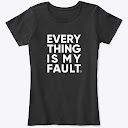
If you'll accept that you are responsible for everything in your life, you suddenly have all the power to change it. Most excuses out there are perfectly valid, but they rob us of our power to develop our success. Don’t we secretly wish that success were in our control? Well, it absolutely is, and we can do anything we set our minds to, without limitations. So stop blaming everyone else. Repeat this: “Everything is my fault.” Own it. Then relentlessly attack goals with purpose. Custom designed graphic is printed in vivid color and high resolution using state of the art color transfer technology. Shirts are made from super soft 100% preshrunk cotton. Printed in the USA. Guaranteed to last through hundreds of washes.
The process of putting together this incredible Global Summit program is coming down to the final weeks for anyone to save up to 57% on tickets.
Super Early Bird tickets are available here. Come for a choice of one to five days. Here's a quick look at what's happening each day:
June 3: Pre-Summit Daylong Leadership Training, led by David Peterson, director of leadership development and executive coaching at Google, and Jeremy Hunter of the Peter F. Drucker School of Management
June 4: Summit Day 1: Mindful Leadership Forum, featuring 15+ speakers
June 5 and 6: Summit Days 2 and 3: Mindfulness and Compassion in the Workplace and Society, featuring 35+ speakers
June 7: Post-Summit Daylong Compassion Training with Sharon Salzberg, co-founder of Insight Meditation Society
Benefit from case studies, success stories, cutting-edge best practices, practical tools and strategies, and lots of inspiration.
Plus, the Summit includes mindfulness and compassion practices, mindful movement, opportunities to meet up in small groups, networking, social events and having fun.
The deadline to save up to 57% is Friday, February 28th. So get tickets right now. People are coming from more than 20 states and a dozen countries to join this Los Angeles event exploring the powerful roles mindfulness and compassion in elevating leadership, improving the workplace, and transforming society.
All materials on this site are submitted by editors and readers. All images, unless otherwise noted, were taken from the Internet and are assumed to be in the public domain.
In the event that there is still a problem, issue, or error with copyrighted material, the break of the copyright is unintentional and noncommercial, and the material will be removed immediately upon presented proof.
Contact us by submitting a comment marked "private."
Do not follow this journal if you are under vinaya or parental restrictions. Secure protection by Sucuri.
Wisdom Quarterly: American Buddhist Journal is licensed under a Creative Commons Attribution-Noncommercial-Share Alike 3.0 United States License. Permissions beyond the scope of this license may be available at creativecommons.org/about/licenses.