Showing posts with label brain structure. Show all posts

Thursday, September 28, 2023

Archeologists discover 476K y.o. structure

KSAT 12, Sept. 22, 2023; Pat Macpherson, Ashley Wells (eds.), Wisdom Quarterly

(KSAT 12) Archeologists have discovered a 476,000-year-old structure, thought to be oldest known wooden structure in the world. Read more: ksat.com/tech/2023/09/20...

Researchers from two United Kingdom universities have discovered what they say is the oldest known wooden structure, which they found at the Kalambo Falls, in Zambia, Africa.

At almost 500,000-years-old (half a million), it predates the emergence of Homo sapiens or modern humans. The archeologists think the two large logs they found were joined together to make a structure, possibly the foundation of a platform or part of a dwelling.

Prof. Larry Barham, from the University of Liverpool’s Department of Archaeology, said whoever built this structure “transformed their surroundings to make life easier, even if it was only by making a platform to sit on by the river to do their daily chores. These folks were more like us than we thought.”

12 most amazing archeological finds scientists still can't explain

(Lightning Top) March 18, 2022: There are a lot of questions archeologists have to try to answer when they come across an ancient artifact or site. How old is it? Who made it? Why did they make it? What was it used for? There are times when they can answer these questions quite easily, but there are also times when the answers are much harder to find. All the discoveries about to be shown in this video belong to the second category.

#Amazing #Mysterious #ArchaeologicalFinds #ScientistsStillCan'tExplain #EverSee #Compilation #LightningTop

For copyright matters, advertising, and other questions, please contact: lightningtopchannel@gmail.com. Subscribe ► bit.ly/2knsQP7

Tuesday, January 9, 2018

The Buddha's BLUE eyes not blue, says science

Fiona MacDonald (ScienceAlert.com, 1/18); Amber Larson, Dhr. Seven (eds.), Wisdom Quarterly

.
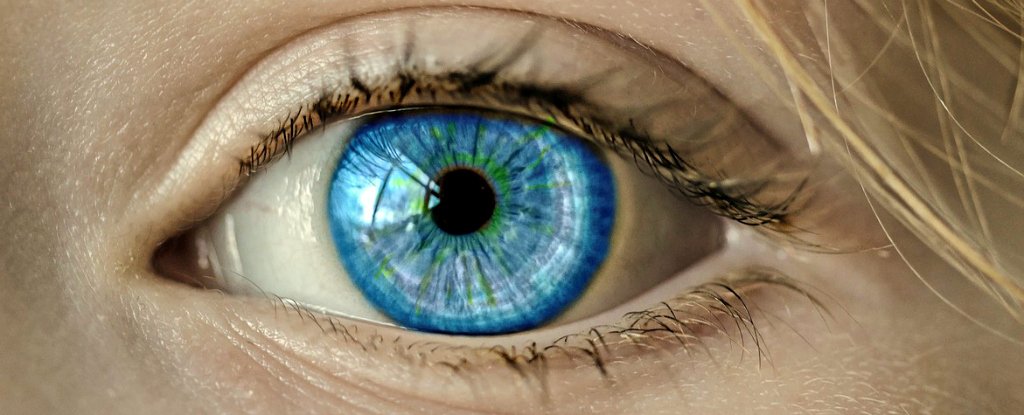
The fascinating way blue eyes get their color
I have blue eyes, so I'm better than all y'all.
The human body is incredible. Our eyes aren't blue (or green) because of pigment in cells.

As Paul Van Slembrouck writes for Medium, their color is actually structural -- and it involves some pretty interesting physics.
 
The colored part of our eye is called the iris, and it's made up of two layers, the epithelium at the back and the stroma at the front.
 
The epithelium is only two cells thick and contains black-brown pigments. The dark specks that some people have in their eye is, in fact, the epithelium peeking through.
 
The stroma, in contrast, is made up of colorless collagen fibers. Sometimes the stroma contains a dark pigment called melanin, and sometimes it contains excess collagen deposits.
 
The Buddha DID have blue eyes
Dhr. Seven, Wisdom Quarterly; Dr. Ranajit Pal, Ph.D. (ranajitpal.com)

Origin of Blue Eyes: Ancient "Devas" and Their Royal Descendants (humansarefree.com)
.
First representations
How could a dark Dravidian Indian have blue eyes? Anything is possible. But the historical Buddha -- the Scythian Sage/Prince Siddhartha Gautama or Shakya-muni -- was neither dark (he was golden skinned and fair), nor Dravidian (but Indo-Aryan/Indo-Iranian), nor Indian (but Central Asian from the region of modern Afghanistan in the south extending to Ukraine in the north, the real "Middle Country" (possibly a reference to mythical Agartha) between East and West. Many Central Asians have blue, green, and hazel eyes. See the "Story of the Lineage" (translation by Rhys Davids). His first anthropomorphic representation (rather than as a symbol of enlightenment or the path such as the bodhi tree or Dharma wheel) was from near his hometown, likely Bamiyan (one of his three seasonal capitals/hometowns along with Mes Aynak and Kabul/Kapilavastu), as made famous in Gandharan/Bactrian (Greco-Buddhist) art.

CONT'D: No one has blue eyes
But it looks blue! - But it's not! The "blue" is a structural illusion (cocoparisienne/Pixabay)
.
Hazel eyes have the best of all worlds.
And, fascinatingly, it's these two factors that control our eye color.
 
Brown eyes, for example, contain a high concentration of melanin in their stroma, which absorbs most of the light entering the eye regardless of collagen deposits, giving them their dark color.
 
Green eyes don't have much melanin in them, but they also have no collagen deposits.
 
Eyes scatter light and pierce the onlooker.
This means that while some of the light entering them is absorbed by the pigment, the particles in the stroma also scatter light as a result of something called the Tyndall effect, which creates a blue hue.

(This is similar to Rayleigh scattering, which makes the sky look blue).
 
Combined with the brown melanin, this results in the eyes appearing green.
 
Blue eyes are potentially the most fascinating, as their color is entirely structural.
 
Brown eyes? If only I could buy blue contacts!
People with blue eyes have a completely colorless stroma with no pigment at all, and it also contains no excess collagen deposits.
 
This means that all the light that enters it is scattered back into the atmosphere and as a result of the Tyndall effect, creates a blue hue [or an illusion of it].
 
Interestingly, this means that blue eyes don't actually have a set color; it all depends on the amount of light available when we look at them.
 
What about black eyes, red eyes, cataracts?
Structural coloration also gives color to butterflies, dead cows, and berries. It's pretty mind-blowing stuff.
 
Van Slembrouck writes for Medium:
"Imagine that you could shrink yourself to a microscopic size and then climb through the mesh of fibres in the stroma. That's where structural colouration is coming from…
…and in the mesh are also strands of smooth muscle tissue that contract to dilate (expand) the pupil, pulling the inner edge of the iris toward the outer edge. When this happens, the stroma fibres slacken and may become wiggly as tension is released. This makes me wonder, does that slightly alter the colour of your eye as well?"
Check out Van Slembrouck's great story to find out how hazel and grey eyes get their color, and also to check out his beautiful diagrams that explain structural coloring. (Source: Medium via Science Alert)

Monday, March 12, 2012

Left Brain versus Right Brain (myth)

Rick Nauert, PhD (Senior Editor, PsychCentral.com), reviewed by John M. Grohol, Psy.D.

Visual creativity uses both right, left brain
The common belief that the right hemisphere of the brain is the source of creativity while the left brain is responsible for logic and math may well be less true than once thought.

In a quest to determine the exact source of creativity in the brain, researchers have found that the left hemisphere of your brain is critical for creative thinking. The finding adds an asterisk to the belief that if you paint or sculpt, you are right-brained.

Researchers discovered that while the right half of the brain performs the bulk of the creative process, the left half makes important contributions.

The study, posted online in Social Cognitive and Affective Neuroscience, focuses on how the brain... More

Understanding the Myth and Reality of Left Brain and Right Brain Dominance

(About.com Guide)
Have you ever heard people say that they tend to be more of a right-brain or left-brain thinker?

From books to TV programs, you've probably heard the phrase mentioned numerous times or perhaps you've even taken an online test to determine which type best describes you.

What is Left Brain-Right Brain Theory?
According to the theory of left-brain versus right-brain dominance, each side of the brain controls different types of thinking. Additionally, people are said to prefer one type of thinking over the other. For example, a person who is "left-brained" is often said to be more logical, analytical, and objective, while a person who is "right-brained" is said to be more intuitive, [creative] thoughtful, and subjective. More

Friday, July 31, 2009

Brain's potential explained by big new idea

(LiveScience.com) Different species and individuals have limits as to what they can learn. For instance, you can't teach your dog to read. But what sets these boundaries? According to a new hypothesis, components of an organism's brain cortex may help determine how well that organism, be it dog, monkey or human, learns and improves its cognitive skills.

The cortex is your brain's outer layer, the exterior part you can see if you look at a picture of the whole organ. The new idea posits that small sets of neuronal cells in the cortex, called cortical modules, determine our "cognitive plasticity," that is, our capacity to learn new ways of thinking, or improve upon old ones.

"What [constrains] an individual organisms' ability to learn cognitive skills is essentially the diversity and number of [cortical] modules they have," said Eduardo Mercado III, a psychologist at the University at Buffalo in New York. "So, if you think about it like a set of Legos, if you have more Legos, you can build a wider variety of things."

Quality, not size, matters: These cortical modules are very spatially distinct, like circles in a honeycomb-pattern layered over a brain, Mercado said. More>>

Saturday, May 30, 2009

Is Niceness related to Brains?


Socialites and Curmudgeons: Two Brain Types
Robin Nixon, Special to LiveScience.com

Socialites and curmudgeons not only have different party demeanors, they may also have different brain structures, a new study suggests. But what came first — the incentive to charm or the bolstered brain anatomy — is still a matter of debate.

Forty-one randomly selected men filled out a questionnaire assessing their own tendency to, say, "make a warm personal connection." Those who reported being sociable and emotionally demonstrative also tended to have denser cell concentration in two brain structures, the orbitofrontal cortex and the ventral striatum, said the study's head researcher Graham Murray of the University of Cambridge in the United Kingdom.

The research was published in the May 20, 2009 issue of the European Journal of Neuroscience.

Chicken or egg
Many studies have found correlations between the size of a particular brain structure and physical behavior, such as the classic finding that taxi drivers often have more developed hippocampi, structures associated with spatial memory. Whether the above-average geographic abilities existed before or only developed after the subjects became cabbies is unclear. The burgeoning field of social neuroscience is producing similar findings.

For example, the structural research by Murray and colleagues is backed by a recent study published in Nature Neuroscience and led by Michael Cohen. He showed that strong neuronal connections between the orbitofrontal cortex and striatum were also associated with social pleasure.

"Connectivity encourages growth of brain regions," Murray said, so taken together the studies suggest two causal relationships. A particular brain composition could create a warm personality, but experiencing social behavior could also create a social brain, he said. Most likely it is both nature and nurture acting in tandem, creating "a snowball effect," Murray theorized. Experience spurs brain growth, brain growth influences behavior, behavior affects experience and around we go.

Personality develops most rapidly during childhood and adolescence, Murray said, but traits are never completely fixed. Even in adulthood, he continued, "social experiences could have their effect by changing brain structures over time."

Key to Survival
The identified brain areas also respond to pleasures, such as food and sex, that are necessary for species survival. Over the course of evolution, socializing may have also become a critical need, Murray said. More>>

Friday, May 22, 2009

Dissecting Einstein's Brain


(LINK)

Dissecting the Genius of Einstein's Brain
When it comes to brilliance, do exceptional brains exist? To find out if there is a link between brain structure and genius, scientists look to the gray matter of renowned physicist Albert Einstein. WSJ's science columnist Robert Lee Hotz reports.

Saturday, March 21, 2009

Women (Pravda.ru)

Pravda.ru (a perspective from Russian)

Female orgasm switches brain areas governing fear

New research indicates that parts of the brain that govern fear and anxiety are switched off during female orgasm.

In the study to map brain function during female orgasm, scientists from the Netherlands also found that as a woman climaxes, an area of the brain that governs emotional control is also heavily deactivated.

“The fact that there is no deactivation in faked female orgasms means a basic part of a real orgasm is letting go. Women can imitate orgasm quite well, as we know, but there is nothing really happening in the brain,'' said neuroscientist Gert Holstege, presenting his findings at the meeting of the European Society of Human Reproduction and Embryology. More>>

Women ready to kill men for their stupid remarks

There are certain things one should never say to a woman. Here they are:

  • Don’t ever say in front of women that there aren’t any irreplaceable ones. It could happen that they would replace you without letting you know about it.
  • Never tell a woman how great she looks when you are on the phone.
  • Never tell women small lies. Save your strength for important stuff.
  • If you have something you don’t need, never throw it away. Offer it to a woman. Let her throw it away herself.
  • Never ask a woman’s opinion on any issue. She will give it to you anyway. And not just one time. And not just one opinion.

Try to avoid the unexpected. Remember, the best surprise for a woman is the thing of which you told her a month ago and of which you reminded her every day since then. More>>

"Hook Up Culture," phantom menace
Jessica Valenti Feministing
A thorough debunking of the conservative movement's anti-woman, anti-sex, anti-evidence arguments.

Spot on:
And if you're at skeptical about this, besides looking at who is doing the writing and the funding, you should also pay close attention to what they're actually saying, and specifically what solutions they're suggesting to the "problem" of young women hooking up.

Laura Sessions Stepp, who wrote Unhooked, writes that young women don't belong in bars, "that's a guy thing," and that they should consider baking cookies to impress men. (Not that there's anything wrong with baking cookies, I'm a big fan myself, but I think you see where this is going...) More>>

Lesbian girls have a different brain structure

It is no news that people who have unconventional sexual orientation look differently. However the study showed that they also think differently.

Lesbians’ brains react differently to sex hormones than those of heterosexual women. An earlier study of gay men also showed their brain response was different from straight men — an even stronger difference than has now been found in lesbians.

Lesbians’ brains reacted somewhat, though not completely, like those of heterosexual men, a team of Swedish researchers said in Tuesday’s edition of Proceedings of the National Academy of Sciences.

A year ago, the same group reported findings for gay men that showed their brain response to hormones was similar to that of heterosexual women. More>> Self Defense for women -- a short demonstration