Beginner's Mind (Japanese 初心 or shoshin) is a concept from Zen Buddhism. It means it's better to have an attitude of openness, eagerness, and lack of expectations or preconceptions when practicing meditation and exploring Dharma. Even at an advanced level, approach Truth as a beginner would.
Beginner's Mind is especially used in the study of Zen Buddhism and Japanese martial arts [1]. It became popular outside Japan because of Shunryū Suzuki's book Zen Mind, Beginner's Mind.
The practice of shoshin acts as a counter to the hubris and closed-mindedness often associated with thinking of oneself as an adept or expert [2].
When we let ourselves think we know everything, we leave no room for surprises, but reality is full of surprises.
For example, in the Einstellung Effect, a person becomes so accustomed to a certain way of doing things that s/he does not consider or acknowledge new ideas or approaches [3], such as thinking outside the box. Like let's say someone asks you, "Who are YOU?"
One more TikTok, hookup, sext, hit of dopamine
"I'm me," you say. Then this exchange takes place:
"You're not who you think you are."
"I'm who other people think I am."
"No, you're not even that."
"But, but, what else is there? If I'm not who I think I am, and I'm not who others think I am, do I just not exist?"
"No, you are who you think others think you are."
"Oh, yeah, because we're social creatures, right? There's always that [performative] factor of being watched, even if we only think we're being watched."
"Something like that."
"Ah, what do you know?"
"Hey, at least I got you to think outside the box, realize it's not binary -- a this or that, thesis or antithesis. There's often a synthesis, an interaction, a third or fourth option not thought of within the confines of the assumptions surrounding the question."
"Oh, yeah, huh?"
"Monkey."
The word shoshin combines sho (Japanese 初, "beginner" or "initial") and shin (Japanese 心, "mind" or "heart") [4], which is not necessarily the brain but the intuition, knowing, heart, or the ability to discern. More
On a recent night, practitioners gathered, took to zafus and zabutons (sitting cushions), chanted Sanskrit the Japanese way then English, and started a session of shikantaza, just sitting.
Then came time for kinhin, the relief of getting up to stretch and walk slowly and mindfully before another sitting session. Then the fireworks: question and answer with discussion.
"Those who know don't say, and those who say don't know" is a Taoist saying and sentiment. Many things can be known, and many of them can be expressed. So we hit the meditation leader with two barrels' worth of questions. Next time we finish off with koans of such subtlety and complexity, he stands no chance.
'Monkey-barring' is the latest dating trend wreaking havoc on relationships
Without letting go of one, you grab the next.
(FOX 32 Chicago) Sept. 2, 2025: Certified counselor Love McPherson breaks down why some people jump from one relationship to the next [like a monkey grabbing bars, not letting go of one and already grabbing the next or like a frog waiting for a new pad to jump on instead of getting into the water of singlehood and swimming to find a better pad like a decent person] and offers steps for healing and forming healthier connections. "Fear of abandonment" anyone?
The term "monkey mind" originates from Chinese xīnyuán or Sino-Japanese shin'en (心猿), which literally means "heart-mind monkey."
It is a Buddhist concept that describes a state of restlessness, capriciousness, and lack of control of one's thoughts and emotions, the inability to find soothing stillness, calm, equanimity, poise, or maintain mindfulness.
Others suffer from it, too?
Attempts to suppress tend not to work. It is spurred by caffeine, stimulants, excitotoxins (chemicals), and is frequently followed by a crash, exhaustion, and cyclical dysfunction:
This "mind monkey" metaphor is found in Buddhist writings in Zen, Chan, Mind-only, Pure Land, and Shingon and has also been adopted by Taoism, Neo-Confucianism, Chinese poetry, theater, and literature.
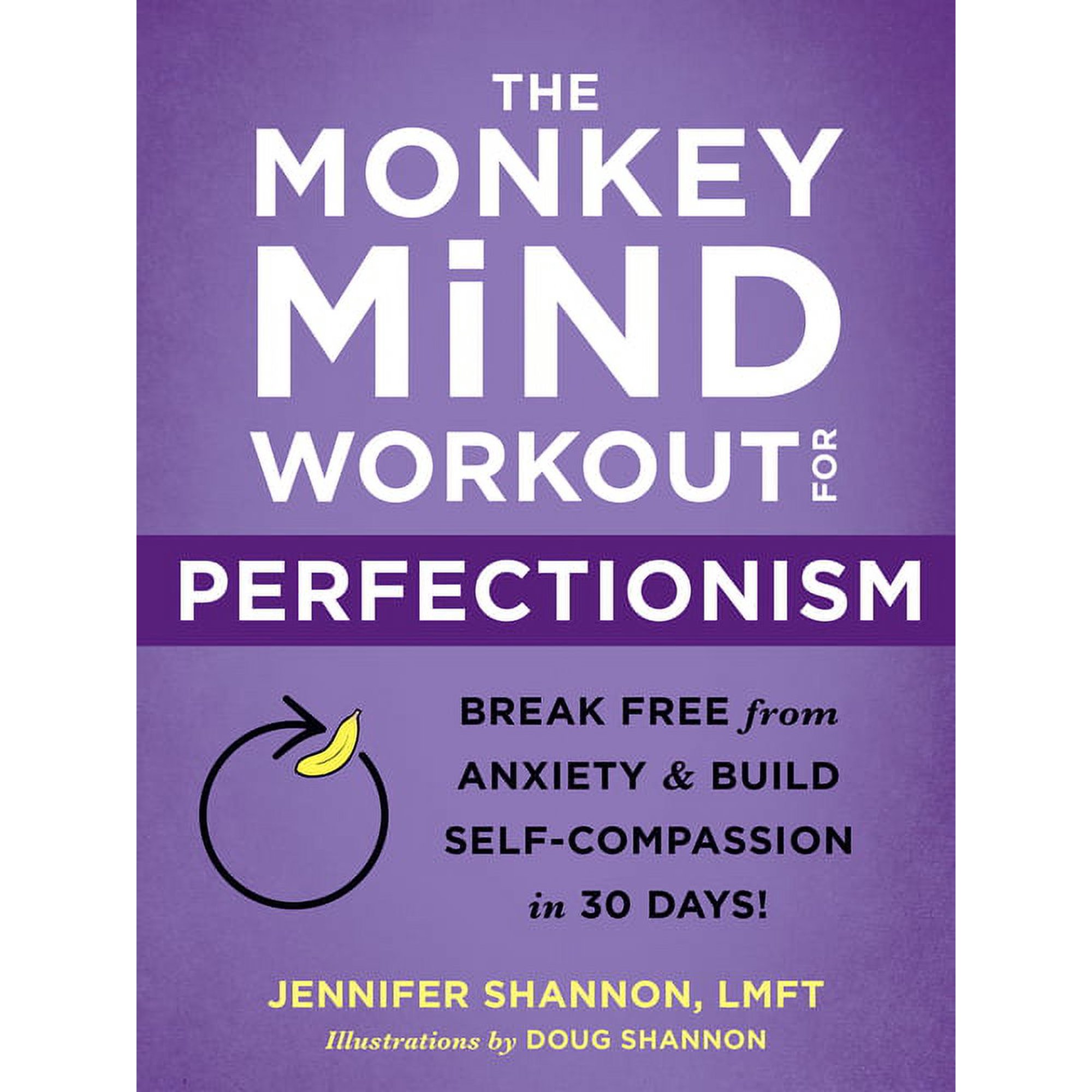
Perfectionism is a mental illness.
The expression "monkey mind" commonly appears in two reversible four-character idioms paired with yima or iba (意馬), which means "idea horse."
Chinese xinyuanyima (心猿意馬) and Japanese ibashin'en (意馬心猿) illustrate the interconnectedness of a restless mind and wandering (discursive) thoughts.
The "Monkey King" Sun Wukong in the classic Chinese novel Journey to the West is an iconic personification of feeling indecisive and unsettled. More
While most mindfulness meditation teachers praise the benefits of "bare awareness," he teaches BEAR awareness. Huh? He helps us make friends with the scary things that come up on the cushion, and he knows how to lift the mood with a well-placed stuffed teddy––or a well-timed pun.
The intimacy of the question-and-answer format provides a fresh experience of learning from a master meditator.
Whether Ajahn Brahm is urging readers to fly Buddha Air (sit back and relax on the way to nirvana), giving tips for dealing with panic attacks or depression, or extolling the bliss of meditation that is better than sex, he gives us permission to enjoy our lives and our kindful and joyful practice. More(Amazon.com)
(Eye Opening) In this video, I share my personal experience of a spiritual emergency, a spiritual crisis, kundalini syndrome, or psychic trauma (however one wishes to label it) that happened not too long after I had a life-changing experience of my third eye suddenly opening.
The seven main chakras along the spine are nexus points associated with different areas of life, the lower three being rooted to the earth in the body, the heart being the centered transitional point, and the upper three "spiritual" spinning energy wheels, which is the literal meaning of chakra. The lowest is survival (lum), the next is sexual (vum), the third is digestion and assimilation (rum); the fourth is the heart (yum), a green-hued area vibrating frequency; the fifth is the throat (hum) about expression and speaking our truth; the sixth is the most famous, the third eye (aum or om) between the brows; the seventh is silent at the crown of the head, full release.
I ended up hospitalized for a week, heavily medicated, and diagnosed with "schizophrenia" and "bipolar disorder" ["mania"]. I am neither of those.
Western medicine doesn't know how else to label what was happening to me. I was simply having a spiritual awakening and did not have any guidance, so I slipped into fear.
The intention of this video is to give some advice so that others do not have to go through what I did.
SUMMARY: The use of fermented foods and drinks by humans is so widespread as to be considered ubiquitous, with their use largely linked to dietary benefits and social bonding [123].
The discovery of a molecular adaptation in an alcohol dehydrogenase enzyme that greatly increased ethanol metabolism in the common ancestor of African apes suggests that the incorporation of fermented fruit in the human diet [such as kombucha and fermented relishes and foods] has ancient origins [4].
However, little is known about the inclusion of ethanolic foods in the diet of nonhuman great apes. Here [at Science Direct], we document for the first time the repeated ingestion and sharing of naturally fermented African breadfruit (Treculia africana) with confirmed ethanol (alcohol), by wild chimpanzees (Pan troglodytes verus) [humans' last common ancestor] in Cantanhez [Forests] National Park, [Southern] Guinea-Bissau.
Widespread plant food sharing in great apes and the recent confirmation of ethanol presence in diverse fruit species [5] suggest the sharing, and dietary incorporation, of ethanol-containing foods is extensive and may have played a long-standing role in hominoid societies.
"I already live this way *lol* it's kool" (Ayr Hed)
The Buddhist term "monkey mind" originates from Chinese xīnyuán and/or Chinese-Japaneseshin'en (心猿). It is a Buddhist concept that literally means "heart-mindmonkey [business]," for it describes a state of discursive restlessness, capriciousness, and lack of self-control in one's thoughts and emotions.
It has also been adopted by Taoism, Neo-Confucianism, Chinese poetry, theater, and literature. The expression "monkey mind" commonly appears in two reversible four-character idioms paired with yima or iba (意馬). It translates as "idea horse."
Chinese xinyuanyima (心猿意馬) and Japanese ibashin'en (意馬心猿) illustrate the interconnectedness of a restless mind and wandering thoughts.
The "Monkey King" Sun Wukong in the classic Buddhist Chinese novel Journey to the West is an iconic personification of feeling indecisive and unsettled. More
We need brains, but do we need thoughts?
Few people waste more time overthinking than we do around here at the office of Wisdom Quarterly. It is no way to be. Thinking might make a person smart. Might. It will definitely make her or him obsessive, neurotic, unhappy, and exhausted. Lev Z lost his brain in the war and lived.
What is there instead of thinking, worrying, anxiously projecting, predicting, prognosticating, forecasting, mental doomscrolling, trying to avoid everything bad that can happen? One time on retreat with a very great Buddhist meditation master who was visiting California from Asia for the first time, I was spending all my sitting time thinking and pondering.
I would ask him solutions to my thoughts, which would put to rest my worries. But I would soon think of something new to ask, an unsolvable mental construct, philosophical question, or paradox.
I remember mainly thinking about karma -- the process by which our intentional (cetana) deeds bring about many wished for and unwished for results even though we do most things in ignorance, not with the "intention" that they should bring about the results they do: How can this be "fair" if we didn't know?
I think this sort of questioning brought him to him to the limit of tolerating my nonsense and indulging my endless stream of questions. Thereafter, every time I'd ask anything speculative or philosophical, he'd answer by asking, "How's your meditation going?"
I would laugh, realizing that I was spending way more time thinking than "meditating." He asked me how, and I explained my system: Since I only had to be aware of "breathing" (in), I would let my mind wander the rest of the time (when I was breathing out or when the breath was pausing in between, so I was actually able to get a lot of thinking in while still being aware or counting the breath as it happened, only drifting off the rest of the time.
He was astonished someone could be so utterly daft (or neurotic and full of too much zeal and too overbearing a sense of urgency when what was desperately needed was contentment), and no wonder I wasn't making any progress. "Who told you to do that?" he asked.
I didn't answer, but the answer was obvious: "No one ever told me not to." (I like thinking, why wouldn't I think? I'm thinking all the time, it's my thing, my jam, my delight, and apparently my downfall!) It was true. I was only supposed to be aware of the breath -- so he again defined "breath" for me:
"Breath" in BREATH MEDITATION is mindful awareness of anapana (the in-and-out breath and any time in between, which becomes vanishingly brief the slower one breathes for the person paying more and more attention to the whole-body-of-the-breath like the Satipatthana Sutra instructs).
Aah, then everything came to a rest: blissful peace
Then not long after, it happened. It was a miracle. I would not have thought it was possible. And thinking so much, there wasn't much I thought impossible. Nearly everything is possible by some twist with enough creative imagination.
What happened? THINKING STOPPED. (I didn't stop; it stopped). It was the strangest thing. I wasn't expecting it to. I didn't know it could. I don't think I was doing anything different than normal (other than maybe not thinking for once). IT REALLY STOPPED. I kept checking it to be sure. I was fully aware.
Earlier in the day, I had taken a walk in the woods and seen wild turkey and deer, and I had found a giant rusty cistern, a big corrugated water tank, the size of a grain silo, just in the middle of nowhere in the woods. It had no water in it. Imagine dragging a stick across it, the sound it would make, clang-clang-clang: that's what my thinking was like.
As a teen in high school, I was in some bands, and one of the hardest things about being in a band was coming up with a satisfying name. (It's very hard, so the best bands, the legends, just take on any nonsense and by their greatness, they make the dumb name great. It's almost the dumber the name the better because their fame will have to eclipse it and raise it to the status of "wow, what a name," whereas the dumb names keep sounding dumb because the music isn't that good to our ears. Lead Zeppelin, what kind of dumb name is that? Lead (leed as in leader). Hey, I know, we'll drop the a so nobody will ever mispronounce it! It was a self-deprecating expectation of how their new group would go over when they launched, like a leaden blimp, dwhoopall the way down to a crash and burn like the Hindenburg, which was used as the cover of their first album. So I thought a great name for my next band would be No Mind Asylum. It didn't go over very well because no one knew what it meant, which I thought was self-evident. People liked the sound of it; only no one thought it had a meaning. My friend heard it, didn't judge, thought about it, and asked, "What does it mean?" I was flabbergasted. "Well, isn't it obvious?" It wasn't. It means how pleasant it would be, if such a thing were possible, to find asylum from so much thinking. After all, too much thinking doesn't pay. "That's what it means, being sent to a mental asylum!?" "Not a mental asylum! A mental asylum is called an asylum as a euphemism, a pleasant place, a safety, a refuge, how nice it would be to go to give the mind a rest." Suddenly the name Led Zep was looking really good by comparison.
But here it was. I found it without looking. I had my asylum. There was compulsive thinking. Here's the amazing thing, thinking was possible, it just wasn't automatic. There was peace, rest, direct knowing. That's the thing: I would have thought, if asked before this, "Why think so much?" My answer would have been "To know." But there's no knowing that way. There's only speculation, pondering, wondering, probabilities, possibilities, imagining ways to test intuitions, inspirations, guesses, or logical suppositions and conclusions.
Now, here, the most amazing thing was happening to me -- like everyone had always said was impossible and NOT the goal of meditation. Not thinking it was the goal, here I was enjoying it. And like said, I could think. It just seemed dumb to. Thinking stands between us and direct experience. It's a buffer, a block, a kind of dirty glass we look through for so long we fail to notice how dirty and distorting it is. A rain comes along, like maybe a good long sleep, and things seem clearer -- clearer for not having thought. Thinking gets in the way, yet it's glorified, particularly in the university system.
Eckhart Tolle: Even the Sun Will Die
It seems even now that no one appreciates any of this except maybe Eckhart Tolle. He sat on a bench in a park perfectly content to keep sitting there. It was such a relief compared to all his previous worries, ego-trips in the highly competitive world of academics and self-promotion university faculty maneuvers. Imagine Descartes, Sophia, Nietzche, Socrates, Plato, or Aristotle getting a day off -- getting some no mind asylum (benevolent respite, safety, exile, expat vacation) time. Remember the paean, the joy the Buddha felt right after his great awakening (maha-bodhi). He KNEW freedom was possible and directly attainable here and now. There was no need to die and hope for a heaven. Here and now he saw things clearly.
As it was happening, because it went on for a long time (until it was about to be ruined by having to get up from my meditation mat to go to the restroom before the long evening Dharma talk started and I would be trapped in the hall holding it in for two hours or so), it occurred to me how I might explain this to anyone who might in the future ask. I had to kind of explain it to myself, too, because I was fully conscious, much more conscious, undistracted, and in the moment than I normally was. In fact, I normally tried to keep myself in abstractions most of the time, finding it fun to pose philosophical questions about reality then tackling them with an explanation that could be verified. The verification would show if the speculation or intuition were true. So these were not just pointless thoughts with no purpose; they were grand thoughts about life, the universe, and everything, musings of which Douglas Adams could be proud.
The explanation that spontaneously came to mind -- in just the same way that once when the Buddha was asked if he planned his answers to questions in advance or just spoke extemporaneously as it now occurred to him, he said there was no need to premeditate any more. He instantly knew the answer as the question was being asked. The analogy came to me what it was like, this "not having a brain"/"not thinking" was like, which as I said should be impossible to our normal way of thinking, speaking, conceiving, or imagining. It was exactly like this:
Normally and usually when we "think," it's like tossing a rock into a giant old empty cistern (corrugated galvanized rippled metal water tank) or big storm runoff corrugated drainage pipe, so big one can stand in it, and around here such underground pipes pour runoff into the LA River. It's not a sewer but a wash, a cemented over arroyo. Throw a rock in it, and it ricochets and echoes after hitting multiple times. One question (thought, stone, disturbance), many ripples (vrittis). The commotion of my mind was that nearly anything could trigger it. Now it was at rest, contented and peaceful. I knew not why.
Whatever desire-to-know arose, there the obvious answer simultaneously arose with it. There was no need to ponder or wrack my brain or stir up a hornets' nest of thoughts and questions. I toss one stone, and the reply is one thud, at which point the stone is done, no echo, no commotion, no ripples in the mind or aftereffects.
It was blissfully beautiful, and one could imagine living that way for the rest of one's contented life. THIS WAS BETTER THAN THINKING BECAUSE THE ANSWER WAS IMMEDIATE AND UNMEDIATED BY LANGUAGE, GRAMMAR, THOUGHT CONSTRUCTS, AND SO ON. There was just direct knowing.
When external disturbances (my having to get up, impelled by the urge to pee which was uncomfortable to hold and conscientiously not wanting to disturb the Dharma talk later by getting up in the middle of it, being bumped by other meditators trying to signal me that we were switching from silent meditation to Dharma talk as if it were possible that I forgot) forced me to get up, move, and slowly head toward the bathroom, the peace and silence remained. It was not an artifact of perfect stillness; I was not asleep or in anyway unconscious, semi-conscious, or unmindfully out of it. I was bright, mindful, and much more away of what was really happening in the moment than usual.
Anyone who says nonthinking is wrong. Anyone who says it is not the goal of meditation is right. Making it the goal, striving not to think or trying to stifle the brain/mind, which has as its job to think, is no way to peace. Being aware just of this moment without evaluation, judgment, ambition, resistance, nonacceptance, force, efforting, that is far more likely to result in this kind of blissful abiding, this "peace of mind."
Hooray for Buddhist Japan and Los Angeles, as Asian fans are more excited about this Dodgers' win than the diehards who just lost Mexican legend Fernando Valenzuela on the eve of his birthday.
Shohei "Show Me The Money" Ohtani injured himself (shoulder subluxation, meaning he pulled it and it popped back), trying to steal a base to pull off this great win against the Less Coast (East), proving that the West Coast is the Best Coast, if rappers are to be believed.
It's mayhem on the streets of the City of Lost Angels as riots begin to form in some parts of the megalopolis. Police prepared in advance to over-police the heck out of sports fans who get too rowdy, as Israel rejoices that there is yet another distraction from their ongoing and expanding genocide.
Israeli is ethnically cleansing the Palestinians off land it stole with the secret dream being revealed of a future "Greater Israel," a Jewish empire (in alliance with Western powers, weapons, geopolitical influence, resource extraction, and full spectrum dominance like the colonial British rulers dreamed of exercising) that expands into Lebanon, Syria, Jordan, Yemen, and Iran, with Egypt ceding even more land for Israel' settler colonial project of Ashkenazi (European) Jews in the Middle East.
PM/Dictator Bibi Netanyahu's reign of terror can continue undisturbed until the U.S. election is settled, which will not be for weeks or months, until the transfer of power and installation of Pres. Vance, the ultimate winner in all this.
The original Planet of the Apes tried to warn us: If "religion is the opiate of the masses," sport is the stimulant, the caffeine fiending to meth devouring mover and shaker of the sheeple. Therefore, let us all chant our unofficial national mantra:
"Go our side! Down with the other side! Hooray! USA, USA, USA!!!" (lol)
All hail New York, for the last shall be the first in the unfolding of deeds and their repercussions as they cycle on endlessly in this continued-wandering-on called samsara.
The Yanks need to win at home or LA will be lifting the Commissioner’s Trophy! Can the Bronx Bombers force the series back to Los Angeles? Two of the biggest teams facing off in the ULTIMATE showdown!
THANKS to ALL, if reading this, the credit goes to YOU! All of you made this channel successful! Make sure you fire up the chat and keep the trash talking CIVIL! Time to have some fun! Glad to have you here to hang out, chat it up and listen to the game with thousands of fellow baseball fans! Give: https://tilt.fyi/jqeJTq1JTI. Huge thanks to this amazing community! It started as a dream to have the best online fan club for Toronto Sports, and every single day the dreams are becoming reality! Thanks for hanging out, cheering on sports teams, keeping it classy and making a REAL-WORLD difference! On to go get that plaque! See you in the chat! #losangelesdodgers #newyorkyankees #worldseries #losangelesdodgers vs #newyorkyankees
QUESTION: When I meditate, which has both the words "me" and "I," I feel so selfish and self-absorbed, like it's all about me. So shouldn't I stop? I would rather be an explorer [astronaut] than a selfish seeker [psychonaut]. You can't argue with my logic, admit it, and let me get off this mat.
We've just scratched the surface in this direction.
Space cadet gets bored with own distractions
ANSWER: Well, Doggone, with logic like that, you really have us in a bind. I mean, we don't want you to be selfish or self-absorbed. In fact, it would be good to be selfless and fully absorbed [in the object of meditation]. With killer logic like you've laid out, we realize that we are wrong, and by "we" we mean all of us -- the Buddha, the sages, the arhats, the sadhus and sadhvis (godmen and godwomen), the rishis (seers), the jinas (pathfinders), the shamans (wandering ascetics or shramanas). We've been doing this all wrong. So what you propose is that we launch our own Asian space program out in Afghanistan or Northwest India, maybe in Mohenjo-Daro or in any case somewhere near Gandhara?
Q: I don't know what those places are.
A: Of course not, yet you're sure of which direction to head, out not in?
Q: Well, no, but...
10, 9, 8, 7, 6, 5, 4, 3, 2, 1, lift off
A: So without knowing even the general direction, you've let your mind talk you into doubt, skepticism, and more discursive thinking?
Q: Discursive?
A: Monkey Mind, going from branch to branch to branch, ceaselessly jumping around.
Q: Oh yeah, that.
A: Yet without knowing, you've never noticed how enlightened scientists are? Everyone who comes back from "space" is awake. Everyone who spends her time drinking coffee, reading data printouts, fashioning explanations is well behaved, serene, in control of their minds, inspiring, happy...
Q: No, they're none of that. They're the opposite!
A: Of course, what else would they be? Neither purifying their own minds nor encouraging others to purify theirs, they strengthen their rational powers and let everything else go to pot. They use the power of a streetlamp the way a drunk does, for support rather than illumination. They debate, they argue, they aggrandize their own theories while belittling others'. What a way to go about in search of wisdom.
Q: Yeah, well.
Calm down, Monkey. - Play with me, Homer!
A: Yeah well, what? They're harried, confused, leading others to confusion, cantankerous, amenable to nothing but argument and besting others in debates, to more and more data, rarely recognizing the biases that secretly guide their (mis-)interpretations of that "data." There is this world. Look around. Loot at it. Your lenses (all three eyes) are covered in dust, but you hope to accurately discern and make sense of what you're seeing. You have no conception of the assumptions you arrive with, like that of a "seer." That you take for granted and leave unquestioned. The suitability of the apparatus (the eye and its focus), that you leave unquestioned, with no access to assessing it.
Q: I'm starting to see.
A: Sit, turn inward, and the next time the mind misleads you to look the other direction, the direction you spent your whole life looking and trying to make sense of, note it and remain with the subject.
Q: What subject?
"Space" like dinosaurs is for kids.
A: Your subject of meditation, like the breath, or if that has been mastered (and it has not), the Elements, or the others laid out in the Four Foundations of Mindfulness Sutra. Trust that the Buddha and the arhats who confirmed his findings had something useful to say about the way to peace and enlightenment. It isn't by thinking, for if it were, all the thinkers would already be there and, by their thinking, would have talked others into seeing things their way. "Thinking" is not the way. We are really going from the ground up (rather than the top down, from experience to knowledge rather than thinking and theorizing to knowledge). It's already been done. Follow the Path.
Q: But how? It doesn't work no matter how I try!
A: Stop "trying." Start doing. Leave expectations and angst behind. The very problem you are running into is efforting, attempting to muscle it. Relax. LET GO. Let it be. You're only task is to watch. Don't think about it. See it. There it is. That is reality. Watch it unfold. What happens to a thought?
Q: It comes.
A: What else?
Q: It makes me think.
A: It makes you think? Isn't it a byproduct of your thinking?
Q: Well, yeah, but...
A: You said, "it comes." Have you ever noticed that "it goes"?
Q: Well, sure, after it hangs out a while.
Oh, this is easy. Now what? What else?
A: So don't welcome it. Simply see it. And you will see that although it comes whenever it wants to, it also goes whenever it wants to. You're not in control. When you're sitting, you're full of thoughts. But when you stand up to make sense of them, where are they? They are hardly dependable or useful. They've ruined your meditation (that is, welcoming them, conversing with them, and following them has ruined it) and then, their job done, they go away. You can't even account for them, find them now, or get back your peaceful meditation. You created this great argument against sitting and did no sitting still. The theory immediately fell apart when you ask about it, yet you cling to it as a "really good thought."
Q: I see now it wasn't.
A: And the next one won't be either. Billions have thought these thoughts, made these assumptions, thoughtlessly followed thought. Stop all that. Let it go. There's something better on the other side of confidence (the faith to believe this is not all for naught). In Zen some say, "Just be." Sort of be like that. Be content in the moment, be with the moment, just be (with it). Stop abandoning yourself. If you need inspiration for sitting, reading the lives of those who previously succeeded is inspiring, although those stories can set up expectations, hopes, and lead to frustration and a sense of futility if magic doesn't happen. Let magic happen, let it not happen, let it be.
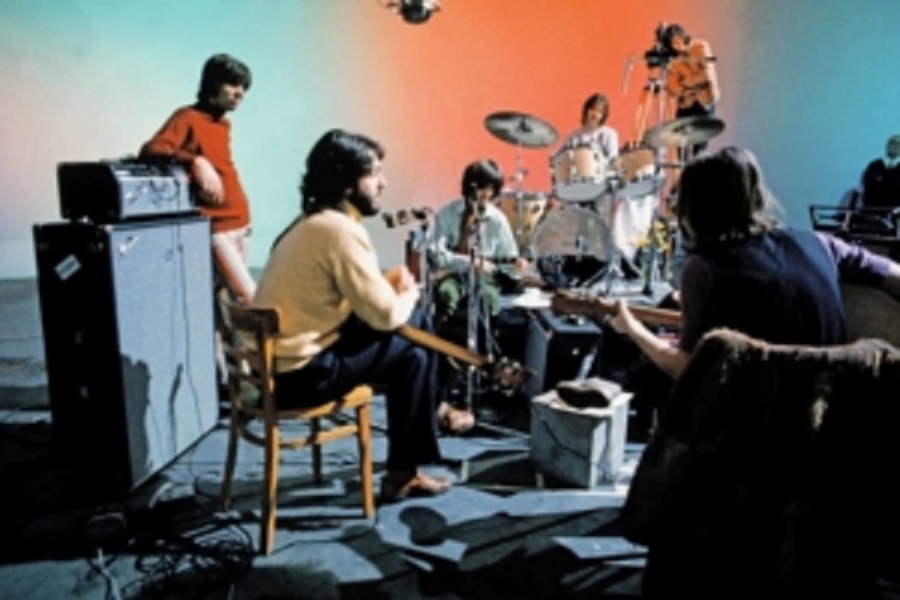
Q: So like the Beatles.
Let's make more songs to distract everyone.
A: No, but okay. Like anything. It is. Let it be. Let it be just as it is. Don't fix it. Observe it. Your strength of observation will strengthen. Beyond sitting, there are practices the whole rest of the time to make the next sit more solid. Ever be mindful. Stay with the moment. Stop abandoning this moment and attention to it. Then, when sitting, that can be done much better. Exhale. Let the inhale happen all by itself. Just watch it. Don't "do" it.
Q: I might suffocate!
A: You won't if you relax. Most of "your" breathing is being done without you most of the time. When you notice it at the beginning of the sit, it should occur to you that "you" haven't been breathing yet breathing has been happening just fine, in fact, better than if you had.
All materials on this site are submitted by editors and readers. All images, unless otherwise noted, were taken from the Internet and are assumed to be in the public domain.
In the event that there is still a problem, issue, or error with copyrighted material, the break of the copyright is unintentional and noncommercial, and the material will be removed immediately upon presented proof.
Contact us by submitting a comment marked "private."
Do not follow this journal if you are under vinaya or parental restrictions. Secure protection by Sucuri.
Wisdom Quarterly: American Buddhist Journal is licensed under a Creative Commons Attribution-Noncommercial-Share Alike 3.0 United States License. Permissions beyond the scope of this license may be available at creativecommons.org/about/licenses.


.svg.png)

_front_cover.png)


.jpg)