Prana-yama(Sanskrit प्राणायाम, prāṇāyāma) is the yogic practice of controlling, retaining, balancing, and working the breath in yoga. It is described in Hindu texts such as the Upanishads and the Bhagavad Gita. In the Yoga Sutras of Patanjali, it is described as one of the eight limbs of yoga ("union" with spirit, breath, the universe's energy). In classical yoga, what we call "the breath" is actually the life energy called prana(chi, qi, holy spirit, wind, pneuma, esoteric energy, Vayu-Vata).
In later Hatha Yoga texts, it means the complete suspension of breathing [which is something that happens in Buddhism's meditative absorptions (jhanas) four through eight]. Prana-yama practices in modern yoga done just as exercise, such as in Ashtanga (Vinyasa) Yoga, differ radically from those of the Hatha Yoga tradition, often using the breath in synchrony with movements. Pranayama
In the Pali language texts, there are two ways for developing the Four
Elements Meditation, in brief and in detail.
The brief method explained here is meant for those of quick understanding. The detailed method is meant for those who have
difficulty with the brief method.
The Buddha taught the brief
method in the Maha Satipatthana Sutta (the “Greater Discourse on Setting Up the Four Foundations of Mindfulness”): A meditator reviews this very body however it is positioned
or placed as consisting of just elements: “There are in this
body just the earth-element, the water-element, the fire-element,
and the air-element” (The Path of Purification, Visuddhimagga, Ch.XI, para. 41–43) explains further:
First, one of quick understanding who wishes to develop
this meditation should go to a solitary place. Then one should
advert [turn attention towards] one's entire material body and discern the elements in
brief in this way:
Western (British) Sayalay now Beth Upton
“In this body
what is hard or rough is [to be regarded as] 'earth
element,'
what is flowing or cohesive is 'water-element,'
what
is maturing (ripening) or heat [temperature] is 'fire-element,'
what is pushing
or supporting is 'air-element.'”
One should advert and give
attention to it and review it again and again as [simply] “earth-element,
water-element, fire-element, air-element,” that is to say, as mere
elements [components, qualities, characteristics], not as a being but as selfless.
As one applies attention in this way, in no long time, concentration [stillness] arises, which is reinforced by understanding that illuminates the classification [labelling] of the
elements.
This is only access-concentration* and does not reach absorption [a fully absorbed or concentrated condition] because it has states with individual essences as its object.
[*“Neighborhood or access-concentration” (upacāra-samādhi) is the degree of concentration (stillness, centeredness, mental-settling, focus) just before entering the absorptions or jhānas.]
Alternatively, there are these four [bodily] parts mentioned by Ven. Sariputta for the purpose of showing the absence of any self in the Four (great primary) Elements:
“When a space is enclosed with bones, sinews, flesh, and skin, there comes to be the term 'material form' (rupa)” (M. I. p. 190).
And one should resolve each of these, separating them out by the
hand of knowledge, then discern in the way already stated (above): “In these what is hardness…as its objects.”
4. Air-element: supporting, pushing [for a total of 12 characteristics lumped into four categories called the Four Elements, the dhatu or maha-bhuta].
To learn this meditation, one must begin by learning how to discern each of the 12 qualities or characteristics of the Four Elements one at a time.
Usually, the beginner must first be taught the characteristics that are easier [more obvious] to discern then the more difficult [subtle] ones later. The “Four” Elements are therefore usually taught in this order:
pushing,
hardness,
roughness,
heaviness,
supporting,
softness,
smoothness,
lightness,
heat,
coldness,
flowing,
cohesion.
Each characteristic must be discerned first in one place in the body then one must try discerning that same characteristic throughout the body.
Fortunately for us in the United States, Americans have gone to Burma, practiced under Pa Auk Sayadaw, succeeded in attaining the absorptions and insight and on occasion written books about it. They are in America. They teach. We can recommend these seven:
(Yongey Mingyur Rinpoche) Tibetan Buddhist teacher Yongey Mingyur Rinpoche discusses how [bare] awareness is central to [Buddhist] meditation. He elaborates on how the recognition of awareness is the very foundation for one’s meditation practice.
Reflection question: What do you do in your daily life that helps you remember to recognize awareness?
This rinpoche is a Tibetan teacher from Nepal and a master of the Karma Kagyu and Nyingma lineages of Tibetan Vajrayana Buddhism. He is a star in the West because he is or was neurotic (a worry wart) and is very user-friendly and has written five books on the subject of meditation.
Yongey Mingyur Rinpoche was born in Nepal in 1975 [1] as the youngest of four brothers. His mother, Sönam Chödrön, is a descendant of Tibetan King Songtsen Gampo and King Trisong Deutsen. His brothers are Chokyi Nyima Rinpoche, Tsikey Chokling Rinpoche, and Tsoknyi Rinpoche, and his nephews are Phakchok Rinpoche and the reincarnation (tulku) of Dilgo Khyentse Rinpoche, known popularly as Khyentse Yangsi Rinpoche.
Join Vajrayana Online, a virtual space with courses
and resources to explore Vajrayana (Esoteric) Buddhism with practical guidance from Mingyur Rinpoche with online webinars and recorded teachings.
Learn more at learning.tergar.org
(Solace Owl) What if I were to say that the key to shifting "reality" [timeline, position in the universe, psychophysical health] lies in something as simple as breathing?
As crazy as it may sound, we’re inhaling the essence of the universe with our every inhalation (prana). It’s the most fundamental act of life, something we do unconsciously every moment of every day, yet 99% of people don’t know the truth about breathing.
This simple action has the power to transform our entire existence, but only if we know the secret behind it.
Let’s discover the long-kept secret of ancient breath masters, something so powerful that it had to be kept hidden for centuries.
Issues about video? Feel free to contact: bizemailyt@gmail.com. Thanks for joining in on this journey. Subscribe to the channel: @SolaceOwl. Buy a coffee (and support the channel): https://ko-fi.com/solaceowl. Music by: @ironcthulhuapocalypse.
Solace Owl, 9/13/24; Pat Macpherson, Dhr. Seven, Ananda (Dharma Buddhist Meditation) (eds.), Wisdom Quarterly
O, I see it now. It's starting to kick in. Oh wow!
Taking things up a notch, there is also Holotropic Breathwork, or HB for short, which utilizes accelerated deep breathing, stimulating music, and a tailored setting to help participants enter a nonordinary state of consciousness that activates the natural inner healing process.
From inside the mind, the healing activated by HB can potentially help alleviate past mental and physical trauma or mental illnesses such as depression, anxiety disorders, and substance use disorders, for example.
Curious to learn more, we emailed Director of the Institute for Holotropics and Grof Transpersonal Training Cary Sparks.
For reference, Grof Transpersonal Training (holotropic.com) through the Institute for Holotropics is the only organization in the world that can certify Holotropic Breathwork facilitators.
What is Holotropic Breathwork?
Holotropic Breathwork was created in 1974 by Stanislav Grof, an American psychiatrist, LSD researcher, and one of the principal developers of transpersonal psychology; his wife at the time, Christina Grof, was a psychotherapist, teacher, artist, and student of Mythologist Joseph Campbell.
The Hindu-Yogi Science of Breath by Yogi Ramacharaka (1903)
(Master Key Society) This book explores the principles and techniques of yogic breathing, highlighting its benefits for physical health, mental clarity, and spiritual development.
SUMMARY: The book The Hindu-Yogi Science of Breath was written by Yogi Ramacharaka, first published in 1904. It is a study of the "science of breath" (pranayama) and the ways in which it affects body and mind.
At the core of the book is the idea that breath (prana, pneuma, holy spirit, animating principle) is the key to physical and mental well-being and that by learning to control and regulate our breath, we can improve our health and achieve a higher level of consciousness.
The book explores a range of techniques for controlling and regulating the breath, including pranayama, the practice of controlling the breath through specific breathing exercises.
Throughout the book, author Yogi Ramacharaka discusses the science behind the various techniques for controlling the breath and offers practical advice for incorporating these techniques into daily life.
He also explores the role of breath in spiritual development and offers guidance for using the power of the breath to connect with a higher power.
CHAPTERS
00:00 - Book Shelf
00:45 - I. Salaam
06:32 - II. “Breath Is Life”
13:10 - III. The Exoteric Theory of Breath
24:53 - IV. The Esoteric Theory of Breath
34:27 - V. The Nervous System
41:41 - VI. Nostril Breathing vs. Mouth Breathing
50:48 - VII. The Four Methods of Respiration
01:03:28 - VIII. How to Acquire the Yogi Complete Breath
01:10:02 - IX. Physiological Effect of the Complete Breath
01:19:48 - X. A Few Bits of Yogi Lore
01:27:11 - XI. The Seven Yogi Developing Exercises
01:38:02 - XII. Seven Minor Yogi Exercises
01:44:11 - XIII. Vibration and Yogi Rhythmic Breathing
01:53:46 - XIV. Phenomena of Yogi Psychic Breathing
02:08:33 - XV. More Phenomena of Yogi Psychic Breathing
02:27:45 - XVI. Yogi Spiritual Breathing
Credits: Text by Yogi Ramacharaka. Audio narration by Adam Hanin.
★ Please support the channel by checking out Gaia: https://www.gaia.com/portal/masterkey... What is Gaia? bit.ly/mstrkey_gaia. What kind of movies does Gaia have? bit.ly/mstrkey_films. What kind of TV shows does Gaia have? bit.ly/mstrkey_TV.
★ Get the paperback using the following affiliate link. As an Amazon Associate, Master Key Society earns from qualifying purchases: amzn.to/3AziZJj.
General Disclaimer: This recording is a production of Master Key Society for the purpose of research and study. The views and opinions expressed in this book belong to the author and may not necessarily reflect those of Master Key Society, nor its affiliates.
ABOUT: Master Key Society's educational channel offers rare and often previously unseen books in an easily accessible format. Each book is accompanied by an overview in the description, original narration, and detailed photographs of each page. Its library is intended for academic study and research of metaphysical philosophy, as well as for those seeking wisdom, personal transformation, and self-improvement. MKS welcomes participation through subscribing and sharing thoughts in the comments section.
QUESTION: When I meditate, which has both the words "me" and "I," I feel so selfish and self-absorbed, like it's all about me. So shouldn't I stop? I would rather be an explorer [astronaut] than a selfish seeker [psychonaut]. You can't argue with my logic, admit it, and let me get off this mat.
We've just scratched the surface in this direction.
Space cadet gets bored with own distractions
ANSWER: Well, Doggone, with logic like that, you really have us in a bind. I mean, we don't want you to be selfish or self-absorbed. In fact, it would be good to be selfless and fully absorbed [in the object of meditation]. With killer logic like you've laid out, we realize that we are wrong, and by "we" we mean all of us -- the Buddha, the sages, the arhats, the sadhus and sadhvis (godmen and godwomen), the rishis (seers), the jinas (pathfinders), the shamans (wandering ascetics or shramanas). We've been doing this all wrong. So what you propose is that we launch our own Asian space program out in Afghanistan or Northwest India, maybe in Mohenjo-Daro or in any case somewhere near Gandhara?
Q: I don't know what those places are.
A: Of course not, yet you're sure of which direction to head, out not in?
Q: Well, no, but...
10, 9, 8, 7, 6, 5, 4, 3, 2, 1, lift off
A: So without knowing even the general direction, you've let your mind talk you into doubt, skepticism, and more discursive thinking?
Q: Discursive?
A: Monkey Mind, going from branch to branch to branch, ceaselessly jumping around.
Q: Oh yeah, that.
A: Yet without knowing, you've never noticed how enlightened scientists are? Everyone who comes back from "space" is awake. Everyone who spends her time drinking coffee, reading data printouts, fashioning explanations is well behaved, serene, in control of their minds, inspiring, happy...
Q: No, they're none of that. They're the opposite!
A: Of course, what else would they be? Neither purifying their own minds nor encouraging others to purify theirs, they strengthen their rational powers and let everything else go to pot. They use the power of a streetlamp the way a drunk does, for support rather than illumination. They debate, they argue, they aggrandize their own theories while belittling others'. What a way to go about in search of wisdom.
Q: Yeah, well.
Calm down, Monkey. - Play with me, Homer!
A: Yeah well, what? They're harried, confused, leading others to confusion, cantankerous, amenable to nothing but argument and besting others in debates, to more and more data, rarely recognizing the biases that secretly guide their (mis-)interpretations of that "data." There is this world. Look around. Loot at it. Your lenses (all three eyes) are covered in dust, but you hope to accurately discern and make sense of what you're seeing. You have no conception of the assumptions you arrive with, like that of a "seer." That you take for granted and leave unquestioned. The suitability of the apparatus (the eye and its focus), that you leave unquestioned, with no access to assessing it.
Q: I'm starting to see.
A: Sit, turn inward, and the next time the mind misleads you to look the other direction, the direction you spent your whole life looking and trying to make sense of, note it and remain with the subject.
Q: What subject?
"Space" like dinosaurs is for kids.
A: Your subject of meditation, like the breath, or if that has been mastered (and it has not), the Elements, or the others laid out in the Four Foundations of Mindfulness Sutra. Trust that the Buddha and the arhats who confirmed his findings had something useful to say about the way to peace and enlightenment. It isn't by thinking, for if it were, all the thinkers would already be there and, by their thinking, would have talked others into seeing things their way. "Thinking" is not the way. We are really going from the ground up (rather than the top down, from experience to knowledge rather than thinking and theorizing to knowledge). It's already been done. Follow the Path.
Q: But how? It doesn't work no matter how I try!
A: Stop "trying." Start doing. Leave expectations and angst behind. The very problem you are running into is efforting, attempting to muscle it. Relax. LET GO. Let it be. You're only task is to watch. Don't think about it. See it. There it is. That is reality. Watch it unfold. What happens to a thought?
Q: It comes.
A: What else?
Q: It makes me think.
A: It makes you think? Isn't it a byproduct of your thinking?
Q: Well, yeah, but...
A: You said, "it comes." Have you ever noticed that "it goes"?
Q: Well, sure, after it hangs out a while.
Oh, this is easy. Now what? What else?
A: So don't welcome it. Simply see it. And you will see that although it comes whenever it wants to, it also goes whenever it wants to. You're not in control. When you're sitting, you're full of thoughts. But when you stand up to make sense of them, where are they? They are hardly dependable or useful. They've ruined your meditation (that is, welcoming them, conversing with them, and following them has ruined it) and then, their job done, they go away. You can't even account for them, find them now, or get back your peaceful meditation. You created this great argument against sitting and did no sitting still. The theory immediately fell apart when you ask about it, yet you cling to it as a "really good thought."
Q: I see now it wasn't.
A: And the next one won't be either. Billions have thought these thoughts, made these assumptions, thoughtlessly followed thought. Stop all that. Let it go. There's something better on the other side of confidence (the faith to believe this is not all for naught). In Zen some say, "Just be." Sort of be like that. Be content in the moment, be with the moment, just be (with it). Stop abandoning yourself. If you need inspiration for sitting, reading the lives of those who previously succeeded is inspiring, although those stories can set up expectations, hopes, and lead to frustration and a sense of futility if magic doesn't happen. Let magic happen, let it not happen, let it be.
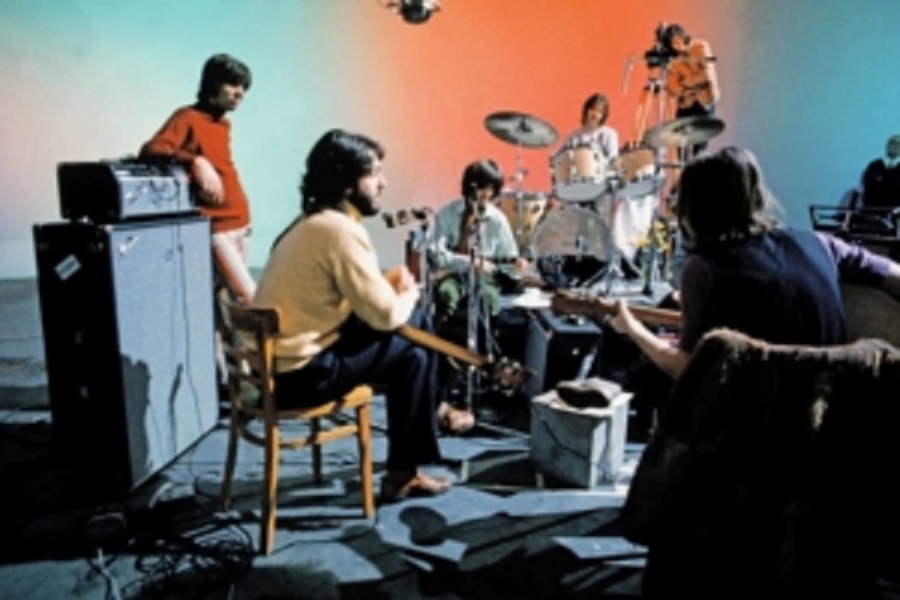
Q: So like the Beatles.
Let's make more songs to distract everyone.
A: No, but okay. Like anything. It is. Let it be. Let it be just as it is. Don't fix it. Observe it. Your strength of observation will strengthen. Beyond sitting, there are practices the whole rest of the time to make the next sit more solid. Ever be mindful. Stay with the moment. Stop abandoning this moment and attention to it. Then, when sitting, that can be done much better. Exhale. Let the inhale happen all by itself. Just watch it. Don't "do" it.
Q: I might suffocate!
A: You won't if you relax. Most of "your" breathing is being done without you most of the time. When you notice it at the beginning of the sit, it should occur to you that "you" haven't been breathing yet breathing has been happening just fine, in fact, better than if you had.
It's fun to be human, to run and jump like a reindeer in leaps and bounds, but not everyone is cut out for parkour. It's a dangerous sport.
If only there were a way to fly cross legged, winning our ability to levitate back, not relying on vimanas or space pods and animal mounts like godlings.
If we take a seat and let go, something happens. We're not steering. What arises arises, while we stay calm and breathe, just breathe. We come to the mat to see. The guide, teacher, sayadaw will explain and give instructions about how to utilize what comes up. First, we sit so that it can come up.
I can ride anything.
But all that sitting, before things get moving in the mind and memory, might seem a drag. What if there were a magic carpet made of flexible wood and nonslip sandpaper to stand on? Where might it take us?
Standing on water on floating fiberglass sounds like a dream. What if a wave comes or what if a growing shark thinks I'm chum? The others yell, "My beach!" and want to fight like they're a blond gang of sand thugs on the water and I've got no battery. Ask MIT scholar Trump.
What does it mean to "surf"
All nouns seem to be verbs abstracted and conceptualized. We walk (verb) on a walk (noun). The walk is the thing, and walking is the action we do on that thing. We smoke (verb) some smoke (noun). We surf (verb) the surf (noun, the waves crashing on the sand).
Surfing means "riding it out." Riding what out? The surf. We surf the surf, ride the waves, skim the surface, and coast the tumult, gliding over the flood coming at us.
That is a good description of "meditating." What is meditation (jhana)? It is meditating (verb), the doing of meditation (absorbing in the meditative absorptions, being so involved and single-minded (attentive) that everything else is ignored temporarily.
Sit. Stand on water. Or ride the asphalt, a smooth surface that doesn't jam up the trucks (skateboard wheels).
Pick a wide roadway with a mild decline, in a park, parking lot, or on a quiet street and let it all hang loose. Hang out and ride out. What does it mean to "hang"? It means stay loose while remaining upright. The best way to sit for meditation is not stiff as a rod, but to hang like a shirt on a hanger, loose and draping in a relaxed way. The shirt is not on the ground, so it keeps its shape.
It's held up by the idea of a rod above it that holds it up effortlessly. The shirt hangs itself up then completely lets go, drops the wrinkles, kinks, and creases.
Ten digit relax as does the eleventh protrusion, just letting all eleven be, just hanging there. The proboscis is a good focal point, right at the tip. That's where breath is breathing. (What is breathe other than the breathing? We think it's what's being breathed, the breath. It can be all three. It's all breath. What's breath without breathing? It's meaningless.
Bhāvanā: "mental development" (lit. "bringing into being, calling into existence, producing") is what in English is generally and vaguely called "meditation."
There are actually two other terms that might be better translated as meditation, jhana ("absorption") and kammatthāna ("field of endeavor, domain of effort, ground of cultivation, or field of karma"). One distinguishes two kinds of development or mental cultivation.
development of tranquility (samatha-bhāvanā), that is, stillness, coherence, concentration (samma-samādhi = first four jhanas)
development of insight (vipassanā-bhāvanā), that is, the cultivation of wisdom (paññā).
Can anyone "meditate" or only Buddhists?
These two important terms, tranquility and insight (see samatha-vipassanā), are very often met with and explained in the sutra collection as well as in the Abhidhamma (collection of texts known as the Higher Doctrine or Dharma in Ultimate Terms).
Tranquility (samatha) is the concentrated, unshaken, peaceful, and therefore undefiled state of mind.
Insight (vipassanā) is the direct perception and penetration (insight) into the three inherent characteristics of all things: impermanence, unsatisfactoriness, and impersonal nature (anicca, dukkha, anattā, known collectively as ti-lakkhanaor Three Marks of All Conditioned Existence) of all bodily and mental phenomena of existence.
This includes the Five Aggregates (or groups of existence) clung to as self, namely, form (body, corporeality, rupa, kaya), feelings, perceptions, mental formations, and consciousness. (See khandha).
Tranquility -- or stillness (purification, concentration, quietude) of mind, according to Sankhepavannana (the Commentary to the Abhidhammattha-sangaha) -- bestows a threefold blessing:
favorable rebirth,
present happy life, and
purity of mind, which is the foundation and necessary condition for insight to arise.
Stillness (samādhi) is the indispensable foundation and precondition of insight by purifying and temporarily clearing the mind/heart of the Five Mental Defilements or Hindrances (nīvarana).
Insight (vipassanā) produces the four supramundane stages of enlightenment and liberation of mind/heart.
The Buddha therefore says, "May you develop mental stillness, O meditators, for who is mentally still sees things as they actually are (in accordance with reality)" (S.XXII.5).
And in Mil. it is said: "Just as when a lamp is brought into a dark room, light destroys the darkness and produces and spreads light, just so insight, once arisen, destroys the darkness of ignorance and produces the light of wisdom."
The Path of Purification (Vis.M. III-XI) gives full directions on how to attain full stillness and the meditative absorptions (jhāna) by means of practicing 40 meditation subjects (kammatthāna):
10 kasina-exercises. These produce the first four absorptions
10 repulsive subjects (asubha). These produce the first absorption.
Among these, the recollection (mindfulness) of in-and-out breathing is able to produce the first four absorptions, the body the first absorption, the rest only neighborhood-stillness (upacāra-samādhi, see samādhi).
The Four Divine Abidings (Sublime Abodes) (brahma-vihāra):
loving-kindness (mettā)
compassion (karunā)
altruistic joy (muditā)
equanimity (upekkhā).
Of these, the first three exercises are able to produce the first three absorptions, the last one only the fourth absorption.
The Four Immaterial Spheres (arūpāyatana, the fifth through eighth jhānas):
sphere of unbounded space,
sphere of unbounded consciousness,
sphere of nothingness,
sphere of neither-perception-nor-non-perception.
These are based on the fourth absorption.
One perception of the repulsiveness of food (āhāre patikkūla-saññā), which is able to produce neighborhood-stillness.
Four Elements Meditation
One analysis of the Four Elements (catudhātu-vavatthāna, see dhātu-vavatthāna), which is able to produce neighborhood-stillness.
Mental development forms one of the three kinds of meritorious action (puñña-kiriya-vatthu).
"Delight in meditation" (bhāvanā-rāmatā) is one of the noble usages (ariya-vamsa).
Ven. Nyanatiloka (German Theravada monk, formerly Anton Walther Florus Gueth), Buddhist Dictionary: Manual of Buddhist Terms and Doctrines, bhavana; Dhr. Seven (ed.), Wisdom Quarterly
All materials on this site are submitted by editors and readers. All images, unless otherwise noted, were taken from the Internet and are assumed to be in the public domain.
In the event that there is still a problem, issue, or error with copyrighted material, the break of the copyright is unintentional and noncommercial, and the material will be removed immediately upon presented proof.
Contact us by submitting a comment marked "private."
Do not follow this journal if you are under vinaya or parental restrictions. Secure protection by Sucuri.
Wisdom Quarterly: American Buddhist Journal is licensed under a Creative Commons Attribution-Noncommercial-Share Alike 3.0 United States License. Permissions beyond the scope of this license may be available at creativecommons.org/about/licenses.
_-_EnKi_(Sumerian).jpg)




.jpg)