(Hardcore Zen) Roshi Brad Warner is a punk rocker and Zen Buddhist teacher with genuine transmission and a lot of opinions, which he shares in a not overbearing way. He may be iconoclastic, but he makes good points and remains All-American in the process as if Zen has done nothing for him because, hey, What was it supposed to do? It's just sitting (shikantaza), right Brad? Here he reviews the Buddhism written into Hollywood's The White Lotus.
(Max) Jan. 27, 2025: "You will leave [Theravada Buddhist Thailand] an entirely different person." Season 3 of The White Lotus premiered Feb. 16 on Max.
ABOUT: Max is the culture-defining entertainment service for every mood. With a variety of genres that include favorite series and movies from iconic brands and treasured franchises, it delivers irresistible stories every time. From reuniting with life-long favorites to uncovering new ones not discovered yet, there's something for every moment, every feeling, every you of all the yous because there are so many yous, don'tcha think? It’s all here. Iconic series, award-winning movies, fresh originals, and family favorites featuring the worlds of Harry Potter, the DC Universe, and HBO. Discover the best entertainment for every mood.
#WarnerBrosDiscovery #streamonmax https://streamonm.ax/3vgR69B https://streamonm.ax/4a83GYO Follow Max on YouTube: https://streamonm.ax/YouTube, Instagram: https://streamonm.ax/Instagram, TikTok: https://streamonm.ax/TikTok, Twitter: https://streamonm.ax/Twitter, Facebook: https://streamonm.ax/Facebook
Brad Warner, Hardcore Zen, April 8, 2025; Mike White's The White Lotus (HBO, Max)' MsMojo; Eds., Wisdom Quarterly
Ever dream of having a casual conversation with a real-life Zen master? Here's a talk is about life, love, success, and happiness with Korean Zen Buddhist monk Ven. Pomnyun Sunim.
ABOUT: Zen Master Pomnyun is a peace activist, humanitarian assistance expert, and an environmentalist, speaking about four topics and taking questions on all topics.
QUESTION: When I meditate, which has both the words "me" and "I," I feel so selfish and self-absorbed, like it's all about me. So shouldn't I stop? I would rather be an explorer [astronaut] than a selfish seeker [psychonaut]. You can't argue with my logic, admit it, and let me get off this mat.
We've just scratched the surface in this direction.
Space cadet gets bored with own distractions
ANSWER: Well, Doggone, with logic like that, you really have us in a bind. I mean, we don't want you to be selfish or self-absorbed. In fact, it would be good to be selfless and fully absorbed [in the object of meditation]. With killer logic like you've laid out, we realize that we are wrong, and by "we" we mean all of us -- the Buddha, the sages, the arhats, the sadhus and sadhvis (godmen and godwomen), the rishis (seers), the jinas (pathfinders), the shamans (wandering ascetics or shramanas). We've been doing this all wrong. So what you propose is that we launch our own Asian space program out in Afghanistan or Northwest India, maybe in Mohenjo-Daro or in any case somewhere near Gandhara?
Q: I don't know what those places are.
A: Of course not, yet you're sure of which direction to head, out not in?
Q: Well, no, but...
10, 9, 8, 7, 6, 5, 4, 3, 2, 1, lift off
A: So without knowing even the general direction, you've let your mind talk you into doubt, skepticism, and more discursive thinking?
Q: Discursive?
A: Monkey Mind, going from branch to branch to branch, ceaselessly jumping around.
Q: Oh yeah, that.
A: Yet without knowing, you've never noticed how enlightened scientists are? Everyone who comes back from "space" is awake. Everyone who spends her time drinking coffee, reading data printouts, fashioning explanations is well behaved, serene, in control of their minds, inspiring, happy...
Q: No, they're none of that. They're the opposite!
A: Of course, what else would they be? Neither purifying their own minds nor encouraging others to purify theirs, they strengthen their rational powers and let everything else go to pot. They use the power of a streetlamp the way a drunk does, for support rather than illumination. They debate, they argue, they aggrandize their own theories while belittling others'. What a way to go about in search of wisdom.
Q: Yeah, well.
Calm down, Monkey. - Play with me, Homer!
A: Yeah well, what? They're harried, confused, leading others to confusion, cantankerous, amenable to nothing but argument and besting others in debates, to more and more data, rarely recognizing the biases that secretly guide their (mis-)interpretations of that "data." There is this world. Look around. Loot at it. Your lenses (all three eyes) are covered in dust, but you hope to accurately discern and make sense of what you're seeing. You have no conception of the assumptions you arrive with, like that of a "seer." That you take for granted and leave unquestioned. The suitability of the apparatus (the eye and its focus), that you leave unquestioned, with no access to assessing it.
Q: I'm starting to see.
A: Sit, turn inward, and the next time the mind misleads you to look the other direction, the direction you spent your whole life looking and trying to make sense of, note it and remain with the subject.
Q: What subject?
"Space" like dinosaurs is for kids.
A: Your subject of meditation, like the breath, or if that has been mastered (and it has not), the Elements, or the others laid out in the Four Foundations of Mindfulness Sutra. Trust that the Buddha and the arhats who confirmed his findings had something useful to say about the way to peace and enlightenment. It isn't by thinking, for if it were, all the thinkers would already be there and, by their thinking, would have talked others into seeing things their way. "Thinking" is not the way. We are really going from the ground up (rather than the top down, from experience to knowledge rather than thinking and theorizing to knowledge). It's already been done. Follow the Path.
Q: But how? It doesn't work no matter how I try!
A: Stop "trying." Start doing. Leave expectations and angst behind. The very problem you are running into is efforting, attempting to muscle it. Relax. LET GO. Let it be. You're only task is to watch. Don't think about it. See it. There it is. That is reality. Watch it unfold. What happens to a thought?
Q: It comes.
A: What else?
Q: It makes me think.
A: It makes you think? Isn't it a byproduct of your thinking?
Q: Well, yeah, but...
A: You said, "it comes." Have you ever noticed that "it goes"?
Q: Well, sure, after it hangs out a while.
Oh, this is easy. Now what? What else?
A: So don't welcome it. Simply see it. And you will see that although it comes whenever it wants to, it also goes whenever it wants to. You're not in control. When you're sitting, you're full of thoughts. But when you stand up to make sense of them, where are they? They are hardly dependable or useful. They've ruined your meditation (that is, welcoming them, conversing with them, and following them has ruined it) and then, their job done, they go away. You can't even account for them, find them now, or get back your peaceful meditation. You created this great argument against sitting and did no sitting still. The theory immediately fell apart when you ask about it, yet you cling to it as a "really good thought."
Q: I see now it wasn't.
A: And the next one won't be either. Billions have thought these thoughts, made these assumptions, thoughtlessly followed thought. Stop all that. Let it go. There's something better on the other side of confidence (the faith to believe this is not all for naught). In Zen some say, "Just be." Sort of be like that. Be content in the moment, be with the moment, just be (with it). Stop abandoning yourself. If you need inspiration for sitting, reading the lives of those who previously succeeded is inspiring, although those stories can set up expectations, hopes, and lead to frustration and a sense of futility if magic doesn't happen. Let magic happen, let it not happen, let it be.
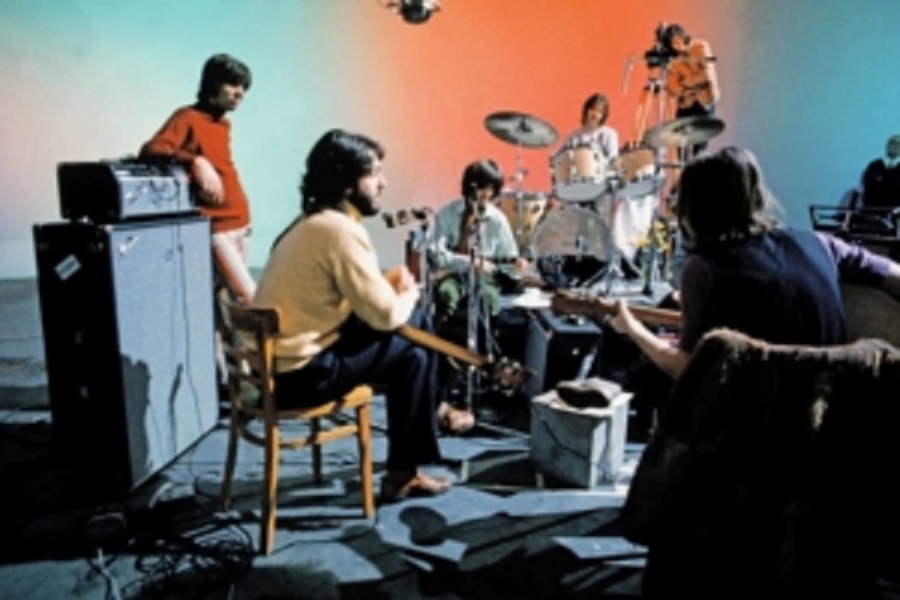
Q: So like the Beatles.
Let's make more songs to distract everyone.
A: No, but okay. Like anything. It is. Let it be. Let it be just as it is. Don't fix it. Observe it. Your strength of observation will strengthen. Beyond sitting, there are practices the whole rest of the time to make the next sit more solid. Ever be mindful. Stay with the moment. Stop abandoning this moment and attention to it. Then, when sitting, that can be done much better. Exhale. Let the inhale happen all by itself. Just watch it. Don't "do" it.
Q: I might suffocate!
A: You won't if you relax. Most of "your" breathing is being done without you most of the time. When you notice it at the beginning of the sit, it should occur to you that "you" haven't been breathing yet breathing has been happening just fine, in fact, better than if you had.
INDIGENOUS DHARMA: Native American and Buddhist Voices
by John Travis, Eduardo Duran, Fred Wahpepah, Lorain Fox Davis, Tsultrim Allione, Susan Murphy.
Susan Murphy is an Australian Zen teacher in the lineages of Robert Aitken and John Tarrant. She teaches at Zen Open Circle in Sydney, the Melbourne Zen Group, and at her rural retreat center, Cloud Mountain.
The Dalai Lama meets and greets familiar Native elders in the United States.
Elder Buddhist nun in Zanskar teaches a younger nun the mudras (Olivier Adam).
The roots of Native tradition are relationships with fellow living being and the Earth itse4lf.
.
Inquiring Mind asked her to write the introduction to a series of essays and interviews on "Indigenous Dharma."
"When you know the place where you are, practice begins.”
- Zen Master Dogen
The Buddha's Earth-witnessing gesture or mudra called upon Mother Earth, who responded
.
One could say that every stage of Buddhist practice, including realization [enlightenment] itself, forms and deepens a covenant with the Earth.
We bear witness to the Earth by learning to really be here, and when reality breaks through and shakes us to the core, it is the Earth reciprocating that intimate gesture of custodianship.
It is one elemental act of kindness being met by another. The testimonies that follow from Native American and Buddhist teachers bring to light some of the affinities of Buddhist practice with the old, native Earth-based traditions and their protocols for creating and tending good relations with the Earth, the source of life [on this planet].
In my [Susan Murphy] own practice as a Zen teacher in Australia, it has felt increasingly important to me to begin consciously to walk the song lines of the Way, to seek out Aboriginal Law holders.
I actively explore the affinities and resonance between Aboriginal and Zen spiritualities as they meet in the place where I am.
Can Westerners adopt Eastern traditions? (Bree Van Z)
It will not be the first time that Buddhism has been received, enlarged, and refined by the more ancient Earth-based spirituality that awaits it in a particular place.
The Dharma is wanting to learn to stand up here in olive-gray saltbush and red earth, gray kangaroos, and satin bowerbirds. It is never complete, and it is the Earth that constantly completes it.
Our human conversation with the Earth has a chance to resume when we grow quiet and still and do some listening, some asking and a bit of thanking.
Meditation itself is a ritual action of respect, literally, “looking again,” with patience and forbearance.
Respect structures the spiritual authority through which both Native American and Buddhist teachings are offered and transmitted, and respect — a kind of nameless gratitude — marks every mindful gesture and breath, gradually maturing into a conscious minding of the universe. More
(Atrocity Guide) June 12, 2023. Throughout the 1980s and 1990s, a Jewish college professor (Dr. Frederick Lenz), alleged student of blissful Sri Chinmoy, and self-proclaimed "enlightened" Zen master comedian accumulated a loyal following of meditation students, taking them across the United States on a mission to achieve enlightenment [or at least get rich in this world]. It did not go well.
Cult leader "Zen Master Rama" (formerly Frederick Philip Lenz III, also known as Atmananda, a name handed out to Sri Chinmoy's inner circle of recruiters) lived from Feb. 9, 1950–April 12, 1998, at which time he committed suicide.
He was an American "spiritual leader," scandal monger, author, alleged software designer, and record producer. He founded what he termed "American Buddhism," which incorporated the teachings of Tibetan (Vajrayana) Buddhism, Zen Buddhism, Vedanta (Hinduism), mysticism, and a hodgepodge of New Age ideas.
Reborn in San Diego, California, Lenz grew up in Stamford, Connecticut. He faced legal trouble in his youth for marijuana possession, and afterwards — according to his own account — embarked on a spiritual journey in Kathmandu, Nepal.
He attended the University of Connecticut, where he earned a master's degree, and the State University of New York at Stony Brook (SUNY), where he completed a doctorate degree.
He later studied under various Hindu and Buddhist teachers, most notably Sri Chinmoy, for whom he served as a recruiter for years before breaking away to start his own cult.
Lenz's teachings centered around "enlightenment in the modern world" through the integration of Eastern religious principles into everyday American life.
Some of Lenz's former students accused him of cult activity, including financial and sexual exploitation of his students.
Lenz tried to deny the accusations, and no civil or criminal proceedings were brought against him.
Lenz committed suicide in 1998. After his ignominious death, his $23 million cult estate became the subject of a legal dispute, ultimately leading to the creation of the Frederick P. Lenz Foundation for American Buddhism, which has made significant grants to various American Buddhist organizations since 2003. More
Zen [Japanese, from the Pali word for "meditation" and "meditative absorption" or jhana, Chinese chan] is not just about what we do in the meditation hall, but what we do in the home, the workplace, and the community.
That’s the premise of the book Instructions to the Cook: A Zen Master's Lessons in Living a Life That Matters: how to cook what Zen Buddhists call “the supreme meal” — life.
It has to be nourishing, and it has to be shared. And we can use only the ingredients at hand.
Author Zen Master Bernie Glassman
Inspired by the 13th-century manual of the same title by Zen Master Dogen, the founder of the Japanese Soto Zen school, Instructions to the Cook describes the innovative business model American JuBuRoshi Bernie Glassman developed to revitalize a poverty-stricken section of Yonkers, New York.
Bernie Glassman (born 1939) is a Zen master and the first dharma successor to Taizan Maezumi Roshi, founder of the Zen Center of Los Angeles(ZCLA). He is well known for integrating Zen practice with social, economic, and educational initiatives, author of Bearing Witness: A Zen Master's Lessons in Making Peace and Infinite Circle: Teachings in Zen. More
Rick Fields (1942–1999) is the author of several books, including Chop Wood, Carry Water and The Code of the Warrior. He has served as the editor of The Vajradhatu Sun, an international journal of Buddhism (now called Shambhala Sun), and as the editor-at-large of Tricycle: A Buddhist Review. More
Zazen (sitting Zenmeditation) instructions are available for everyone upon request. Please contact BMZC for details.
To "do" meditation [if such a thing can be "done"] is to set aside time to be the real us. Meditation without any goal helps us see that who we consider our “selves” may not be who we truly are.
All things change.
But the self of our thoughts and feelings cannot always accept change. So we suffer.
Meditation helps us experience things as they really are and ourselves as we are. Through meditation, we can forget the self and free up space to care for others in the world. The 14th Dalai Lama has said that the point of Buddhism is to become kind. We become more joyful as well.
How to Begin
If we want to try sitting by ourselves, we find a place at home where we can sit without being disturbed or distracted. Don’t sit in a very light or very dark room. Pull the shades or close the blinds or leave on a light. Turn off the phone. Light incense if it pleases.
Soto Zen Buddhists generally sit facing the wall. This form began with Bodhidharma, the founder of Zen Buddhism. We can sit on a chair, on a cushion, or any substitute (such as a small bench made for this purpose). Even a folded blanket works.
If one sits on a chair, sit straight up on the chair.
If one sits on cushions, sit with ankles crossed, under, or to one side.
If it is possible, we can also sit in half lotus or full lotus position.
If one is sick or dizzy, we can meditate lying down.
Rest the left hand on the right hand so that thumbs touch lightly above the fingers, forming an oval shape. (This is called a mudra). Let the hands rest comfortably against the lower area of the abdomen about three inches below the navel.
How to Breathe
We sit upright to breathe fully. Our shoulders should be directly over our hips. Our ears should line up with our shoulders.
Keep the mouth closed and pull the chin in slightly. Look down at a 30-to-45-degree angle. Let the eyes partially close, without focusing on anything.
Relax the neck. Imagine a line running from the bottom of the spine to the top of the head – and on up to the ceiling.
Now inhale deeply through the nose. Breathe all the way in through the nose. Then exhale naturally — slowly and completely — through the nose. Our inhale will take slightly less time than than our exhale. If breathing seems too shallow, put a slight weight on it. As the exhale ends, one will naturally inhale.
Count the breaths. Near the end of the exhale, say silently “one.” Repeat this. When reaching “ten,” start over again with “one.” But if one loses track (which is easy to do), that's fine: Just begin again with “one.” Whether we ever reach “ten” or not is unimportant.
What to Think About
Thoughts and physical sensations may pull at our attention. Don’t focus on them. Don’t try to get rid of them. “Let thoughts come in and go out,” Suzuki Roshi would say. Just “don’t serve them tea.”
We are solely with our body and mind. It may be our first awareness of body and mind completely together.
When to Sit
Any time is a good time for sitting.
Some like to sit in the morning just after rising, or just after getting back from work, or just before going to bed. These are easy times for one to schedule.
The important thing is to decide when to sit. Then stick to it. We mostly belong to our habits. If we don’t make a commitment to meditate a certain number of days a week at the same time (or times), we are much less likely to continue.
How Long to Sit
Starting with five minutes is fine. Eventually we may get up to 30 or 40 minutes. This is the amount one would be sitting if one sat with a group. At first, just sit for the length of time determined. Set a kitchen-timer or something similar to know when the period is over.
Sitting with a Group
Meditating alone is fine. However, sometimes it is better to sit with others. When obstacles appear, it is oftentimes harder to continue regular meditation when we are sitting alone.
It is good to have the help of others when meditating. It is helpful to be able to observe someone who has been sitting for some time. It is important to have people who can answer our questions about Buddhism and encourage us. The example of peers will greatly help us with our practice.
The people we choose to practice with becomes our sangha (spiritual community). Our sangha helps us keep going when things become discouraging.
Find a group near enough to attend at least once a week.
If we are very fortunate, we will find a group with an experienced meditation teacher.
We may have a choice of different groups with different styles of meditation. It is not unusual for someone to study several schools of Buddhism (Theravada, Vajrayana, Mahayana, Pure Land, Esoteric, Mantrayana, Tantra, etc.) before settling on a group that feels comfortable.
No matter where one sits or how one sits, all are always welcome at Beginner’s Mind Zen Center. More
Paul McCartney (The Beatles); Dhr. Seven, Pat Macpherson, our Kelly Ani, Wisdom Quarterly
What is Zen but riddles and paradoxical koans or puzzling historical "cases"?
.
Attachment sucks. Let go. Go Zen.
LYRICS: Your day breaks, your mind aches/ You find that all her words of kindness linger on/ When she no longer needs you/
She wakes up, she makes up/ She takes her time and doesn't feel she has to hurry/ She no longer needs you/
And in her eyes, you see nothing/ No sign of love behind the tears/ Cried for no one/ A love that should have lasted years/ You want her, you need her/ And yet you don't believe her when she says her love is dead/ You think she needs you
And in her eyes you see nothing/ No sign of love behind the tears/ Cried for no one/ A love that should have lasted years/
You stay home, she goes out/ She says that long ago she knew someone/ But now he's gone, she doesn't need him/
Your day breaks, your mind aches/ There will be times when all the things she said will fill your head/ You won't forget her/
And in her eyes you see nothing/ No sign of love behind the tears/ Cried for no one/ A love that should have lasted years.
Only riddles and koans. No answers anywhere! (When Zen sucks: When not practiced)
.
Purify your heart, mind will follow.
It's odd to miss someone, even if she's in a better place now, satori, out of this samsara, this endless round of rebirth and suffering. Once upon a time, not so long ago, there was an Irish-American lass, Maura "Soshin" O'Hollaran. Born in Boston, raised in Ireland, she became a formal Zen Buddhist nun -- and stuck it out. She succeeded, if by "success" one means kensho and satori, which is to say, she woke up, became a Western "saint." We're only sleeping.
All materials on this site are submitted by editors and readers. All images, unless otherwise noted, were taken from the Internet and are assumed to be in the public domain.
In the event that there is still a problem, issue, or error with copyrighted material, the break of the copyright is unintentional and noncommercial, and the material will be removed immediately upon presented proof.
Contact us by submitting a comment marked "private."
Do not follow this journal if you are under vinaya or parental restrictions. Secure protection by Sucuri.
Wisdom Quarterly: American Buddhist Journal is licensed under a Creative Commons Attribution-Noncommercial-Share Alike 3.0 United States License. Permissions beyond the scope of this license may be available at creativecommons.org/about/licenses.


.jpg)