What does it mean to be "present"? That is hard to say for sure, but some Buddhist teachers like American Sharon Salzberg say it means continuously coming back to the present moment. "Begin again." The mind settles, is here, but then it wanders. We realize at some point that it has wandered away from the here and now. What to do? "Begin again." That is a good description of mindfulness meditation. How could we stay in THIS moment? There is something happening that only happens now. If we place our unswerving attention on that, we too will stay in the right now. What is it? The in-and-out breath. Breathing is happening right here, right now, and only now. Stay with the breath, not as something to contemplate or ponder but only watch, notice, keep in mind. See Anapanasati Sutta
Meditation is NOT the "doing," not the technique that takes us to stillness. Doing assumes time. To realize "being," just being, is instantaneous. There is no need to travel there, no need for time, no need for an action or doing. If we could just "be," that would be NOW. The Power of Now is to realize what is true right now, as Eckhart Tolle tried to explain it. We need to suffer until we realize that it is no longer necessary.
Don't Feed the Monkey Mind: How to Stop the Cycle of Anxiety, Fear, and Worry
Psychotherapist Jennifer Shannon LMFT and illustrator Doug Shannon have 4.6 out of 5 stars (with 1,327 reviews) helping readers deal with monkey mind.
The very things we do to try to control anxiety can make anxiety worse.
This unique guide offers a cognitive behavioral therapy (CBT)-based approach to help
recognize the constant chatter of anxious “monkey mind,”
stop feeding anxious thoughts,
find the personal peace craved.
Ancient sages compared the human mind to a monkey: constantly chattering, hopping [discursively] from one branch to another—endlessly trying to move from fear to safety.
For the millions of people's lives affected by anxiety, this process is familiar. Unfortunately, we can’t switch off this “monkey mind.” But we can stop feeding the monkey—stop rewarding it by avoiding the things we fear.
Written by psychotherapist Jennifer Shannon, this book shows how to stop anxious thoughts from taking over using proven-effective cognitive behavioral therapy (CBT), acceptance and commitment therapy (ACT), and mindfulness (sati) techniques, as well as fun illustrations.
By following the exercises in this book, learn to identify anxious thoughts, question those thoughts, and uncover the core fears at play.
Once we stop feeding the monkey, there are no limits to how expansive life can feel. This book shows how anxiety can only continue as long as we try to avoid it. Paradoxically, only by seeking out and confronting the things that make us anxious can we reverse the cycle that keeps our fears alive. More
(After Skool) Jan. 7, 2025: In this animation, Alan Watts explains how most of us are failing to experience the reality of life for what it really is. We get so caught up in language, ego, time, money, "problems," and distractions that we miss the beauty of the present moment -- the eternal Now.
It's an inspirational and profound speech on the real and tangible here and now. What were we previously thinking, carrying on and going about on autopilot?
WARNING: This is NOT a test run. This is your real life. Live.
Original audio sourced from: “Alan Watts - Limits of Language-2."
► Follow the Alan Watts Organization:
Speech courtesy of alanwatts.org. Instagram: alanwattsorg. Facebook: alanwattsauthor. YouTube: @alanwattsorg
(Soul Continuum) MELBOURNE, Australia. Who is this genius with an Alan Watts' level of ability to explain transcendental and transpersonal, more Eastern than Western concepts like this? And is he being interviewed by a child? "Out of the mouths of babes" is the famous saying.
Commentary
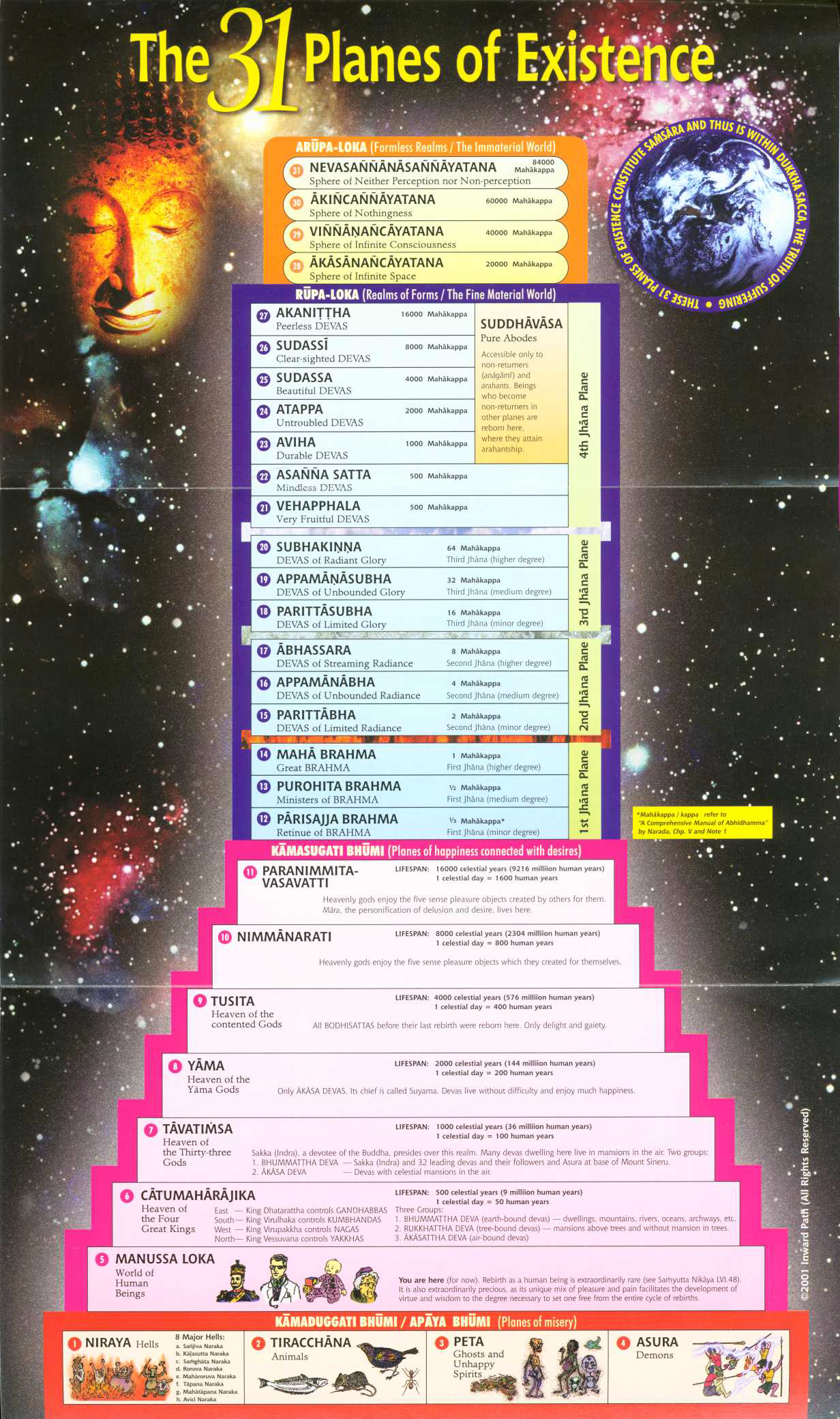
Time is an illusion. This was said. What was meant? For one thing, time is relative to location. On other planes of existence (and there are at least 31major ones the Buddha talked about), time is different.
Things tend to last much longer there in those worlds. One can see that on the animal plane, life is even more brief than on the human plane. But the average lifespan on the human plane varies, contracting down to a few decades (Decadent Age or Kali Yuga), expanding to 80,000 years (Golden Age or Satya Yuga).
At this time in the repeating cycle (samsara), time is very short. When it was 80K years long, it was very short. So it is possible, not likely but possible, to notice the radical impermanence of all things.
That's the funny thing about time, both to be an illusion and something that contracts and expands. When is now?
We can speak of an "eternal now," not "eternal" in the sense of everlasting. It is eternal in the sense of being ever-present.
Time does not move, as the speaker shows, going from the past to the present to the future. That is how the mind is ordering it, making sense of it. (There's causality, with everything arising from sets of causes and conditions. And when science detects retrocausality, what are we to make of that? How can anything that happens now or in the future ever affect the past? It can. It does. It always has.
This may sound abstract even though scientists have evidence for it, so to make it more tangible and relatable, we ask: Could you imagine being a retrosexual? (What the heck's that? It's a person who only dates people s/he has dated before, in other words, somebody who from now on only redates). Hey, they exist! Some are trans. Anyway, apart from the retrocausality in quantum physics, there is social retrocausality we see all the time if we ever bothered to notice. Everyday practically something that happens today changes the meaning of something that happened in the past. In the past, things were like this. Now they're like this. What we do a lot today changes what it means when it was done in the past. In the past it meant something, but since the "past" really only exists in our heads, that's what changing. What we're thinking changes. Past, future, they're not even real in an ultimate sense. In a conventional sense, they're very real. Better pay attention. We have to consider them, but what are we considering other than changing illusions?
The order of events may be that way, but actually it is always "NOW." We abandon the now to ruminate about the past or to worry about the future, losing the safety and potential of the ever-present.
Semi-Buddhist Eckhart Tolle, who became famous as the author of The Power of Now and through his business partner Oprah, was often asked: "How many nows are there?"
His mind would loop in disbelief about this question because of its astonishingly wrong assumptions. There aren't many "nows." There's only this now. Now is all the time. This is all there has ever been.
We can imagine a future (but when can we imagine it?) We can daydream about a better past. (But when can we do that?) There's only one answer to when anything happens or can happen.
Where and when do we have power? Where and when can we ever make a choice? When do we suffer or find bliss?
We'll lay it out, space it out, after the fact, for sure, but as we live it, when is it?
What was American guru and former Harvard professor Ram Dass (Dr. Richard Alpert) talking about when he named his classic book, condensing his Indian love-guru (Neem Karoli Baba) and other gurus' message? He distilled all of their messages down to one and the same message: "Be here now."
Mahayana Buddhism, particularly Zen, being heavily influenced by Taoism, is all about being rather than doing (karma, action). But where to be? When should we be mindful, when should we be present?
What? Be. Where? Here. When? Natch. Naturally, that is now.
How to tap into awareness | Yongey Mingyur Rinpoche | TED
(TED) Meditation asks us to slip into a state of serene presence, this moment. But why does something that sounds effortless often feel so difficult? In this lighthearted invitation, Tibetan Buddhist monk and spiritual leader Yongey Mingyur Rinpoche shares three steps to help us accept the ebb and flow of our emotions and learn to meditate anytime and anywhere. #TEDTalks#TED#meditation
Love watching TED Talks like this one? Become a TED Member to support its mission of spreading ideas: ted.com/membership
(What Meditation Really Is) 12/12/11. Visit on whatmeditationreallyis.com.
Sharon Salzberg from the "Wisdom of Awareness" Retreat with Sogyal Rinpoche and Tsoknyi Rinpoche, June 2011 (Garrison Institute, New York). She talks about the importance of a loving attitude (metta) in our modern society.
Today is the start of this year's Real Happiness Challenge. American Buddhist meditation master Sharon Salzberg hopes all will consider joining this month-long endeavor built around the exploration of happiness.
This year (2023) is the 13th year we've offered this program, and through that time, we have witnessed the world undergo much change and difficulty. Now more than ever it feels vital to cultivate the inner resources for ease and joy in the ever-shifting landscape of our lives.
Concentration Practice: Learn core techniques of concentration practice by working with the natural breath. Salzberg’s masterful approach to the process of engaged awareness and the secret sauce for any practice: the art of beginning again.
Mindfulness of the Body: Learn the basics of mindfulness by exploring body-based meditation techniques like walking meditation, body scan meditations, and practices that incorporate daily activities and household tasks.
Mindfulness of Emotions: Go deeper into the world of mindfulness with the rich terrain of emotions and thoughts. Learn practices for working with difficult emotions and building positive emotions for greater resilience.
Lovingkindness Practice: Learn core lovingkindness practices that explore how we pay attention and who we pay attention to. Cultivate genuine self-compassion and how to balance that with compassion for others and the larger world.
The Challenge is offered on a sliding scale basis, with a $10 suggested contribution, to keep this offering as accessible as possible. Full scholarships are available for those who cannot contribute financially.
This program is based on her New York Times bestselling book, Real Happiness, now in its second edition.
While the book is not required to participate in The Challenge, it is a lovely way to deepen the experience.
Real Happiness (second edition)
For anyone wanting to purchase the new edition, use the code HAPPINESS23 to receive 20% off on Real Happiness and Real Happiness at Work via Workman (US orders only).'
Sharon Salzberg hopes all will join in this robust offering, which is only available once a year during the month of February.
Wishing everyone well,
Sharon Salzberg (edited by Wisdom Quarterly)
If we were simply to be aware, that would be good. But we will not stay there because we will naturally go from what we're aware of to how we relate to it. When we fall into these customary habits of relating, judging, evaluating, measuring, and reckoning, we are far from being mindful. Rather, stay with the object, and don't go anywhere with it. Do not allow it to take us anywhere. Do not wander or wonder, think or figure. Just watch. Just be. And let it be. Keep watching, and nothing more. It will reveal itself. All we need to do is remain present, wakeful, open, radically accepting of what is, and vigilant (in the sense of staying awake for a vigil). Mindfulness is this bare awareness. It is not at all like our ordinary "awareness." But after a time, our ordinary awareness will become this way -- unentangled, undeluded, unswayed, undeceived. The habits of our greed, hatred, and delusion (passion, aversion, and ignorance) will not overtake us. And everything will be perfect just as it is.
Nowadays, pop psychologists use and abuse the word "mindfulness" (a handy translation of sati by a Western Theravada Buddhist monk Ven. Nyanaponika Thera, where previously it had been "vigilance" or "wakefulness"), having it mean simply "awareness."
A better translation would be "bare awareness," full wakefulness with detachment, dispassion, non-entanglement in all that is being perceived.
Mindfulness is NOT about thinking, evaluating, judging, measuring, or conjecturing about the field of perception. It is simply being aware of it -- as if for the first time, given that we judge and measure, evaluate and establish preferences the whole rest of the time.
[But thinking is good, right? Yes, it's good in waking life. It's good like talking is good. What's better than talking? Listening is better. Listening is about receptivity, whereas talking and thinking are active and attempting to explain what we ourselves do not yet understand. So watch rather than describe, listen rather than talk or forming vrittis (modifications and streams of mind, disturbances of consciousness, vibrations, distortions of clear seeing). To be mindful (full of presence of mind) is not to be thoughtful (full of thought). This will become sati-sampajjana or "watchful and clearly comprehending."]
When we can see in this way, we are free from it, in it, in the midst of it, standing right before it. It is no kind of escapism, but rather being fully with it, letting it be, radically accepting of it, not fixing it, not judging it, not ignoring it, not pushing it away. Instead, we are being with it, not sucked in by it, and seeing its true nature as it reveals itself under our withering watchfulness of it. What is "it"? All that is, all that is going on, all the contents of experience.
The Buddha divided all these contents into four categories of body, feelings, mind, and mind-objects.
Yogini Stella Han leads us in Meditation and Breathwork on Saturdays.
Meditation is a practice where individuals use mindfulness techniques (presence of mind, staying in the moment, full awareness and acceptance of what is) to focus the mind on objects, thoughts, or activity to help cultivate attention, expanded consciousness, and heightened awareness.
This is done in an effort to enjoy mental clarity, decrease stress and worry, and return to balance. It is the higher training of the mind following the higher training in ethical conduct and stillness.
ABOUT: Stella Han (stella4yoga@gmail.com) is a passionate full-time yoga instructor and former social worker from Los Angeles She earned a master's degree in social work degree USC) and has many years of experience in the fields of social work and psychology.
This is a question that doesn't get asked nearly enough. It is not mere "awareness." It is paying attention to the present moment without giving in to the habits of
being fond and attaching to the pleasant,
being dejected and rejecting the unpleasant
being bored and inattentive to the neutral (neither-pleasant-nor-unpleasant).
Mindfulness is therefore a special kind of awareness or presence of mind, wakefulness, vigilance that gives attention to whatever is in the present moment with radical acceptance, letting it be, and letting it go (just for the moment).
Simply being aware in the woods in not being mindful at all. Mindfulness (Sanskrit smirti, Pali sati) is remaining mindfully aware, dispassionate, detached, fully attending to without being entangled in that of which one is aware.
If lust or greed come up, be with them as a watcher without getting sucked in. If annoyance or anger creep up, be with them without becoming hostile. If boredom or mental-wandering arise, note them. That noting, that sudden awareness that the mind has wandered, is mindfulness.
Now it all becomes clear to me.
Now, bring it back to the present moment -- without becoming angry, frustrated, or dejected that wandered off, as mind by its nature will do.
Casting back to the past or forward to the future is the habit of the mind that mindfulness remedies. As Ram Dass famously said: "Be here now."
There is something magical about remaining in the moment. But we'll never know it if we never practice it until it becomes habit.
It is the way to happiness, contentment, and peace -- if done correctly, dispassionately, softly. It leads to clarity and vision, to knowing and seeing, and is essential for awakening.
The Buddha, in the famous "Fourfold Setting Up of Mindfulness Discourse," gives the four groups of things of which to be mindful:
MARC is delighted to announce the upcoming release of the second edition of Fully Present: The Science, Art, and Practice of Mindfulness. Now considered a classic in the field, Fully Present offers practical guidance on how to meditate and bring mindfulness into daily life, along with the scientific evidence behind mindfulness, such as its effect on the brain and body.
Co-written by the founder of MARC, Sue Smalley, and Mindfulness Education Director, Diana Winston, the second edition keeps the original book intact, and includes a new Afterword overviewing the changes in the science and in the mindfulness field in the last decade since publication.
Available now for pre-order. Makes a great holiday gift!
IntraConnected: Integrating Identity and Broadening Belonging as "MWe" with Dan Siegel, M.D.
In this presentation, we’ll examine the notion of “connection” and its correlation with mental health. When we feel disconnected from our inner life, we suffer; when we are disconnected relationally—from people and nature—we can become anxious, depressed, despondent.
What is this powerful “connection” actually made of, what is it, and how can we take the science of connection and inform the practice of psychotherapy? In many ways, the experience of a separate, solo-self may underlay the many challenges we face, from racism and social injustice to environmental destruction.
The field of mental health can play a pivotal role in how we help our human family move toward a new way of living on Earth by addressing the modern cultural excessive focus on individuality in the separate sense of self. These questions and their personal, professional, and public implications will focus our discussion on the nature of both interconnection—the links between parts of a system—and intraconnection—the wholeness of the system.
All experience levels are welcome
Date: Sat Dec 3 Time: 10:00 AM- 1:00 PM, PT Cost: $0-$50
MAPs II: Mindful Self-Care Part 2 with Gloria Kamler
This class is for students who have taken MAPs I and MAPs II classes and wish to deepen their mindfulness practice.
Open to anyone who is interested in Self-Care as we focus on qualities of the heart. You do not need to have taken Part 1 to benefit.
We will cultivate mindful attention through sitting, walking and stretching meditations to enhance practice on the cushion and in daily life.
This class will also include lecture and discussion.
In addition to the traditional ways we do mindfulness practice, we will also incorporate specific movement practices that foster self-care and the cultivation of altruistic qualities of the heart.
MAPs III: The Buddhist Roots of Mindfulness with Diana Winston
This class will explore the core Buddhist teachings that are implicit in mindfulness practice. In particular, we will look at the Four Noble Truths, which in classical Buddhism are said to incorporate the whole of the Buddhist teachings.
We will investigate these Noble Truths personally, how they are understood in Buddhist philosophy, and how they can deepen and enhance our meditation practice.
Dates: Thurs, Jan 12-Feb 16 (No class Jan 26) Time: 10:00AM- 12 Noon, PT Cost: $0-$200
Day of Mindfulness: Setting Conscious Intentions For Our Lives And World In 2023 with Deborah Eden Tull
Recognizing the importance of setting clear and supportive intentions for our lives and our world, this day-long retreat offers mindfulness practices for renewal and transformation, In celebration of the new year, you will be invited to listen deeply, reflect, restore, and create anew. You will be invited on an embodied journey bridging personal and collective awakening. Rather than setting New Year's resolutions based on the myth of self-improvement, we will set intentions from the heart of our being, supporting each other in moving beyond limiting beliefs and the illusion of separate self.
Grounded in mindfulness and acknowledging the gravity of the times we face, we will seek to cultivate compassion, clear-seeing, and possibility through meditation and mindful inquiry, reflective writing, and somatic practices.
Day of Mindfulness: Energize Your Practice with Gloria Kamler
This all-day retreat is dedicated to deepening your mindfulness practice. Sometimes in meditation we find our bodies are uncomfortable or tense. Since ease and relaxation serve our meditation practice, this retreat will devote significant time to mindful movement, also known as "Easy Stretching Postures." These postures can be useful for cultivating relaxed awareness, ease in the body and an open heart.
We will use various activities to cultivate mindful attention including sitting, walking, stretching and eating. The day will also include lecture and discussion.
This retreat is suitable for new or experienced practitioners.
MAPs Applications: Paying Attention Mindfully — The Key to Well-Being in 2023 with Mitra Manesh
Do you know where your attention is right now? Often, most of us don’t know the answer to this question! We do know life has changed. Our old norms are gone, we’re bound to re-create new ways of living and working… and hence we come to realize there is an even stronger call for us to learn to command our attention more intentionally and more mindfully.
In this virtual live 4-week class, we will identify the value and nature of our attention, explore ways to mindfully discern what we want to pay attention to, and learn methods and tools to direct our attention along those lines. There will be lectures, practices, dyads, journaling, and Q&A. This is a participatory class that requires your full attention!
Dates: Sun, Jan 29 - Feb 19 Time: 10:00AM- 12 Noon, PT Cost: $0-$165
All materials on this site are submitted by editors and readers. All images, unless otherwise noted, were taken from the Internet and are assumed to be in the public domain.
In the event that there is still a problem, issue, or error with copyrighted material, the break of the copyright is unintentional and noncommercial, and the material will be removed immediately upon presented proof.
Contact us by submitting a comment marked "private."
Do not follow this journal if you are under vinaya or parental restrictions. Secure protection by Sucuri.
Wisdom Quarterly: American Buddhist Journal is licensed under a Creative Commons Attribution-Noncommercial-Share Alike 3.0 United States License. Permissions beyond the scope of this license may be available at creativecommons.org/about/licenses.




.jpg)


 Do you know where your attention is right now? Often, most of us don’t know the answer to this question! We do know life has changed. Our old norms are gone, we’re bound to re-create new ways of living and working… and hence we come to realize there is an even stronger call for us to learn to command our attention more intentionally and more mindfully.

























































