Showing posts with label Buddhist Publication Society. Show all posts

Thursday, May 14, 2026

Hybrid retreat with Bhikkhu Bodhi (9/4-7)


Four-Day Hybrid Retreat
with Ven. Bhikkhu Bodhi (online or in-person)
Buddhist Association of the United States (BAUS, Chuang Yen Monastery, Carmel, Upstate NY

PRACTICING THE DHAMMA:  From Bondage to Liberation a Four-Day Hybrid Retreat with Ven. Bhikkhu Bodhi
Beginning Sept. 4th and running through Sept. 7th a retreat will study the groups of mental factors that hold us in bondage to samsara, the cycle of repetitive birth and death, and the opposing factors that lead to liberation.

This retreat is based on the Comprehensive Manual of Abhidhamma, Chapter II, Sections 4–8, and Chapter VII, Sections 3–14 and 24–40.

The retreat includes Dhamma talks, discussion periods, and five sessions of meditation each day. It also provides the opportunity for those who haven’t yet “gone for guidance” (ti-sarana) to go for guidance to the Three Jewels, the first decisive step to formally becoming a follower of the Buddha-Dharma.

This retreat is conducted in hybrid mode, meaning it is both onsite in New York and online worldwide. Those who cannot attend in person can practice at home, participating online over Zoom or YouTube.

Those who wish to join in-person can come to BAUS/Chuang Yen Monastery and stay from Friday evening until Monday afternoon.
  • The monastery can accept only 50 onsite practitioners. If someone applies after the 50 spaces have been filled, that person will be put on a waiting list and accepted if prior applicants drop out.
Remember, anyone who can’t join in person can join from home via Zoom or YouTube.

REGISTER to participate in person only if committed to coming to Chuang Yen Monastery and staying all the way through Monday afternoon. If participating only part time, please join online.

A more detailed schedule will be posted later, but reserve these dates now. To register, go HERE.

Order a copy of the Comprehensive Manual of Abhidhamma (either electronic edition or hardcopy) from Pariyatti Press HERE.
BAUS: The Buddhist Association of the U.S.
美國佛教會
2020 Route 301 Carmel, NY 10512
contact@baus.org

Wednesday, March 19, 2025

Sexual Pleasure and Concept of Sin


Reduced to essentials, the great debate about sex revolves, for many, around the concept of "sin." To the Puritan, indulgence in sexual activity for the sake of pleasure is evil, wicked, or as Christians say, "sinful" (i.e., displeasing to their God).

To the permissive person, this is nonsense. One probably rejects the term "sin" as meaningless and not only sees nothing "evil" in sexual pleasure but regards it as highly legitimate, perhaps as the highest pleasure there is and certainly as something to which, in principle at least, everybody has a right.

Many [American and European] people, coming from a more or less Christian background with at least some Puritanical overtones, find the true Buddhist attitude to this problem rather difficult to see. Perhaps they have never even been given a clear explanation of it, or if they have, it may have seemed too technical for them, and they have not grasped the point.

Puritans were fond of the pillory for immodesty and more, 17th century art (pixels.com)
.
"Purity" or pure hypocrisy?
The point, in fact, is of considerable importance, so it is worthwhile attempting to make it clear. It involves a proper elementary grasp of what is meant by karma — something that many people, who may have been "Buddhists" for years, have never had.

However, we may begin more profitably by considering the word. "Sin" to a Christian is primarily thought of as a breach of their God’s commandments. This explanation is correct so far as it goes in terms of theology, but it is not applicable in Buddhism, where there are no such "commandments" upon which one can infringe.

The Buddhist precepts are undertakings given to oneself, which is something different. They are more on a par with the instruction, "Look both ways before crossing the road." Of course, there is much agreement between the content of the Five Precepts and some of the Ten Commandments, so it may be wise in many cases to behave accordingly, whichever formulation one follows.

However, there is another rendering of the word "sin" which in fact (though less well-known) comes much closer to the Buddhist view of things.

In the Bible, "sin" is a rendering of Hebrew and Greek words that literally mean "missing the mark," that is, behaving inadequately or unskillfully.

The sinner, then, is like an unskillful archer who misses what is aimed at. (Could this be the real meaning of Zen and the Art of Archery?) This comes, surely, very close to the idea of akusala karma or "unskillful action" in Buddhism.

The Pali word kamma (Sanskrit karma) literally means "action" (i.e., cetanā, "volitional deed"), which can be either skillful (kusala) or unskillful (akusala).

The results of action (karma) accrue to the doer as vipāka ("resultants"), which is pleasant when the action was skillful, unpleasant when it was unskillful. (If one looks before crossing the road, one shall get across safely, which is pleasant; if not, one may get run down, which is unpleasant).

The feelings we experience are of the nature of resultants (vipāka). They are dependent on past karma. And of course, we are continually creating fresh karma most of the time.

Gnostic Christianity on the "virgin birth"

It should be noted that the feeling of pleasure (sexual or otherwise) is not an action but a result. There is, therefore, nothing either "skillful" or "unskillful" about experiencing such a feeling, and we should therefore not regard it either as "virtuous" or "sinful." So far so good.

Such pleasant feelings can be enjoyed with a clear conscience and no guilt feeling, [Alanis]. If this were all, there would be no problem.

The Puritans would be routed and the permissive people justified. Unfortunately, there is another side to the matter.

Years ago, there was a song called "Money is the Root of all Evil." Some pointed out that it is not money, according to the Bible, but the love of money that is the root of all evil. And here is the snag. Sexual pleasure (like money) is not "evil" (or unskillful), but attachment to sexual pleasure (like the love of money) is.

What Bible says about sin as missing the mark
If we can experience the pleasure without attachment, we are all right; if we become attached to it, we are "missing the mark." Now, of course, it is rather difficult (to put it mildly) to experience pleasure of any sort without developing attachment. Attachment is karma, unskillful karma at that. The results of that will inevitably, according to Buddhism, be something unpleasant in the future.

Many people will find this explanation novel. Some will find it puzzling. Some will undoubtedly reject it — with or without investigation — with the excuse that it is overly subtle, or arbitrary, or something of the sort.

What they mean is that they find it inconvenient. But it will repay a lot of consideration and mindful investigation. Careful study should show that it is the key to the whole problem.

The Twelve Links of Dependent Origination
The matter can also be considered in terms of the law of Dependent Origination: "Contact is the basis for the arising of feeling; feeling…of craving; craving…of clinging," and so on, the ultimate outcome being the continued process of becoming, with all the suffering that entails.

Therefore, if we wish to adjudicate between the Puritans and the permissive people, we cannot say that either side is entirely right. We might suggest that the Puritans are partly right for the wrong reasons.

Sexual indulgence is not wicked, but it may be to some degree inadvisable. Most people will not feel able to refrain altogether, nor are they being urged to, but there is merit in moderation.

Marriage
Calm down, Hun. - Don't call me Hun, you SOB!
What is the Buddhist attitude towards marriage? For many Buddhists, East and West, there is no great problem. They live a reasonably normal married life just as others do by luck or enjoying the results of favorable past karma. For others, serious problems arise. In the Christian tradition, marriage is a "sacrament." In some branches of Christianity it is treated as an unbreakable bond with a few loopholes.

Other branches of Christianity permit divorce in certain narrowly defined circumstances and of course in most countries the state permits divorce and remarriage, with or without the approval of the Church.

In Buddhism, marriage is not a "sacrament," as such a concept does not exist. And it is not any part of the functions of Buddhist monastics to join people together in wedlock (or deadlock). It is occasionally done in Japan as a modern idea in conformity with a tendency to imitate (perhaps unwisely) Christian institutions....

Sex Outside Marriage
That was awkward. - Good thing we didn't marry.
We should try to look at things calmly and clearly and, above all, responsibly. Nowadays there is pretty frank acceptance of what has always been the case, that a lot of people in fact have sexual intercourse without going through the formality of getting married (the "sin" called fornication).

No doubt there is more of it now than before because, for one thing, contraception is more effective than it formerly was and also because religious prejudices are fast breaking down.

This is a statement of fact, not of what ought or ought not to be. In the case of engaged couples, it is probably now the usual thing and is not heavily frowned on by most people. But it is not rare among couples who have not the slightest intention of getting engaged.

In the past, premarital sex was widely considered (and almost openly admitted) a good thing for young men but a bad thing for young women.

Now sexual equality has caught up. We may as well accept the fact that whatever we may think about it, preaching by older generations will, by and large, have precious little effect on the young. This is probably something most parents are worried about. More
  • Maurice O'Connell Walshe, Buddhism and Sex, BPS.lk; edited by Wisdom Quarterly

Thursday, July 25, 2024

Secret Teachings of Theravada Buddhism


The Secret Doctrine
If there were a book that had all of the secret teachings of Theravāda Buddhism, the Path of Purification (Visuddhimagga) would be it.

This compendium explains all of the good stuff, like:
  • how to attain samādhi (super consciousness, coherent stillness, purified concentration);
  • how to attain psychic powers, including knowing and seeing past lives.
  • it includes the stages of insight and wisdom that one needs to reach nirvana.
Knowing and Seeing
Books do not get more complete than this. One can read a FREE and condensed version of this path in a book called Knowing and Seeing by Ven. Pa-Auk Sayadaw (amazon.com), who teaches the exact method based on the Path of Purification. Find the free PDF link here.

If one wishes to know more about mindfulness-of-breathing (ana-pana-sati), Ven. Nyanamoli wrote a small book that contains information from both the Path of Purification and what some say is its predecessor the Path to Freedom (Vimuttimagga). It can be found free at urbandharma.org or in book form at this amazon.com link.

Basically, there are no secrets in Early Theravāda Buddhism because the historical Buddha proclaimed that he was not teaching a "secret" doctrine but one who offered his Dharma (his Doctrine and Discipline) openly to those wise enough to hear it.

There are, however, texts that are not well known (until now). We should never have to pay for such teachings because they are priceless and if people paid the price of it, no one would be able to afford it. Be wary if anyone asks for payment for these sacred Teachings.

All of the content inside Knowing and Seeing can be learned at Pa-Auk Meditation Centers. There is no charge at these centers, not for food, teachings, or lodging.

Best of luck, and please let me know how things go!

Bhikkhu Subhuti
  • Buddhaghosa compiling the texts in Sri Lanka
    Wikipedia
    (edited by WQ): Visuddhimagga (The Path of Purification), is the "great treatise" on Theravada Buddhist doctrine compiled by Ven. Buddhaghosa in approximately the 5th century in Sri Lanka. It is a comprehensive manual condensing and systematizing the theoretical and practical teachings (vada) of Gautama Buddha as they were understood by the "elders" (theras) of the Great Monastery in Anuradhapura, in ancient Sri Lanka. It is described as “the hub of a complete and coherent method of exegesis (explanation) of the Three Baskets (Tipitaka), using the Abhidhamma method as it is called. It sets out detailed practical instructions for the purification of mind. It is considered the most important [commentarial] Theravada text outside of the threefold canon of the scriptures. Its structure is based on the Rathavinita Sutta (the “Relay Chariots Discourse,” MN 24), which describes the progression from the purity of discipline to the final destination of nirvana in seven steps. Its contents strongly resemble the material found in brief in an earlier treatise called the Path to Freedom (Vimuttimagga). [This is because both are thought to be written by the same author, one as a draft or outline and the other with all of the details added.]

Saturday, July 6, 2024

Incense, peppermints? The 4 Noble Truths


LYRICS: "Incense and Pepermints"
(The Strawberry Alarm Clock)
Good sense, innocence, cripplin' mankind/ Dead kings, many things I can't define/ Occasions, persuasions clutter your mind/ Incense and peppermints, the color of time// CHORUS: Who cares what games we choose?/ Little to win, but nothin' to lose// Incense and peppermints, meaningless nouns/ Turn on, tune in, turn your eyes around/ Look at yourself, look at yourself, yeah, girl/ Look at yourself, look at yourself, yeah, girl, yeah, yeah// To divide the cockeyed world in two/ Throw your pride to one side,/ it's the least you can do/ Beatniks and politics, nothin' is new/ A yardstick for lunatics, one point of view.

One may ask why Wisdom Quarterly is "all over the map, talking about this and talking about that." It's a good question, and the answers rests largely on the Buddhist Publication Society (bps.lk) and in particular this small book written by Francis Story. One picks it up to read about something as direct and easy as the Four Noble Truths, and what one gets instead is all over the map, no topic untouchable. It liberated us to think we could talk about anything. And we can. It all relates. For a pure treatment limited to Buddhism and Buddhism alone, see Wisdom Stringently. 😏

Foundations of Buddhism: Four Noble Truths
Francis Story (Wheel 34/35, Buddhist Publication Society) edited by Wisdom Quarterly 2024
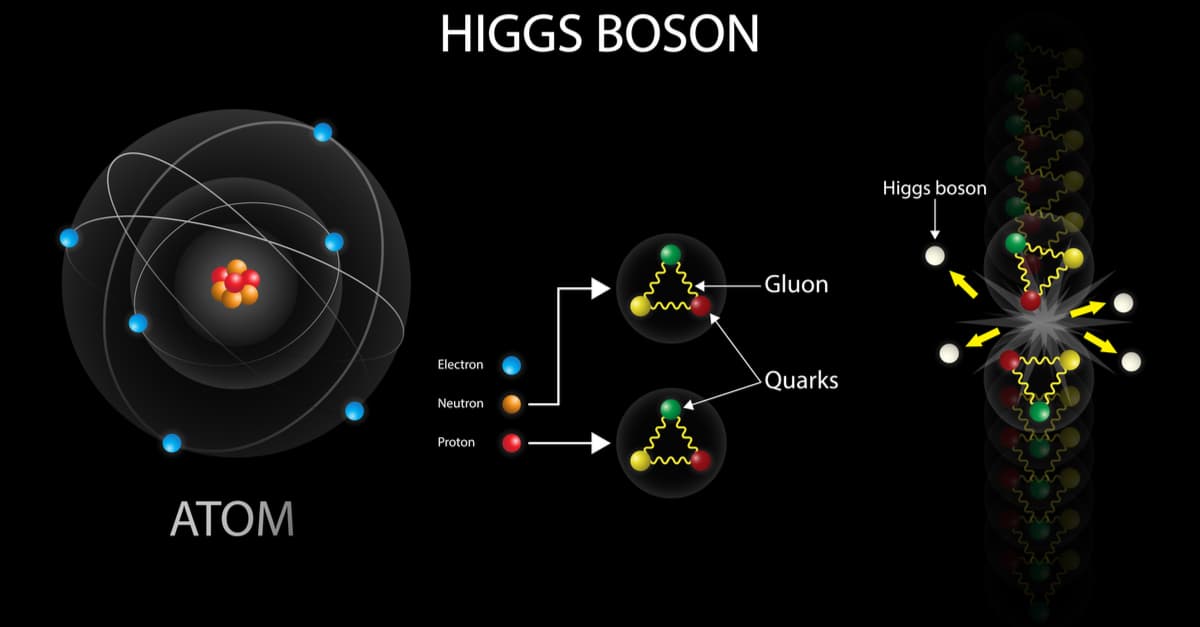
Are you a wave, Sis? - No, Bro, I'm a particle waving, a wavicle. - Groovy! Hang ten.
.
Humankind, pondering and disputing, has been engaged for so long in trying to find an answer to the enigma of existence, and so many first-class minds have been devoted to the task, that had the problem been open to solution by the intellect alone, we should certainly have been furnished with the definitive blueprint of our being, beyond all doubt or conjecture, many centuries ago.

From the time when prehistoric myth became merged into an attempt to give a rational account of the universe the questions, "What is life? How did it originate? Has it a purpose, and if so, what is it?" have haunted the imagination; yet, still for most people they remain unanswered.

Reason has offered a wide range of ingenious possibilities from the speculations of the Eleatics down to the more sophisticated theories of the modern epiphenomenalists, but so far reason has failed to provide any reasonable explanation that is not open to equally reasonable objections.

While reason has failed, its alternative, supernatural revelation, has shown itself equally contradictory and inconclusive, and it has suffered an even worse defeat. Its historical record has weighed heavily against it because of the disastrous influence it has often exerted in human affairs.

The private revelations of mystics, by their exclusively subjective nature, can never offer more than an insecure foothold for faith in those who have not directly shared them, and a doubtful faith is the father of fanaticism.

The record of human speculative thought down the centuries has come to resemble a maze of tracks in a boundless desert. The tracks can be identified by their characteristics; they are the tracks of religion, of philosophy, and obliterating many of these, the more recent tracks of science.

For the most part the tracks of religion go round in circles. Beginning as myth they continue as myth hardened into dogma, and so they go over the same ground in endless repetition.

Other tracks wander along aimlessly, drawn in this direction and that by new theories, new discoveries and new contacts, their path as variable as the wind. These are the tracks of philosophy, the imprints of humanity's restless and inquiring mind — a mind which, despite its courage and adventurousness, has only the old material to work over and so is reduced to combining ideas in endless permutations, seeking to reconcile the irreconcilable and always failing to reach an end.

Then, superimposed on these there are the imprints of scientific thought, which has invaded philosophy to an ever-increasing extent, but which at the same time discourages any concern with ultimate issues or with questions of value and purpose.

Time and again the older tracks of philosophy and religion are seen to have crossed one another, and where they met there are signs of a scuffle. Too often, there is blood on the sands of history. So it has been ever since humans emerged as a kind of animal capable of abstract thinking.

Now we have entered a phase in which supernaturalism has given way almost entirely to scientific knowledge, and the approach to the problem is somewhat different. Yet, science has not brought us any nearer to the answers.

The tracks of thought still remain indecisive, their beginning a mystery, their end a mark of interrogation. Present-day knowledge with its unprecedented accumulation of facts concerning the physical universe and the constitution of living organisms has provided philosophers with a vast stock of new material to take into account, but so far the result has only been to give the mind more than it can handle.

Far from clarifying the general picture, the effect has been to overcrowd the canvas. To correlate the various specialized branches of knowledge is a stupendous task, one that is further complicated by the areas of uncertainty in each of them.

The non-specialist is seldom in a position to be able to separate conjecture from established fact in the scientific disciplines, and this is particularly so in the case of those which relate to the life processes, such as genetics and biochemistry, and are therefore the most relevant to the inquiry.

Besides this, the facts that science presents often seem to point to opposite conclusions. Despite the great advances that have been made in physics, technology is still working to a great extent with factors that are not completely understood or even satisfactorily defined.

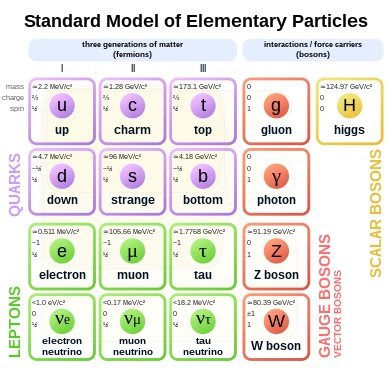
There are, for example, certain radiations forming the basic structure of the universe that appear both (depending on the observer) as waves and as particles, although logically they cannot be both at the same time.

It is not even certain whether the expression "at the same time" has any meaning in a universe where events can hardly be said to be simultaneous at all and where the image of a star seen from a distance of many thousands of light years may be nothing more than the ghost of something that ceased to exist in space before humans appeared on earth.

Expanding knowledge tends to cut us adrift from the apparent security of empirical facts, and in many ways the nature of thought itself has been brought into question. There are people who entertain the hope that at some time in the not-too-distant future we may be able to get final answers to questions that have tormented men for generations by feeding all the relevant data into an electronic brain. (An AI robot named Hal?)

But that hope is founded on two very large assumptions. The first is that all the necessary data will eventually become available, and secondly that humans (or ETs) can devise a machine more capable than that machine's creator.

So far, the most advanced electronic computer has not been able to do more in the field of mathematics than a human mind can do. It only does it more quickly. Even there it adds nothing new; there have been abnormal human brains that could extract cube roots with the same speed and accuracy.

If a new and basically different mode of thinking is needed, it must be sought for elsewhere than in electronic machines. Does this mean that we shall never know any more about the ultimate things than we do now?

The conclusions to which science moves at present are, in regard to the older beliefs, chiefly negative. They tell us what is no longer believable, but do not suggest alternatives or encourage any positive inferences. Yet, in the quest for truth science contributes something of greater value than the facts it provides.

It offers a method of inquiry, a disciplined use of the facts at hand, which is more productive than the pursuit of random theories. It indicates a method by which the data of experience, no matter how limited they may be, can be taken as starting points for a journey into unknown territory and how from a few observed facts a general principle can be deduced.

Furthermore, it includes as an important part of its method the readiness to discard whatever theory is found to be in disagreement with the observed phenomena. And this iconoclastic function of science points to a truth of the highest significance, namely, that in the search for reality what is most essential is not the gathering and tabulating of facts, but the understanding of those facts in their true relation to one another.

The preliminary stripping away of hitherto accepted ideas until we are left with nothing more than the bare bones of experience is needed to get at the experience of the most fundamental and universal kind.


Science works on theories, certainly, but is prepared to abandon them when they fall flat; it does not build model cosmologies from selected materials. This method, which has been responsible for everything we can claim to have derived from our knowledge of the physical universe, is the only profitable one to follow when we seek to enlarge our understanding beyond the world of immediate sensory perception.

And it is towards the possibility of such an extension that the psychological sciences are now turning. There is an increasing recognition of the truth that the world of external phenomena is only a part — and by no means the most important part — of humanity’s total experience.

What goes on within us, in our psychological responses and motivations, and also on the intuitive levels of the mind, is being given the same analytical scrutiny as that which is turned on the objective features of the universe.

For the first time, scientists are making a serious study of the mental processes, conscious and unconscious. They are giving equal attention to the paranormal aspects of the mind, such as the phenomena of telepathy, clairvoyance, and the recollection of previous lives.

From this may develop an entirely new approach to the problem of being -- a new one, that is, so far as the West is concerned. But nothing in mental science or in philosophy is really new.

More than six centuries before the Christian era, the tracks of speculative thought had reached a stage of the utmost complexity in India. There we find the familiar arguments of mysticism versus rationalism, of empiricism, pragmatism, logical positivism, the opposing views of "eternalism" and "annihilationism" [the view that we live forever or live now but are annihilated at death] and of so many intermediate doctrines that it can be safely said that later philosophers have been able to produce nothing that was not a duplication or variant of one or the other of them.

When we examine the 62 views (diṭṭhis or theories) regarding the nature of life and the universe that were current in the time of the Buddha and described by him in "The Net of All-Embracing Views" (the Brahmajāla Sutta of the Long Discourses), we find there the seeds of all later thought, the archetype of every idea that has appeared in philosophy between Plotinus and Kierkegaard.

That some of them were the doctrines of established schools which had been in existence long before the birth of the Buddha is evident from the accounts of the Buddha’s own search for enlightenment, for on renouncing the world the prince who became a wandering ascetic, Siddhattha Gotama, first placed himself under two yogi teachers from among the many sects that were already laying claim to ultimate knowledge.

Let's teach Sid the way our teachers taught us

Those teachers, Ālāra Kālāma and Uddaka Rāmaputta, were not logicians but exponents of yoga. As such they had their philosophy, but its final vindication was to be sought in the subjective realm through meditation, in an intensified perception outside the scope of formal reasoning.

By the practice of meditative absorption (jhāna), they had in fact succeeded in raising consciousness to a higher power. But great as were the achievements of these two eminent yogis, the wandering ascetic Gotama did not find the full enlightenment he sought within their meditative systems. Neither did he reach it by way of the extreme asceticism to which he later turned when he left them.

He found, on the contrary, that an entirely new mode of approach was needed if he were to break through the thicket of views and tangle of conceptual thinking on the one hand, and sublimated consciousness on the other.

By traditional yogic methods, he had gone beyond the world of forms but not beyond that of ideas or the mere suspension of ideas. He found that the degree of illumination these methods gave was far from that of absolute knowledge and spiritual liberation.

Thrown back on his own resources, with no longer any guiding principle except what he might find within himself, he returned in thought to the original impulse of his quest.

Its beginning, significantly, lay in a very early experience he had known, which was of an intuitive kind.

When he was 7 years old, he had been sitting watching his father, King Suddhodana, carrying out the ritual of the spring festival's first ploughing. His attention had been caught and held by the flocks of birds that followed in the wake of the plough; they were eagerly scratching in the newly-turned furrows for worms and insects.

Driven by hunger, the all-demanding craving that is ever present in nature, and excited by the sight of their living prey, birds of all kinds were quarrelling and fighting one another, a noisy, turbulent mass of feathered bodies, mercilessly striking and tearing with beak and claw. More

Monday, July 17, 2023

The Buddhist Book of Protection (chants)

Ven. Piyadassi Thera (BPS.lk); Dhr. Seven and Amber Larson (eds.), Wisdom Quarterly


PREFACE
The Book of Protection, which is an anthology of selected discourses of the Buddha compiled by the teachers of old, was originally meant as a handbook for the newly ordained novice monastic.

The idea was that those novices who are not capable of studying large portions of the Discourse Collection (Sutta Pitaka) should at least be conversant with The Book of Protection. Even today it is so.

The twenty-four discourses are selected from the five nikáyas or the original collections in the Pali language containing the Buddha’s discourses. The fact that the book was meant for the novice is clear from the prefatory paragraphs that precede the discourses.

The precepts are ten, not the five basic principles of the lay follower. The novice is expected to observe the Ten Precepts. This is followed by the "Questions to be Answered by a Novice" and the "Thirty-Two Parts of the Body," which is really a type of meditation on the constituent parts of the human body.

Then comes the "Fourfold Reflection of a Monastic," and finally the "Ten Essentials (Dhammas)" to be reflected upon by one who has gone forth to live the high life [of a monastic].

The discourses come next. If one patiently and painstakingly studies these discourses or sutras, one could gather knowledge of the essential and fundamental teachings of the Buddha. The Mahá-samaya Sutta (No. 18) and the Átánátiya Sutta ending the book (No. 24) may appear to some as pointless, but a careful reader will no doubt appreciate their relevance.

In the essay "The Book of Protection and the Value of Paritta" an attempt is made to show what paritta means to a Buddhist.

I have endeavored to keep as close as possible to the original wording of the Pali text without making it too liberal a translation, on the one hand, or a word for word translation, on the other, and have avoided translating the Pali stanzas into verse (except the stanzas of Discourses Nos. 5, 11, 19) in order to give a very faithful, easy and readable rendering.

I have preserved the synonymous words and repetitions found in the sutras since they are [presumed to be] the very words of the historical Buddha handed down to us through oral tradition.

In all the sutras the word Bhagavá, the "Blessed One," an epithet of the Buddha [which itself is another epithet meaning the "Awakened One" for Siddhartha Gautama], is frequently used.

To avoid using the same word too often in the translation, I have, at times, used "the Buddha" for Bhagavá or a personal pronoun to denote him.

The Angulimála Paritta is a short discourse that does not appear in the Book of Protection (Paritta text), but as it is a paritta made use of by expectant mothers in Buddhist lands, I have included it in the Appendix.

English renderings of other Pali stanzas used by Buddhists when reciting the parittas are also included in the Appendix.

PUBLISHER'S NOTE to 2nd Edition
This second, retypeset edition of The Book of Protection contains the Pali text, which is derived from the digital text of the Catu-bhánavára as prepared by Bhikkhu Ánandajoti and available on the Metta.lk website.

1. INTRODUCTORY ESSAY
The Book of Protection is a collection of paritta or "protective" discourses — in Sinhalese Pirit Potha — that is the most widely known Pali language book in Sri Lanka.

It can be called a "Buddhist Bible" [for its devotional uses]. It is given an important place in the Buddhist home and is even treated with veneration.

In most houses where there is a small shrine this book is kept there so that the people may refer to it during their devotional hour. Some have committed to memory the three well-known discourses — Mangala, Ratana, and Karanìya-Mettá Suttas. (See Suttas 2, 3, 4).

Even children are familiar with these discourses, for they learn them from their parents and elders or from the "Dhamma school." The habit of listening to the recital of protective chants or sutras among Westerners is growing slowly and steadily.

The present writer, while on missions in America and European countries, has at the request of several residents there, recorded the recital of chants for their benefit and has mailed cassettes containing the recitals to those who sent him such cassettes.

Now, what does this book contain? It is a collection of 24 sutras or discourses almost all delivered by the Buddha and found scattered in the five original collections (nikáyas) in the Pali language, which form the Sutta Pitaka, the "Canonical Discourses."

These discourses are preceded by an enunciation of the Threefold Guidance, the Ten Precepts, and questions asked of a novice.

This collection of discourses has a less known title, Catu-bhánavára (Sinhalese Satara-banavara). A 13th century commentary to the collection -- written in Pali by a pupil of Ven. Rájaguru Vanaratana of Sri Lanka -- is available under the title Catu-bhánavára-atthakathá or Sárattha-samuccaya.

What is a bhánavára? It is a collection of sermons or discourses. Four such collections are called Catubhánavára.

As the teachers of old have said, a three-word line (pada) is made up of eight syllables (attha-akkhara), four such padas make a stanza or a gáthá. Thus stanzas consist of 32 syllables. Two hundred such stanzas are called a bhánavára, which consists of 8,000 syllables.

The Catubhánavára was compiled by the Great Elders (Mahá Theras), the teachers of yore (poránakácariyá) in Sri Lanka. That is what is known today among the Buddhists of Sri Lanka as the Pirit Potha or The Book of Protection.

It is customary for Buddhist monks, when they are invited to homes of lay Buddhists on occasions of domestic importance, such as birthdays, housewarmings, illnesses, and similar events to recite the three popular discourses mentioned above.

In the domestic and social life of the people of Sri Lanka a pirit ceremony is of great significance. No festival or function, religious or social, is complete without the recital of a protective chant.

On special occasions monks are invited to recite paritta suttas not for short periods but through the night or for three or seven days, and at times, for weeks.

On such occasions a pavilion (pirit manðapaya) is constructed for the purpose of accommodating the monks at the recital.

Before the commencement of the recital, Buddhists present at the ceremony make a formal invitation to the monks by reciting in Pali three stanzas that explain the purpose of the recital. (See Invitation below).

Then generally about 12 or 14 monks who have been invited will recite the three popular sutras. Thereafter a pair of monks will commence reciting the remaining sutras for two hours. Then they retire and are followed by another pair for another two hours.

Two monks must constantly be officiating. In this manner the recital lasts till dawn. While the recital continues, there will be found a pot of water placed on a table before the monks.

On this table there is also the sacred thread (pirit nula). For an all-night pirit ceremony, the casket containing a relic of the Buddha, and the Pirit Potha or The Book of Protection written on ola (talipot palm) leaves are also brought into the pavilion.

The relic represents the Buddha, the Pirit Potha represents the Dharma or the Teachings of the Buddha, and the reciting Monastic-Community represents the Noble (Enlightened/Ariyan) Sangha, the attained disciples of the Buddha from stream winners to arahants.

The thread is drawn around the interior of the pavilion, and its end twisted around the casket, the neck of the pot of water, and tied to the cord of the ola-leaf book.

While the special discourses are being recited, the monks hold the thread. The purpose is to maintain an unbroken communication from the water to the relic, to the Pirit Potha and to the officiating monks, (Buddha, Dharma, Sangha, the "Three Jewels" or Ti-ratana).

A ball of thread connected to the Three Jewels and the water is released and passed on to the listeners (seated on mats on the ground), who hold the thread while the recital goes on.

When the recital in Pali of the entire book is completed around dawn, the thread made sacred by the recital is cut into segments and distributed among the devotees, tied around their wrists or necks [like friendship bracelets].

At the same time the sanctified water is sprinkled on all. They may drink a little of it then sprinkled on their heads. These are to be regarded as symbols of the protective power of the paritta that was recited.

It is a spiritual service producing blessings, but it has psychological [and physcial] effects.

Dr. Bernard Grad of McGill University in Montreal painstakingly proved that if a psychic healer held water in a sealed flask and this water was later poured on barley seeds, the plants significantly outgrew untreated seeds.

But — and this is the intriguing part — if depressed psychiatric patients held the flasks of water, the growth of the seeds was retarded.

“Dr. Grad suggests that there appeared to be some ‘X factor’ or energy that flows from the human body to affect growth of plants and animals. A person’s mood affected this energy. This previously unacknowledged ‘energy’ has the widest implications for medical science, from healing to lab tests, Grad says” [1].

As experimentally discovered by Dr. Grad, mind can influence matter. If that is so, not much thinking is necessary to draw the logical inference that mind can also influence mind. Further, if the human mind can influence lower animals, then by a parity of reasoning the human mind can influence the minds of beings higher than animals [such as other humans and devas or "shining ones" of various orders]. More

CONTENTS
  • Preface v
  • Introductory Essay 1
  • The Book of Protection 1
  • The Value of Paritta 3
Introductory Chants
  • I. Árádhana (Invitation) 10–11
  • II. Deváradhana (Invitation to Deities) 10–11
  • III. Saranagamana (Going for Guidance) 10–11
  • IV. Dasasikkhápadáni (The Ten Training Precepts) 10–11
  • V. Samanerapañhá (Questions to be Answered by a Novice) 12–13
  • VI. Dvattiísákára (The Thirty-Two Parts of the Body) 12–13
  • VII. Paccavekkhaná (The Four-fold Reflection of a Monastic) 12–13
Discourses (Sutras)
  • 1. Dasadhammasutta (Discourse on the Ten Dhammas) 14–15
  • 2. Mahámangalasutta (Discourse on Blessings) 16–17
  • 3. Ratanasutta (The Jewel Discourse) 18–19
  • 4. Karanìyamettasutta (Discourse on Loving-Kindness) 24–25
  • 5. Khandhaparitta (Protection of the Aggregates) 24–25
  • 6. Mettánisaísasutta (Discourse on Advantages of Loving-Kindness) 26–27
  • 7. Mittánisaísa (The Advantages of Friendship) 28–29
  • 8. Moraparitta (The Peacock’s Prayer for Protection) 30–31
  • 9. Candaparitta (The Moon Deity’s Prayer for Protection) 32–33
  • 10. Suriyaparitta (The Sun Deity’s Prayer for Protection) 32–33
  • 11. Dhajaggaparitta (Banner Protection) 34–35
  • 12. Mahákassapattherabojjhaòga (Factors of Enlightenment) 38–39
  • 13. Mahámoggallánattherabojjhaòga (Factors of Enlightenment) 40–41
  • 14. Mahácundattherabojjhaòga (Factors of Enlightenment) 44–45
  • 15. Girimánandasutta (Discourse to Girimánanda Thera) 46–47
  • 16. Isigilisutta (The Discourse at Isigili) 54–55
  • 17. Dhammacakkappavattanasutta (Discourse on the Setting in Motion of the Wheel of Truth) 58–59
  • 18. Mahásamayasutta (The Great Assembly) 64–65
  • 19. Álavakasutta (Discourse to Álavaka) 76–77
  • 20. Kasìbháradvájasutta (Discourse to Bháradvája, the Farmer) 80–81
  • 21. Parábhavasutta (Discourse on Downfall) 84–85
  • 22. Vasalasutta (Discourse on Outcasts) 88–89
  • 23. Saccavibhangasutta (Discourse on the Analysis of the Truths) 94–95
  • 24. Átánátiyasutta (Discourse on Átánátiyá) 104–105
APPENDIX

Sunday, April 9, 2023

Buddhist Women at the Time of the Buddha

Hellmuth Hecker, Sister Khema (trans.) © 1994; Amber Larson (ed.), Wisdom Quarterly
The following stories, written in German by Hellmuth Hecker, have been translated from the German Buddhist magazine Wissen and Wandel, XVIII 3 (1972), XXLI 1/2 (1976).

While every effort has been made by the translator, Sister Vajira, to conform to the original writing, some changes had to be made for the sake of clarity.

The stories of the famous Buddhist nuns Bhadda Kundalakesa and Patacara have been enlarged and filled in.

Grateful acknowledgment is made to the Australian monk Ven. Khantipalo for his assistance in improving the style and content of this narrative.

His new translations of verses of the Therigatha and the Dhammapada from the original Pali language have helped to make these stories come alive.

It is hoped that this booklet will serve as an inspiration to all those who are endeavoring to tread in the Buddha's footsteps.

Bhikkhuni Sujata's Verses of Final Knowledge
With subtle veils adorned,
Garlands and sandalwood bedecked,
Covered all over with ornaments,
Surrounded by my servants,
Taking with us food and drink,
Eatables of many kinds,
Setting off from the house,
To the forest grove we took it all.

Having enjoyed and sported there,
We turned our feet to home
But on the way I saw and entered
Near Saketa, a monastery.
Seeing the Light of the World
I drew near, bowed to him;
Out of compassion the All-Seeing One
Then taught me Dharma there.

Hearing the words of the Great Sage,
I penetrated Truth:
The Dharma passionless,
I touched the Dharma of Deathlessness.
When the True Dharma had been known,
I went forth to the homeless life [as a nun];
The three True Knowledges are attained,
Not empty are the Buddha's Teachings!

(Therigatha 145-150) Verses of the Elder nuns. More
 
Abbreviations of Source References 
A .... Anguttara Nikaya
D .... Digha Nikaya
Dhp .... Dhammapada
M .... Majjhima Nikaya
S .... Samyutta Nikaya
Sn .... Sutta Nipata
Thag .... Theragatha
Thig .... Therigatha
Pac. .... Pacittiya (Vinaya)
J. .... Jataka
Ud. .... Udana
Mil. .... Milindapañha
Jtm. .... Jatakamala
Bu. .... Buddhavamsa
Divy..... Divyavadana
Ap. .... Apadana

Wednesday, October 5, 2022

The Four Noble Truths (Francis Story)

Francis Story, The Four Noble Truths, Wheel Publication No. 34/35 (Buddhist Publication Society, bps.lk, Kandy, Sri Lanka); Amber Larson (ed.), Wisdom Quarterly

By walking thou canst not the world’s end gain;
Nor, if ye win it not, be freed from pain.
But truly, he whose wisdom is profound,
Who rightly sees the world—by him ’tis found.
He that has lived in holiness shall know
With mind serene the ending of life’s round,
Nor to this world nor other long to go.
(Saṃyutta Nikāya, 1. 87. Verse translation by the author)

Foundations of Buddhism: The Four Noble Truths
Without leaving samsara, there will be pain.
Humankind, pondering and disputing, has been engaged for so long in trying to find an answer to the enigma of existence, and so many first-class minds have been devoted to the task, that had the problem been open to solution by the intellect alone, we should certainly have been furnished with the definitive blueprint of our being, beyond all doubt or conjecture, many centuries ago.

From the time when prehistoric myth became merged into an attempt to give a rational account of the universe, these questions have haunted the imagination:
  • What is life?
  • How did it originate?
  • Has it a purpose?
  • And if so, what is it?
Yet, still for most people they remain unanswered. Reason has offered a wide range of ingenious possibilities from the speculations of the Eleatics down to the more sophisticated theories of the modern epiphenomenalists. But so far it has failed to provide any reasonable explanation that is not open to equally reasonable objections.

And while reason has failed, its alternative -- the supernatural revelations of others -- have shown themselves to be equally contradictory and inconclusive and have suffered an even worse defeat.

Its historical record has weighed heavily against it because of the disastrous influence it has often exerted in human affairs. The private revelations of mystics, by their exclusively subjective nature, can never offer more than an insecure foothold for faith (or confidence) in others who have not directly shared in the visions. And a doubtful faith is the father of fanaticism.

The record of our speculative thought down the centuries has come to resemble a maze of tracks in a boundless desert. The tracks can be identified by their characteristics: They are the tracks of religion, of philosophy, and obliterating many of these, the more recent tracks of science.

For the most part the tracks of religion go round in circles. Beginning as myth they continue as myth hardened into dogma, and so go over the same ground in endless repetition. Other tracks wander along aimlessly, drawn in this direction and that by new theories, new discoveries, and new contacts, their path variable as the wind.

These are the tracks of philosophy, the imprints of human restlessness and our inquiring mind — a mind which, despite its courage and adventurousness, has only the old material to work over and so is reduced to combining ideas in endless permutations, seeking to reconcile the irreconcilable and always failing to reach an end.

Science

Then, superimposed upon these there are the imprints of scientific thought, which has invaded philosophy to an ever-increasing extent, but which at the same time discourages any concern with ultimate issues, with questions of value and purpose.

Time and again the older tracks of philosophy and religion are seen to have crossed one another, and where they met there are signs of a scuffle. Too often, there is blood on the sands of history.

So it has been ever since humans emerged as an animal capable of abstract thinking. Now we have entered a phase in which supernaturalism has given way almost entirely to scientific knowledge, and the approach to the problem is somewhat different.

Yet science has not brought us any nearer to the answers. The tracks of thought still remain indecisive, their beginning a mystery, their end a mark of interrogation. Present day knowledge with its unprecedented accumulation of facts concerning the physical universe and the constitution of living organisms, has provided philosophers with a vast stock of new material to take into account, but so far the result has only been to give the mind more than it can handle.

Far from clarifying the general picture, the effect has been to overcrowd the canvas. To correlate the various specialized branches of knowledge is a stupendous task and one that is further complicated by the areas of uncertainty in each of them.

The non-specialist is seldom in a position to be able to separate theory from established fact in the scientific disciplines, and this is particularly so in the case of those which relate to the life-processes, such as genetics and biochemistry, and are therefore the most relevant to the inquiry.

Besides this, the facts that science presents often seem to point to opposite conclusions. Despite the great advances that have been made in physics, technology is still working to a great extent with factors that are not completely understood, or even satisfactorily defined.

There are, for example, certain radiations forming the basic structure of the universe which appear both as waves and as particles, although logically they cannot be both at the same time.

It is not even certain whether the expression "at the same time" has any meaning in a universe where events can hardly be said to be simultaneous at all, and where the image of a star seen from a distance of many thousands of light years may be nothing more than the ghost of something that ceased to exist in space before moodern humans appeared on the surface of the earth.

Expanding knowledge tends to cut us adrift from the apparent security of empirical facts, and in many ways the nature of thought itself has been brought into question.

There are people who entertain the hope that at some time in the not-too-distant future we may be able to get final answers to questions that have tormented men for generations by feeding all the relevant data into an electronic brain.

But that hope is founded on two very large assumptions. First, there's the assumption that all the necessary data will eventually become available and, second, that humans can devise a machine more capable than the creator of the machine. So far, the most advanced electronic computer has not been able to do more in the field of mathematics than a human mind can do. It only does it more quickly.

Even there it adds nothing new; there have been abnormal human brains that could extract cube roots with the same speed and accuracy. If a new and basically different mode of thinking is needed, it must be sought for elsewhere than in electronic machines.

Does this mean that we shall never know any more about the ultimate things than we do now? The conclusions to which science moves at present are, in regard to the older beliefs, chiefly negative. They tell us what is no longer believable but do not suggest alternatives or encourage any positive inferences.

Yet in the quest for truth science contributes something of greater value than the facts it provides. It offers a method of inquiry, a disciplined use of the facts at hand, which is more productive than the pursuit of random theories. It indicates a method by which the data of experience, no matter how limited they may be, can be taken as starting points for a journey into unknown territory, and how from a few observed facts a general principle can be deduced.

Furthermore, it includes as an important part of its method the readiness to discard whatever theory is found to be in disagreement with the observed phenomena, and this iconoclastic function of science points to a truth of the highest significance, namely, that in the search for reality what is most essential is not the gathering and tabulating of facts, but the understanding of those facts in their true relation to one another, and the preliminary stripping away of hitherto accepted ideas until we are left with nothing more than the bare bones of experience, but that experience of the most fundamental and universal kind.

Science works on theories, certainly, but is prepared to abandon them when they fall flat; it does not build model cosmologies from selected materials.

This method, which has been responsible for everything we can claim to have derived from our knowledge of the physical universe, is the only profitable one to follow when we seek to enlarge our understanding beyond the world of immediate sensory perception. And it is towards the possibility of such an extension that the psychological sciences are now turning.

There is an increasing recognition of the truth that the world of external phenomena is only a part — and by no means the most important part — of our total human experience.

What goes on within ourselves, in our psychological responses and motivations, and also on the intuitive levels of the mind, is being given the same analytical scrutiny as that which is turned on the objective features of the universe.

For the first time, scientists are making a serious study of the mental processes, conscious and unconscious. They are giving equal attention to the paranormal aspects of the mind, such as the phenomena of telepathy, clairvoyance and the recollection of previous lives. From this may develop an entirely new approach to the problem of being.

A new one may develop, that is, in so far as the West is concerned. But nothing in mental science, or in philosophy, is really new. More than 600 years before the Christian era, the tracks of speculative thought had reached a stage of the utmost complexity in India. [The Buddha pointed them out. (See The All-Embracing Net of Views or Brahmajala Sutta).]

There we find the familiar arguments of mysticism versus rationalism, of empiricism, pragmatism, logical positivism, the opposing views of "eternalism" and "annihilationism," and of so many intermediate doctrines that it can be safely said that later philosophers have been able to produce nothing that was not a duplication or variant of one or the other of them.

When we examine the 62 views (diṭṭhis) or theories regarding the nature of life and the universe, which were current in the time of the historical Gautama Buddha and described by him in the Brahmajāla Sutta of the Collection of Long Discourses (Dīgha Nikāya), we find there the seeds of all later thought, the archetype of every idea that has appeared in philosophy between Plotinus and Kierkegaard.

What did yoga have to teach the Bodhisatta?
That some of them were the doctrines of established schools which had been in existence long before the birth of the Buddha is evident from the accounts of the Buddha’s own search for illumination, for on renouncing the world the prince who became the ascetic Siddharttha Gautama first placed himself under two teachers from among the many schools that were already laying claim to ultimate knowledge.

These yogi teachers, Ālāra Kālāma and Uddaka Rāmaputta, were not logicians but exponents of yoga. As such they had their philosophy, but its final vindication was to be sought in the subjective realm, in an intensified perception outside the scope of formal reasoning. By the practice of meditative mental absorption (jhāna), they had in fact succeeded in raising consciousness to a higher power. More