(Moon Mind Temple) Buddhist teachings that end the vicious circle of negative habits | Zen stories for deep peace (Thich Nhat Hanh)
Showing posts with label chenrezig. Show all posts
Showing posts with label chenrezig. Show all posts
Tuesday, September 22, 2026
Tuesday, July 21, 2026
Dalai Lama says he's reincarnated Goddess
 |
| Dalai Lama: Not trans, I'll reincarnate as a Western woman, a hot one, so people will listen. |
 |
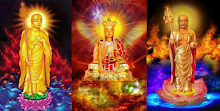
| Manjushri, Chenrezig, Vajrapani |
But many will choose the institution, as most of Tibet (a massive region a quarter to half the size of China) did in centuries past. But the real practice of Buddhism involves moving beyond comfortable institutions, rituals, and dogma and onto the mat for purification of heart/mind and view. That's when the real progress begins. Few are probably ready for that, so let's get back to Tibetan politics with the pope-king who is now just "pope" of one Tibetan school or sect, the Gelug Yellow Hats.
Dalai Lama said he wants to be a hot woman?
- Dalai Lama sorry for saying [his reincarnation as] a female successor would have to be
hot'attractive' | NBC News - Dalai Lama 'sorry' for remarks about females | BBC
- I am raging! Help! The Dalai Lama said that female successor must be attractive or people will not want to look at her!!! (r/Buddhism)
- Why did the Dalai Lama write a book about Jesus? I don’t see how that would help Buddhists achieve liberation (r/Buddhism)
- Tibetan Buddhist Manjushri with Chenrezig and Vajrapani | Thangka of Three Bodhisattvas (Evamratna)
- Tibetan Chenrezig (Avalokiteshvara) thangka (artofit.org)
Chenrezig thangka | Avalokiteshvara

 |
| Chenrezig on throne |
With a peaceful expression, the Tibetan deity is depicted seated on a moon disc lotus seat which is encircled by beautiful flowers. This thangka was exquisitely painted by Enlightenment artists utilizing genuine 24K gold and acrylic paints. More: artofit.org
Saturday, July 5, 2025
The Dalai Lama's 90th birthday (live)

 |
| China won't get rid of me so easily. Right, CIA? |

- "His Holiness" will attend a public program in honor of his 90th birthday organized by the Kashag of the Central Tibetan Administration on behalf of all Tibetan people at the Main Tibetan Temple in Dharamsala, Himachal Pradesh, India on July 6, 2025.
How long will you live? And then what?
Saturday, June 21, 2025
What about the next Dalai Lama, sir?

- Check out earlier video explaining the Dalai Lama: The Dalai Lama Explained: The Last Lama? (now that YouTube has restricted Last Week Tonight with John Oliver's interview)
Who in the world are the Han Chinese?
- Millet farming over rice farming among Han Chinese?
Compare news coverage. Spot media bias. Avoid algorithms. Try Ground News today and get 40% off subscription by going to ground.news/religionforbreakfast.
Tuesday, April 22, 2025
What happened at Peace Mandala 2025?
An amazing Buddhist spectacle unfolded at the World Peace Gathering in a fancy hotel across from Disneyland in downtown Anaheim on Easter Sunday, April 20, 2025. From 4:00 to 9:00 pm floors of the Anaheim Convention Center were transformed into a kind of Mahayana Buddhist Pure Land, with 300 monastics from all traditions and countries in the Southland and 1,700 or so lay participants.
We filed into a color filled hall in the diagonal, our bodies forming a mandala (sacred geometrical pattern in the Mahayana/Vedic Hindu sense) for a kind of Catholic-style repentance ceremony, inviting peace and countless light beings (devas, brahmas, bodhisattvas, mahasattvas, and buddhas).
No photography or video footage was allowed by participants, though there were official cameras on the perimeter and some people couldn't help but pull out their cellphones for a quick snap or two. However, here is old footage of this event from 2013 and 2018 before it evolved into the spectacle we experienced for Earth Day 2025.
World Peace Gathering 2013: Mandala Ceremony (2 of 4)

What happened in 2025?
Wisdom Quarterly 2025
It started off as a normal convention of Buddhists at a convention center in OC. But it became profound with Vedic/Brahminical magic -- mantras and mudras, intentions and emotions. It made an impression.
First, everything was color coded. There are Sanskrit letter, bija mantras or "seed sounds" we were uttering once in formation. When 1,700 get in a room with 300 monastics, whatever happens is bound to be special.
- There is the Soka Gakkai Buddhist cult, and they have that chant for material manifestation that may encourage greed in the name of "spirituality." One could understand how nice it might be to chant a repetitive set of meaningful sounds one doesn't know the meaning of. Somethings are only meant to be vibrational utterances, not sensible concepts. But there were translations, too. It was not mindless.
One would have wished to be videotaping the goings on so the outside world could see it. Once, at the Lu Mountain Chan Monastery in Rosemead, San Gabriel Valley, Los Angeles County, California, there was the ordinary sermon by Chan Master, as he had us call him. Then a short meditation. Then a great vegan meal of homemade Vietnamese delicacies by elderly expert cooks in the temple kitchen. Then socializing and talking, people hanging around and eventually dispersing.
Wanting to get some real meditation in, something silent and unguided, free of visualizations and interruptions, I went into the empty meditation hall and took a seat. To my surprise, people came back in dressed in robes, the same people from the morning sit. But there was no special occasion announced.
They began to chant and do hand movements (mudras) with a secret book they had, turning the pages. It went on and on. I remained still and silent, going unnoticed. That was their mistake, which they tried to play off when I began to ask questions afterward. I had seen the secret ceremony, the ritual Hindu-influenced Mahayana practices that really aided their Chan ("Zen") and samadhi, surrounded by countless alleged sariras (sacred relic beads and crematory remains). This was like that, and it may go on in every Vietnamese Zen temple in the county. The OC is full of them, particularly in the small city of Westminster.
I picked up a color diagram explaining the five elemental colors (white at the perimeter, yellow, blue, red, green, and white at the center). There is a siddham or character that looks like a four (4) in Japanese/Chinese script interpreting Sanskrit. A Vietnamese speaker is needed to decipher the explanation: Quan he giua pham tru ca the va tap the khi tu tap phap Lien Hoa Thu Nhan va Mandala Lien Hoa, which may not make sense without the diacritical marks.
The magic spells (mantras)
A color booklet with pictures of lotuses titled So tay Lien Hoa Bo Tat ("Lotus Bodhisattva Handbook"), Ban Cap Nhat 2025, on the cover also came to hand.
Friday, March 3, 2023
Dalai Lama's Tibetan Buddhism explained
What is Tibetan Buddhism?

 |
| Massive Himalayan Padmasambhava |
The Dalai Lama, the current spiritual [and former temporal] leader [or "pope-king"] of the Tibetan people, is perhaps the most well-known figure associated with Tibetan Buddhism.
 |
| Goddess of Compassion |
[This is explained in The Heart Sutra but largely goes un-understood by most ordinary people and scholars, whereas monastics and meditators may break through to a direct understanding that there is no "self" (no compact or unity) but what there is are the Five Heaps Clung to as Self: form, feeling, perceptions, mental formations, and consciousness. This is the unique liberating message of buddhas past, present, and future. The Buddha understood this and by his understanding was liberated, had a great enlightenment, and became the "Awakened One" or Buddha. It is on account of not seeing this, not knowing this, not penetrating this truth that beings carry on -- impersonal, impermanent, and disappointed -- in the long wandering on called samsara, suffering in all kinds of ways, falling into miserable existences, forms of rebirth, re-arising now here, now there, constantly chasing cravings of various sorts -- for eternal existence, for annihilation, for this kind of sense sphere pleasure, or that kind of supersensual pleasure, or this kind of fine material or that kind of immaterial state of being, always instead becoming and beset by dukkha.]
Male Avalokitesvara

Special thanks to Dr. Connie Kassor for co-writing this episode. Follow her on Twitter at: @constancekassor.
To learn more, check out Dr. Aaron Proffitt's introduction over at: @AmericanBuddhistStudyCenter
• Introduction to T...
🌏 Get the exclusive NordVPN deal here ➼ nordvpn.com/rfb It’s risk-free with Nord’s 30-day money-back guarantee. Thanks to NordVPN for sponsoring this video. RFB Patreon community: patreon.com/religionforbreakfast... One-time donations: paypal.me/religionforbreak... Check out my favorite religious studies books by following this affiliate link to the RFB Amazon page: amazon.com/shop/religionforbreakfast...
Sunday, January 14, 2018
Buddhist Goddess of Mercy: Kwan Yin
CC Liu, Amber Larson, A. Wells, Dhr. Seven (eds.), Wisdom Quarterly; Ven. Thubten Chodron


 The English story of Guan Yin: Great Compassion Bodhi Prajna Temple Canada 加拿大大悲菩提寺 as recounted by a kind Chinese Buddhist nun or bhikshuni.
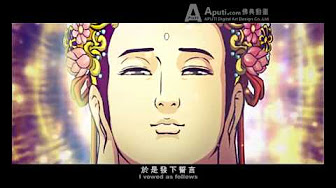 Kwan Yin Bodhisattva (a being striving for perfect-enlightenment) is also known as Chinese Guanyin Pusa, Sanskrit Avalokitesvara or Avalokita, Tibetan Chenrezig Japanese Kannon, Vietnamese Guan Am, in English Kwan Yin (like the Virg Yin Mary/Maya Devi/Maha Prajapati, Mother Goddess, a manifestation of the Divine Feminine, a kind of stand in for every planetary manifestation of our universal protectoress and nurturer like Mother Earth, Gaia, Tierra, Tara, Bhumi Devi, Sophia/Prajnaparamita...or simply The Goddess.
The Chinese origin story of Kwan Yin, the female manifestation of the deva/Indian god Avalokitesvara, "The One Who Looks Down from Above (and Hears the Cries of the World)."
The English story of Guan Yin: Great Compassion Bodhi Prajna Temple Canada 加拿大大悲菩提寺 as recounted by a kind Chinese Buddhist nun or bhikshuni.Kwan Yin Bodhisattva (a being striving for perfect-enlightenment) is also known as Chinese Guanyin Pusa, Sanskrit Avalokitesvara or Avalokita, Tibetan Chenrezig Japanese Kannon, Vietnamese Guan Am, in English Kwan Yin (like the Virg Yin Mary/Maya Devi/Maha Prajapati, Mother Goddess, a manifestation of the Divine Feminine, a kind of stand in for every planetary manifestation of our universal protectoress and nurturer like Mother Earth, Gaia, Tierra, Tara, Bhumi Devi, Sophia/Prajnaparamita...or simply The Goddess. |
| The original "Madonna and Child," the Buddha and mom |
- Is Guanyin (Avalokitesvara) Bodhisattva a real historical person? (Master Sheng Yen)
- The Universal Door of Guanshiyin Bodhisattva (Western Pure Land Of Ultimate Bliss)
01 Chenrezig Retreat 2014: The Origin Story of Kwan Yin
(Sravasti Abbey) Venerable Thubten Chodron explores the different manifestations of Chenrezig (Kwan Yin) in East Asia and tells the story of the Chinese Princess Miao Shan, who was believed to have taken the form of 1,000-armed Chenrezig upon attaining awakening/enlightenment. For more Buddhist teachings visit sravasti.org.
(Sravasti Abbey)
Venerable Thubten Chodron explores the different manifestations of Chenrezig (Kwan Yin) in East Asia and tells the story of the Chinese Princess Miao Shan, who was believed to have taken the form of 1,000-armed Chenrezig upon attaining awakening/enlightenment. For more Buddhist teachings visit sravasti.org.
Who is the Goddess of Mercy Kwan Yin?
Editors, Wisdom Quarterly Wiki edit

Kwan Yin or Guanyin is an East Asian bodhisattva associated with compassion as venerated by Mahayana Buddhists.
She is commonly known as the "Goddess of Mercy" in English. The Chinese name Guanyin is short for Guanshiyin, meaning "[The One Who] Perceives the Sounds of the World."
Some Buddhists believe that when one of their adherents departs from this world, they are placed by Kwan Yin in the heart of a lotus and then sent to the western Pure Land of Sukhāvatī.
Kwan Yin is often referred to as the "most widely beloved Buddhist divinity" [almost exactly like the beloved and world renown Catholic Goddess of Mercy Mother Mary/Miriam/Muire] with miraculous powers to intercede and assist all those who pray to her, as is said in the apocryphal Lotus Sutra and Karandavyuha Sutra.
Several large temples in East Asia are dedicated to Kwan Yin including Shitennō-ji, Sensō-ji, Kiyomizu-dera, and Sanjūsangen-dō as well as Shaolin Temple.
Kwan Yin is beloved by all Buddhist traditions in a non-denominational way and can be found in most Tibetan Vajrayana temples under the name Chenrezig. Furthermore, Kwan Yin can also be found in some influential Theravada temples such as Gangaramaya and Kelaniya of Sri Lanka. Statues can also be found in the Asian art sections of most museums in the world as a widely depicted subject of Asian art and sculpture.
It is generally accepted among East Asian adherents that Guanyin originated as the Bodhisattva Avalokiteśvara.
Commonly known in English as the Mercy Goddess or Goddess of Mercy but often depicted as both male and female to show this figure's limitless transcendence beyond gender Guanyin is also revered by Taoists as an immortal. In Chinese folk religion, there are mythical accounts about Guanyin's origins that are not associated with the Avalokiteśvara described in Buddhist sutras. More
Editors, Wisdom Quarterly Wiki edit

 |
| The deva Avalokistesvara |
She is commonly known as the "Goddess of Mercy" in English. The Chinese name Guanyin is short for Guanshiyin, meaning "[The One Who] Perceives the Sounds of the World."
Some Buddhists believe that when one of their adherents departs from this world, they are placed by Kwan Yin in the heart of a lotus and then sent to the western Pure Land of Sukhāvatī.
 |
| The blessed saint Mother Mary |
Several large temples in East Asia are dedicated to Kwan Yin including Shitennō-ji, Sensō-ji, Kiyomizu-dera, and Sanjūsangen-dō as well as Shaolin Temple.
 |
| Kwan Yin as Prajnaparamita |
 |
| I'm the most popular female figure |
Commonly known in English as the Mercy Goddess or Goddess of Mercy but often depicted as both male and female to show this figure's limitless transcendence beyond gender Guanyin is also revered by Taoists as an immortal. In Chinese folk religion, there are mythical accounts about Guanyin's origins that are not associated with the Avalokiteśvara described in Buddhist sutras. More
Monday, October 26, 2009
The Two Buddhisms (and Kwan Yin)
Seven Jaini (Wisdom Quarterly) and Lila Sakura (Kwan Yin material)
 The other (called Theravada) is closer to what the Buddha actually taught -- subtle and much less appealing to devotional inclinations. Instead of faith (or confidence in external objects), wisdom is emphasized, as are practice towards enlightenment in this life, meditation, and self-reliance. Chanting ancient texts for recollection (sati), protection (paritta), and uplift also figures into the practice. However, it is more a monastic endeavor rather than mantra-japa or prayer. And it is usually done in the exclusively Buddhist language Pali, a version of which (Magahi) the Buddha spoke.
(WQ) For those who may not have yet noticed, there are two kinds of Buddhism. One (called Mahayana) is a populist movement that started centuries after the time of the historical Buddha (Siddhartha Gautama). Instead of understanding (or transcendent wisdom), devotion is emphasized, as are chanting, stories, rituals, and dependence on great masters and intervening entities.
 The other (called Theravada) is closer to what the Buddha actually taught -- subtle and much less appealing to devotional inclinations. Instead of faith (or confidence in external objects), wisdom is emphasized, as are practice towards enlightenment in this life, meditation, and self-reliance. Chanting ancient texts for recollection (sati), protection (paritta), and uplift also figures into the practice. However, it is more a monastic endeavor rather than mantra-japa or prayer. And it is usually done in the exclusively Buddhist language Pali, a version of which (Magahi) the Buddha spoke.
This chanting emerges from the first type of Buddhism. The intervening entity either being honored, brought to mind, beseeched, relied on, or prayed to is Kwan Yin (Guan Yin, Kannon, Avalokita/Avalokiteshvara, the Mother Goddess in her guise as a Indo-Sino personification of "compassion").
 Mahayana Buddhism is tre-mendously influenced by ideas and ideals that are more Hindu than is generally recognized. It prefers Sanskrit texts. For it is a school that emerged, not in China or Japan, but in India. It co-opted Buddhism's growing popularity as an Indian movement independent and philosophically antagonistic to Hinduism (the Brahmanism of the Buddha's day). It syncretized innovative Buddhist teachings, which were rejections of key Hindu tenets, with some of the very Hindu concepts the historical Buddha worked hard to rectify.
Buddhist terms were then used. And entire sutras, not attributable to the historical Buddha, were invented. Oftentimes the ideas behind these new sutras are quite Hindu but dressed in Buddhist guise. Therefore, like the innumerable gods of Hinduism, Avalokita morphed into a diety that vowed with infinite compassion to become a bodhisattva who saves the world.
 This deity is called Kwan Yin (Kuan Yin, Gwan Yin, Guan Yin) and is akin to Catholicism's Mother Mary and/or her would-be savior son, who is an avatar of the God Almighty of Christian dogma (a sort of brahma).
Bearing this in mind, and construing karma ("accumulated deeds capable of bearing a result") in a decidedly Hindu and Christian manner, this mantra promises to cleanse one of accumulated "sin," as it were.
Namo ratna travaya / namo arya jnana sagara, Vairochana / byuhara jara Tathagataya arahate samyaksam Buddhaya / namo sarwa Tathagate bhyaya arhata bhyah / samvaksam Budde bhvah / namo Avalokite shoraya bodhisattvaya / maha sattvaya / maha karunikaya / tadyata / Om dara dara / diri diri / duru duru / itte we / itte chale chale / purachale purachale kusume kusuma wa re / ili milli chiti jvalam / apanave shoha.
(Lila Sakura) This is a general translation:
- Adoration to the noble Avalokitesvara, bodhisattva, the great compassionate one.
- Having paid adoration to One who Dispels all Fears, O noble Avalokitesvara, to You adoration, O Nilakantha.
- I shall enunciate the "heart" dharani, which ensures all purposes, is pure and invincible for all beings, and which purifies the path of existence.
- Thus: Lord of Effulgence, the World-Transcending One, come, come, great bodhisattva, descend, descend. Bear in mind my heart-dharani. Do, do the work. Hold fast, oh Victor, oh Great Victor. Hold on, hold on, oh Lord of the Dharani. Move, move oh my immaculate image, come, come. Destroy every poison. Quick, bear in mind, quick, quick, descend, descend. Being enlightened, being enlightened, enlighten me, enlighten me. Oh merciful Nilakantha appear unto me. To you who eyes us, hail. To the Great Siddha, hail. To the Great Siddha in Yoga, hail. To Nilakantha, hail. To the Boar-faced, hail.
- Adoration to the Triple Gem. Adoration to the noble Avalokitesvara bodhisattva, hail (The Tibetan and Himalayan Library at thdl.org).
Avalokitesvara (Sanskrit), the Bodhisattva of Compassion in the Lotus Sutra, became known as Kuan Yin. The Chinese found it easier to think of "compassion" in terms of a loving and compassionate goddess (also known as Chenrezig and Kannon).
Chanting has its Rewards
 Reciting the Great Compassion Mantra can prevent and cure the eighty-four thousand kinds of diseases, including AIDS and pneumonia. This mantra can prevent and cure all kinds of illness and diseases if recited with utmost sincerity, according to the Venerable Master Hsuan Hua.
"To recite it a full five times in one evening is to wipe away your heavy offenses of hundreds, thousands, tens of thousands, tens of thousands of millions of aeons of birth and death" (Dharani Sutra).
Benefits of Reciting
People and gods [devas] who recite and hold the Great Compassion Mantra will obtain fifteen kinds of good birth and will not suffer fifteen kinds of bad death.
15 Bad Deaths
- They will not die of starvation or privation.
- They will not die from having been yoked, imprisoned, caned, or otherwise beaten.
- They will not die at the hands of hostile enemies.
- They will not be killed in military battle.
- They will not be killed by tigers, wolves, or savage beasts.
- They will not die from the venom of poisonous snakes, black serpents, or scorpions.
- They will not drown or be burned to death.
- They will not be poisoned to death.
- They will not die as a result of sorcery.
- They will not die of madness or insanity.
- They will not be killed by landslides or falling trees.
- They will not die of nightmares sent by malevolent people.
- They will not be killed by malignant spirits or ghosts.
- They will not die of ruinous illnesses which bind the body.
- They will not commit suicide.
15 Good Births
Those who recite and hold the spiritual Mantra of Great Compassion will not suffer any of these fifteen kinds of unfortunate deaths. But they will obtain the following fifteen kinds of good births:
- Their place of birth will always have a good king.
- They will always be born in a good country.
- They will always be born at a good time.
- They will always meet good friends.
- The organs of their body will always be complete.
- Their heart will be pure and full in the way.
- They will not violate the prohibitive precepts.
- Their family will be kind and harmonious.
- They will always have wealth and goods in abundance.
- They will always obtain the respect and help of others.
- Their riches will not be plundered.
- They will obtain everything they seek.
- Dragons, devas, and good spirits will always protect them.
- Where they are born they will see the Buddha and hear the Dharma.
- They will awaken to the profound meaning of the proper Dharma they hear.
Those who recite and hold the Great Compassion Mantra will obtain these fifteen kinds of good birth. All devas and people should constantly recite and hold it, without carelessness.
This video features the China Disabled People's Performing Art Troupe performing the Thousand-hand Bodhisattva dance; the members are all deaf. Music can be downloaded here:


Wednesday, August 27, 2008
Four Immeasurables: Brahma Viharas

Chenrezig (embodiment of compassion): Kalu Rinpoche said "one does not think of the deity's body as solid or material, made of flesh and blood like one's ordinary body, or made of metal or stone like an idol. One thinks of its appearance as inseparable from emptiness, like a rainbow or like a reflection in a mirror."
THE FOUR IMMEASURABLES
Also known as the Brahma Viharas (the "supreme" or "divine abidings"), the Four Immeasurable states are found in one brief and beautiful contemplation:
May all sentient beings have happiness and its causes,
May all sentient beings be free of suffering and its causes,
May all sentient beings be blissful without suffering,
May all sentient beings be equanimous, free of bias,
attachment, and anger.

Humorous talk by Kusala Bhikshu, August 2008*
The Buddha taught the following to his son Rahula, as related in "Old path white clouds" by Thich Nhat Hahn:
"Rahula, practice loving-kindness to overcome anger. Loving-kindness has the capacity to bring happiness to others without demanding anything in return. Practice compassion to overcome cruelty. Compassion has the capacity to remove the suffering of others without expecting anything in return.
"Practice sympathetic-joy [a.k.a., empathy] to overcome hatred. Sympathetic-joy arises when one rejoices over the happiness of others and wishes others well-being and success. Practice non-attachment to overcome prejudice. Non-attachment is the way of looking at all things openly and equally. This is because that is. Myself and others are not separate. Do not reject one thing only to chase after another.
I call these the Four Immeasurables. Practice them and you will become a refreshing source of vitality and happiness for others." (To meditate on these, see List of Sample Meditations).
LOVE
One definition of love in Buddhism is "wanting others to be happy." This love is unconditional and it requires a lot of courage and acceptance (including self-acceptance). The "near enemy" of love, or a quality which appears similar, but is more an opposite is conditional-love (selfish love, see also attachment). The opposite is wanting others to be unhappy -- anger, hatred. A result which one needs to avoid is attachment.
This definition means that "love" in Buddhism refers to something quite different from the ordinary term of love, which is usually about attachment, more or less successful relationships and sex, all of which are rarely without self-interest.
Instead, love in Buddhism refers to detachment and an unselfish interest in others' welfare.
"Even offering three hundred bowls of food three times a day does not match the spiritual merit gained in one moment of love" -- Nagarjuna.
"If there is love, there is hope that one may have real families, real brotherhood, real equanimity, real peace. If the love within your mind is lost and you see other beings as enemies, then no matter how much knowledge or education or material comfort you have, only suffering and confusion will ensue" -- the Dalai Lama from The little book of Buddhism.
COMPASSION
The definition of compassion is wanting others to be free from suffering. It happens when one feels sorry with someone, and one feels an urge to help. The near enemy of it is pity, which keeps others at an emotional distance, without the urge to help. The opposite is wanting others to suffer, or cruelty. Another result one needs to avoid is sentimentality. Compassion thus refers to an unselfish, detached emotion that gives one a sense of urgency in wanting to help others.
From a Buddhist perspective, helping others to reduce their physical or mental suffering is very good, but the ultimate goal is to extinguish all suffering by stopping the process of rebirth and the suffering that automatically comes with conditioned living (enlightenment).
The attitude of a so-called Bodhisattva is Bodhicitta [bodhi = "enlightenment," citta = "mind"]. This is the ultimate compassionate motivation, the wish to liberate all sentient beings from the suffering of cyclic existence. Therefore, one wishes to become a fully enlightened Buddha oneself in order to act as the perfect guide for them. (See compassion).
SYMPATHETIC JOY
The definition of empathy is being happy with someone else's good fortune/happiness. Sympathetic joy here refers to the potential of bliss and happiness of all sentient beings, as they can all become Buddhas. The near enemy is hypocrisy or affectation. The opposite is jealousy, when one cannot accept the happiness of others. A result that one needs to avoid is spaced-out bliss, which can easily turn into laziness. Note that sympathetic joy is a great antidote to depression as well, but this is not the main goal. By rejoicing in others' progress on the spiritual path, one can actually share in their positive karma. Sympathetic joy is an unselfish, very positive mental attitude beneficial for oneself and others. In this case, it also refers specifically to rejoicing in the high rebirth and enlightenment of others.
EQUANIMITY
EQUANIMITY
The definition is not to distinguish between friend, enemy, or stranger, but instead to regard every sentient-being as equal. It is a clear minded, tranquil state of mind -- not being overpowered by delusions, mental dullness, or agitation.
The near enemy is indifference. It is tempting to think that "not caring" is equanimity, but that is just a form of egotism.
The opposite is anxiety, worry, stress, and paranoia caused by dividing people into "good" and "bad." One can worry forever if a good friend may not be a bad person after all, thus spoiling trust and friendship. A result to be avoided is apathy as a result of "not caring" enough.
.
Equanimity is the basis for unconditional, altruistic love, compassion, and joy over others' happiness and Bodhicitta. When there is discrimination between friends and enemies, how can one ever help all sentient-beings? Equanimity is an unselfish, detached state of mind that also prevents one from doing negative actions.
If one tries to befriend an enemy for even a moment, that person becomes a friend. The same thing occurs when one treats a friend as an enemy. Therefore, by understanding the impermanence of temporal relations, wise ones are never attached to food, clothing, reputation, or to friends and enemies.
"The father becomes the son in another life, mother becomes the wife, enemy becomes friend; it always changes. Therefore, there is nothing definite in Samsara" -- the Buddha.
The foundation for practicing the seven-point cause and effect method is cultivating a mind of equanimity. Without this foundation one is unable to have an impartial, altruistic view, because without equanimity one is always partial towards relatives and friends. Realizing that it is better to be without prejudice, hatred, or desire towards enemies, friends, or neutral persons, thus lay a very firm foundation of equanimity -- the Dalai Lama, from Path to Bliss: A Practical Guide to Stages of Meditation.
It is said that the awareness of a Buddha is completely even, like the ocean, taking in equally the joys and sorrows of all people, friends, loved ones, relatives, and those never met. This is the meaning of a statement made by so many of the world's great spiritual teachers, "Love your enemy." It does not mean love the person you hate. One cannot do that. Love those who hate you (from Buddhism with an Attitude: The Tibetan Seven-Point Mind-Training).
*Urban Dharma: Kusala Bhikshu (http://www.dharmatalks.info/) is an American born Buddhist monk living in Los Angeles, California. He shares his understanding of Buddhism in a simple, non-technical way through stories, humor, and personal insights. He spoke on the Four Immeasurables at the One Spirit Center for Conscious Living in Simi Valley, CA on 8/4/08.
- More information: http://www.kusala.info/
- Free EBooks on Buddhism: http://www.buddhabooks.info/
- Video (2 min video "The Fly" on meditation): http://www.dharmatube.org/
Subscribe to:
Posts (Atom)