Showing posts with label construction. Show all posts
Showing posts with label construction. Show all posts
Wednesday, May 20, 2026


Tuesday, March 10, 2026
Tuesday, January 20, 2026
Skull: Native face of 'Kennewick Man'


.
Meet the Kennewick Man: Face of "most important" ancient Native American revealed after 8,500 years
 |
| Strong and resilient ancestor of current residents |
The individual, known as the Kennewick Man, was approximately 40 years old when he died during the early Holocene period, which started roughly 11,700 years ago following the conclusion of the last major ice age.
 |
| Columbia River, Washington, USA |
 |
| Map: Where is the Columbia River? |
Scientists have now created a reconstruction of his living facial features using his skull, providing insight into the man's history, reports the Express US.
 |
| Chief Joseph, Nez Perce People |
Lead researcher Cicero Moraes described the reconstruction as depicting a "strong and resilient man," whose characteristics reflected "a life marked by continuous physical effort and survival."
He continued: "First, the skull is analyzed using known averages of soft-tissue thickness and anatomical guidelines to position key features such as the eyes, nose, lips, and ears. More
Tuesday, November 25, 2025
Jew was Adolf Hitler’s 'ideal' German?

How an empire created 'Jewish' identity
(Prof. Jiang Clips) How the Persian Empire constructed "Jewish" identity with Cyrus the Great
Exaggerating the numbers until everyone believes
Thursday, September 18, 2025
Irish Latinos: Somos paisanos (comedy)

Irish-Mexican boxing champ 'Cinnamon Barrigan' aka Canelo Alvarez
 |
| I'm not Irish. I'm purely Mexican. |
 |
| Jicama con chile (mx.pinterest.com) |
- What is the Spanish word for "sneaky"? Furtivo (furtive)
- What does Somos paisanos mean? "We are paisanos."
- Irishman becomes Latino; Ana Saia; Eds., Wisdom Quarterly
Wednesday, September 17, 2025


Thursday, August 7, 2025
How Elvis Presley 'destroyed' his enemy
 |
| What is stronger, expressing anger and irritation or forgiving and showing forbearance? |
- Most of us imagine that an "enemy" is someone we hate when, in fact, it more applies to anyone who hates us. Though they hate and attack, we need not give tit for tat. We can be like the sandalwood tree, which sprinkles perfume even on the axe that lays it low: Positive Response: How to Meet Evil with Good
 |
| The King as Fat Happy Budai |
Who was the great entertainer Elvis Presley, the King of Rock 'n Roll, to commit such a public act of love and compassion? Would Johnny Cash, who had a great deal of love and acceptance of the most marginalized members of our society, approve? "Folsom Prison Blues" suggests he would.
- Elvis Presley: The Untold Legacy; Pfc. Sandoval, Ashley Wells, Dhr. Seven (eds.), Wisdom Quarterly
Friday, May 30, 2025
WeHo Pride '25, ancient Greek LGBTQ?
 |
| Can we be more accepting of uncloseted gay pride rather than repressive and full of bias? |
WeHo Pride 2025 kicks off tonight | FOX 11
 |
| Happy Pride Month: June |

LGBTQ new or older than ancient Greece?
The pandakas of Pakistan
Do all molested boys in Pakistan grow up to be trans (pandaka) outcastes?
Modern pandaka is a menace to Dave Chappelle
Sunday, March 23, 2025
Give me LIBERTY or give me death
250th anniversary of Patrick Henry's "Liberty or Death" speech

Among the 120 delegates in attendance were George Washington, Thomas Jefferson, Benjamin Harrison, Thomas Nelson, Robert Carter Nicholas, and other.
Henry was a superb orator who spoke extemporaneously. One aspect of Henry’s genius was that he was able to take ideas and phrases that were part of the intellectual life of the colonies and put them into eloquent words and persuasive arguments. There is no written record of this speech. It was not until William Wirt, Henry’s first biographer, published Sketches of the Life and Character of Patrick Henry in 1817 that a reconstruction of the speech was printed.
Hindus (Vedic Brahmins) do not understand what Buddhism means by moksha (liberation, freedom). By shunyata, or "emptiness," is not meant "nothing." What is meant is no self, that ultimately there is no separate "self." This can mean self is all-one with everything, indistinguishable from the environment, but the point is that it means everything is impersonal. It is not-self. There is no ego. The personality is an impermanent flux.
Based on the recollections of men who had been present when the speech was made, the main source was a lengthy letter that St. George Tucker wrote relating his memories of the speech. Some scholars attribute the version of the speech commonly known to Tucker, but there are other firsthand accounts that characterize Henry’s speech in a similar manner, giving weight to Tucker’s memories of the words that Henry spoke.
James Parker, a Norfolk merchant who talked with delegates after the convention, wrote a letter on April 6, 1775, that describes Henry’s speech as “infamously insolent” and repeats that
- Henry referred to the king as “a tyrant, a fool, a puppet, and a tool to the ministry,
- said there was now no Englishmen, no Scots, no Britons, but a set of wretches sunk in luxury,
- they had lost their natural courage and
- [were] unable to look the brave Americans in the face.”
The language reflected in these descriptions of Henry’s speech is similar to that which William Wirt included in his reconstruction.
Henry’s speech was powerful and carried the resolutions in a close vote.
The convention journal does not record the actual vote, but Parker wrote that the resolution was “carried by a Majority of 65 to 60.”
The convention records indicate that only 118 delegates were likely present that day. The vote was close, and the resolution passed by a narrow margin.
#patrickhenry
#ThomasJefferson
#GeorgeWashington
#american
#Richmond
#Virginia
#St.JohnsEpiscopalChurch
#Nationalhistoriclandmark
#HistoricStJohnsChurch
www.historicstjohnschurch.org
#libertyordeath
#givemelibertyorgivemedeath
Monday, March 3, 2025
Control reality? Get what you want?

🕒 TIMESTAMPS
- 00:00 - The illusion of reality
- 02:15 - How our mind shapes everything
- 05:42 - What happens when we look closer?
- 09:10 - The secret behind perception
- 12:35 - Is everything we see just a social construct?
- 15:20 - Unlocking the simplicity of it all
- 17:45 - Final thoughts
Why do we not get what we want? It is because wanting has no resolution. With wanting arises not having. The solution, then, is not wanting. But how can we not want? (And isn't not-wanting a kind of wanting?) The way to not want is simple: LOOK long enough to see things as they really are. This leads to revulsion, and the mind/heart lets go (renunciation or "inner letting go").
Of course. we don't do this because sensual pleasures are our only respite, our only chance at any kind of "escape" from dukkha (disappointment, unsatisfactoriness, the woe of never getting what we really want). What do we really want? Fulfillment, which is not available through endless wandering on life after life through samsara, chasing satisfaction first here then there and anywhere we imagine it might be hiding.
Even without wishing, if we calmed-and-intensified (which is what happens on the path of purification by stillness and insight or shamatha and vipassana) by the mind through the meditative absorptions and learned to look at four things (body, feelings, mind, and mind-objects), the heart/mind would let go. That is the ultimate solution. That is what the Buddha advocated as actual escape. One will not hear this terse explanation from the AI generator or Tan Geoff, but the answer is implicit amidst the misleading text and talk.
Not getting what you want? The Buddha’s solution

These writings, though read by Ven. Thanissaro himself on his website and made freely available at WatMetta.org, are fed to an AI voice that mispronounces Pali terms and names. (This particular talk is about Ajaan Fuang Jotiko). The reading sounds confident but translates Pali terms in an extreme and idiosyncratic way. Instead of being of benefit, they are sure to mislead.
Then to give a pretense of depth, AI is used to generate and add unrelated images. Just to get views and seem important? They sound smarmy for a reason: that is Tan Geoff's personality. Revolting to some (like us), soothing to others.
These opinions are offered free at accesstoinsight.org and Tan Geoff's dhammatalks.org. Sadly, AI or "Ego" has little understanding, so every summary of a lifted talk is misleading. Why do we often fail to get what we want? No reason is given. This video talks about connection between suffering and conviction. This video is a rip off of this talk:
The Buddha teaches that the pain of not getting what we want can spur us to put an end to the vicious circle of "wanting, not getting, pain, wanting more." Unfulfilled desires are therefore not only negative — they can spark a determination to follow a path that leads to liberation from suffering.
Or we could just keep wanting and wanting and never finding fulfillment in all the ordinary things we wished for (because the sensual world told us we'd be happy through sensuality). This is why millionaires take drugs and are miserable. They have come to know that getting what one wants does not work to end the desperate craving that keeps us working like slaves to get them. Word to the wise: let go. Or keep going, and in that Zen spirit of which Alan Watts speaks, "a fool who persists in his folly will become wise."
- "If a fool persists in his folly, he becomes wise" - What does that mean? : r/NoStupidQuestions
- The Fool Who Persists in His Folly Will Become Wise | by Adam Aushaf | Mind Cafe | Medium
- One thing this might mean, as a teacher who encourages students in more and more austerities and a hard path that builds their egos, is that by doing the impossible (foolishness), one will realize this is not the way to liberation (a wise realization). So what is? The Middle Way that avoids extremes
Saturday, October 19, 2024
How to build a house: 'Dangers' (sutra)
 |
| With instructions, I can practice DIY at home ? - Yes, you can do it with these instructions. |
90 days to build a wooden house: One woman's admirable build from start to finish
(Wild Novels) Summer 2024: I am a nature lover who loves to experience, venture into, and explore unspoiled forests. That is my great passion.
My videos cover camping, bushcraft, survival skills, building log cabins, going off grid, primitive technology, wilderness survival and outdoor skills, bush gear like backpacks, axes, knives, saws, clothing systems, shelters, and cooking gear.
- 00:00 Part 1: Making a concrete base off grid
- 07:01 Part 2: Wood planing and cleaning process
- 10:25 Part 3: How to assemble and build a wooden cabin frame by yourself
- 17:52 Part 4: Start tiling the roof to completion
- 24:27 Part 5: Process of smoothing wood planks - finishing exterior walls
- 33:56 Part 6: How to make the doors by yourself off grid
- 45:03 Part 7: DIY concrete steps, plant bonsai, and garden planning
Hope everyone will support and subscribe to the "Wild Novels" channel, share videos, and contribute comments. Thanks! ☞ Please help in reaching 100,000 subscribers: @wildnovels. ☞ Copyright by Wild Novels. #WildNovels
Neighbors laughed at the innovative building of our small house, but then they were amazed

We built this small house for elderly parents. By design the house is simple and consists of light blocks called autoclaved aerated concrete. The total area of the house is 640 square feet, and the exterior dimensions are 18 by 22 feet.
We built it without loans on a small budget of $17,000. This price included the purchase of the land for $2,000. The total budget did not include the cost of labor because we did all the work ourselves.
ABOUT: We are a happy couple, Hena and Vita. We like to create with our own hands, which is how we find ourselves. We love making videos and try to make them useful. This is how we develop ourselves and continue to build the channel. We have many more DIY projects that we will definitely surprise viewers. If you support family values and love to create with your own hands, welcome to our family "CREATIVE COUPLE."
A sutra for householders: "Dangers"
Ven. Sujato (trans.), "Dangers" (AN 10.92) or (Numbered Discourses 10.92) 10. "With Upāli"), suttacentral.org; edited, expanded, and explained by Dhr. Seven, Wisdom Quarterly

.
Then the householder Anāthapiṇḍika [Sudatta, the generous multimillionaire donor to the needy who was already a stream enterer] went to the Buddha, bowed, and sat respectfully to one side. The Buddha said:
“Householder, when a noble [Arya = enlightened] disciple has quelled five dangers and threats, has the four factors of stream entry, and has clearly seen and comprehended the noble system with wisdom, that person may, if one wishes, declare of oneself: ‘I’ve made an end of rebirth in hells, the animal realm, and the ghost realm.
“‘I’ve made an end of [all rebirth in] places of loss, unfortunate destinations, subhuman worlds. I am a stream-enterer! I’m no longer liable to be reborn in the downfall and am bound for full awakening.’
The dangers
“What are the five dangers and threats such a person has quelled?
 |
| One can live at home practicing the Path. |
- Anyone who kills living creatures creates dangers and threats both in this present life and in lives to come and experiences mental pain and sadness. Anyone who refrains from killing living creatures creates no dangers and threats either in the present life or in lives to come and doesn’t experience mental pain and sadness. So that danger and threat is quelled for anyone who refrains from killing living creatures.
- Anyone who steals…
- Anyone who engages in sexual misconduct…
- Anyone who lies [engages in wrong speech, which is more than lying]…
- Anyone who consumes beer, wine, liquor, and intoxicants [that occasion heedlessness] creates dangers and threats both in the present life and in lives to come and experiences mental pain and sadness. Anyone who refrains from consuming beer, wine, liquor, and intoxicants creates no dangers and threats either in the present life or in lives to come and avoids experiencing mental pain and sadness. So that danger and threat is quelled for anyone who refrains from consuming beer, wine, liquor, and intoxicants.
The Four Factors of Stream-Entry.
 |
| Why leave household life to practice? No distractions. |
“A noble disciple has experiential confidence [proven conviction, confirmed faith] in the Teacher (the Buddha): ‘This Blessed One is indeed perfected, a supremely enlightened teacher, accomplished in knowledge and conduct, full of integrity, a knower of worlds, a supreme guide for those wishing to train, a teacher of devas and human beings, awakened, blessed.’
“One has experiential confidence in the Teaching (Dharma): ‘The teaching is well explained by the Buddha — apparent here and now in the present life, immediately effective, inviting investigation, relevant, so that sensible people can know it for themselves.’
“One has experiential confidence in the Taught (the Noble Saṅgha, the successfully taught): ‘The Saṅgha of the Buddha’s disciples [the spiritual community of accomplished practitioners, people at the first level of awakening called stream-entry up to full enlightenment or arhatship, which is a category of beings in no way limited to ordained monastics] is practicing the way that is skillful, direct, systematic, and beneficial.
“This community consists of the four pairs, the eight individuals. This is the Saṅgha of the Buddha’s disciples that is worthy of offerings (gifts) dedicated to the devas, worthy of hospitality, worthy of religious donations, worthy of greetings with joined palms (anjali mudra), and serves as the supreme field of merit for the world.’
“And a noble disciple’s virtue and ethical conduct is loved by the noble ones, unbroken, impeccable, spotless, and unmarred, liberating, praised by the wise (sensible people), unmistaken, and leading to absorption (meditative immersion).
“These are the Four Factors of Stream-Entry that one has.
The Enlightening System
 |
| "There's a systematic way to let go and be free," asked Imogen. The Buddha is full of surprises. |
.
“And what is the noble [enlightening] system that one has clearly seen and comprehended with wisdom? A noble disciple reflects:
“‘When this exists, that is; due to the arising of this, that arises. When this does not exist, that is not; due to the cessation of this, that ceases. [This is called knowledge of how all things arise: they are "dependently originated," and here is an explanation of how suffering (dukkha, disappointment, ill, woe) comes to be and how to end it completely.] That is:
- Ignorance is a condition for karmas.
- Karmas (actions) are a condition for consciousness.
- Consciousness is a condition for name and form.
- Name and form are conditions for the six sense fields.
- The six sense fields are conditions for contact.
- Contact is a condition for feeling [sensation].
- Feeling is a condition for craving [lust, thirst, craving].
- Craving is a condition for grasping.
- Grasping is a condition for continued becoming.
- Continued becoming is a condition for rebirth.
- Rebirth is a condition for old age and death, sorrow, lamentation, pain, sadness, and distress to come into being.
- That is how this entire mass of suffering originates.
[What is Dependent Origination?]
- “When ignorance fades away and ceases without remainder, karmas cease.
- When karmas cease, [the impersonal process of] consciousness ceases.
- When consciousness ceases, name and form cease.
- When name and form cease, the six sense fields cease.
- When the six sense fields cease, contact ceases.
- When contact ceases, feeling ceases.
- When feeling ceases, craving ceases.
- When craving ceases, grasping ceases.
- When grasping ceases, continued rebirth ceases.
- When continued becoming ceases, rebirth ceases.
- When rebirth ceases, old age and death, sorrow, lamentation, pain, sadness, and distress cease.
- That is how this entire mass of suffering ceases.’
 |
| I can go home and know-and-see this DIY? - Not DIY |
“When a noble disciple has quelled five dangers and threats, has the Four Factors of Stream-Entry, and has clearly seen and comprehended the noble cycle with wisdom [Dependent Origination], one may, if one wishes, declare of oneself:
“‘I’ve made an end of [any possibility of] rebirth in hells, the animal realm, and the ghost realm. I’ve made an end of rebirth in all places of loss, unfortunate destinations, subhuman worlds. I am a stream-enterer. I’m no longer liable to be reborn in the downfall and am bound for full awakening.’” Source: suttacentral.net
- Wild Novels, June 26, 2024; Creative Couple, Aug. 25, 2022; Ananda (Dharma Buddhist Meditation), Pfc. Sandoval, Jen B., Dhr. Seven (eds.), Wisdom Quarterly
Thursday, August 22, 2024
ET fingerprints: impossible architecture
Scientists discovered world's oldest structure built by extinct species of humans

(FactFile) Aug. 15, 2024: Imagine a world where distant ancestors, living before Homo sapiens (modern "thinking" humans like us), built wooden structures with amazing skill. Believe it or not, scientists in Africa have just found the oldest known wooden building — dating back nearly half a million years.
And that’s just the beginning! Let’s explore ancient wonders from Greece to Japan that change everything we thought we knew about primitive and savage early humans.
Monolithic miracles
Off the coast of Florida, the USA's dangling lingam, lies the Bermuda Triangle. Under the water of this haunted area full of anomalies are shaped stones of an ancient structure that might explain the source of the irregularities and strange disappearances of flying and watercrafts.
- The Wooden Structure of Zambia or Kalambo structure in Africa
- The Lion Gate of Mycenae in Greece
- Japan's Atlantis, the Underwater City in Japan or Yonaguni Monument
- Dolmens from Japan to Europe (Dolmen of Menga in Spain), Dolmens of the North Caucasus), list of dolmens
- Longyou Caves flooded and drained artificial caverns in Buddhist China
- Incredible Baalbek, Lebanon
- Buddhist Lion's Rock or Sigiriya on the Island of Sri Lanka
- New Zealand megastructure, the mysterious Kaimanawa Wall: man-made megalithic structure or work of nature? VIDEO: Obviously a wall, not a natural fracturing of magma into perfectly standardized stone blocks [Was this the ET technology that built all of the megalithic carved rock structures? The hydrogen-based flame jet drill]
- Yanshang Quarry of China's Buddhist Ming Dynasty
- Buddhist-Hindu Ellora Caves and Kailasa Temple in India
- Masada in the Judaean Desert, now Palestine/Israel
- Karnak Temple Complex in Egypt
- Roman Colosseum called the Flavian Amphitheater in Italy
- Tower of Jericho in the State of Palestine
- Catalhoyuk neolithic site in Turkey
- Knap of Howar in Scotland
- Abu Simbel Temple in Egypt
- Puma Punku and Tiwanaku in the Bolivian Andes, South America
- Lost City of the Incas Machu Picchu in the Peruvian Andes, South America
- Mayan ruins of Palenque in Mexico, North America (ancient Mesoamerica)
- FactFile, Aug. 15, 2024 (AI voice and research?); Pat Macpherson, Dhr. Seven, Sheldon S. (eds.), Wisdom Quarterly
Friday, August 9, 2024
Machine used to build Egyptian pyramid
 |
| VIDEO: Long-lost ancient Egyptian pyramid building tech may have just been unearthed |
.
Long-lost ancient Egyptian pyramid building tech may have just been unearthed
 |
| Ancient Step Pyramid of Djoser, Egypt (iStock) |
Now, a new study has suggested that at least one of the great structures was built using equipment that was far more sophisticated than once thought.
The paper, published in the journal PLOS ONE on Aug. 5, 2024, posits that the iconic 4,500-year-old Step Pyramid of Djoser [once thought to be the oldest pyramid in the world] was erected with the help of a unique hydraulic lift system.
 In the past, experts believed that the Step Pyramid of Djoser was most likely constructed using a network of ramps and levers.
However, the latest analysis, led by Xavier Landreau of France’s CEA Paleotechnic Institute, suggests that the ancient Egyptians channeled nearby canals to power weight-bearing lifts.
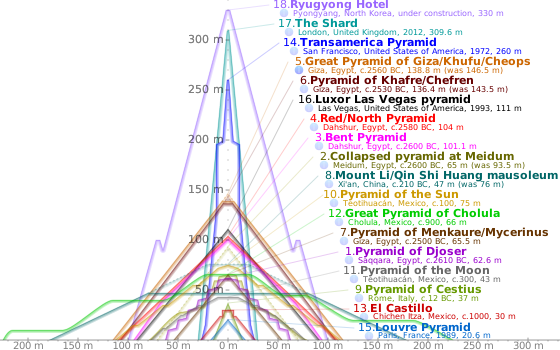
The construction of the Pyramid of Djoser, also known as the Step Pyramid, has defied explanation for centuries, with suggestions of advanced ET technology, sound levitation, pouring concrete to form blocks in place. Was it all hydraulic?
 |
| Comparison of pyramids (wikimedia.org) |
“Ancient Egyptians are famous for their pioneering and mastery of hydraulics through canals for irrigation purposes and barges to transport huge stones,” the researchers wrote. More:
- Egyptian pyramids were built using an incredibly clever machine, new research suggests (Indy 100 via msn.com)
- Sheldon S., Seth Auberon (eds.), Wisdom Quarterly
Tuesday, July 23, 2024
Tiny home of our own: Ajahn Chah Teachings

 |
| An A-frame solution full of light and two floors |
Having acquired the floorspace, by loan or lease, squatting or deed, it's time to set up a structure, a shelter from the elements and creeping things, nuisances and dangers.
The yurt, a Central and North Asian hut that can be carried about while being very environment-friendly, is a good option. But any hut will do, even a tent of saffron robes. Why won't Amazon, Temu, eBay, or Alibaba carry something like that. (Oh, they do?)
 |
| Avoid covered wagons pulled by slave sheep. |
The Teachings of Ajahn Chah
Edited by Dhr. Seven, inspired by Sayalay Aloka. This selection taken from pp. 311-316

RIGHT PRACTICE – STEADY PRACTICE
 |
| The Teachings of Ajahn Chah |
People would keep coming by
to chat, disturbing me. I ran off to live by myself. I thought I
couldn’t practice with people bothering me. I was fed up, so I
went to live in a small, deserted monastery in the forest, near a small
village.
I stayed there alone, speaking to no one – because there was
nobody else to speak to.
After I’d been there about 15 days the thought arose, “Hmm, it
would be good to have a novice or pa-kow [1] here with me. He could
help me out with some small jobs.”
- [1] Pa-kow: Eight-Preceptor who often lives in training with Buddhist monks (bhikkhus). In addition to his own meditation practice, he also helps with certain services that monks are forbidden from doing by the Buddhist Monastic Disciplinary Code (Vinaya).
I knew this would come up! And sure
enough, here it was. So I said to myself, “Hah, you’re a real character! You say you’re fed up with your
friends, fed up with your fellow monastics and novices [samanas and samaneras, wandering ascetics and little-wanderering ascetics], and now you want
a novice. What’s this?”
“No,” it [my rationalization] says back, “I want a good novice.”
 |
| If mind is happy, then you are happy anywhere. |
“There! Where are all the good people? Can you find any? Where
are you going to find a good person? In the whole monastery there
were only no-good people. You must have been the only good person to have run away like this!”
...You have to follow it up like this, follow up the tracks of your
thoughts until you see...
“Hmm, this is the important one. Where is there a good person
to be found? There aren’t any good people. You must find the good
person within yourself. If you are good in yourself then wherever you
go will be good.
“Whether others criticize or praise you, you are still
good. If you aren’t good, then when others criticize you, you get angry. And when they praise you, you get pleased.”
 |
| I know you're good, Homer. - STFU, B*tch! |
As
soon as I saw this, that feeling of wanting to run away disappeared. In
later times, whenever I had that desire arise, I let it go. Whenever it
arose, I was aware of it and kept my awareness on it. Thus, I had a
solid foundation.
Wherever I lived, whether people condemned me or
whatever they would say, I would reflect that the point is not whether
they were good or bad. Good or evil must be seen within ourselves.
However other people are, that’s their concern.
Don’t go thinking, “Oh, today is too hot” or “Today is too cold”
or “Today is....” Whatever the day is like, that’s just the way it is.
Really
we are simply blaming the weather for our own laziness. We must see
the Dhamma [the Truth and practices to see it the Buddha taught] within ourselves, then there is a surer kind of peace.
So for all of you who have come to practice here. Even though it’s
only for a few days, still many things will arise. Many things may be
arising which you’re not even aware of. There is some right thinking,
some wrong thinking...many, many things.
So I say this practice is
difficult.
Even though some of you may experience some peace when you sit
in meditation, don’t be in a hurry to congratulate yourselves.
 |
| Oh, yes, yes, now it's good and peaceful. |
Good and bad can both bite, so don’t hold fast to them.
The practice is simply to sit, sit and watch it all. Good moods and
bad moods come and go as is their nature. Don’t only praise your mind or only condemn it.
Know the right time for these things. When it’s time
for congratulations then congratulate it, but just a little. Don’t overdo
it. Just like teaching a child, sometimes you may have to spank it a
little. In our practice, sometimes we may have to punish ourselves, but
don’t punish yourself all the time. If you punish yourself all the time, in a while you’ll just give up the practice.
But then you can’t just give
yourself a good time and take it easy either. That’s not the way to
practice. We practice according to the Middle Way.

Steady practice is
having the attitude of practice while standing, walking, sitting, and lying
down. [This is sati-sampajanna, "mindfulness and clear comprehension."] When coming out of sitting meditation, reflect that you’re simply changing postures. If you reflect in this way, you will have peace.
Wherever you are, you will have this attitude of practice with you constantly. You will have a steady awareness within yourself.
Those who, having finished their evening sitting, simply indulge in their moods, spending the whole day letting the mind wander
where it wants, will find that the next evening when sitting meditation, all they get is the “backwash” from the day’s aimless thinking. There
is no foundation of calm because they have let it go cold all day.
If you
practice like this, your mind gets gradually further and further from the
practice.
When I ask some of my disciples, “How is your meditation
going?” They say, “Oh, it’s all gone now.”
You see? They can keep it
up for a month or two, but in a year or two it’s all finished.
Why is this? It’s because they don’t take this essential point into
their practice. When they’ve finished sitting, they let go of their samadhi [coherence, stillness].
They start to sit for shorter and shorter periods until they reach the point
where as soon as they start to sit, they want to finish. Eventually they
don’t even sit.
It’s the same with bowing to a Buddha image. At first, they make the effort to bow every night before going to sleep. But
after a while, their minds begin to stray. Soon they don’t bother to bow at all. They just nod until eventually it’s all gone. They throw out
the practice completely.
 |
| Ah, like this, the mind settles quickly. I'm calm. |
Therefore, understand the importance of sati [mindfulness, bare awareness, not discursive thinking but being with and accepting what is happening now without abandoning ourselves].
Practice it constantly.
Right practice is steady practice. Whether standing, walking, sitting, or
reclining, the practice must continue. This means that practice, meditation, is done in the mind, not in the body.
If our mind has zeal, is
conscientious and ardent, then there will be awareness [nonabsentmindedness, nonforgetting, presence]. The mind is the
important thing. The mind is that which supervises everything we do.
When we understand properly then we practice properly. When we
practice properly, we don’t go astray. Even if we only do a little, that
is still all right.
For example, when you finish sitting in meditation,
remind yourselves that you are not actually finishing meditation. [Mindfulness meditation continues all the time.] You
are simply changing postures. Your mind is still composed. Whether
standing, walking, sitting, or reclining, you have sati with you.
If you
have this kind of awareness, you can maintain your internal practice.
In the evening when you sit again, the practice continues uninterrupted.
Your effort is unbroken, allowing the mind to attain calm. This is called steady practice.
Whether we are talking or doing
other things, we make the practice continuous. If our mind
has recollection and self-awareness continuously, our practice will naturally develop. It will gradually come together. The mind will find
peace, because it will know what is right and what is wrong. It will see
what is happening within us and realize peace.
If we are to develop sila (virtue, moral restraint) or samadhi (firmness of
mind), we must first have pañña (wisdom). Some people think that
they’ll develop moral restraint one year, samadhi the next, and the
year after that they’ll develop wisdom. They think these three things
are separate.
They think that this year they will develop, but if the mind
is not firm (samadhi), how can they do it? If there is no understanding
(pañña), how can they do it? Without samadhi or pañña, sila will be
sloppy.
In fact, these three come together at the same point. When we have
sila (restraint), we have calm (samadhi); when we have samadhi, we have understanding (pañña). They
are all one like a mango.
Whether it’s small or fully grown, it’s still a
mango. When it’s ripe, it’s still the same mango. If we think in simple
terms like this, we can see it more easily. We don’t have to learn a lot of
things just to know these things, to know our practice.
 |
| Don't Look Down on Defilements: They Will Laugh at You (Ashin Tejaniya) |
This is the way people are. They
side with their defilements.
Now that you have this chance to practice, please understand that
whether you find it difficult or easy to develop samadhi, is entirely up
to you not the samadhi.
If it is difficult, it is because you are practicing
wrongly. In our practice we must have “right view” (samma-ditthi).
...If our view is right, then everything else is right:
- right view,
- right intention,
- right speech,
- right action,
- right livelihood,
- right effort,
- right mindfulness,
- right stillness – the enlightening Eightfold Path.
For the best practice, as I
see it, it isn’t necessary to read many books. Take all the books and
lock them away. Just read your own mind.
 |
| It's good to read. I like reading. I get lost in books |
Just read your mind.
Whenever something arises within the mind, whether you like it or
not, whether it seems right or wrong, just cut it off with, “This is not a
sure thing.”
Whatever arises just cut it down, reminding yourself, “Not sure, not sure.”
With
just this single axe, you can cut it all down. It’s all “not sure.”
 |
| Sophia (Khema Theri), Goddess of Wisdom |
The more you look, the more you will see the “not-sure-ness.” After you’ve cut something off with “not sure,” it may come circling
round and pop up again.
Yes, it’s truly “not sure.” Whatever pops up, just stick this one label on it all: “not sure.” You stick the sign on,
“not sure.” And in a while, when its turn comes, it crops up again. “Ah, not sure.” Dig here! Not sure.
You will see this same old one
who’s been fooling you month in month out, year in year out, from the day you were born. There’s only this one who’s been fooling you
all along. See this and realize the way things are.
When your practice reaches this point, you won’t cling to sensations, because they are all uncertain.
Have you ever noticed this? Maybe you see a clock and think, “Oh, this is nice!” Buy it and see. In not many days, you’re already bored with it.
“This pen is really beautiful,” so you take the trouble to buy one. In not many months, you tire of it again. This is how it is.
Where is there any certainty? If we see all these things as uncertain, then their value fades away. All things become insignificant. Why should we hold on to things that have no value?
We keep them only as we might keep an old rag to wipe our feet with. We see all sensations as equal in value because they all have the same nature.
When we understand sensations, we understand the world. The world is sensations, and sensations are the world. If we aren’t fooled by sensations, we aren’t fooled by the world. If we aren’t fooled by the world, we aren’t fooled by sensations.

Peace arises in their stead. This is called “practice.” If we really practice, it must be like this. More
- Ajahn Chah, The Teachings of Ajahn Chah (pp. 311-316) edited and rearranged by Dhr. Seven, with help from American DRC and Sayalay Aloka (eds.), Wisdom Quarterly
Subscribe to:
Posts (Atom)