Friday, February 21, 2020

Western chemicals or Native herbs?

Christopher Nyerges (pasadenaweekly.com, Jan. 15, 2020), Dhr. Seven (ed.), Wisdom Quarterly


Europeans burned the codices of wisdom.
Let's blend knowledge of Western chemical medicine and Native Chumash herbal plant remedies to help cure pain.

Healer Cecilia Garcia was a Chumash medicine woman who collaborated with a Western doctor at the University of Southern California.

Dr. James Adams, a pharmacologist at USC, learned the healing techniques of the Chumash people -- Southern California Native Americans who lived from Malibu to Ventura -- to teach them as part of his regular college classes.

Dr. Adams earned his Ph.D. in comparative pharmacology and toxicology at the University of California at San Francisco in 1981. Since then he’s written more than 200 articles for lay and academic audiences.

Dr. Adams became interested in the medicinal uses of native plants in 1994. He was taking his son out on Boy Scout walks when he began to realize that all of the native plants they encountered had been used by local Native Americans for thousands of years.

Chumash medicine woman Cecilia Garcia (pin)
Dr. Adams set out to find an authentic Native American herbalist from which to learn. After a lengthy search, he found Chumash medicine woman Cecilia Garcia.

Dr. Adams became Garcia’s student in 1998. He studied the intricacies and underlying belief structures of Chumash healing traditions with her.

“I was her apprentice for 14 years,” says Dr. Adams. “I worked with her on every aspect of healing — making medicine, gathering medicine, leading hikes, leading talks, leading religious ceremonies, and more.

“She taught me about the medicine and the Chumash religion. She taught me how to interview patients and reach a diagnosis. She taught me the traditional way to treat a patient. We spent many hours and days together, sometimes just the two of us out hiking. We went from Davis to Ensenada and many places in between.”

Nature’s Way
Co-author Dr. James Adams, Ph.D. in pharmacology, University of Southern California
.
Dr. Adams and Native Medicine Woman Garcia eventually collaborated to produce the book Healing with Medicinal Plants of the West (2005). The fully illustrated text describes the chemistry of the plants that were used by the Chumash for medicine and generally used throughout the American West.

Since their collaboration Dr. Adams and healer Garcia led about 100 walks and workshops to teach Native American uses of healing herbs, until Garcia’s untimely passing in 2012.

Dr. Adams was also instructed by Ted Garcia, the chief of the Chumash, his brother Dennis Garcia, their father Ted Garcia, Frank Lemos, and many other Chumash people.

Dr. Adams points out that he is accepted by Chief Garcia and the Chumash people who follow him as a healer, though there are some Chumash people who do not accept him.

History (Roxanne Dunbar-Ortiz)
I asked Dr. Adams whether he was cynical about the medical profession: Does he believe that Western doctors are more concerned about making a buck [selling treatments rather] than actually healing a patient?

“Neither,” he told me. “Doctors are simply working on a false preconceived notion that herbs are not strong enough to deal with certain physical conditions. But believe me, some herbs are just as strong as any patent medicines out there.”

He adds that there is a lot of good medicine being practiced, but not with the use of opioids for pain. In fact, their use is not only counter-productive, but sometimes deadly, with at least 67,000 people dying every year in the US from their misuse, and that figure continues to rise.

According to Dr. Adams, doctors work from the premise that people should try to control pain by using the drugs that affect the brain. They tell the patient, let’s try x, or y, or z, and when those don’t work, they try opioids, like Vicodin.

Opium: Afghan flowers
American troops move in to protect the poppy fields, the source of heroin production.
.
The British created Chinese addicts.
Dr. Adams explains that opioids are compounds synthesized based on the chemistry of the herb opium (Afghan poppy plant). This is highly addictive and has never been shown to cure chronic pain.

This is all based on the notion that we need to cure the pain in our brain, but the brain only processes pain signals from the skin. More than 95 percent of the body’s pain receptors are in the skin.

"Why have doctors gotten this so wrong?" I ask. Dr. Adams tells me that the prevailing theory is still that the brain is the center of all pain, that pain can be combated by giving the patient drugs that suppress pain detectors in the brain.

“That’s the prevailing notion,” Dr. Adams explains, “but the pain comes from the skin.” The brain might process pain, but we still need to treat the pain in the skin. “When a child skins their knee, do they quickly grab their brain, or do they grab their knee?” he asks wryly.

That form of treatment may have been based on the best of intentions, but it is not working, Dr. Adams has learned. “Think of a carpenter who can’t do a job with his hammer. What does he do? He gets a bigger hammer. In medicine, pain is often treated with ibuprofen and naproxen. But when that doesn’t work, the doctor has a bigger hammer — opioids. And some doctors just go right to that bigger hammer.”

Chumash healer Cecilia Garcia taught Dr. Adams about traditional ways of dealing with pain, among other things. “Cecilia taught me how to make and use liniments from black sage and sagebrush. And as a result of working with several hundred patients over the years, I have seen that these are great pain killers, which also have the ability to deal with chronic pain.”

Dr. Adams added science to his collaboration with Garcia by explaining medically why the Chumash systems work.

“Most modern Western-trained people do not want to believe that the Indian medicines are efficacious [effective]. I have learned how these herbs worked. It took me a lot longer to learn how they cure chronic pain,” he said, adding that he has written several academic papers on this topic.

Native American Pasadena: Hahamongna
Two of his papers are “Chronic pain – can it be cured?” (Journal of Pharmaceutics and Drug Development) and “Control of pain with topical plant medicines” (Asian Pacific Journal of Tropical Biomedicine).

“Everyone says they feel pain in their organs, but it is almost always in the skin. So you put this herb liniment from native herbs on your skin, and the pain is gone. Even kidney stone pain can be treated with the sage brush liniment,” he explains.

“We need to learn how to treat pain correctly, and we are not doing that correctly with oral medicines,” says Dr. Adams. “When I was a boy, everyone knew how to take care of themselves when it came to the most basic everyday medical issues, like using sassafras, yerba santa, and other common herbs. But no one seems to know any of this anymore.”

Through his writings and teachings, Dr. Adams hopes to bring back the notion that the body can heal itself if we allow it to do so. Everyone should take charge of his/her health and not assume that any doctor can “heal” us.

Sage and Sagebrush
SoCal native sage in the garden (ucanr.edu)
Dr. Adams readily admits that there are some cases that his black sage or sage brush liniment doesn’t entirely cure, but there are no side effects, as in the case of opioids.

He cites an example of a 77-year-old woman with terrible hip arthritis. “She has been making the sagebrush liniment and applying it every day for the last five years, and she says that it keeps her going. Her pain is relieved. And there are dozens of other patients who treat themselves this way, and none have ever reported any incidents of toxicity.”

Dr. Adams points out that there were six top herbs used by the Chumash in healing:
  1. Mugwort
  2. sagebrush
  3. white sage
  4. black sage
  5. bay
  6. yerba santa.
These are described in detail in their book. There is a comprehensive scope and depth to Dr. Adams’ teaching, yet he usually emphasizes that he’s not healing anyone. He’s only making it possible for the body to heal itself.

Dr. Adams has also been compiling testimonials to demonstrate the efficacy of the healing methods he practices.

“Even if a person is told by [his or her] doctor that there is nothing the medical profession can do and that you will die, I say, you are still alive. Your body can heal itself. Don’t give up,” Dr. Adams encourages. “Learn to live in balance.”

Les Brown: What holds us back? (video)

Les Brown, Tom Bilyeu (Impact U, 1/14/20; Ashley Wells, CC Liu (eds.), Wisdom Quarterly


Les Brown on Impact Theory
What's wrong with me, Les? Let me explain, in just 51 seconds, everything that's holding you back. Let's hear it! But first, you had cancer?

Legendary motivational speaker Les Brown has overcome the most profound challenges. Over the course of his incredible life, he has gone from being labelled "mentally retarded" and working menial jobs to inspiring audiences of as many as 80,000 people at a time. On this episode of Impact Theory with Tom Bilyeu, Les Brown shares the truth about how we all have to fail our way to success. He also details his strategies for improving his mindset, explains exactly how he transformed the story he tells himself about himself, and talks about how to deal with negative thoughts and negative people.


  • Life is a battle for territory [3:07]
  • Les discusses his battle with cancer, which he has been winning for over 20 years [4:35]
  • Les explains how he changed his beliefs and the stories he told himself about himself [7:21]
  • Les shares his experience with prejudice, and how he learned to have hope [11:53]
  • Les explains how the dominant culture dismantles people’s creativity and sense of self [17:15]
  • Les describes the most important lessons about success he ever learned [19:46]
  • Les strongly advocates embracing your own uniqueness [22:53]
  • Don’t live the life that was given to you by your circumstances [26:40]
  • Les strongly recommends reading, changing your social circle, and finding a mentor [29:13]
  • Les makes some surprising book recommendations [32:23]
  • Les talks about holding negative thoughts in check [33:31]
  • Les details his strategy for continuously improving his mindset [35:43]
  • Les shares the impact his mother had on his life [37:25]
  • Les tells the story of how he learned to be unstoppable [43:02]
  • Les advocates listening, telling stories, and orchestrating an experience [45:37]
  • Les shares the impact he wants to have on the world [47:30]
QUOTES
“Someone’s opinion of you does not have to become your reality.” [21:34]
“Life is a fight for territory. Once you stop fighting for what you want, what you don’t want will automatically take over.” [3:45]
“No excuse is acceptable.” [24:18]
“You will fail your way to success.” [24:46]
“If your achievements outgrow your sense of self, you will unconsciously engage in self-destructive behavior.” [36:59]
“If information could change people, everybody would be skinny, rich, and happy.” [46:59]
BOOKS MENTIONED
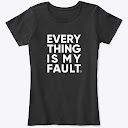
If you'll accept that you are responsible for everything in your life, you suddenly have all the power to change it. Most excuses out there are perfectly valid, but they rob us of our power to develop our success. Don’t we secretly wish that success were in our control? Well, it absolutely is, and we can do anything we set our minds to, without limitations. So stop blaming everyone else. Repeat this: “Everything is my fault.” Own it. Then relentlessly attack goals with purpose. Custom designed graphic is printed in vivid color and high resolution using state of the art color transfer technology. Shirts are made from super soft 100% preshrunk cotton. Printed in the USA. Guaranteed to last through hundreds of washes.

Mindfulness & Compassion Global Summit

Eric Forbis founder of the Mindfulness and Compassion Global Summit and co-founder BuddhaFest, Los Angeles; Dhr. Seven, Ashley Wells Crystal Q. (eds.), Wisdom Quarterly

The process of putting together this incredible Global Summit program is coming down to the final weeks for anyone to save up to 57% on tickets.

Super Early Bird tickets are available here. Come for a choice of one to five days. Here's a quick look at what's happening each day:
  • June 3: Pre-Summit Daylong Leadership Training, led by David Peterson, director of leadership development and executive coaching at Google, and Jeremy Hunter of the Peter F. Drucker School of Management
  • June 4: Summit Day 1: Mindful Leadership Forum, featuring 15+ speakers
  • June 5 and 6: Summit Days 2 and 3: Mindfulness and Compassion in the Workplace and Society, featuring 35+ speakers
  • June 7: Post-Summit Daylong Compassion Training with Sharon Salzberg, co-founder of Insight Meditation Society
Real Happiness w/ Sharon Salzberg (iLA)
Benefit from case studies, success stories, cutting-edge best practices, practical tools and strategies, and lots of inspiration.

Plus, the Summit includes mindfulness and compassion practices, mindful movement, opportunities to meet up in small groups, networking, social events and having fun.

The deadline to save up to 57% is Friday, February 28th. So get tickets right now. People are coming from more than 20 states and a dozen countries  to join this Los Angeles event exploring the powerful roles mindfulness and compassion in elevating leadership, improving the workplace, and transforming society.

Neo-Nazi makes it to TED Talk stage (video)

Christian Picciolini (TEDx, 12/20/17); Pfc. Sandoval, Seth Auberon (eds.), Wisdom Quarterly


My time in America's neo-Nazi movement and what happened
Wait, you two are Hitler Youth? - White shower!
(TEDx Talks) At 14-years-old, Christian Picciolini went from naïve teen to white supremacist. And soon he was the leader of America’s first neo-Nazi skinhead gang.

How was he radicalized, and how did he ultimately get out? In this talk, he shares a surprising and counterintuitive solution to hate in all forms.

White American Youth
After leaving the white supremacist skinhead movement he helped build in the 80s and 90s, he co-founded "Life After Hate," a nonprofit dedicated to helping people disengage from violent extremism.

His memoir, White American Youth: My Descent into America's Most Violent Hate Movement—and How I Got Out (Hachette), details his involvement and eventual disengagement from the early American white nationalist movement. He lives in Chicago.

This talk was given at a TEDxMileHigh event using the TED conference format independently organized by a local community. Learn more at ted.com/tedx.

Thursday, February 20, 2020

Dr. Joe Dispenza: DMT, pineal, breath (3/5)

Dr. Dispenza via Motivation Manifested; Pat Macpherson, Dhr. Seven (eds.), Wisdom Quarterly
Practice this breathing in group meditation, March 5, 2020. FREE: DBM, Los Angeles

Information + Application = Transformation. Learning is the first step, practice the second until we drop what is ready to be let go of and gain what is waiting.

DMT, Pineal Gland, and the Piezoelectric Effect
I can see colors and feel bliss.
Dr. Joe Dispenza provides a detailed explanation on how to contract the muscles of the body together with breathing in order to accelerate the flow of cerebrospinal fluid, apply gentle pressure to the pineal gland ("third eye" or Buddhist dibba cakkhu) at the center of the brain, and create very profound metabolites including benzodiazepine and DMT (the "spirit molecule," di-methyl-tryptamine). More
HIGHLIGHTS: 00:10 - Psycho-neuro-immunology, 01:40 - Anatomy of Supernatural Breathing, 02:43 - Cerebrospinal Fluid and the Inductance Field, 04:00 - The Pineal Gland, 05:10 - The Pituitary Gland (Oxytocin + Vasopressin), 07:00 - Piezoelectric Effect, 09:00 - Serotonin, Melatonin, Inner Visions (DMT), 10:40 - Joe's Personal Experiences, 11:28 - Moving into the Unknown, 12:30 - Biological Upgrade, 13:25 - How to Breathe Supernaturally.

Music by Jonathan Slatter. Licensed through yopo.co.uk. Watch the full interview. Footage licensed through and all videos and images sourced from: pixabay.com, pexels.com, videezy.com, videoblocks.com. Motivation Manifested claims to "own the rights to all music/footage used in this video except for speaker audio used under fair trade."

Lust to love, it was the last thing... (video)

GoGosUnsealed; Ashley Well, CC Liu, Seth Auberon, Ellie Askew, Wisdom Quarterly
C'mon, let's just do it, Baby. - You don't even love me! You don't even care. - Not this again.

(GoGosUnsealed) The Go-Go's "Lust to Love" (from Beauty & the Beat, by C. Caffey/J. Wiedlin).

It hurt my heart in this area around here.
I used to believe in romantic love. Then came you. Are you happy? Of course you're not! Am I? No, me neither. That's the way it is with selfish love. Ask Nazareth. But just as there is metta (altruistic loving-friendliness), there must be love tainted with craving (sensual desire).

It's nobody's fault. Things are just the way they are.
On account of persistent craving, there's grasping, and repeatedly grasping is clinging. Because things are impermanent, always fickle and changeable, what we cling to will result in our suffering. When?

When we meet with alteration. And that's very soon. Why? It's because we want for things to be otherwise. We will not see what is, accept what is, or deal with what is. If we did we'd move toward the end of suffering or what Buddhism calls the cool bliss of nirvana.

But who cares? I'm hot right now. I love you, and I want you! And more than anything I want for you, and me, and this emotion, and this situation never to change. Will I get my wish? Not a chance.

Why? Why does it have to be this way? Why!
LYRICS: "It used to be fun was in, the catch and release capture and kill. In another place and time, I did it all for thrills. Love me, and I'll leave you. I told you at the start. I had no idea that you would tear my world apart. And you're the one to blame. I used to know my name. But I've lost control of the game because, even though I set the rules, you've got me acting like a fool. When I see you I lose my cool. Lust to love was the last thing I was dreaming of. And now all I want is just to love. Lust turned to love. That was when the fun was in, the capture and the..." Ouch.
  • Get a job. Work for the census (2020census.gov)
  • Are you a HENRY ("High Earner Not Rich Yet")?

"Divine Beings" museum exhibition (Feb. 20)

Norton Simon Museum (norton.org); CC Liu, Crystal Quintero (eds.), Wisdom Quarterly
Vishnu Riding Garuda, 320-500 CE, Eastern India or Bangladesh, Gupta Period
.
Parinirvana, Tosa Yukihiro 土佐行広 (Japan,
Muromachi Period, 1338-1573), circa 1451
A new exhibition at the Norton Simon Museum features works by Asian artists in response to spiritual concepts: "Divine Beings" spotlights six exceptional works, five of which are loans that include four Buddhist paintings from China, Korea, and Japan linked with Buddhism and one Hindu sculpture from Eastern India or Bangladesh.

Visitors are invited to explore the relationships between these and more than 30 selected works from the Norton’s vast Greco-Buddhist (Gandharan) collection on view within five Chinese galleries. Some representations of Buddhist, Hindu, and Taoist gods and demigods (devas) take the form of humans, such as the Three Taoist Star Lords (ETs?)

Zhao Changguo 趙 昌 國 (Chinese, active 16th century), Three Taoist
Star Lords Playing Weiqi in Autumn Mountains Ming Dynasty, 1500s

Other works depict real or mythological animals, such as the dragon (naga), phoenix (garuda), tiger, owl, ox, horse, and crane, which are believed to possess supernatural abilities, acting as guardians or mounts (transport) for deities and/or disembodied "souls" (gandharvas). Within the structure of time-honored artistic and philosophical conventions, each artist has thoughtfully given form to traditional beliefs about the fundamental nature of existence. It runs between February 20–June 30, 2020. More

Wednesday, February 19, 2020

Boy Scouts worse than Catholic Church?

Today; ABC; Pam Jones for Liberty; Pfc. Sandoval, Seth Auberon (eds.), Wisdom Quarterly
The Boy Scouts of America have filed for bankruptcy protection as the organization struggles to deal with a wave of homosexual rape and child abuse lawsuits. Their situation is drawing comparisons to the Catholic Church. NBC’s Gabe Gutierrez reports for TODAY.
(Pam Jones for Liberty) Secret 14,000-page Boy Scout "perversion list" finally revealed.


(Pam Jones for Liberty) Pedophile Exposure Project is the BIGGEST pedophile COVER UP (youtu.be...) ever exposed. This is a secret 14,000-page Boy Scout "Perversion List" released online (nj.com/news...). Link to a file of 5,000 pedo names (crewjanci.com/files). Boy Scout "perversion files" detail CHILD SEX Abuse Charges (thedailybeast.com/boy-scout...). List reveals 120 New Jersey Scout leaders banned from the Boy Scouts of America. BANNED/CENSORED on Facebook (facebook.com/pam.nickelt).

Child molestation by lesbian nuns, too


Catholic nuns molest kids: surviving (video)

HuffPost; Lauren Book; WLRN; Pfc. Sandoval, S. Auberon, Ashley Wells, Wisdom Quarterly
Lauren from LaurensKids.org talks about being molested by her female nanny: TEDx.


Nuns sexually abused girls for years. Now survivors speak out.
What would a gay church look like?
The Catholic Church has been rocked by allegations of homosexual rape, sodomy, torture, and sexual abuse carried out by priests, bishops, and cardinals for decades. Now survivors of abusive lesbian nuns are speaking out. Patricia “Trish” Cahill and Anne Gleeson were heterosexual teenagers when they were victimized by sexually abusive nuns. Even though these two survivors grew up in different cities, the gay grooming and lesbian child molestation and manipulation conducted by the nuns they say abused them sound eerily and tragically similar.

Rape in the USA, is it real?

Out of Darkness, Into Light: Child Sexual Abuse
Lauren Book would've gone crazy and acted out, but she told her doctor (laurenskids.org).
.
(WLRN, wlrn.org, 5/11/12) "Out of Darkness, Into Light" is a half-hour documentary which delves into the lives of three survivors of child sexual abuse, who through their own personal experiences are committed to helping others affected by this unthinkable crime.

Tuesday, February 18, 2020

Scientists: “mind” isn’t confined to brain

Olivia Goldhill (qz.com, 12/24/16); Dhr. Seven, Pat Macpherson (eds.), Wisdom Quarterly

Scientists say “mind” isn’t confined to brain, or even to this body
Ever wonder what’s going on in another person’s mind? Ever get a compliment for having a great mind, or ask if someone is out of theirs? Ever try to expand or free the mind?

But what is a mind? Defining the concept is a surprisingly slippery task. The mind is the seat of consciousness, the essence of our being [aware]. Without a mind, we cannot be considered meaningfully alive. So what exactly, and where precisely, is it?
  • This whole tail and bulb is a brain.
    [According to Buddhism, "mind" (mano or nama) is a mind-body process comprised partly of consciousness (vinnana), which is composed of mind-moments and mental factors (cittas and cetasikas). It is located physically in the area of the heart, and this can be directly investigated and confirmed by gaining absorption, emerging, and reviewing the area of the heart to see the mind door. If one looks between the ears, one will not see mind. See the meditation techniques of Ven. Pa Auk Sayadaw for details.]
Yeah, this part got no blood, a stroke of insight...
Traditionally, scientists have tried to define "mind" as the product of brain activity: The brain is the physical substance, and mind is the conscious product of those firing neurons, according to the classic argument.

But growing evidence shows that the mind goes far beyond the physical workings of the brain. [And the size of "the brain" is underestimated because most of it is not in the cranium but extends down the brainstem and spinal column. See Dr. Jill Bolte Taylor holding one whole brain.]

Mind (Dr. Dan Siegel, MD)
No doubt, the brain plays an incredibly important role. But the human mind cannot be confined to what’s inside the skull, or even the body, according to a definition first put forward by Dr. Dan Siegel, a professor of psychiatry at UCLA's School of Medicine and the author of Mind: A Journey to the Heart of Being Human.

He first came up with the definition more than two decades ago, at a meeting of 40 scientists across disciplines, including neuroscientists, physicists, sociologists, and anthropologists.

My Stroke of Insight (Taylor)
The aim was to come to an understanding of the mind that would appeal to many and serve as common ground, satisfying those wrestling with the question across various academic fields.

After much discussion, they decided that a key component of the mind is “the emergent self-organizing process, both embodied and relational, that regulates energy and information flow within and among us.”

It’s not catchy. But it is interesting with meaningful implications. The most immediately shocking element of this definition is that our mind extends beyond our physical selves.
  • The Buddha on mind-body
    [In Buddhism, "self" (atta or atman) is defined in a very detailed way as those things (groups or clusters of things) we cling to as a self. The Buddha called them the Five Aggregates or heaps -- form, feelings, perceptions, formations (such as volitions), and consciousness. When one speaks of a self, it is usually in reference to one or more of these. Or these things are regarded as the property and possession of a self. This is the "me," the "I," the "ego," or the possessions of a "self." Ultimately, however, it is an illusion. There is no self behind these impersonal processes. But because there exists the thought that there is, clinging happens. What clings? There is no clinger, but form forms, feelings feel, perception perceives, mental formations will (among other things), and consciousness is conscious. The Abhidharma explains all of this is minute detail; moreover, it may be known-and-seen directly and enlightenment realized by calm meditation and liberating-insight.]
We're looking at the prefrontal cortex (TED).
In other words, our mind is not simply our perception of experiences, but those experiences themselves. Dr. Siegel argues that it’s impossible to completely disentangle our subjective view of the world from our interactions.

“I realized if someone asked me to define the shoreline but insisted, is it the water or the sand, I would have to say the shore is both sand and sea,” says Dr. Siegel. “You can’t limit our understanding of the coastline to insist it’s one or the other.

Is the "shoreline" land OR sea? Which one?
“I started thinking, maybe the mind is like the coastline — some inner and inter process. Mental life for an anthropologist or sociologist is profoundly social. Your thoughts, feelings, memories, attention, what you experience in this subjective world is part of mind.”

By Olivia Goldhill
The definition has since been supported by research across the sciences, but much of the original idea came from mathematics.

Dr. Siegel realized the mind meets the mathematical definition of a complex system in that it’s open (which means it can influence things outside itself), chaos capable (which, simply put, means it’s roughly randomly distributed), and non-linear (which means a small input leads to large and difficult to predict result). More

Monday, February 17, 2020

Comedy: Rush, topless Bernie protest

Mike MacRae (TJDS); RC; SNL; Seth Meyers; Seth Auberon, Ashley Wells, Wisdom Quarterly
Conservative Hollywood actor Vince Vaughn loves Rush Limbaugh. He defends him against anyone who might make light, mock, or laugh at him in his cancerous misfortune, after a lifetime of broadcasting as a dove, a paragon of love, unity, and human kindness.

Topless anti-dairy protesters against Bernie


Bernie wins New Hampshire, Trump tells crooked Barr to let Roger Stone off: A Closer Look


(Late Night with Seth Meyers, Feb. 12, 2020) Seth Meyers takes a closer look at Bernie Sanders’ New Hampshire primary win and Impeached-Pres. Trump bullying the Justice Department into showing favoritism on one of his convicted henchman, longtime Republican Operative and Nixon lapdog Roger Stone. Watch Late Night with Seth Meyers Weeknights 12:35/11:35c on NBC.