The Dharma of Alan Watts and Ram Dass Virtual Course: introductory call with Mark Watts
Baba reading Be Here Now
(Baba Ram Dass) Premiered Sept. 20, 2023: Celebrating the Dharma of Alan Watts and Ram Dass with a call in from Alan Watts' son, Mark Watts, and Jackie of the Love Serve Remember Foundation, Raghu, and Justin.
Learn more at: ramdass.org/dharma.
Monday, Oct. 2 through Saturday, Oct. 28. Come immerse in the profound teachings of Westerners Alan Watts and Ram Dass, two cultural icons who were essential in bringing Eastern mysticism to a Western audience.
Sign up today: ramdass.org/dharma.
Two cultural icons, two unique perspectives, one understanding of the presence of the Way.
Dropping acid (LSD) for science
Alan Watts (KPFA and KQED TV) was a scholar and a philosopher; his ideas were deeply profound yet entirely accessible for Westerners. Ram Dass (Harvard's Dr. Richard Alpert, author of Be Here Now) was an explorer of human consciousness and heartfulness; his life was his message [which was to communicate the love he felt from his guru, Neem Karoli Baba/Maharaji, whose sex scandals only came to light later].
Both were essential to transmitting Eastern mysticism to a Western audience, opening the minds and hearts of millions of people, particularly Americans as both were based in the U.S.
BOOK: Be Here Now (Ram Dass)
Though the two traveled different paths of spirituality and mindfulness -- Alan on the path of non-duality, Ram Dass on the path of Bhakti Yoga (union through devotion) -- they came together in friendship and in understanding the Tao or the Way of things.
There are many pathways up the mountain of spirituality, but the destination remains the same [given the extreme similarities between Hinduism and Mahayana Buddhism]
[Mahayana or Universalist Buddhism is much influenced by Taoism, Shinto, Bon shamanism, yoga, and esoteric practices, but is to be distinguished from Early Buddhism, particularly of the surviving Theravada school, which focuses on practice and direct experience through serenity (samadhi) and systematic fourfold setting up of mindfulness (satipatthana), calm and insight, for personal realization of the historical Buddha's Teachings].
ABOUT: Love Serve Remember Foundation and the Alan Watts Organization invite all to open their mind, open their heart, and tap into the living truth of these two seminal figures. In this 4-week course, one will...
Buddhist Alan Watts was an Episcopalian priest
immerse oneself in profound teachings from Alan Watts and Ram Dass, two cultural icons who were essential in bringing Eastern mysticism to a Western audience
recognize the possibility of a true merging of mind and heart through two very different perspectives on the spiritual path
discover ways to create greater balance and harmony in life
develop intuition and sensitivity and leave behind the analytical mind
learn how to navigate the worlds of business, money, and pleasure, and use the stuff of life to get free
abandon the complicated games and self-interests that make us doubt ourselves
gain discernment for the “divine madness” of love, sex, romance, and parenting
start to recognize our true nature in connection to our humanity
develop deeper trust in ourselves, nature, and the Way of things
Come join this FREE 3-Day mini-course for women wanting to find deeply meaningful relationships.
This course is for singles and women who are currently in unfulfilling relationships, looking to get out responsibly.
Why?
The reason we are unable to attract a suitable partner into our life is due to unconscious blockages we have towards relationships, which are primarily the result of traumatic and painful experiences we have experienced in the past.
Solution
Let's learn how to recognize our own patterns and blockages and overcome our fears so that we will be open to new and meaningful relationships.
✨ Three consecutive 1-hour live sessions starting on Tuesday, October 11 at 8:00 pm GMT
Schedule
1. Welcome and Hellos (10 mins.)
2. Topic Deep Dive (45 mins.)
3. Q&A and Discussion (15 mins.)
4. Wrapping Up (5 mins.)
What we'll cover
✅ Day 1 (Tuesday, Oct. 11th @ 8:00 pm) The real reason career women do not attract their ideal partner or end up in relationships that are draining and incompatible.
✅ Day 2 (Wednesday, Oct. 12th @ 8:00 pm) Healing from old relationship narratives to create space, for new healthy ones. Saying Yes to the relationship we want to create.
✅ Day 3 (Thursday, Oct. 13th @ 8:00 pm) Developing emotional intelligence and self-awareness for successful, long-lasting relationships.
🔷Interactive Online Workshop:
This is an interactive online workshop and a great way to chat and connect with like-minded women. Participants are encouraged to share stories and connect with each other. To join, click attended and then be able to simply click the link on the righthand side.
🔷Facilitator: Golden Gabi
Holistic Health & Embodied Leadership Guide, Trauma Informed Healing Facilitator, Motivational Speaker
Trained in Mind-Body Therapies, NLP and Holistic Nutrition, BSc (Hons) Neuroscience, Psychology
Gabija Trybyte ("Golden Gabi") has been transforming people's lives ever since she realized that working in a laboratory, surrounded by lab coats and test tubes for a doctoral degree in neuroscience wasn’t quite her soul's purpose.
Mr. and Mrs. S.N. Goenka via Dhamma Naturalmind; Ellie Askew, Wisdom Quarterly
Q&A: Goenka-jii (of free 10-day insight meditation vipassana retreats fame) addresses a few amusing questions from Californians in this Dhamma (Dharma) talk in Berkeley, California, USA on June 8, 2002. The original video was uploaded to vridhamma.org, a resource for more videos and information.
This online course, led by B. Alan Wallace, be introduced to the view, meditation, and way of life of Dzogchen -- the “Great Perfection” tradition of Tibetan Buddhism.
Wallace goes through a remarkable text by 19th century Master Düdjom Lingpa, The Foolish Dharma of an Idiot Clothed in Mud and Feathers, and guides the class in meditations that help participants begin to discover the Great Perfection for themselves.
Additional selected readings, quizzes, and the opportunity to discuss this material with an international community of learners augments understanding and helps integrate this profound path into daily life.
What We’ll Learn
Practices that lead directly to the heart of Dzogchen
Special meditation techniques to develop relaxation, stillness, and clarity
How to observe thoughts and emotions without getting caught up in them
An overview of the world of the Great Perfection, as told by the great master (Düdjom Lingpa).
About the Course
Dzogchen (“Great Perfection”) is regarded by many to be the pinnacle of the Buddhist teachings, as it presents the most direct path to realizing our true nature and to unveiling the deepest dimensions of consciousness.
About the Teacher
Dynamic lecturer, progressive scholar, and one of the most prolific writers and translators of Tibetan Buddhism in the West, Dr. B. Alan Wallace, PhD continually seeks innovative ways to integrate Buddhist contemplative practices with Western science to advance the study of the mind.
Dr. Wallace, a scholar and practitioner of Buddhism since 1970, has taught Buddhist theory and meditation worldwide since 1976. Having devoted 14 years to training as a Tibetan Buddhist monk, ordained by H. H. the Dalai Lama, he went on to earn an undergraduate degree in physics and the philosophy of science at Amherst College and a doctorate in religious studies at Stanford U.
He later studied Dzogchen with Gyatrul Rinpoche, a senior teacher in the Nyingma school of Tibetan Buddhism. With his unique background, Dr. Wallace brings deep experience and applied skills to the challenge of integrating traditional Indo-Tibetan Buddhism with the modern world.
Misery is a complex thing. More often than not, we know when we are feeling shitty. Less frequently, however, do we know the root of our suffering.
Our aversion to facing ourselves perpetuates an inner climate of denial and sadness.
Following a conversation I had with a complete stranger about anxiety and coping mechanisms, I found myself walking through the doors of the Quebec Vipassana Meditation Centre in Montebello looking to understand myself and to find some kind of closure to things that I hadn’t yet resolved.
The typical vipassana ("insight") meditation course is drawn out over ten days. The practice is largely founded on the principle of accepting the present as it is.
[All free 10-day Goenka vipassana retreats worldwide strive to be identical. Apply to attend one nearby at dhamma.org. Free to first time "new" students.]
For the first three days, we practiced anapana [-sati, "mindfulness of in-and-out-breathing"].
Focusing solely on the triangular space [under and] around the nostrils and the Cupid’s bow, the soft bit of skin above the upper lip, I learned to hone my awareness to feel subtle sensations in that area. For me, it felt like tiny flecks of electricity dancing across my face.
On Day 4, we learned to begin scanning our bodies from the top of our heads to the tips of our toes slowly, carefully. Through this simple technique, it’s believed that we can [calm body and mind to prepare the mind for developing insight to] find inner peace and harmony.
After the first meditation session, we took a vow of silence. Goenka chanted in Pali -- the sacred language of Theravada Buddhism -- in a deep, grumbling voice [that sounds like he's from Transylvania with an Indian accent].
We shyly attempted to repeat his words. The delicate voices of 60 women gradually filled the meditation hall with a beautiful, harmonic sound until the chanting abruptly ended.
We agreed not to speak, touch, or even look at each other for the next ten days. Twice a day, we ate [free delicious vegetarian food] in silence, the only sound the clinking of utensils against plates and bowls.
A subtle smile from another meditator became a cherished yet outlawed interaction.
Each day brought a different storm. According to Goenka’s evening [recorded] discourse, most people find that Day 2 and Day 6 are the hardest. I mean, on the second day I saw a woman run outside into the darkness and never return, but we don’t need to talk about that.
On the third day, I found myself experimenting with meditation techniques I had learned in the past -- something that the Centre emphasizes you shouldn’t do.
[Bad trip hallucinating]
I am freaking out, man, freaking out! (Askew)
Forty-five minutes into the midday session, I lost myself in what, at the time, seemed like the be-all-end-all of spiritual experiences -- but which now I can only describe as terrifying.
I felt a powerful vibration go through my body [possibly prana going through the body's chakra system], and a gross sensation took over and swept me up into a sea of disturbing, DMT-esque mental imagery that seemed to promise -- but never to deliver -- enlightenment.
[This is so far from what "enlightenment" or bodhi actually is that it is not worth correcting.]
I tried to speak with the instructor, Rachel, about it.
“You are supposed to focus on this area, nothing else,” she replied, circling her nose with her index finger. “You cannot bring your old practices here.”
“It was so powerful though, I —” [I tried to explain.]
“Don’t argue with me,” she said sternly, cutting me off mid-explanation.
Feeling angry, uncertain and unsafe, I went back to my room and thought about what gave her that authority. I resented Rachel for not validating what I’d experienced.
“With one leg on the white horse, the other leg on the black horse, you’re bound to fall through the middle,” I’d hear later that evening on the Goenka recording.
I then realized that you had to dedicate yourself to one technique to allow it to work the way it’s supposed to.
I cried constantly throughout the week. I cried constantly throughout the week. ...I burst into tears as I suddenly thought...I wept in the meditation hall, muffling my sobs with my blanket, which I pulled over my head as terrible thoughts polluted my consciousness.
I pictured my family dying, my loved ones committing horrible acts, and the world ending. I felt trapped by the unending and explosive chain of dark thoughts, reactions, and misery.
The concept of sankara, which loosely means “reactions,” explained my feeling of eternal misery.
I pictured sankara as a collection of little rocks in my stomach -- miseries that piled up over the years. Sankara is your “craving” and “aversion.” It’s the reason why we’re all so sad.
And apparently you can eradicate it through meditation.
I had to find an OUT from my sankara. I knew there would be no relief in giving up. Leaving the course early would mean returning home with an open wound. So I decided that I would stay to try to close it.
As time went on, I found safety in the meditation and in the powerful beauty of a group of women silently confiding in each other.
I grew fond of Rachel’s simple responses to my complex worries. I found a dormant creative energy within myself that I had forgotten existed. Put simply, I went into THE VOID and came out known. More
(Diamond Mind) Three-part guided meditation on "Buddha Nature" [our innate potential for enlightenment], forgiveness, and equanimity with insight meditation instructor Jack Kornfield.
Psychotherapy 2.0 2016: Online Training Summit(soundstrue.com)
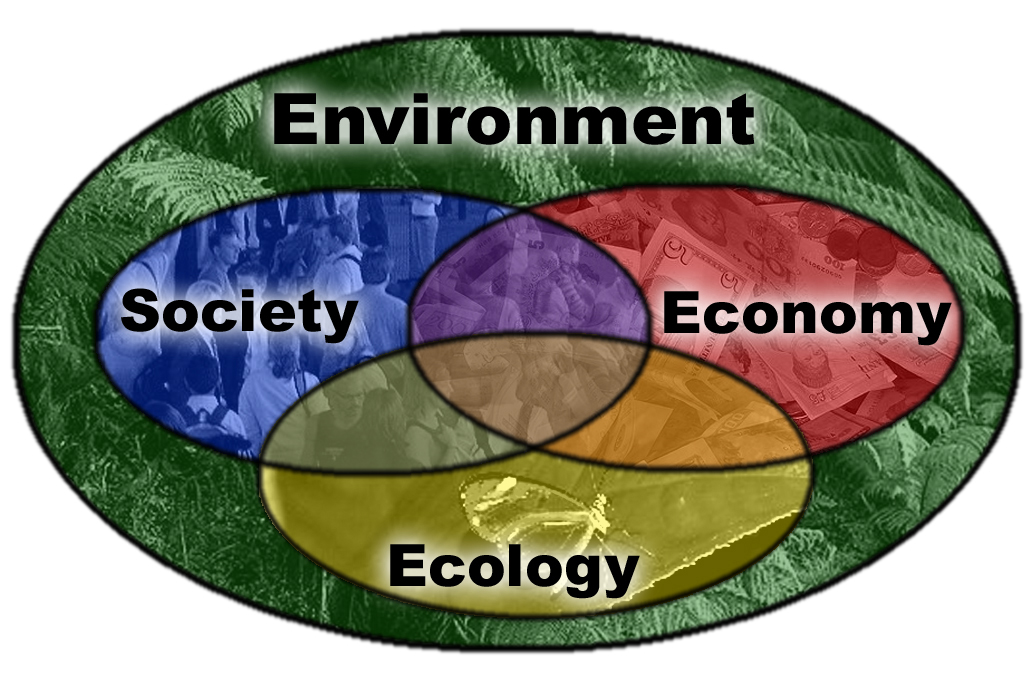
Amber Larson, Wisdom Quarterly; Living Mandala, Permaculture, Social Enterprise and Leadership Program: 7 Stages to Sustainability Permaculture Design Course
Living Mandala -- in conjunction with Empowerment WORKS and a host of community leaders, social entrepreneurs, visionary organizations, and amazing educators -- presents a groundbreaking 7 Stages to Sustainability Permaculture Design Course starting in less than a week!
Of all the more than 100 courses, workshops, and events Living Mandala has co-produced over the last six years, this one is going to be exciting.
Looking for an exceptional, manageable, affordable, and accessible PDC? This is an amazing program to support getting projects, social enterprises, and long term goals off the ground from Vision to Impact. It is an amazing opportunity! See more at livingmandala.com/7SS
What is enlightenment? Bodhi, in Pāli and Sanskrit, is often translated as “enlightenment.”
A better translation might be “to awake, become aware, notice, know, understand.”
What does it mean to become awake? How do I wake up, become enlightened?
Dharma maps are descriptions of the path to enlightenment, strategies, step-by-step guides for organizing insight practice toward the (non) goal of enlightenment.
There many such maps, perhaps as many as there are teachers. Which works for us?
This course will look at them as if portions of the Requisites of Enlightenment were independent maps:
The Seven Factors of Enlightenment, Sixteen Stages of Insight, Four Stages of Enlightenment, Ten Fetters... The course will also look at the work of the commentaries and
This is an intermediate level course and will explore insight practice using guided-meditation. Everyone who is comfortable sitting two 30-minute guided meditations per class is welcome.
Dharma Maps:
An 8-Week Series
Thursdays, 7:30-9:30 pm
June 7, 14, 28, July 5, 12, 19, 26, and August 2.
Cost: $20 per evening.
Some scholarships and work study available. No one is turned away for lack of funds. More
George Haas, who is from Manhattan, began sitting vipassana at Ordinary Dharma in Venice and reading extensively. In 1998, he began study with his current teacher, Shinzen Young, and Vipassana Support International, where he is now a senior facilitator.
"Meditation in Everyday Life" is an introductory four-class course (Shambhala Meditation Center of Los Angeles) with Bill Bothwell and Chris O'Hare, Tuesdays beginning Sept. 20, 2011. Register
The newly constructed SCVC is open and accepting applications for free 10-day Buddhist insight meditation (vipassana) retreats taught in the tradition of S.N. Goenka. The Southern California Vipassana Center Trust is delighted to announce the opening of Dhamma Vaddhana, the newly completed Buddhist meditation center in Twentynine Palms near Joshua Tree, California.
The center will open with an inaugural FREE ten-day course to be held from May 4-15, 2011. Online registration is now open for this first course, as well as for all other courses offered at the new center throughout the year.
To apply to sit or serve a course at SCVC, please visit the course schedule page at schedules.
To learn more about the development of Dhamma Vaddhana, please visit vaddhana.dhamma.org. There is a lot of work to be done to meet the May 4th starting date for the course.
Old students who have the time and energy in the next couple of weeks to help complete the final projects and get the center ready for its first course are welcome to come out to Dhamma Vaddhana and pitch in.
Along with all the work that needs to be done, there will be three group sittings a day. Accommodations and meals will be provided for all old student volunteers.
LOCATION
Southern California Vipassana Center: Dhamma Vaddhana
68561 Twentynine Palms Highway,
Twentynine Palms, CA 92277
Phone: (760) 362-4615
NOTE: If you are currently on the waitlist for a course at the California Vipassana Center (Dhamma Mahavana) in North Fork and would like to apply for a course at the Southern California Center, please email CVC North Fork at registration to cancel your waitlisted application. After doing so you may then submit a new application to attend a course at the Southern California Vipassana Center.
Directions from the west (Los Angeles area) I-10 eastbound to 62 northbound (29 Palms Highway). Continue through Morongo Valley, Yucca Valley, and Joshua Tree. Continue past Copper Mountain Community College (on left). Go another two miles and look for a tall radio tower on the left side of the road. This tower is directly across the highway from the center. On your right you will see a sign indicating the center property. Turn right onto Mantonya Road (dirt road), and right again into the entrance driveway.
New Mindfulness Research Project Healthcanal.com Our minds naturally tend to focus on things that have already happened or on planning for the future.
Mindfulness meditation has been used in Theravada Buddhism for more than 25 centuries. Its key goal is to train us to live more fully in the present moment and to look more objectively at our experiences
Marise Fallon, a Master in Clinical Psychology student in the UTAS School of Psychology, is examining the benefits of mindfulness meditation.
“Studies have indicated that the practice can help with emotion regulation, decreasing stress, and increasing positivity.
“Other studies have focused on the use of the practice for its physical health benefits, which include lowering blood pressure, helping us get a better night’s sleep and dealing better with physical pain for those suffering from chronic pain,” Marise said.
“There are also a number of cognitive benefits that can arise from regular mindfulness practice, including an increase in working memory capacity and the ability to have more control over our attention.”
Mindfulness is a key part of these different therapies:
Mindfulness-Integrated Cognitive Behavior Therapy, used to treat a range of issues including anxiety, depression, substance abuse, chronic pain, and post traumatic stress disorder;
Acceptance and Commitment Therapy which has been used to treat anxiety, depression, and general life dissatisfaction;
Dialectical Behavior Therapy, used to treat personality disorders; and
Mindfulness-Based Stress Reduction, used to treat disorders related to anxiety and depression, chronic pain, and general life stress.
Marise explained that while we know mindfulness has a lot of benefits, researchers have not yet evaluated the outcome differences the various types of mindfulness techniques used by clinicians.
“My study will attempt to find valuable information that we believe will be extremely helpful for teachers and clinicians throughout the world,” she said.
The goal of her study is to take a closer look at three of the most commonly used mindfulness techniques:
Mindfulness of Breath – a formal meditative technique that focuses on the breath.
Body-Scan – a formal meditative technique that focuses on bodily sensations.
Everyday Mindfulness – involves integrating mindfulness and the concept of living in the present moment into our everyday activities.
“All of these techniques are being used more and more frequently by practitioners (including psychologists, doctors, and other mindfulness teachers),” she said.
“The information arising from a closer look at these techniques should enable practitioners to tailor their use of mindfulness to better suit each client, providing optimal outcomes.”
Fallon is seeking participants to partake in a FREE COURSE in mindfulness for her study. The eight-week course will start this month and will involve attending one class each week as well as committing to daily mindfulness practice. She will have classes during the day as well as after hours. To take part, please call 0422 635 009.
Bhutanese art: the Buddha in one of the most splendid temples in Bodhgaya, where he attained enlightenment, Bihar state, India. (Photographs by Y. Awanohara/Flickr.com).
I was asked by a learned monk who combines Mahayana and Theravada Buddhism to teach at a new Buddhist temple he built in Los Angeles. Because I was writing a book on the Factors of Enlightenment, I proposed an eight-week class on that subject. It was advertised in the Los Angeles Times and elsewhere.
Sixty-one Americans attended the first Sunday. Forty of them stayed for all eight weeks, two hours every Sunday, capped off with meditation in the main hall. It was so well received -- with people saying they had never heard of such Dharma topics, Buddhist meditation instructions, or explanations from the oldest sutras -- that I was asked to teach at another much older and much more traditional temple.
This time the focus was on their own lay devotees. Although they were born Buddhists and exceedingly devotional, they did not understand many concepts and details concerning the vast range of Dharma taught by the Buddha, to say nothing of the teachings of other religions. These were the seven main topics we covered in a class I called:
"Buddhist Kindergarten (for Adults)"
I.BUDDHISM: Since Buddhism places such great emphasis on personal understanding and effort, rather than blind faith, it is often asked: Is Buddhism a "religion"? The combination of wisdom and compassion results in enlightenment (bodhi). Buddhism invites skeptical inquiry, questioning authority, and the development of both rational and intuitive insight. Does spirituality trump religion
II. KARMAWhy do bad things happen to good people? Deeds (karma) produce mental-resultants as well as bearing fruit in this and future lives. Personal choice leads to future responsibility as we by our deeds design our "fate" and destiny, albeit often inadvertently.
III. HAPPINESSWe crave only pleasure, joy, and satisfaction. But we meet with pain, frustration, and sorrow. What's going wrong? Why do even the most privileged among us feel dissatisfied? We will examine contentment, rapture, bliss, and nirvana in our search for happiness.
IV. DEATH There may be no death, yet we must often comfort the bereaved, deal with our own mourning, and assist those who have passed on. But how can we do any of these of the topic is taboo in polite society? We will discuss the transition from one transient state of existence to another in stark detail: Who or what passes away? What is the special value of human life? How does our (death-proximate) consciousness condition our next rebirth? Why?
V. REBIRTHWhat determines rebirth? Wonderful, woeful, and human rebirths -- plus discussion of angels, animals, and anatomically-incorrect realms. The divinities (brahmas) are neither male nor female, but the deities (devas) are as active and mischievous as daytime soap stars. Craving, aversion, and delusion are the root causes of rebirth in unfortunate destinations, whereas opposite impulses bring about exponentially greater results. Within this Cyclical Round of Birth and Death (samsara), there is no "being," only becoming and again-becoming. What is freedom from rebirth?
VI. GOD "God" in Buddhist perspective will surprise most Buddhists because Buddhism is non-theistic not atheistic. Are the gods creators meting out rewards and punishments, or merely as well-born beings? Many views prevalent in ancient India and modern America will be considered to show how they are not all that different even as adherents fight to the death to advocate their views: pantheism, polytheism, monotheism, atheism, and that rare form of non-theism the Buddha endorsed will be discussed as well as the G.O.D. in us all.
VII. ENLIGHTENMENT How long does it take to become enlightened? There is no darkness like the darkness of ignorance, no enemy like the enemy of hate, no trap like the trap of desire. This being so, how will we ever develop the light of wisdom to realize the liberating Truth for ourselves, and can it be done in this very life? When does the marriage of wisdom and compassion that transforms greed, hatred, delusion take place? Who are the noble individuals in the world and why?
Under the sprawling Bodhi tree, I saw you, I saw me, and there was no one to be seen
Cutting Through Fear (audio) Within the ancient teachings of Tibetan Buddhism is a practice called Chod (literally, "to cut") that was developed almost 1,000 years ago by the legendary yogini Machig Lapdron for facing and dissolving our greatest fears and attachments.
This method is still practiced today by all schools of Tibetan Buddhism. In this CD course, Tsultrim Allione, one of contemporary Buddhism's most respected teachers, shares the fascinating history of this practice and interprets it for Western students of meditation.
Drawing from root visualization practices, she shares a four-step process that can help us meet and release fears, obsessions, addictions, anger, and other difficult emotions. (3 CDs, 3 hours)
SoundsTrueVideos — The Buddha meets neurobiology in this interactive course on the power of mindfulness. This is a 10-minute excerpt from "Mindfulness and the Brain: A Professional Training in the Science and Practice of Meditative Awareness" by Jack Kornfield, Ph.D. and Dr. Daniel J. Siegel, MD.
Long and Special Meditation Course Schedules 2009/2010
(Dhamma.org) Each of the long Vipassana courses listed below have special course qualification requirements. Students who have participated in a free 10-day course must meet these special requirements in order to be considered for free admission. Application for admission to a long course must be made on special application forms available from each of the centers. All instruction is Buddhist based insight meditation as taught by S.N. Goenka. Download a form in (PDF) for return by either printout or email. Choose the correct file from the Application Form Page.
"College Offers Course in Surviving Our Bad Economy"
PCC offers class this spring. Surviving the economic downturn financially and emotionally is the subject of a class Pasadena City College will offer this spring. What makes the class unusual is the teaching combination. A psychologist and financial planner team up to teach the course on coping with our bad economy.
The course is offered through Pasadena City College Extended Learning Program. Contact the college for details. Link (Pat Healy, NBCLosAngeles.com).
All materials on this site are submitted by editors and readers. All images, unless otherwise noted, were taken from the Internet and are assumed to be in the public domain.
In the event that there is still a problem, issue, or error with copyrighted material, the break of the copyright is unintentional and noncommercial, and the material will be removed immediately upon presented proof.
Contact us by submitting a comment marked "private."
Do not follow this journal if you are under vinaya or parental restrictions. Secure protection by Sucuri.
Wisdom Quarterly: American Buddhist Journal is licensed under a Creative Commons Attribution-Noncommercial-Share Alike 3.0 United States License. Permissions beyond the scope of this license may be available at creativecommons.org/about/licenses.