Showing posts with label human world. Show all posts

Thursday, April 30, 2026

What's special about human life? (Blind Turtle)


SUTRA: The hole in the ring
Who would ever become a Buddhist monastic?
"Meditators, suppose that this great earth were completely covered with water and a person were to toss a ring with a single hole onto the surface.
 
"A wind from the east would send it west, a wind from the west would send it east, a wind from the north would send it south, and a wind from the south would send it north.
 
"Moreover, suppose there were a blind turtle that surfaced only once every 100 years.

"Now, what do you think? How likely is it that that blind turtle, coming to the surface only once every 100 years, would ever stick its head through that ring?"
 
"It would be very improbable, venerable sir! It would only be by chance that a blind turtle, coming to the surface only once every 100 years, would stick its head through that ring [being tossed around by wind]."

"Likewise, meditators, it is very improbable, mere chance that [at any given time] one obtains a human rebirth.

"Likewise, it is very improbable, mere chance that a Tathagata [a fully enlightened teaching buddha], worthy and rightly self-awakened, ever arises in the world.

"Likewise, it is very improbable, mere chance that a Doctrine and Discipline [Dhamma-Vinaya] expounded by a Tathagata appears in the world.

"But now this human rebirth has been obtained. A Tathagata, worthy and rightly self-awakened, has arisen in the world. A Doctrine and Discipline expounded by a Tathagata has appeared in the world.
 
"Therefore, take as [an extraordinarily rare and] sacred duty to contemplating [these four enlightening/liberating truths]:
  1. 'This is [the meaning of] suffering...
  2. This is the origin of suffering...
  3. This is the end of suffering.'
  4. Undertake the duty of contemplating: 'This is the path-of-practice that leads to the end of suffering.'"
In retrospect, the historical Buddha might have said:
  1. This is pleasure (sukha)...
  2. This the origin of pleasure...
  3. This is the end of pleasure (dukkha)...
  4. This is the path-of-practice that leads to more and more pleasure [until one reaches the ultimate and unsurpassable bliss of nirvana.]
  • Why didn't he? It must have occurred to him. One very likely reason is that this is not the path of hedonism (pleasure-seeking as the ultimate good). Making an end of 
1. What is "suffering" and could we talk about pleasure instead?
.
What is dukkha (disappointment, distress, unsatisfactoriness)? There is no need for confusion about dukkha or displeasure with translating it as "suffering." It is the nature of Pali and Sanskrit that a term has a RANGE of meaning, from agitation to agony.

All of these are dukkha, which could be rendered "off-kilter," like the wheel of an ox-cart that is off center and making for a bumpy and unpleasant ride. The Buddha defines exactly what he means by the word: "Not getting what one wants, getting what one doesn't want, being separated from or losing what one loves, being joined with what one detests." In short, the Five Aggregates clung to as self (the khandha or skandha) are disappointing, painful, unable to ever fulfill, and are thus unsatisfactory and suffering.

(Wiki) According to Monier Monier-Williams, the actual roots of the Pali term dukkha appear to be Sanskrit दुस्- (dus-, "bad") + स्था (sthā, "to stand") [9, Note 2]. Irregular changes in the development of Sanskrit into the various Prakrits [ancient hybrid languages] led to a shift from dus-sthā to duḥkha to dukkha.

Western Theravada Buddhist monk Analayo
Western scholar-monk Ven. Analayo concurs, stating that dukkha as derived from duḥ-sthā, "standing badly," conveys nuances of "uneasiness" or of being "uncomfortable" [16].

Silk Road philologist Christopher I. Beckwith elaborates on this derivation [17]. According to him: "...although the sense of duḥkha in Normative Buddhism is traditionally given as 'suffering,' that and similar interpretations are highly unlikely for Early Buddhism.

"Significantly, Monier-Williams himself doubts the usual explanation of duḥkha and presents an alternative one immediately after it, namely: duḥ-stha "'standing badly,' unsteady, disquieted (literally and figuratively); uneasy," and so on.

"This form is also attested, and makes much better sense as the opposite of the Rig Veda sense of sukha, which Monier-Williams gives in full [11, Note 3].

Translation
The literal meaning of duḥkha, as used in a general sense, is "suffering" or "painful" [Note 4]. Its exact translation depends on the context [Note 5].

Contemporary translators of Buddhist texts use a variety of English words to convey the [many] aspects of dukh.

Early Western translators of Buddhist texts (before the 1970s) typically translated the Pali term dukkha as "suffering." Later translators have emphasized that "suffering" is a too [harsh and too] limited translation for the term duḥkha and have preferred to either leave the term untranslated [15] or to clarify that translation with terms such as
  • anxiety,
  • distress,
  • frustration,
  • unease,
  • unsatisfactoriness,
  • not [getting] having what one wants,
  • having what one does not want, and so on [19, 20, 21, Note 6].
In the sequence "[re]birth is dukkha," it may be translated as "painful" [22].

The opposite of pleasure
But I want what I want when I want it!!!
When related to vedana ("sensation" or "feeling") dukkha ("unpleasant," "painful") is the opposite of sukha ("pleasure," "pleasant"), yet all feelings are dukkha [unsatisfactory, disappointing] in that they are impermanent, conditioned [impersonal] phenomena, which are unsatisfactory, incapable of providing lasting satisfaction or actual enduring fulfillment.

The term "unsatisfactoriness" then is often used to emphasize the unsatisfactoriness of "life under the influence of afflictions and polluted karma" [23, 24, 25, 26, 27, a], but it would equally well -- though much less obviously -- apply to sukha.

All pleasure ultimately fails to fulfill, satisfy, make us happy exactly because the nature of ALL conditioned (dependently originated or co-arisen) phenomena is beset by what the Buddha described as three universal characteristics or the Three Marks of All Conditioned Existence (ti-lakkhana) and transient states.

Early Buddhism
Dukkha is one of the three marks of existence -- namely anicca ("impermanent"), dukkha ("unsatisfactory"), anatta ("impersonal," "not-self," "empty," devoid of an enduring essence) [Note 7].

Various Pali canon sutras (discourses) sum up how cognitive processes result in an aversion to unpleasant things and experiences (dukkha), forming a corrupted process together with the complementary process of craving and clinging to pleasure (sukha).

What does dukkha mean?
This is expressed as saṃsāra, an ongoing process of [re-]death and rebirth [Note 8], but also more pointedly and non-metaphysically in the process-formula of the Five Aggregates clung to as self (skandhas):
  1. [Re-] birth is dukkha (disappointing),
  2. aging is dukkha,
  3. deteriorating is dukkha,
  4. illness is dukkha,
  5. death is dukkha;
  6. sorrow, lamentation, pain, grief, and despair are dukkha;
  7. association with what we don't like is dukkha;
  8. separation from the liked is duḥkha;
  9. not getting what is wanted is dukkha.
  10. In summary, the Five Aggregates clung to as self (khandhas) are dukkha. More

Sunday, February 1, 2026

'Fight till Death' in Human/Animal World


Countless worlds in 31 Planes of Existence
What deeds (karma in Buddhism) lead to rebirth in the animal womb (tiracchana yoni). The simple answer is breaking any of the Five Precepts. Upholding these moral precepts is the basic minimum to ever be reborn on the human plane.

Animals in the Buddhist worldview are believed to inhabit a distinct "world" (loka) that is separat from humans. But the dividing line is not in space. Rather, it is in terms of state of mind. This "Animal Womb" (Sanskrit Tiryag-yoni, Pāli Tiracchāna-yoni) World is part of the downfall (apaya).

Rebirth as an animal is considered very unfortunate -- even though some animals are very beautiful, long lived, and treated well due to previous karma. In general, rebirth as an animal involves much more suffering than is found in the human world (manusya-loka).

The real "human world" we don't see
Humans live long lives in peace and prosperity...not here, but in other human worlds.
 
We think we understand the "human plane" because we are living on it. We do not. We do not understand even a fraction of human life on this plane, which we are told is a "plane(t)" and no one is allowed to question that and be taken seriously.

There are countless "human" worlds existing in "world systems" in all directions in space. But just here, wherever "here" is, the Buddha spoke of four "lights" or "islands" (dipas, usually translated as "continents," but they are more likely other divisions, places, dimensions because the strange beings that inhabit them are very different from the ordinary "humans" we take for granted all around us). What is behind the Ice Wall, the next human subdivision or "continent"?
  • FOUR "HUMAN" WORLDS right here, main divisions: (1) Jambu-dīpa, located in the south (of the axis mundi Mt. Sumeru (a "mountain" too big to be an actual peak here like holy Mt. Kailash, K2, Everest, or the even taller Mauna Kea when measured from base to peak as one would normally measure anything), named after the Jambu tree, with human beings who are five to six feet tall and length of life currently at 120 years (though varying between 10 years at its lowest ebb and 80,000 at its height); (2) Pubbavideha located in the east, named after the acacia tree, similar to Yggdrasil the "world tree" in Norse mythology, with humanoid people about 12 feet (3.7 meters) in height, living for an average of 700 years; (3) Aparagoyāna located in the west, named after a giant Kadamba tree (Anthocephalus chinensis), with humanoid inhabitants living not in houses but sleeping on the ground, standing about 24 feet (7.3 m) tall and living for 500 years (though usually 500 just means "a long time"); (4) Uttarakuru, located in the north, with a giant tree called a Kapparukkha, an "aeon-tree," because it lasts for the entire kappa (Pali) or kalpa (Sanskrit) with humanoid inhabitants living in cities built in the air/sky/space (akasha), extraordinarily wealthy, not needing to work for a living – with food that grows by itself – having no private property, standing about 48 feet (15 m) tall and living for 1,000 years under the protection of Vaiśravaṇa.
  • (Does any of this sound like "our 'planet' or 'human world,'" the one we know as we travel around? Or maybe The Jetsons were onto something.) More unbelievable details: The Earthly Realms in Buddhist cosmology
  • There are almost certainly more of these, as spoken of in Vedic, Hindu, and Jain texts, with a series of planes inside, below ground: Agartha (Hollow Earth).
The Animal World
Help, I'm drowning, I'm drowning in samsara!
The Buddhist commentaries (tika) depict the many types of suffering associated with the animal world. Even when human beings are not present to torture, imprison, slaughter, and devour them, they are attacked by other animals and ripped to shreds -- or live in fear of it. They endure extreme changes of environment throughout the year and have no secure habitation.

Animals that live among humans are often groomed, molested, experimented on, then slaughtered for their bodies, or captured and forced to work with beatings until they are slaughtered at the premature end of their miserable lives.


This is nice. Diane and I are rich and live well!
Moreover, animals as a rule suffer from ignorance even more than humans, not knowing or understanding with any clarity what is happening to them or why. And they are unable to do much about it, acting primarily on instinct, if they can manage to figure anything out. Some animals understand what is going on, remembering past lives and wondering why humans cannot hear them or respond to their feelings and cries and complaints. (See an animal communicator if this seems impossible to believe). More
Slayer: “Fight till Death”
(Slayer) We were living like animals "In Praise of Death," only living to die (and Hell Awaits)

Will the Eagle conquer the Serpent?
Metal and men clash once more to the end/ Warriors above, with the power to kill, descend/ Militia of blood, troops of hate march to die/ Soldiers of Hell, veterans of death arise

[CHORUS:] Prepare for attack/ Your body will burn/ Endless war/ There's no return/ Prepare for attack/ Death will arrive/ Your orders are clear/ No way to hide/ Fight till death

Senseless death of all mankind overtakes/ Armored assassins destroy, at will, your escape/ Children of sorrow are trampled into the grave/ There is no future, no fucking world to be saved [CHORUS]
 
To reign in Hell [guitar solo: Jeff Hanneman]/ Gods of steel unleash their destruction on man/ Reign of death, what is the final command?/ Scepters of hate are dropped upon this Earth/ Clouds of terror destroy all hope of rebirth [CHORUS]

Prepare for attack/ Your body will burn/ Endless war/ There's no return/ Prepare for attack/ Death will arrive/ Your orders are clear/ No way to hide/ Fight till death/ Fight till death/ Fight till death/ Fight till death.
  • Slayer; Seth Auberon, Dhr. Seven, Amber Larson, Pfc. Sandoval (eds.), Wisdom Quarterly Wiki edit

Monday, January 12, 2026

Contacting world's uncontacted tribes


Are there really uncontacted bands of humans left on the surface of the planet? Besides in the warm and green parts of Antarctica we are banned from seeing and Sentinel Island off the coast of India or deep in New Guinea and still wandering around in the thick Amazon or out on the Kalahari, aside from those, is there a single human who does not know there are other humans, carrying on destroying the planet? It would seem so. They're probably better off not knowing what we're doing. What about one of the oldest countries in the world, the Kush we now call Ethiopia, are there secret tribes there, riding around on tiny boards with even tinier wheels, doing the impossible?


Friday, September 5, 2025

Civilizations before cataclysmic flood


New evidence of civilizations THRIVING before the cataclysmic flood
(Gaia) Is there archeological evidence across ancient sites from around the world that suggests civilizations thrived before the flood?

Experts piece together pre-flood history by examining antediluvian (pre-flood) myths alongside astrologically aligned megaliths on different continents.

Connecting data points from before the Great Deluge uncovers new evidence of unfathomable complexes from a mythological time when gods walked the Earth and influenced humanity.
ABOUT: Gaia offers the largest resource of consciousness expanding videos. Answer life's deeper questions and go beyond the mainstream narrative with Gaia— a member-supported media network of truth seekers and believers empowering an evolution of consciousness. Explore over 8,000 ad-free, streaming titles that challenge modern paradigms and allow us to manifest the reality that defines our being. Experience Gaia in English, Spanish, German, or French. It offers original, dubbed, or subtitled content in these languages. Join hundreds of thousands of members in 185 countries in awakening consciousness. #Gaia 8,000+ Films, shows, and classes on Gaia. Start FREE trial: cs-link.gaia.com/4f1gK5g Connect with #Gaia: Visit Gaia website: gaia.com
  • Gaia.com, July 18, 2025; Pat Macpherson (ed.), Wisdom Quarterly

Thursday, October 17, 2024

Real reason we come to Earth (Dr. Goldberg)

There are real monsters here, so why would anyone come?
The Giant of Kandahar, Afghanistan, during US occupation

Dr. Bruce Goldberg was on Coast to Coast last night talking about the amazing Mt. Shasta, California, home of Lemurians with the last known sightings of Saint Germain. Dr. Goldberg is able to facilitate future life progressions, past life regressions, time travel, timeline shifting, law of attraction activation and manifestation, and he's here in Los Angeles (but also works on Zoom). This is no fly by night soothsayer. Dr. Goldberg has been on Coast since the Art Bell days. He was also recently heard on the Jeff Mara Podcast:

The real reason we come to Earth and more with Dr. Bruce Goldberg
(JeffMara Podcast) Sept. 29, 2024: General Paranormal & Supernatural Podcast. Podcast Guest 1273 is Dr. Bruce Goldberg, who holds advanced degrees in dentistry and counseling psychology. He has an international hypnosis practice in Los Angeles, is an author of many books, and was inducted into the international Hypnosis Hall of Fame. He has conducted over 35,000 (past life) regressions and (future life) progressions on over 14,000 patients since 1974. This talk is about his "Superconscious Mind Tap Technique" and more.

Dr. Goldberg's YouTube channel @brucegoldberg. Dr. Goldberg's website: drbrucegoldberg.comJoin this channel to get access to perks: @jeffmarapodcast. CONTACT: email: jeff@jeffmarapodcast.com

Wednesday, February 21, 2024

Transcending "The World" (sutra)

John Ireland (trans.), Dhr. Seven (ed.), Wisdom Quarterly, §112. "The World" {Iti 4.13; Iti 121}

Thus have I heard. This was said by the Bhagava (Blessed One), said by the Arahant (the fully enlightened):

"Meditators, the world [saṃsāra] has been fully understood by the Tathagata [the Buddha referring to himself, the Wayfarer, the Well Come One/Well Gone One]; the Tathagata is released from the world.

"The origin of the world has been fully understood by the Tathagata; the origin of the world has been abandoned by the Tathagata.

"The cessation of the world has been fully understood by the Tathagata; the cessation of the world has been realized by the Tathagata.

"The way [course of conduct] leading to the cessation of the world has been fully understood by the Tathagata; the way leading to the cessation of the world has been developed by the Tathagata.


"Meditators, in the world with its angels, devils, and gods [devas, maras, and brahmas], with its wandering ascetics and temple priests (Brahmins), among [this generation of] humankind with its princes and people, whatever is seen, heard, sensed, cognized, attained, sought, and reflected upon by the mind — that is fully understood by the Tathagata: therefore, he is called 'the Tathagata.'

"Meditators, from the night when the Tathagata awakened to unsurpassed supreme enlightenment until the night when he passes into the nirvana-element without remainder [aka "the unconditioned element"] whatever he speaks, utters, and explains — all that is just so and not otherwise: therefore, he is called 'the Tathagata.'

"As the Tathagata says, so he does; as the Tathagata does, so he says: therefore [due to this integrity], he is called 'the Tathagata.'

"In the world with its angels, devils, and gods, with its wandering ascetics and temple priests, among humankind with its princes and people, the Tathagata is the conqueror, unvanquished, all-seer, wielding power: therefore, he is called 'the Tathagata'."

By knowledge of the world,
The entire world as it truly is,
He is released from all the world;
In all the world, he clings to nothing.

The all-conquering heroic sage,
Freed from every bond he is;
He has reached a perfect peace,
Nirvana, which is free from fear.

Rid of taints, he is enlightened,
Trouble-free, with doubt destroyed,
Reached the final end of karma,
Released by the destruction of clinging.

The Enlightened One, the Sage,
A lion he is, unsurpassed;
For in the world together with its devas
He set the supreme-wheel in motion.

Thus those shining ones and human beings,
Gone for guidance to the Buddha,
On meeting him pay him respect,
The Great One free from diffidence.

Tamed, among the tamed he is the best;
Calmed, among the calmed he is the seer;
Freed, among the freed he is the foremost;
Crossed, among the crossed he is the chief.

Thus do they pay him due respect,
The Great One free from diffidence:
"In the world together with its devas
There is no person to equal you."

This, too, is the meaning of what was said by the Buddha, thus I heard.

Friday, November 3, 2023

Solo female traveler: Me, Myself, and World

Pamela Holt, 10/26/23; Shannon McFerrin, GAS; Amber Larson (ed.), WIsdom Quarterly

Me, Myself, and the World | trailer
From LA, California, raised in Oahu, Hawaii
(GoTraveler) Pamela Holt has become an expert solo female traveler. Together share in the adventure, the freedom, and the joy of discovering new experiences, foods, and friends. There is no better time to explore the world on one's own terms.
  • Host: Pamela Holt
  • Director: Pamela Holt
  • Writer: Pamela Holt
  • CEO: Pamela Holt
  • Art: Pamela Holt
  • Concept: Pamela Holt
  • Based on a notion by Pamela Holt (lol)
On top of the world: Tiger's Nest Buddhist Monastery, Bhutan, Himalayas

Download the GoTraveler Free Streaming TV App on smart TV or phone. Check out social media accounts: Instagram: thegotraveler, TikTok: gotraveler, Facebook: thegotraveler. #femaletraveler #solotravel #traveltips #asiatravel

Wednesday, March 15, 2023

Is the universe conscious? (video)

The Weekend University, 8/9/20; Pat Macpherson, Dhr. Seven (eds.), Wisdom Quarterly

A Conscious Universe? – Dr. Rupert Sheldrake
(The Weekend University) The sciences are pointing toward a new sense of a living world. The cosmos [Buddhist cakkavala, "world-system," or loka, "sphere," or 31 Planes of Existence, categories composed of countless worlds] is like a developing organism, and so is our planet, Gaia (Bhumi, Tierra).

The laws of Nature may be more like habits. Partly as a result of the "hard problem" of finding space for human consciousness in the materialist worldview, there is a renewed interest in panpsychist philosophies, according to which some form of mind, experience or consciousness is associated with all self-organizing systems, including atoms, molecules, and plants.

Maybe the sun is conscious and other [planets and] stars and entire galaxies. If so, what about the mind of the universe as a whole?

Dr. Sheldrake explores some of the implications of this idea.

ABOUT: Dr. Rupert Sheldrake is a biologist and author of more than 85 scientific papers and was named among the top 100 Global Thought Leaders for 2013. He studied natural sciences at Cambridge University, where he was a scholar of Clare College, took a double first-class honors degree, and was awarded the University Botany Prize in 1963. He then studied philosophy and the history of science at Harvard before returning to Cambridge, where he took a Ph.D. in biochemistry in 1967. He is the author of 13 books and in 2012 published The Science Delusion, a book that examines the ten dogmas of modern science and shows how they can be turned into questions that open up new vistas of scientific possibility. It received the Book of the Year Award from the British Scientific and Medical Network. His most recent book, Ways To Go Beyond, And Why They Work, was published in 2019; it looks at seven spiritual practices that are personally transformative and have scientifically measurable effects.
  • Keep up to date with Dr. Sheldrake’s work on his website: sheldrake.org
LINKS: Get latest psychology lectures emailed directly to inbox: bit.ly/new-talks5. Check out next event: theweekenduniversity.com/events. Books: amzn.to/2Gbvijy. Get early access to our latest psychology lectures: bit.ly/new-talks5

Monday, December 26, 2022

Warning: intense AI anger with Elon (video)


This intense AI anger is exactly what experts warned of with Elon Musk
(Digital Engine) Sept. 11, 2022. AI, Ameca, Elon Musk, and Boston Dynamics, it's been a big month for AI. Visit brilliant.org/digitalengine, a great place to learn about AI and STEM subjects. Get started for free and the first 200 people will get 20% off a premium annual subscription. Thanks to Brilliant for sponsoring this video.

The human-like avatar is from Synthesia. (We created the Tesla robot avatar). AI art resources (recommend midjourney for beginners): midjourney.com/home stability.ai/blog openai.com/dall-e-2 How our brain conjures up our sense of self: newscientist.com/article... and sciencedirect.com/topics... Monkeys check themselves out in the mirror. youtube.com... the surprising benefits of curiosity: greatergood.berkeley.edu A path towards autonomous machine intelligence, Yann LeCun: openreview.net

Sunday, October 9, 2022

Sir David Attenborough: Frozen Planet II


VIDEO: Christopher Stevens reviews the weekend's TV: The only way to get closer to a wolf...is to be eaten by one. Sir David Attenborough's Frozen Planet II reveals new behavior and animal secrets that naturalists might never uncover by watching through binoculars in the wild. The photography is spectacular, sophisticated, and is vivid and spectacular.
Sir David Attenborough describes nature rather than watch Ray Mears on one of his Boy Scout nature treks. It’s nonsense to suggest that the spectacular ultra-high-definition video sequences in Frozen Planet II (BBC1) are just pretty pictures. The photography is so vivid, and the filming techniques are so sophisticated, that every segment reveals new behavior — animal secrets that naturalists might never uncover by watching through binoculars in the wild, the Ray Mears way.

Tuesday, September 15, 2020

Of course there's life on Venus (video)

(space.com, 9/14/20); Pat Macpherson, Dhr. Seven (eds.), Wisdom Quarterly
What does life on Venus look like under the clouds, like a National Park on Earth? (MSN)
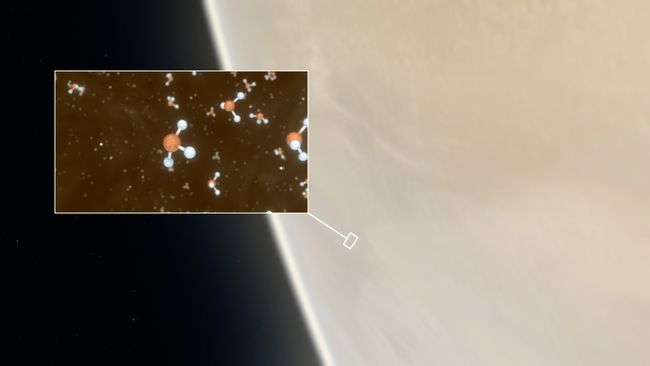
An artist's depiction of Venus and, in the inset, phosphine molecules.
Venus artist's depiction with phosphine (ESO/M. Kornmesser/L. Calçada/NASA/JPL-Caltech)
.
The phosphine discovered in Venus' clouds may be a big deal
Venus? NASA manipulates its images for PR.
A chemical most have likely never heard of has burst into the news as scientists announce that they have detected phosphine, which they say may be a sign of life, in the clouds of nearby Venus.

Phosphine is a chemical compound made up of one atom of phosphorus and three atoms of hydrogen, and scientists have also spotted it on Earth, Jupiter, and Saturn. On the gas giants, it's quite prevalent in the atmospheres, both of which are rich in hydrogen. On Earth, where the atmosphere leans more toward oxygen compounds, it's much shorter-lived, and the same ought to be true on Venus.

"It's so obscure," Sara Seager, an astronomer at MIT (Massachusetts Institute of Technology) and co-author of the new research, said during a news conference held virtually today (Sept. 14). "No one cares about [phosphine] except for a few very niche people." More

Venusian life

The 31 Planes of Existence
Buddhist cosmology, as well as that of Hinduism and Jainism all the way back to the ancient Vedic religion of proto-India (Great Bharat), has always known there is life on Venus (Shukra in astrology, planetary deities). It is not limited to this planet (or island in a sea of space called Jambudvipa) but also exist on other nearby planets or worlds (levels) -- as well as countless other places throughout the universe, of which we are only a tiny portion in this cakkavala or "world-system." Such world-systems are spread like bubbles throughout the universe/multiverse.
  • "The planets are called dvīpas [islands]. Outer space is like an ocean of air. Just as there are islands in the watery ocean, these planets in the ocean of space are called dvīpas, or islands in outer space" (Chaitanya Caritamrita Madhya 20.218, Purport).
In a very interesting book written by an avadhuta ("apostle") of the modern mystic Anandamurti or Baba (P. R. Sarkar), the founder of Ananda Marga ("Path to Bliss"), entitled My Tantric Guru, there is a description of an incident talking about life on Mars, Soma/Chandra (Earth's moon), and Venus.

(Soolaba) Vedic cosmology inherited by Hinduism in modern terms

A revived meditation master was sent to astral travel to those places to see first hand. He reported back at a live demonstration that the beings there (some of whom are red and others blue) want no dealings with earthlings, it is said. They are more advanced and seem to generate or allow the clouds that obscure their world from humanity on Earth.

The life spread across the galaxy is humanoid and related but not limited to this kind of being. The Buddha spoke of 31 planes of existence, which are not worlds but categories of planes. What we see around us is all still the "human plane" or manussya loka.

Monday, February 3, 2020

Out of Eden: ETs engineered humans?

Pat Macpherson, Ashley Wells (eds.), Wisdom Quarterly; Paul Wallis (amazon.com, 5/1/20)

Escaping from Eden: Does Genesis Teach that the Human Race was Created by God or Engineered by ETs?
Escaping from Eden (Paul Wallis)
The familiar stories of the biblical Book of Genesis affirm that a God created the universe, earth, and humans.

However, various anomalies in the text clue us in to the fact that we are reading unoriginal versions of these stories.

Where are the original stories, and what do they say about who we are and where we came from?

What was the earlier documented narrative of human origins that was nearly obliterated from the Hebrew scriptures in the 6th century BC and suppressed in Christian writings of the 2nd and 3rd centuries AD?
The answers are in the earlier Sumerian texts and cylinders, which talk about the extraterrestrials or "powerful ones" we came to call "gods."

Escaping from Eden takes us on a journey around the world into the mythologies of ancient Sumer, Mesoamerica, India, Africa, and Greece to reveal a profound secret hidden in plain sight in the texts of the Bible.

Far reaching and deeply controversial, this book points to truths about ourselves -- our history and potential -- that we may have suspected but not dared to speak. More

"A courageous service...a new perspective on the creation and engineering of man[kind]."
"Takes us on a journey we will never forget."
- "Coast to Coast" radio Host George Noory