
Showing posts with label jambudvipa. Show all posts
Showing posts with label jambudvipa. Show all posts
Monday, October 27, 2025


Monday, October 20, 2025
Diwali: Festival of Lights (Cali, Chi, NJ)

(Encyclopaedia Brittanica) Diwali (Dipa-wali) is one of the major religious festivals in Hinduism, Jainism, and Sikhism [not Buddhism], lasting for five days from the 13th day of the dark half of the lunar month Ashvina to the second day of the light half of the lunar month Karttika.


(The corresponding dates on the Gregorian calendar usually fall on late October and November). The name is derived from the Sanskrit term dipavali, meaning “row of lights.” The festival generally symbolizes the victory of light over darkness. More
Los Angeles, California Diwali and Annakut Celebration
(BAPSChannel) Experience the lights, festivities, and joy of Diwali and Annakut at BAPS Shri Swaminarayan Mandir on the outskirts of Los Angeles, For more details, visit: https://www.baps.org/News/2024/Diwali... #BAPS #BAPSDiwali #diwali #diwali2024 #festivaloflights #na50 #diwalicelebration #diwalifestival #losangeles
Wednesday, March 22, 2023
Indus Valley, Vedic, South Indian Civilizations
 |
| The lovely and massive Buddha statue in Enlightenment Grove, Bodh Gaya, Bihar, India. |
The oldest settlements in South India: The Keeladi excavations

What did the recent excavations at Keeladi (aka Keezhadi) and other places along the Vaigai and Porunai (Thamirabarani) rivers reveal?
For a long time, it was believed that South India had no ancient urban civilizations like in the north [where the Indus Valley Civilization and the Vedic Civilization thrived near Gandhara, now in parts of Pakistan and Afghanistan, which were formerly parts of the Indian Empire].
While the Sangam Period (dated 300 BCE–300 CE) literature talks of a sophisticated Tamil civilization, there was no concrete archeological proof to back it up…until the path-finding/groundbreaking Keeladi excavations that started in 2015.
A series of digs carried out by the Archaeological Survey of India in a little village near Madurai unearthed artifacts dating back at least to the 6th century BCE [the time of the Buddha].
This included pottery fragments with graffiti marks very similar to the Indus Valley Civilization script.
But Keeladi isn’t the first or only place to offer evidence of ancient settlements in Tamil Nadu.
Adichanallur, Korkai, Pallavaram, Attirampakkam, and many more sites have produced an array of amazing artifacts over the last 100 years or so, including the oldest human tool to be ever discovered in India -- a hand-axe that was discovered in Pallavaram, part of present-day Chennai.
It’s only in recent years that the pieces of the jigsaw have started coming together. Archeologists believe that many more exciting discoveries, possibilities, and answers are waiting to be found at this site.
#keeladi #keezhadi #Adichanallur #Korkai #sangamliterature #Porunai #thamirabarani #Vaigai #IndusVallley #indusvalleycivilisation #VediCivilisation #anicientcivilisations #madurai #Agaram #Pallavaram #Egmore #southindianhistory #indianhistory #chennai #storytrails #storiesofindia #tamilnadutourism
Produced in partnership with:
- Saint-Gobain: saint-gobain.com/en (@SaintGobainTV)
- Tamil Nadu Tourism: tamilnadutourism.tn.gov.in (@TamilnaduTourismOnline)
- The Egmore Museum, Chennai
Editing credits: Studio A, Chennai
Music, Sound Design, Mix & Master: Vishwi (vishwimusic.com)
IMAGE CREDITS: To view attributions for images used in this video, click on this link - storytrails.in/culture/the-ol...
To experience more such stories of India, visit storytrails.in.
ABOUT: Storytrails is an award-winning organization that showcases India through her stories, through story-based walking tours, audio tours, local experiences, videos, blogs, podcasts, and online learning programs.
Follow work on facebook.com/storytrails, instagram.com/storytrails, linkedin.com...
Like the video, love the book: The Temple of Treasures and Other Incredible Tales of Indian Monuments. Find out more here: storytrails.in/books. Write with feedback and suggestions: contact@storytrails.in
Tuesday, October 25, 2022
Last solar eclipse of 2022: Tuesday, Oct. 25
Eds., Wisdom Quarterly OPINION; Space.com

According to space.com there will be a solar eclipse today -- Tuesday, Oct. 25 -- just in time to confuse all the spirits stirring for their annual appearance on the human plane. Animals will be disturbed, too, as they seem to be able to see them. What causes an eclipse?


 |
| Everything NASA tells us is a lie. - John Lear |
The unrecognized Rahu (alternating with Ketu) strays across the sky and covers it, according to the ancient Dharmic religions of India -- Hinduism, Buddhism, Jainism, Brahmanism, Skihism, and possibly Rumi's Sufism (which is technically mystical Islam) -- not to mention the biblical views of Sumer, Judea, and Christiandom.
Sure, science has a different explanation that drowns everyone else out. How dare a religion have a point of view. Something about the sun be 400 times farther away than the moon but at a perfect distance to seem exactly the same size as the moon. That's unlikely and not what our eyes tell us. But who are we to believe, what someone says science says or what we say when we look up and see for ourselves?
 |
| Where in the world is Dal Lake, India/Pakistan? (wikipedia) |
In any case, however it happens, someone celestial object is getting in the way of another today. And that may have some astrological portent. Maybe a "dark pall" has spread over the British Empire because Rishi Sunak has become the first person of color (and Hindu) to become the country's political leader?
Or maybe it's American royal K Ye West spreading his dark message of antisemetism and white supremacy (Trump loving White Lives Matter moves). Or maybe the billions of oppressed "darker" people of color on the planet are reflected in the skies.
Or maybe it's the scourge of anti-dark worldwide racism wrought by white supremacists worldwide trying to keep an advantage provided to them by past and present empires (like the Greeks of yore and Americans of Apocalypse Now).
Who knows for sure? Any symbolism could be made out of it, depending on how one chooses to see natural phenomena play out over our personal affairs and points of view.
Tuesday, September 15, 2020
Of course there's life on Venus (video)
Meghan Bartels (space.com, 9/14/20); Pat Macpherson, Dhr. Seven (eds.), Wisdom Quarterly

 |
| What does life on Venus look like under the clouds, like a National Park on Earth? (MSN) |
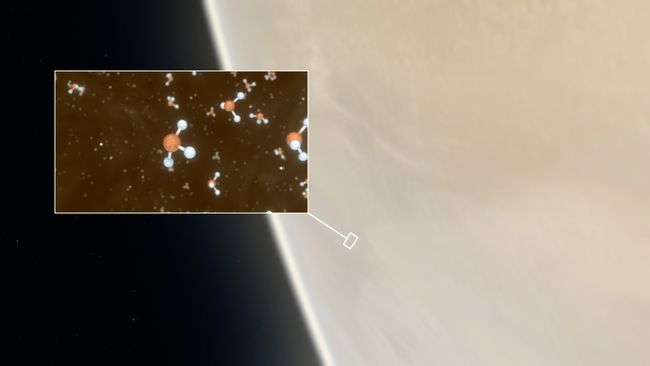 |
Venus artist's depiction with phosphine (ESO/M. Kornmesser/L. Calçada/NASA/JPL-Caltech)
|
.
The phosphine discovered in Venus' clouds may be a big deal
 |
| Venus? NASA manipulates its images for PR. |
A chemical most have likely never heard of has burst into the news as scientists announce that they have detected phosphine, which they say may be a sign of life, in the clouds of nearby Venus.
Phosphine is a chemical compound made up of one atom of phosphorus and three atoms of hydrogen, and scientists have also spotted it on Earth, Jupiter, and Saturn. On the gas giants, it's quite prevalent in the atmospheres, both of which are rich in hydrogen. On Earth, where the atmosphere leans more toward oxygen compounds, it's much shorter-lived, and the same ought to be true on Venus.
"It's so obscure," Sara Seager, an astronomer at MIT (Massachusetts Institute of Technology) and co-author of the new research, said during a news conference held virtually today (Sept. 14). "No one cares about [phosphine] except for a few very niche people." More
Venusian life

 |
| The 31 Planes of Existence |
Buddhist cosmology, as well as that of Hinduism and Jainism all the way back to the ancient Vedic religion of proto-India (Great Bharat), has always known there is life on Venus (Shukra in astrology, planetary deities). It is not limited to this planet (or island in a sea of space called Jambudvipa) but also exist on other nearby planets or worlds (levels) -- as well as countless other places throughout the universe, of which we are only a tiny portion in this cakkavala or "world-system." Such world-systems are spread like bubbles throughout the universe/multiverse.
- "The planets are called dvīpas [islands]. Outer space is like an ocean of air. Just as there are islands in the watery ocean, these planets in the ocean of space are called dvīpas, or islands in outer space" (Chaitanya Caritamrita Madhya 20.218, Purport).
In a very interesting book written by an avadhuta ("apostle") of the modern mystic Anandamurti or Baba (P. R. Sarkar), the founder of Ananda Marga ("Path to Bliss"), entitled My Tantric Guru, there is a description of an incident talking about life on Mars, Soma/Chandra (Earth's moon), and Venus.
A revived meditation master was sent to astral travel to those places to see first hand. He reported back at a live demonstration that the beings there (some of whom are red and others blue) want no dealings with earthlings, it is said. They are more advanced and seem to generate or allow the clouds that obscure their world from humanity on Earth.
The life spread across the galaxy is humanoid and related but not limited to this kind of being. The Buddha spoke of 31 planes of existence, which are not worlds but categories of planes. What we see around us is all still the "human plane" or manussya loka.
(Soolaba) Vedic cosmology inherited by Hinduism in modern terms
A revived meditation master was sent to astral travel to those places to see first hand. He reported back at a live demonstration that the beings there (some of whom are red and others blue) want no dealings with earthlings, it is said. They are more advanced and seem to generate or allow the clouds that obscure their world from humanity on Earth.
The life spread across the galaxy is humanoid and related but not limited to this kind of being. The Buddha spoke of 31 planes of existence, which are not worlds but categories of planes. What we see around us is all still the "human plane" or manussya loka.
Sunday, July 12, 2020
No person is an island... But be one (sutra)
Maurice O'Connell Walshe (trans.), Attadipa Sutra: "An Island to Oneself" (SN 22.43, PTS: S iii 42, CDB i 882), 2007, title based on the Pali Text Society (Feer) edition; Dhr. Seven (ed.), Wisdom Quarterly

 |
| Let the Dharma be your guide. |
"Meditators, be lamps/islands unto yourselves [1], be your own guide/refuge, having no other; let the Dharma be an island and a guide to you, having no other.
"Those who are islands/lamps unto themselves... should investigate to the very heart of things [2]: 'What is the source of disappointment, lamentation, pain, grief, and despair? How do they arise?' [What is their cause and origin?]
"Here, meditators, the uninstructed ordinary worldling [continued as in SN 22.7]. Change occurs in this person's body, and it becomes different. On account of this change and difference, disappointment, lamentation, pain, grief, and despair arise.
- [The same is said with regard to "feelings, perceptions, mental formations, and consciousness."]

"But seeing [3] the body's impermanence, its changeability, its wasting away [4], its ceasing, one says, 'Formerly, as now, all bodies were impermanent, disappointing (unsatisfactory), and subject to change.'
"Thus, seeing this as it really is, with deep insight, one abandons all disappointment, lamentation, pain, grief, and despair. One is not worried at their abandonment but, unworried, lives at ease. And thus living at ease one is said to be 'assuredly delivered' [5]."
- [The same is said with regard to "feelings, perceptions, mental formations, and consciousness."]
NOTES
1. Atta-dipa: Dipa in Pali means both "island" (Sanskrit dvipa) and "lamp" (Sanskrit dipa), but the meaning "island" is well established here. The "self" referred to is, of course, the unmetaphysical pronoun "oneself": cf. SN 3.8, n. 1.
2. It is necessary to withdraw, to be "an island unto oneself," at least for a time (as any meditator knows), not for "selfish" reasons but precisely in order to make this profound introspective investigation and breakthrough in insight. In another sense, Buddhism would of course agree with John Donne who said, "No man is an island."
3. As Woodward remarks in KS [The Book of the Kindred Sayings, translation of the Samyutta Nikaya, Vol. III, PTS 1924], one would expect to find here the words that he inserts in the text: "The well-taught Ariyan disciple," as in many passages. If one, in fact, sees these things and reflects as is said in the text, one will cease to be an ordinary "worldling." [Instead, there will be a "change of lineage" (gotrabhu), making one a "noble one," someone who has gained at least the first stage of enlightenment that culminates in full enlightenment or arhatship.]
4. Viraga is elsewhere translated as "dispassion" (SN 12.16, n. 2) and also has this meaning.
5. Tadanganibbuto means rather more than Woodward's "one who is rid of all that."
- See "The Last Days of the Buddha" sutra (DN 16)
Monday, May 18, 2020
What is our world? Buddhist cosmology (1)
Ajahn Punnadhammo (Birken Forest, 4/19/18); Dhr. Seven, Pat Macpherson, Wisdom Quarterly
Buddhist Cosmology (1): Space, Time, and Being
 |
| The Buddhist Cosmos (Ajahn) |
- Ajahn Sona podcast: anchor.fm/ajahn-sona
- This episode: anchor.fm/ajahn-sona/episodes...

Tuesday, April 14, 2020
SUTRA: To be islands unto ourselves
Maurice O'Connell Walshe (trans.), Amber Larson, Dhr. Seven (eds.), Wisdom Quarterly, Attadipa Sutra, "An Island to Oneself" from the Pali Text Society's Feer edition (SN 22.43)


"Meditators, be islands unto yourselves [1]; be your own guide, having no other.
- 1. Atta-dipa: Atta = "self." Dipa (Sanskrit dvipa) = "island" and "lamp." "Island" is well-established in this context, and "self" is the pronoun "oneself" (cf. SN 3.8, n. 1).
"Let the Dharma be an island and a guide to you, having no other.
"Those who are islands unto themselves... investigate to the very heart of things [2]:
2. It is necessary to withdraw, to be "an island to unto oneself," at least for a time (as any meditator knows), not because it is "selfish" but precisely to make a profound introspective investigation. Buddhists in another sense would, of course, agree with John Donne that "No man is an island."
"Those who are islands unto themselves... investigate to the very heart of things [2]:
2. It is necessary to withdraw, to be "an island to unto oneself," at least for a time (as any meditator knows), not because it is "selfish" but precisely to make a profound introspective investigation. Buddhists in another sense would, of course, agree with John Donne that "No man is an island."
"'What is the source [origin] of disappointment, lamenting, pain, grief, and despair? How do they arise?'
"Here, meditators, the ordinary uninstructed worldling… [continued as in SN 22.7].
 |
| "I would be an island unto myself!" (Karana). |
[The same with feelings, perceptions, mental formations, and consciousness, which with form are the Five Aggregates clung to as self].
"But seeing [3] the body's impermanence, its changeability, its waning [4], its ceasing, one says, 'Formerly, as now, all bodies were impermanent and unsatisfactory and subject to change.'
3. Woodward remarks (in the Book of the Kindred Sayings, the PTS translation of the Samyutta Nikaya, Vol. III, 1924) that one would expect to find here the words he inserts in the text: "The well-taught [noble] disciple," as in many passages. For if one in fact directly sees these things and reflects on them as stated in the text, one will cease to be an ordinary uninstructed "worldling" and become a noble (any person in the stages of enlightenment) disciple.
4. Viraga, "dispassion" (SN 12.16, n. 2), is waning.
 |
| California's remote San Nicolas Island |
"Thus, seeing this as it really is, with full insight, one abandons all disappointment, lamenting, pain, grief, and despair.
"One is not worried at their abandonment, but unworried lives at ease, and thus living at ease one is said to be 'assuredly delivered'" [5]. [The same with feelings, perceptions, mental formations, and consciousness].
5. Tadanganibbuto means rather more than Woodward's "one who is rid of all that."
"One is not worried at their abandonment, but unworried lives at ease, and thus living at ease one is said to be 'assuredly delivered'" [5]. [The same with feelings, perceptions, mental formations, and consciousness].
5. Tadanganibbuto means rather more than Woodward's "one who is rid of all that."
 |
| The greatest |
Friday, December 22, 2017
Earth? Vedic cosmology and Mt. Meru (video)
Dorje Daka (Feb. 2, 2017); Dhr. Seven, Seth Auberon, Pat Macpherson (eds.), Wisdom Quarterly
 For thousands of years before the heliocentric, spinning ball earth was conceived, Vedic wisdom from the world's most ancient (pre-Indian Indus Valley Civilization) texts purported a geocentric flat earth cosmology in which the immaterial, internal worlds of consciousness are given equal consideration and credited with the creation of the external, material world itself (Dorje Daka). Could our earth be flat? Research:

- 1. Horizon always rises to eye level.
2. Water always finds its level.
3. Gyroscopes always remain level throughout worldwide airplane flight travel.
4. The star Polaris never moves from its position despite earth's alleged travel through space.
5. There is no measurable curvature on the horizon.
6. Terminator line on the moon during the day often does not coincide with sun's directional light.
7. Gravity is explained by simple buoyancy and density of objects.
8. There is no independent photographic evidence of satellites.
9. There are very questionable flight paths in the southern hemisphere that make no sense but make perfect sense on a flat earth.
10. The Antarctic Treaty forbids freedom of movement to and in the Antarctic, the only place on earth no one owns.
11. The Van Allen Radiation Belt makes ordinary space travel impossible utilizing current publicly disclosed technology and materials.
12. Water bubbles are frequently seen on NASA's alleged International Space Station (ISS) live video footage because they are actually filmed in swimming pool to simulate zero gravity and use green screen Hollywood technology for the background.
13. The U.S. moon landing shown on TV was faked.
14. The sun and globe earth model has many contradictions.
Copyright Disclaimer Under Section 107 of the Copyright Act 1976: allowance is made for "fair use" for purposes such as criticism, comment, news reporting, teaching, scholarship, and research. Fair use is a use permitted by copyright statute that might otherwise be infringing. Non-profit, educational or personal use tips the balance in favor of fair use.
FAIR USE NOTICE: These works by DORJE DAKA are for criticism, comment, news reporting, teaching, and research. All footage taken falls under ''fair use'' of the Digital Millennium Copyright Act (1998).
Therefore, no breach of privacy or copyright has been committed. This video may contain copyrighted material the use of which has not been specifically authorized by the copyright owner. This material is being made available within this transformative or derivative work for the purpose of education, commentary and criticism, is being distributed without profit, and is believed to be "fair use" in accordance with Title 17 U.S.C. Section 107.
FAIR USE NOTICE: These works by DORJE DAKA are for criticism, comment, news reporting, teaching, and research. All footage taken falls under ''fair use'' of the Digital Millennium Copyright Act (1998).
Therefore, no breach of privacy or copyright has been committed. This video may contain copyrighted material the use of which has not been specifically authorized by the copyright owner. This material is being made available within this transformative or derivative work for the purpose of education, commentary and criticism, is being distributed without profit, and is believed to be "fair use" in accordance with Title 17 U.S.C. Section 107.
Wednesday, June 21, 2017
A Day at the Beach (meditation)
Dhr. Seven, Ananda, Amber Larson, Wisdom Quarterly; Outstanding Videos
Story of the Past
 |
| Who stole my babies? Where are my eggs! |
It's the first day of summer (in our time California zone). It's the longest day of the year and we want to spend it meditating. But the city is so noisy and busy that it makes serenity seem like a far off dream. We want to go to the beach or, at least, the beach of the mind.
 |
| What must have that meditation been like? |
There was that one time, once upon a time in Ancient India (Jambudivpa), when the Bodhisattva (the Buddha-to-be) set off on a merchant ship with a merchant friend. The ship came to destruction by storm, but he and his friend survived on a faraway deserted isle. The Bodhisattva found a tree to sit under, while the merchant tried to figure out a way to get off the island and back to business. As he was combing the beach, he noticed that birds used it as a rookery. And he began to steal their eggs and eat them. The Bodhisattva, now a castaway, entered a deep meditative absorption, and the good terrestrial devas could not bear to see a good person such as this come to harm in the wilderness. So by their advanced technological (read "magical") powers they made a ship to appear on the shore to pick him up. The merchant saw the ship docking and ran to it to board, now saved. But the devas, knowing him to be a wrongdoer, a killer of birds by way of eating eggs, would not let him board. The Bodhisattva emerged from his meditation and approached the ship. The devas invited him on board by a plank extending to the beach. As he approached, he invited his merchant friend to get on board. And as he did, the devas said to him, "It is your good fortune to have a friend such as him. It is your good fortune to be in his company because we did not come for you, but as he invites you are welcome on board." And so ends another Jataka Tale by revealing that in that past life, the Bodhisattva was the [being who became] the Buddha and the merchant was another person present at the recounting of this Rebirth Tale.
Tuesday, May 10, 2016
Out of Africa...into India's Andamans (video)
Arida Aspins; Native Americans; Xochitl, Ashley Wells, CC Liu, Wisdom Quarterly
 |
| The Andaman Islands lie off the eastern coast of mainland India (worldisbeautiful.net). |
 |
| Andaman Islands below Burma, SE Asia |
The uncontacted tribes of the Andaman Islands, known as the Jarawa, Great Andamanese, Onge, and Sentinelese are believed to have lived in their Indian Ocean home for up to 55,000 years, just like the aboriginal blacks in the United States. They are now vastly outnumbered by several hundred thousand East Indians or Dravidians, who have settled on the islands in recent decades. More
The first Americans were aboriginal BLACKS, not Indians or Asians
Tuesday, December 22, 2015
In the Buddhist Himalayas of India, Ladakh
Mag Brinik (italianmountains.org); Dhr. Seven, Amber Larson, CC Liu, Wisdom Quarterly
However, far above it all, in the Indian Himalayas, there has long been a solid Buddhist tradition. Ladakh, Dharamsala (where the current Dalai Lama and a massive Tibetan community in exile are thriving), the state of J&K and Himachal Pradesh, and other locations have long maintained their Buddhist traditions alongside Nepal and Bhutan and Buddhist Tibet and China farther north and east.
 |
| Opening the door of Thiksey Monastery (Tiksey Gompa) for morning puja (devotional ceremony), Ladakh, Himalayas, India (Mag Brinik/flickr.com/italianmountains.org). |
 |
| Colorful Himalayan Buddhist ritual ceremony, Ladakh, India (Mag Brinik) |
 |
| Ceremony (puja) on the roof of Lamayuru Monastery, Ladakh (Mag Brinik) |
 |
| Ladakhi girl traditional dress and headdress, Lamayuru Festival, Ladakh (Mag Brinik) |
 |
| Women with traditional dresses and perak at Lamayuru Festival, Ladakh (Mag Brinik) |
 |
| In the Himalayas of Buddhist India, Thiksey Gompa, monks do morning puja (Mag Brinik) |
 |
| Portrait of Ladakhi girl with traditional dress and perak in her house (Mag Brinik/flickr) |
 |
| Little monk (samanera, novice) in yellow hat, Rizong Monastery, Ladakh (Mag Brinik) |
.
LADAKH, India - Is there still a "Buddhist India"? There has always been a Buddhist India. India is where the Shakyan (Scythian) Prince Siddhartha Gautama became enlightened and thereby gained the title "the Buddha," the "Awakened One."
Buddhism, that is to say the Buddha-Dharma, got a simultaneous start in Afghanistan, the ancient Shakya Land far to the west in Central Asia (not Nepal), the location of the real Kapilavastu, young Siddhartha's hometown.
- The Buddha came from Afghanistan (Dr. Ranajit Pal)
- Kapilavastu was one of the seasonal capitals of the Shakya kingdom. The Buddha's mother and father, King Śuddhodana and Queen Māyā, ruled from there, as did their son Prince Siddhartha until he left the palace at the age of 29.
- Scythians (Sakas, Shakyas) in the Mahabharata in a place called "Sakadvipa" (Land, Island, Continent of the Shakyas), when "India" to the east was called "Jambudvipa" (The Rose Apple Land)
That Shakyan capital (in Indo-Sakastan) was among three where the prince grew up in splendor along the Silk Road. The other two capitals where he had a seasonal palace may have been Mes Aynak ("Copper Well") and Kabul ("Kapil'"?).
But there exact locations are speculative as there are many ancient Buddhist sites and monuments in this faraway land -- the oldest Buddhist sites and monuments in the world -- now being destroyed by the American military-industrial complex and its insatiable need for resources and strategic advantage.
Of course, India gets all of the credit because the Buddha began teaching there and did not return to "Shakya Land" (Scythia, Bactria, Gandhara, Sakastan, Sogdiana, etc.) and Kapilavastu for seven years after his great awakening (maha bodhi) in Enlightenment Grove.
Buddhism is making a resurgence in India today as many Dalits covert to a spiritual teaching that treats them as equals and honors their humanity and dignity, as distinct from the discrimination they face in Hinduism under its atrocious caste system.
 |
| The Buddhist treasures of Afghanistan (WQ) |
 |
| Novice Ladkahi monk, Buddhist India, Rizong Festival, Ladakh, India (Mag Brinik) |
 |
| For a more extensive gallery of amazing photography, see Mag Brinik on flickr.com |
Subscribe to:
Posts (Atom)

























































