Sunday, September 7, 2008

ASK A MONK: "Happy family?"

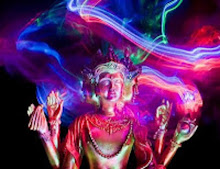
Ven. Karunananda, Ph.D. (pictured below), California Bodhi Vihara

Q: "How do you make for a happy family?"

A: A long time ago in India, there was a royal family. A king and queen lived together with their four children. Although it was a royal family, there was no happiness since its members spent most of their time fighting over things big and small.

On the queen’s birthday, the king wanted to make her happy by presenting her with a wonderful gift. The king commissioned a famous artist to draw an excellent picture of the most beautiful thing he could find in the country and present it to him. Ordered by the king to find the most beautiful thing, the artist set off on a journey towards the east. After traveling a great distance, the artist found nothing he considered beautiful enough.

Then he saw a man is coming toward him. The artist said to him, “Sir, kindly tell me, What is the most beautiful thing you have ever seen in this country?”

The man quickly replied, “It’s liberty! Imagine the a man is released from prison after serving a long sentence.” It was the most beautiful but seemed too conceptual. It was not a thing that could be drawn and given as a gift.

On the next day, the artist started a long journey towards the west. There he met another person and asked the same question. That person answered, “It’s freedom! Imagine the day a freedom-fighter returns from war.” It was beautiful but too conceptual, not a concrete object to be drawn and presented to the king.

The following day, the artist set off towards the north. There he saw a young girl plucking flowers from a tree. When the artist asked her, she’s answered,“It’s love! Imagine a young woman preparing for her marriage ceremony.” But this, too, seemed far too conceptual.

Finally, far to the south, he came across a mendicant wanderer, a saint who was leading a celibate life. When he asked him, the saint answered, “It’s renunciation!”* But the idea of giving things up also seemed too conceptual.

First the artist was disappointed. Later, however, he felt a wonderful surge of happiness as he understood the importance of the four ideals he met on his journey: liberty, freedom, love, and renunciation. In this extended-family of a country, the ideals already existed. And these made for a happy family life.

An excellent idea came to mind: Why not draw a picture of family members with an explanation of the four ideals that make for a happy family and give that picture to the king? When he did, the king was delighted and rewarded him for a wonderful job.

We can see that all four people on his journey had the same goal – to be happy – and only the source of the happiness was different. One found it in liberty, the other in freedom, another in love, and one in renunciation.

What was clear was that to bring about and maintain happiness no matter the individual, family, or society, these four ideals are very important. With this idea in mind, everyone could be happy by the practice of giving things up, love, freedom, and liberty. These four virtues are inter-related.

  • * “Giving up” means sharing, letting go, not clinging or grasping; it is an expression of mental non-greed factor. What keeps people bound is desire or craving. Giving up greed and instead sharing out of love leads us to freedom or liberation. Sharing what we have is a beautiful way of relating to others. The personal quality of sharing is the main enhancer of friendship.


Dr. Karunananda Thero

Friday, September 5, 2008

Meditation: Easy as 1-2-Breathe!

Basic Techniques of Breathing Meditation
Shannon Curtin

• The purpose of step-by-step breathing meditation is to create a peaceful mind. A peaceful mind is free from worries and mental discomfort. To meditate first set the stage by stopping distractions and clearing your mind. This can be done through simple breathing.
  1. Choose a quiet place and sit comfortably. Sitting may be in the traditional cross legged position, a chair, or any comfortable seat that allows your back to be straight to prevent sluggishness.
  2. Partially close your eyes and begin to focus on the natural rhythm of your breath. Be aware as the breath enters and exits the nostrils.
  3. If the mind is busy at first it's normal. There's no need to follow different thoughts as they arise. Remain focused on your breath in spite of everything.
• Persist. Practicing patiently gradually teaches the mind to focus, and stray thoughts subside. Soon there is an experience of inner peace and relaxation. Enjoy this state of mental calm whenever it arises. Breathing meditation is simply the first stage of meditation [according to the sutra on the "Four Foundations of Mindfulness"]. Insight leads to deeper forms of meditation. It is important to learn to calm and steady the mind before advancing.

• Stress and tension come from an unruly and restless mind. Once the mind stabilizes, with the abandoning of restless thoughts and the gaining of stillness, there is an experience of happiness and peace. This form of contentment leads to better coping with everyday stressors. Difficult situations still arise, but now there is an ability to handle them with ease. In time, relationships improve. It's as easy as 1-2-breathe. More>>

Your Musical taste defines your Personality


Study finds that musical taste "defines personality": LONDON (Reuters Life! 9/5/08) – Fans of classical music and jazz are creative, pop lovers are hardworking and, despite the stereotypes, heavy metal listeners are gentle, creative types who are at ease with themselves.

So says Professor Adrian North of Scotland's Heriot-Watt University who has been studying the links between people's personalities and their choice of music. "People often define their sense of identity through their musical taste, wearing particular clothes, going to certain pubs, and using certain types of slang," North said.

"It's not surprising that personality should also be related to musical preference." In what North said was the largest study ever conducted into individuals' musical preference and character, researchers asked 36,518 people from around the world to rate how much they liked 104 different musical styles before taking a personality test.

"Researchers have been showing for decades that fans of rock and rap are rebellious, and that fans of opera are wealthy and well-educated," North said. "But this is the first time that research has shown that personality links to liking for a wide range of musical styles."

The study concluded that:

  • Jazz and classical music fans are creative with good self-esteem, although the former are much more outgoing whereas the latter are shy.
  • Country-Western fans were found to be hardworking and shy.
  • Rap fans are outgoing.
  • Indie lovers lack self-esteem and are not very gentle.
  • Those who like soul music can take heart as the research concluded they are creative, outgoing, gentle, at ease with themselves, and have a high self-esteem.
And if you've ever wondered why people driving expensive sports cars often have music blaring from their vehicle, North could have an explanation. Those who choose to listen to exciting, punchy music are more likely to be in a higher earning bracket, he says, while those who go for relaxing sounds tend to be lower down the pay scale.

North is still looking for volunteers to take part in the research.

(Reporting by Michael Holden; editing by Steve Addison)

Buddhist Personality or "Psychological Types" are based on three dominant mental inclinations – the causes of suffering – and their positive aspects.

NEGATIVE ASPECT - POSITIVE ASPECT

Greed...........................................Faith
Hate.............................................Wisdom
Delusion.......................................Speculation

Buddhist Psychology

Bhikkhu Ayu Kusala Ananda (formerly Professor Mirko Frýba, Ph.D.)

Buddhist psychology has to be a science of mind, which also studies the specific Buddhist approaches to mind. Therefore it has to hold good against all the criteria of science, such as the empirical validity, methodological reliability of procedures, consistency of theoretical statements, etc. Moreover it has to be useful for practical life coping according to the Dhamma in order to be called Buddhist.

The themes deemed to belong to Buddhist psychology became very fashionable towards the end of twentieth century. In collections of popular books, we find many opinions about the Buddhist psychology and, in particular, a lot of nonsense about the supposedly Buddhist psychotherapy which we shall deal with at the conclusion. However there are available also reliable scientific treatments of Buddhist psychology, an overview of which is given by Beatrice Vogt Frýba and Mirko Frýba in a monograph Sīlabbata – Virtuous Performance, the Empirical Basis for the Science of Buddhist Psychology... More>>

Sex Addiction: David Duchovny is not alone

Mulder & Scully together again: Duchovny, Anderson, and Carter on the set of upcoming X-files movie (forbiddenplanet.co.uk)

More becoming addicted to “quick click” self-gratification
Sex Rx with Ian Kerner, Ph.D.
Sex therapist and relationship counselor
TODAYShow.com contributor
Sept. 4, 2008

For years David Duchovny, as agent Fox Mulder, chased down aliens and told us that we’re not alone. Now he's a sex addict who struggles with the issue in real life. He’s not alone either.

His recent entry into rehab for a self-described obsession with Internet porn has cast a national spotlight on a widely misunderstood issue that affects millions of Americans: sex addiction, specifically compulsive use of Internet-based pornography.

Although the term is commonly used in popular culture, the American Psychiatric Association (APA) does not yet recognize sex addiction as a condition, nor is it listed in their widely used clinical bible, the Diagnostic and Statistical Manual of Mental Disorders. But most experts agree that there are growing numbers of people who find themselves in the grip of compulsive sexual behaviors that are beyond their control — behaviors that seriously damage their lives as well as those of their loved ones.

Playing now at a computer near you

Once viewed as rare and obscure, the rapid proli-feration of Internet porn has brought the issue very much into the mainstream, affecting men and women alike. Porn addiction and sex addiction have become synonymous; a “quick click” of self-gratifica-tion can escalate into a self-destructive pattern of behavior (Christie Brinkley’s former hus-band, Peter Cook, is alleged to have spent more than $3,000 per month on his porn habit). Like any substance of abuse, porn becomes a form of escape — from depression, anger, stress, boredom, intimacy, as well as an array of other issues. Self-gratification becomes a way of self-medicating. More>>

Condition Not Limited to Humans
"London Zoo's newest gorilla is addicted to sex"


TheLondonPaper.com

Can’t quit your ex? How to say goodbye for good
Why is it so hard to forgive and forget?
Looking for Mr. Right? It’s your move
No such thing as a broken heart?

The Problem in a Larger Context
What-Buddha-Taught.net

“Inconceivable, recluses, is the beginning of this Samsara. A first point is not known of beings roaming and wandering the round of rebirth, hindered by ignorance and fettered by craving [tanha = lust, thirst, desire, see Buddhist terms]."

"Recluses, which do you think is more, the stream of tears that you have shed as you roamed and wandered on through this long course, weeping and wailing because of being united with the undesir-able and separated from the desirable–this or the water in the four great oceans? The stream of tears that you have shed as you roamed and wandered on through this long course…this alone is greater than the water in the four great oceans…For such a long time, recluses, you have experienced suffering, anguish, and disaster, and swelled the cemeteries” (Assu Sutra, S.15.3).

“There will come a time when the mighty ocean will dry up, vanish and be no more…There will come a time when the mighty earth will be devoured by fire, perish and be no more. But yet there will be no end to the suffering [dukkha = unsatisfactoriness, see Buddhist terms] of beings roaming and wandering this round of rebirth, hindered by ignorance and fettered by craving” (Gaddulabaddha Sutra, S.22.99)

“Through many a birth I wandered in Samsara,
Seeking but not finding the builder of this house.
Painful it is to be born again and again.

“O house-builder! You are seen.
You shall build no house again.
All your rafters are broken.
Your ridgepole is shattered.

“My mind has attained the unconditioned.
Achieved is the end of craving.”

[Builder = craving, lust, desire; house: body (the Five Aggregates); rafters: defilements; ridgepole: ignorance] (Udana Vatthu, Dh.153-154).

This precious human birth
“Recluses, suppose this great earth were totally covered with water, and one were to toss a ring with a single hole in it. A wind from the east would push it west; a wind from the west would push it east. A wind from the north would push it south; a wind from the south would push it north. And suppose a blind sea-turtle swimming therein would come to the surface once every hundred years.

Now what do you think: Would that blind sea-turtle, coming to the surface only once every hundred years, stick his head through the ring with a single hole?"

"It would be a sheer coincidence, Venerable Sir, if the blind sea-turtle, coming to the surface once every hundred years, would stick its neck through the ring with a single hole."

"It's likewise a sheer coincidence that one obtains the human state. It's likewise a sheer coincidence that a Tathagata, perfectly self-awakened, arises in the world. It's likewise a sheer coincidence that a doctrine and discipline expounded by a Tathagata appears in the world. Now, this human state has been obtained. A Tathagata, perfectly self-awakened, has arisen in the world. A doctrine and discipline expounded by a Tathagata appears in the world” (Chiggala Sutta, Samyutta Nikaya 56.48).

So do not waste this precious human birth
Who knows by tomorrow, one may still be living or dead.
Thus reflecting, without procrastinating tomorrow or the day after,
One may incessantly exert right away on this very day
(Uparipan Bhaddekanatta Sutra 226).

“I teach one thing and one thing alone, namely, suffering and the end of suffering.

“Develop a mind of equilibrium.
You will always be praised and blamed,
But do not let either affect the poise of the mind:
Follow the calmness, the absence of pride” (Sutta Nipata).

“Your worst enemy cannot harm you as much as your own unguarded thoughts.”

Thursday, September 4, 2008

Meditating Protected by Naga


Sandstone sculpture of Buddha protected by Naga; Cambodia, Kompong Thom province, Preah Khan Angkorian period, Angkor Wat style, first half of the 12th century (Guimet Museum, France)

According to popular interpretation, this sculpture of the Buddha seated in meditation (samadhi) on the Naga Mucilinda depicts an episode from the life of Sakyamuni. The latter, plunged in meditation, was about to be swallowed up by the waters of a lake when Mucilinda, who dwelt in the lake, protected him with her multiple heads, shown here above the Buddha figure. [Such a thing is possible when meditating radiating unbounded loving-kindness towards the four families of snakes.]


Angkor Wat (the most famous temple in Cambodia, perhaps the world) Britannica

The Enlightened One appears to sit enthroned on the serpent’s coiled body. With its hieratic pose inherited from 10th century styles, and its lavish finery, the statue is typical of the Angkor Wat style. The broad face is square-shaped, displaying an unnatural morphology and stylized modelling; the facial mask is bisected by the sharp, unbroken arching line of the eyebrows. This representation of the Buddha protected by the Naga is an archetypal Cambodian image which, according to our present state of knowledge, emerged in the early 10th century and later became a choice theme in Angkorian statuary. The theme held, moreover, particular significance in Cambodia where the Naga was linked to the foundation myths of the Khmer kingdom.

Sporadic traces of lacquer are visible and these are believed to date from a later period.

A revival of 10th century hieratic statuary styles took place under the reign of the great conqueror and builder King Suryavarman II (1113-c.1145), and the finest of all the Khmer temples, Angkor Wat, was erected under his patronage. In the early 12th century, although Brahmanism was still the dominant faith, more and more Buddhist representations were appearing, indicating the growing importance of Buddhism at this period. However, it was not until the latter half of the 12th century that it became the official state religion.

Book Review: Contemplative Science

Where Buddhism and Neuroscience Converge
(Columbia University Series on Science and Religion)

"Contemplative Science is a must read for anyone interested in consciousness. Alan Wallace challenges neuroscientists, cognitive scientists, and Buddhists, with lucid, provocative scholar-ship" (Paul Ekman, Emeritus Professor of Psychology, University of California, San Francisco, and author of Emotions Revealed).

Science has long treated religion as a set of personal beliefs that have little to do with a rational understanding of the mind and the uni-verse. However, B. Alan Wallace--former monk, assistant to the Dalai Lama, and respected Buddhist scholar--proposes that the contemplative methodologies of Buddhism and of Western science are capable of being integrated into a single disci-pline: "contemplative science."

The science of consciousness introduces first-person methods of investigating the mind through Buddhist contemplative techniques, such as shamatha [serenity meditation], an organized, detailed system of training the attention. Just as scientists make observations and conduct experiments with the aid of technology, contemplatives have long tested their own theories with the help of highly developed meditative skills of observation and experimentation.

Contemplative science allows for a deeper knowledge of mental phenomena, including a wide range of states of consciousness, and its emphasis on strict mental discipline counteracts the effects of conative (intention and desire), attentional, cognitive, and affective imbalances.

Just as Behaviorism, psychology, and neuroscience have all shed light on the cognitive processes that enable us to survive and flourish, contemplative science offers a groundbreaking perspective for expanding our capacity to realize genuine well-being. It also forges a link between the material world and the realm of the subconscious that transcends the traditional science-based understanding of the self.

AUTHOR: B. Alan Wallace (alanwallace.org) spent fourteen years as a Buddhist monk, ordained by H. H. the Dalai Lama. The founder and president of the Santa Barbara Institute for Consciousness Studies (sbinstitute.com), he has trans-lated Tibetan Buddhist texts and is the author of several books, including The Taboo of Subjectivity, and editor of Buddhism and Science (Columbia).

B. Alan Wallace (Shamatha Project) talk on "Optimal Mental Health"

Nagas: Snake SAFETY Meditation

Modern terrestrial Naga (KNBC.com)

Primates (including humans) and horses tend to instinctively dread snakes. (Science has shown they react with repulsion even to the sinuous shape without ever having been exposed to the real thing, so it is not a matter of acculturation or learning).

Vipers have long filled the horrid imagination of our species. In ancient India the Buddha faced the same fear among people. But he taught a meditation that if frequently practiced would lead venomous serpents from biting one. And if sincerely practiced after one was bitten, death from the bite could be avoided.

That meditation was the counter-intuitive practice of sending loving-kindness (metta) to the Four (mythical) Families of Snakes. Apparently, fear of snakes is more harmful than venom.

The texts do not distinguish "snakes" from extraterres-trial "Reptilians" (semi-human/semi-supernatural, mentioned in the Book of Protection and visible to assiduous meditators), fire-breathing dragons, river eels, sea-serpents, or other vipers which long ago injected themselves into the religious lore of traditions around the world. They were all referred to as Nagas. And in India they were seen as human overlords, Naga Kings, ruling through bloodlines. They were also the name given to a particularly fierce and savage tribe of warriors in the Northeast part of the country still known as Nagaland.

Protective Meditation
See below.

Pet Python Squeezes, Bites American Teen: Girl Rescued
(KNBC.com, 9/4/08)

A Las Vegas teen is recovering after being attacked by her 15-foot, 40-pound Burmese python.
The girl's father said he was forced to kill the snake to save his daughter. Family members said they never imagined the pet they loved would attack. "She was wrapped around my ribs and every time I moved she'd squeeze them tighter so I couldn't breathe," 13-year-old Katherine said.

Family members spoke to reporters because they said they wanted to remind people about the dangers of having these animals as pets, but they declined to have their faces shown on camera or provide their last names.

Katherine's uncle and her father came to her rescue. "As I was untangling (the snake), it was wrapping around me and her both," the uncle said. "It had my feet tied together." The python wasn't budging. "(I) stuck my hand between (its) mouth and (Katherine's) leg, where the snake had a bite. It wouldn't come off, (so I) grabbed a knife, and I cut the snake's head," the girl's father explained.

For four years prior to the attack, the snake, named Victoria, had lived at the family's home inside a large, locked tank. When Victoria broke out, she slithered her way into Katherine's room. "I'm just glad they were there because I don't know what I would have done if I was there by myself," Katherine said.

With Katherine having survived the ordeal, she, her father and her uncle said they've learned a valuable lesson: "If you've got children in the house, you shouldn't have (a Burmese Python)," Katherine's father said. "If you have one of your own, pay attention."

Protection from Snakes (Paritta*)
Ven. Piyadassi

Thus have I heard: On one occasion the Blessed One was living near Savatthi at Jetavana at Anathapindika's monastery. At that time at Savatthi a certain monk had died of a snakebite.

Thereupon many recluses (bhikkhus) approached the Buddha and having saluted him sat beside him. So seated those recluses spoke thus to the Blessed One:

"Venerable Sir (Bhante), a certain recluse at Savatthi has died bitten by a snake."

"Assuredly, recluses," said the Buddha, "that monk did not suffuse with thoughts of loving-kindness (metta) the Four Royal Tribes of Snakes. Had he done so, that monk would not have died of snakebite.

"What are the Four Royal Tribes of Snakes? The royal tribe of snakes called Virupakkha, Erapatha, Chabyaputta, and Kanhagotamaka.

"Recluses, that monk, did not suffuse with thoughts of loving-kindness these four royal tribes of snakes. Had he done so, he would not have died of snakebite. Recluses, I enjoin you to suffuse with [unbounded] thoughts of loving-kindness these four royal tribes of snakes for your safety, for your preservation, and for your protection."

So said the Blessed One. Having thus spoken, the Buddha, the "Welcome One" (Sugata), further said (suggesting how they should express themselves):

1. May I have metta towards Virupakkhas
Towards Erapathas may I have metta
May my metta be towards Chabyaputtas
Towards Kanhagotamakas also metta may I have.

2. May I have mietta towards the footless
And towards bipeds too, my metta may I have
May I have metta towards the quadrupeds
And towards the many-footed also, metta may I have.

3. Let not the footless do me harm
Nor those that have two feet
Let not quadrupeds do me harm
Nor those endowed with many feet.

4. All beings, all living creatures,
May good fortune befall them all
May not the least harm on them befall.

"Unbounded (in virtue) is the Buddha, unbounded is the Dharma, unbounded is the Sangha. Finite are creeping creatures — snakes, scorpions, centipedes, spiders, lizards, and rats. I have guarded myself, I have made my protection. Depart from me, ye beings. I pay homage to the Blessed One and to the seven Supreme Buddhas" (Vipassi, Sikhi, Vessabhu, Kakusanda, Konagama, Kassapa, and Gautama).

*Khandha Paritta: Culla Vagga, ii. p. 110; also in the Anguttara under the title Ahi (metta) Sutra, ii.72; Khandha-Vatta Jataka, 203.

Ancient Reptilians in art (click to enlarge, Wikipedia)

Prehistoric Nāgas
Legends abound from Cambodia to Israel, from Norway to Laos, and exist among the tribal Hindus of Southern India (Adivasis) and the aboriginals of Australia. Nāgas are said to have inhabited a massive continent that existed somewhere in the Pacific Ocean. The warrior or kshatriya community of Kerala Nairs, who are believed to be descendants of Nagas (bloodline), have a small forest grove dedicated to Nagas (Wikipedia).

Buddhism and Brain Science


Side saggital view of human cranium MRI scan


Human brain (LiveScience.com)

What Buddhism Offers Science (Dalai Lama)
Mixing Buddhism and Neuroscience to Understand Human Consciousness
OCT/NOV 2005 issue of Seed magazine

The experience of consciousness is entirely subjective. The joy of meeting someone you love, the sadness of losing a close friend, the richness of a vivid dream, the serenity of a walk through a garden on a spring day, the total absorption of a deep meditative state—these things and others like them constitute the reality of human experience. And all of these experiences—from the most mundane to the most elevated—have a certain coherence and, at the same time, a high degree of privacy, which means that they always exist from a particular point of view. More>>

(Matthieu Ricard)

Buddhist Meditation and the Brain (Derek Ellerman)
A Neural Basis for Mystical Insight

Ellerman presents a theoretical model for understanding Buddhist meditation and experience based on neurobiology. Elaborating on the biological basis of the brain-mind, he provides a theory for consciousness and higher-order processing based on neurological function. From this foundation he examines the hypotheses of neurological correlates to Buddhist meditation to arrive at a clearer understanding of the nature and origin of Buddhist insight. Click here for a PDF version of the paper. More >>


Buddha bust, Gandharva period, India (Norton Simon Museum of Art)

This is Your Brain on Buddha Erik Davis

Celebrated neuro-thinkers like Daniel Dennett and Paul and Patricia Churchland are reluctant to give the "inside" of awareness or experience much explanatory weight, insisting that objective accounts of consciousness are far superior if you want to understand how the mind actually works. Such thinkers argue that subjectivity may have an undeniable intuitive appeal, but our own experience is an unreliable source of information, a morass of illusions and myths that cloud the quest to describe reality. Yet in his 1991 book The Embodied Mind, co-written with Evan Thompson and Eleanor Rosch, the celebrated neuroscientist... More >>

How Human Life Began (Creation Myths)

(photos 1&2)
A Buddhist Genesis

There are many creation myths as all cultures found the need to explain their origins. Buddhism differs from most explanations in that it does not posit an ultimate beginning. Rather, things are cyclical. The universe arises and passes away. On arising, it passes through stages. The most recent stage was commented on by Shakyamuni Buddha. This came to form the Agganna Sutra (PDF, UrbanDharma) or "Discourse on Origins."

The Buddha, as he was wont to do, used this as an opportunity to teach the Dharma. He focused on the importance of virtue and skillfulness in actions (karma). This discourse is sometimes referred to as a "Buddhist Genesis." It should be understood in the context of Buddhist cosmology and timespan rather than mistaking it for a document on the beginning of all things or as a creation of any single being (i.e., intelligent design).

Discourse on Origins
The Dialogue Primeval (DN 27)
Albert J. Edmunds (translator)

O, Vâsetthâ, there is a season, at vast intervals in the lapse of time, when this world is dissolved; and upon the world's dissolution, the inhabitants are mostly brought together in the heaven of the Radiant, and there they dwell for a long, long period, mind-made, feed[ing] on joy, self-resplendent, traversing the sky, and abiding in goodness.

Again, there is a season, at vast intervals in the lapse of time, when this world is re-evolved; and upon the world's evolution, people disappear from the host of the Radiant and come down hither. And they are mind-made, feeders on joy, self-resplendent, traversing the sky, and abiding in goodness. [And so] do they dwell for a long, long period.

Now at that season there is gloom and darkness universally: moon and sun are known not; stars and constellations are not known; nor night and day, nor month and fortnight, nor seasons of the year. Women and men are known not, but people say: "Sentient beings only are considered."

Now for those beings there arises, after a vast interval in the lapse of time, a savory earth everywhere upon the water. Even as the tree of paradise on high is to a self-restrained one who is reaching Nirvâna, such does it appear. It was endowed with color, scent, and savor like unto ghee and butter: such was its color. And even as a little honey undefiled, such was its taste. Then some luxurious person saying, "Oh! What can this be?" tasted with his finger the savory earth, and as soon as he had done so, craving therefore became clothed and entered in. Others also, following the example of that being, tasted the savory earth with a finger. When they had done so, craving became clothed and entered in. More >>
Top Ten Creation Myths
Tom X. Chao and Anthony Duignan-Cabrera (LiveScience.com)


Several parents won a lawsuit against a Pennsylvania school district in 2005 that had added the controversial theory of "intelligent design" to its curriculum. Unlike the theory of evolution which is taught at most schools as a fact-based science, "intelligent design" -- as argued by the plaintiffs -- was nothing more than a philosophy predicated on the Judeo-Christian belief that the logical sequences found in nature are not random happenings or surprising mutations, but deftly managed events created by a greater omniscient and omnipresent intelligence with a specific plan. In short, the work of God. A federal judge thought otherwise.

But therein lies the rub: Which god? When the founding fathers established the Constitution of the United States, they chose to include the separation of church and state. This was to ensure that the state-sanctioned religious persecutions that plagued much of Europe during the 16th century would not despoil the young, yet grand experiment in democracy that was to become this Republic.

Scientific research has come a long way since Charles Darwin first posited the concept of "natural selection." In the intervening years, humanity has learned much about how we became the dominant species on the planet, how the Earth and the solar system were formed and the ever-changing development of the Universe. Over that time, how we understand the theory of evolution has also changed.

Scientists now think that there is an intrinsic logic to our reality, that there are absolutes, laws of nature. Much remains a mystery, and as one question is answered, many others arise. The question that faced Pennsylvania's Dover School District was whether or not the imposition of one creation belief on a multi-ethnic, secular student body is in keeping with the law that prohibits the creation of a state religion. If they allow one belief system to be taught, surely they must also teach others?

To help out with this dilemma, LiveScience presents a list of those Creation Myths that helped define civilizations both past and present... More >>

Consciousness


(Photo credit: Dreamtime)

Scientific Study of Consciousness
Jeanna Bryner (Top Ten Mysteries of the Mind, LiveScience.com)

When you wake up in the morning, you might perceive that the Sun is just rising, hear a few birds chirping, and maybe even feel a flash of happiness as the fresh morning air hits your face. In other words, you are conscious. This complex topic has plagued the scientific community since antiquity. Only recently have neuroscientists considered consciousness a realistic research topic. The greatest brainteaser in this field has been to explain how processes in the brain give rise to subjective experiences. So far scientists have managed to develop a great list of questions.

Buddhist Study of Consciousness: Abhidharma
N.K.G. Mendis (Access to Insight)

The Abhidharma forms the third part of the Pali Canon. The other two parts are the Code of Discipline for monks and nuns (Vinaya), and the Discourses (Sutra). The word Abhi-Dharma means "Higher-Teaching" because it treats subjects exclusively in an ultimate sense.

This differs from the Discourses where there is often the use of expressions valid only from the standpoint of conventional truth. In the Abhidharma the philosophical standpoint of the Buddha is given in a pure form without admixture of personalities, anecdotes, or discussions. It deals with realities in detail and consists of numerous classifications [of consciousness].

These may at first discourage the prospective student. However, if one perseveres one will be able to derive much benefit in life-situations from the practical application of the knowledge gained through study of the Abhidharma.


The Buddha preaching the Abhidharma in the Tavatimsa Celestial World (Indira Gandhi Nat'l Center tdil.mit.gov.in)

Origins
Theravada tradition holds that the Buddha conceived the Abhi-dharma in the fourth week after his enlightenment, while still sitting in the vicinity of the Bodhi tree. Tradition also has it that he first preached it an assembly of deities (devas) in the Tavatimsa Celestial world. His mother, reborn as a deity, was present in the assembly.


The Buddha alighting from Tavatimsa to teach the Abhidharma to Sariputra (tdil.mit.gov.in)

This can be taken to mean that the Buddha, by intense concen-tration, transcended the earth-bound mentality and rose mentally to the world of the deities, a feat made possible by his attainment of higher powers (abhiñña) through the perfection of mental concentration. Having preached the Abhidharma to the deities, he returned to earth, that is, to normal human consciousness. He then taught it to the venerable Sariputra, the enlightened disciple who was regared as "foremost in wisdom." More >>

Wednesday, September 3, 2008

Why is the World Flooding?

An undated photo from the Center for Northern Studies shows the Ward Hunt Ice Shelf disintegrating. The incredibly rapid rate at which Canada's Arctic ice shelves are disappearing is an early indicator of the "very substantial changes" that global warming will impose on all mankind, a top scientist said on Wednesday (Denis Sarrazin/Center for Northern Studies/Handout/Reuters).
.
India is under water. Burma is still on the mend. Bangladesh is bracing for Monsoon season. And New Orleans is being evacuated as it's lashed by a series of hurricanes led by Gustav, the heaviest since Katrina. The levees aren't holding in Nepal. And everywhere, weathered and aging infrastructure faces challenges it will not likely survive. Why is this occurring? It's no mystery; it's human activity (particularly everything involved in meat production) that even Al Gore knows about. There is a Buddhist niyama involved as a...

19-square-mile ice sheet breaks loose in Canada
Charmaine Noronha (AP)

TORONTO -- A chunk of ice shelf nearly the size of Manhattan has broken away from Ellesmere Island in Canada's northern Arctic, another dramatic indication of how warmer temperatures are changing the polar frontier, scientists said Wednesday.

Derek Mueller, an Arctic ice shelf specialist at Trent University in Ontario, told The Associated Press that the 4,500-year-old Markham Ice Shelf separated in early August and the 19-square-mile shelf is now adrift in the Arctic Ocean.

"The Markham Ice Shelf was a big surprise because it suddenly disappeared. We went under cloud for a bit during our research and when the weather cleared up, all of a sudden there was no more ice shelf. It was a shocking event that underscores the rapidity of changes taking place in the Arctic," said Mueller. More >>

Tina Turner chants (Amy Winehouse listens)

Larry King interviews Tina Turner about her Buddhist affiliations and the meaning of Nichiren Buddhism. The best rendition of the mantra (nam myoho renge kyo) and first prayer to be found anywhere occurs between 2:40 and 3:56.

Amy Winehouse: Buddhist

Award winning popstar Amy Winehouse (askmen.com)

Singer and "Rehab" aficionado Amy Winehouse has taken up Buddhism, apparently being inspired by singer Tina Turner to seek solace in the religion.

The Buddha-Dharma is open to all, and all have something to gain. Whether it's meditation and liberation...or values (sila) and self-discipline..or just trendy tee shirts and a sensible worldview, Buddhism has it all. Even if it's the antithesis of the Buddha's principle message, immediate material benefit, there's a popular mantra to chant straight out of Japan. The Buddha's overarching message of love, tolerance, and self-improvement invites all to "come and see for themselves."

Amy Winehouse is feeling Much Buddha
BANG Showbiz/The Sun (9/02/08)
Amy Winehouse has taken up Buddhism. The troubled star -- who doctors reportedly fear could be brain damaged after a recent cannabis overdose -- has been inspired by singer Tina Turner to seek solace in the religion. The 24-year-old singer chants Nam Myoho Renge Kyo, a form of Nichiren Daishonin Buddhism [Soka Gakai International].

A source told Britain's The Sun [link to tabloid coverage here] newspaper: "Amy was introduced to Buddhist chanting by one of her musicians. She chants for 10 minutes in the mornings and just before she sleeps. "Amy has also been watching the interview clip of Tina Turner chanting on YouTube [as seem on WQ] and she reckons it's already affecting her in a positive way.

"She has a string of Buddhist beads that she chants with, which she keeps in a red silk scarf. She says chanting is filling her life with positivity." Amy has endured a turbulent 2008. She has been in and out of rehab, involved in several drunken brawls, seen her husband Blake Fielder-Civil jailed and suffer numerous health problems, including scarring of the lungs. The "Rehab" singer is planning to dress up as a mermaid for her performance at the Bestival music festival on the Isle of Wight this weekend, for the "30,000 Freaks Under The Sea" fancy dress theme.

Mushrooms poison "Horse Whisperer" author

Taking mushrooms. Talking to the animals. It can be a deadly combination even if it is spiritually motivated. Mushrooms are reputed to have taken the life of the Buddha.
.
Cortinarius speciosissimus (jlcheype.free.fr)

LONDON (BBC coverage, 9-2-08) -- The author of the best-selling novel The Horse Whisperer is recovering in a hospital after eating poisonous mushrooms during a holiday in Scotland, his agent said Tuesday.

Nicholas Evans' agent said the writer, his wife, her sister, and the sister's husband became sick after cooking and eating mushrooms they had picked in the woods on August 23, 2008. The A.P. Watt literary agency said tests established that the mushrooms included the highly toxic variety Cortinarius speciosissimus, which attacks the kidneys. The agency said in a statement that all four had received dialysis treatment at Aberdeen Royal Infirmary and responded well. They were "walking about and were in a cheerful and positive frame of mind."

Evans' 1995 novel about a trainer's rapport with a wounded, traumatized horse has sold more than 15 million copies around the world and was made into a movie by Robert Redford.

Man accused of ramming Playboy Mansion gates


Man accused of ramming Playboy Mansion gates...
Daily News Wire Services (9-2-08)

The Daily News is reporting that a Ventura County man accused of ramming a car into the gates at the Playboy Mansion twice in less than a week pleaded not guilty today to a pair of felony vandalism charges. Glen Allan Meador, 55, is due back in court Sept. 12, 2008 for a hearing to determine if there is enough evidence to require him to stand trial.

The criminal complaint alleges that the crimes occurred late last month at the home of Playboy magazine founder Hugh Hefner on Charing Cross Road, just north of Sunset Boulevard, in the Holmby Hills area. Hugh Hefner apparently was not home on either occasion. Meador remains jailed in lieu of $250,000 bail.

Rooted in Craving
Numerical Discourses of the Buddha
Book of Nines, Sutra 23 (Nyanaponika & Bodhi)

The Buddha said: "What are the nine things rooted in craving? "Because of craving, there is pursuit. Because of pursuit, there is acquisition. Because of acquisition, there is decision. Because of decision, there is desire and lust. Because of desire and lust, there is selfish tenacity. Because of selfish tenacity, there is possessiveness. Because of possessiveness, there is avarice. Because of avarice, there is concern for protection.
.
"And for the sake of protection, there is the seizing of cudgels and weapons, and various unskillful, unwholesome things such as quarrels, strife, dissension, and offensive talk, slander and lies. These are the nine things rooted in craving."

  • "Decision" refers to thoughts of deciding on the utilization or value of what has been acquired, whether it should be used or stored, etc.
  • "Desire and lust" signifies a weaker degree of desire caused by unwholesome thoughts arising from the object.
  • This weaker desire is intensified at the next stage, "selfish tenacity," the strong insistence on "I" and "mine."

Dalai Lama out of hospital, needs "good rest"

The Dalai Lama gestures as he leaves Lilavati hospital in Mumbai September 1, 2008. The 73-year old exiled Tibetan spiritual leader was being treated for abdominal pains. Doctors said there was no cause for concern and more tests were being done, a Dalai Lama aide said (Reuters/Punit Paranjpe, India).

Slideshow: Dalai Lama

MUMBAI (AFP, 9-1-08) – The Tibetan spiritual leader, the Dalai Lama, was discharged from a Mumbai hospital on Monday, four days after being admitted with stomach pain, but said he still needs plenty of rest.

The 73-year-old Nobel peace laureate smiled and waved as he emerged from Mumbai's private Lilavati Hospital, an AFP photographer said. He shook hands with hospital staff before leaving in a bullet-proof car.

The Dalai Lama's spokesman, Tenzin Takhla, has said he has cancelled all engagements for three weeks and would now spend several days resting in Mumbai.

A hospital spokesman declined to comment on his state of health, but Samdhong Rinpoche, prime minister of the Tibetan government-in-exile, said the Dalai Lama was "very fine." "There is nothing to be worried about. The doctors have advised that he take some more rest," Rinpoche told AFP from the northern Indian hill town of Dharamshala, where the government-in-exile is based.

The Dalai Lama underwent a series of tests in Mumbai after admission to the hospital on Thursday following complaints of "abdominal discomfort." In a message issued by his office, the revered Buddhist leader said he was suffering from "fatigue" and that there was "no cause for concern." "The doctors attributed this to fatigue...They have advised me to have a good rest," the Dalai Lama was quoted as saying. A Tibetan official at the Dalai Lama's home said last week he had suffered a bout of diarrhoea after which "he felt very weak."

In recent weeks, the Dalai Lama has pursued a hectic itinerary as he campaigned for improved human rights in Tibet while China hosted the Olympic Games. During the Games, he travelled to France for a 12-day visit during which he accused China of ongoing repression of the Tibetan people. He met French Foreign Minister Bernard Kouchner and first lady Carla Bruni-Sarkozy -- but not President Nicolas Sarkozy.

On Saturday, he joined Tibetans in a 12-hour fast to draw attention to the human rights situation in their homeland and pray for world peace. "The Dalai Lama had a lot of international teaching commitments this month," Rinpoche said. "We have said his appointments have been cancelled for three weeks... so by the middle of September it should be clear when he will resume his other commitments."

The Buddhist monk fled into exile in India in 1959 following a failed uprising in Tibet against Chinese rule.

The Dalai Lama champions a "middle path" policy which espouses "meaningful autonomy" for Tibet, rather than full independence as many younger, more radical activists are demanding. Still, China has vilified him as the "mastermind" of what it called a drive to sabotage the Olympics and destabilise the country. Violent protests against Beijing's rule broke out across Tibet in March, sparking a heavy Chinese crackdown that drew global condemnation.

Cloned meat already in food supply: FDA

Editing by Christian Wiessner; Eds., Wisdom Quarterly

Gloria, the first calf born to a cloned cow, Vitoria (L), is seen on a government farm outside Brasilia in this 10-4-04 file photo (Jamil Bittar/Files/Reuters).

In ancient India, three Dharmas ("spiritual traditions") -- Buddhism, Hinduism, Jainism -- sensibly advocated a compassionate diet. They were concerned with nirvana and liberating all beings from suffering. However, it's an individual choice. Now that choice may be becoming easier. Meat eaters beware. Protests over meat imports in Korea seem to have been well founded. Genetically modified cloned meat and dairy products used to be banned, but their offspring were not. While vegans may be safe from FrankenMeat cloning and tainted milk in the US food supply, the FDA is reporting something else to turn US consumers' stomachs.

Clones' offspring may already by in food supply: FDA
Christopher Doering

WASHINGTON (Reuters, 9-2-08) -- Food and milk from the offspring of cloned animals may already have entered the U.S. food supply, the Food and Drug Administration said on Tuesday, but it would be impossible to know because there is no difference between cloned and conventional products.
  • [International reports in January 2008 exposed the finding that the US seems to have already approved the sale of meat and milk from cloned and genetically modified livestock (ABC News Australia/AFP at abc.net.au).]
The FDA said in January that meat and milk from cloned cattle, swine, and goats, and their offspring were as safe to eat as products obtained from traditional animals. Before then, farmers and ranchers had followed a voluntary moratorium that prevented the sale of clones and their offspring.

"It is theoretically possible" offspring from clones are in the food supply, said Siobhan DeLancey, an FDA spokeswoman.

(villagevoice.com)

Proponents, including the Biotechnology Industry Organization, say cloned animals are safe and a way to create animals that produce more milk and better meat and are more disease-resistant. There are currently an estimated 600 cloned animals in the United States.

The small cloning industry and the FDA have maintained cloned animals and their offspring are as safe as their regular counterparts. Cloning animals involves taking the nuclei of cells from adults and fusing them into egg cells that are implanted into a surrogate mother.

FDA and the U.S. Agriculture Department have said it is impossible to differentiate between cloned animals, their offspring, and conventionally-bred animals, making it difficult to know if offspring are in the food supply.

"But they would be a very limited number because of the very few number of clones that are out there and relatively few of those clones are at an age where they would be parenting," said Bruce Knight, USDA's undersecretary for marketing and regulatory programs.

Even as the FDA unveiled its final rule, the USDA asked in January for the cloning industry to prolong the ban on selling products from cloned animals during a "transition" period expected to last at least several months. That ban did not extend to meat and milk from the clone's offspring.


Critics still contend not enough is known about the technology to ensure it is safe, and they also say the FDA needs to address concerns over animal cruelty and ethical issues.

"It worries me that this technology is out of control in so many ways," said Charles Margulis, a spokesman with the Center for Environmental Health. The possibility of offspring being in the food supply "is just another element of that," he said.

Despite the backing from FDA, major food companies including Tyson Foods Inc., the largest U.S. meat company, and Smithfield Foods Inc. have said they would avoid using cloned animals because of safety concerns.

The list grew on Tuesday after the Center for Food Safety and Friends of the Earth said 20 food producers and retailers vowed not to use ingredients from cloned animals in their products.

The list, provided by the two groups, included Kraft Foods Inc., General Mills Inc., Campbell Soup Co., Nestle SA, California Pizza Kitchen Inc. and Supervalu Inc.

In a letter to the Center for Food Safety, Susan Davison, director of corporate affairs with Kraft, said product safety was "not the only factor" the company considers.

"We must also carefully consider additional factors such as consumer benefits and acceptance... and research in the U.S. indicates that consumers are currently not receptive to ingredients from cloned animals," she said.