|
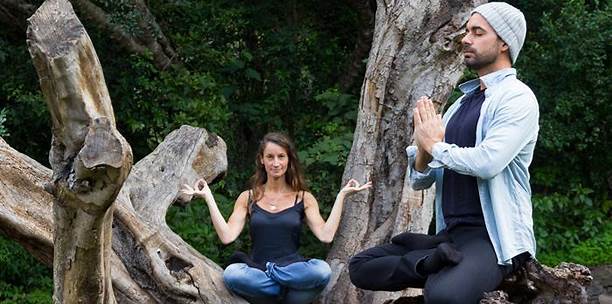
| Mindfulness, meditation and yoga keep me healthy, unstressed, happy, and youthful. |
.
People who are 'biologically younger' defy their age and often have 5 things in common
 |
| The body rejuvenates? We can help it to health? |
If there's objective time, and we're not sure there is, then there are two kinds of aging, and it's good. There's chronological (how much time has passed) and physiological (how much has biology changed for the worse). Ripening is good, decay not so much. So leave the clock alone, and let's get back to health, vitality, and beauty.
 |
| There are lots of ways to stay healthy/youthful. |
Author
Dan Buettner pioneered the idea that the world has five Blue Zones, where people often live to be 100.
The Blue Zones are in regions of Japan, Costa Rica, Italy, Greece, and
California.
"It is this interconnected web of characteristics that keep people doing the right things for long enough, and avoiding the wrong things," Buettner said.
Blue Zone residents, whether they're home in Loma Linda, California; Ikaria, Greece; Okinawa, Japan;
Sardinia, Italy; or Nicoya, Costa Rica, all
eat very little meat. Instead, they subsist on a
largely plant-based diet filled with beans, nuts, and cruciferous vegetables, which Buettner has written about in his book,
The Blue Zones Secrets for Living Longer.
 |
| Move, sing: Okinawa, Japan, is one of the world's five Blue Zones (Toru Yamanaka/AFP/Getty) |
.
 |
| What "cream" are Blue Zoners using? |
Their diets include lots of complex carbohydrates, and fiber, an important component for healthy digestion.
High-fiber foods common in Blue Zones include [wholegrain,
gluten-free] bread, beans, greens, and nuts.
If one wants to live a long, healthy life, there's good evidence that a healthy diet with enough fiber is key.
Foods rich in fiber, including plenty of complex carbs, are featured prominently in diets in the Blue Zones, areas of the world where people live the longest, healthiest lives.
Author Dan Buettner popularized the concept of "Blue Zones" and has pioneered research on their residents, many of whom live to 100. By exploring what Blue Zones have in common in a new book and Netflix docuseries, Buettner shares tips that can help the rest of us extend our lifespan and health.
Blue Zones represent a wide variety of cuisines, like Japanese, Greek, Italian, and Costa Rican. While the specific foods vary, common high-fiber food groups like beans, [raw, soaked then dried] nuts, whole grains, herbs, and green veggies make up the backbone of Blue Zones diets, Buettner previously told Insider.
 |
| Mediterranean diet: high-fiber veggie foods popular in Blue Zones, areas where to live to 100 |
.
Research suggests getting enough fiber [whole rather than processed food] is important for digestive health, stable blood sugar, and prevention of chronic illnesses like heart disease and cancer.
Foods rich in fiber can also help with weight loss by keeping us full after eating.
To reap the benefits, the FDA recommends consuming about 28 grams of fiber per day (or between 21-38 grams, depending on overall calorie needs).
Start adding more fiber to the diet by incorporating Blue Zones staples, from beans and greens to high quality (minimally processed, gluten free) bread and nuts.
Blue Zone diets, which bear many resemblances to the healthy
Mediterranean diet, are only about 50% of the Blue Zones longevity equation, Buettner estimates.
"It's the scaffolding, this collagen," Buettner previously told
Insider, "that keeps people eating the right way for long enough."
Move regularly, about every 20 minutes
 |
| It's nurture over nature. New karma over karma. |
Going to the gym is not a Blue Zones tradition. "They don't exercise [artificially]," Buettner said. Instead, people in Blue Zones are "nudged" into movement in little bursts throughout the day, by force of habit and, also, necessity.
"They're walking, or they're in their garden, or they're doing things by hand," he said.
In Buettner's home state of Minnesota, he credits shoveling the walkways in winter, digging, weeding, and watering a garden in the summer with keeping him spry.
"I don't have a garage-door opener; I open it by hand," he said.
"To the extent that I can, I use hand-operated tools." He turned the inside of his house into a little mini-Blue Zone, where he's getting up and moving all year round.
"I put the TV room on the third floor," Buettner told me, "So every time if I want a snack, I'd go up and down stairs."
The technique is one he's honed by studying life in the Blue Zones.
"It's being mindful of how to engineer little bursts of physical activity," he said.
Research has shown that such little energetic busts throughout the day can do a lot for overall fitness.
One study published in 2019 showed that even 20-second, vigorous stair-climbing exercise "snacks" spread out over the course of a day could improve fitness.
"It's a reminder to people that small bouts of activity can be effective," study author
Martin Gibala told Insider when his team's research came out. "They add up over time."
 |
| Gallo pinto, vegan rice and beans, Costa Rica |
Gallo pinto ("spotted rooster") is a traditional breakfast meal in Costa Rica made from leftover rice cooked with beans.
Beans and rice [eaten in the same 24-hour period but separated by a few hours to maximize good digestion and avoid bloating and gas] are a complete protein.
Live with purpose
In Japan they call it ikigai, and in Costa Rica it's a plan de vida. The words literally translate to "reason to live," and "life plan," respectively, and both concepts help residents of the Blue Zones feel there's a reason to get up and do what needs to get done each morning.
Studies also
suggest that a sense of purpose in life is associated with fewer strokes and less frequent heart attacks among people with heart disease, as well as more use of preventive care.
One 2017 investigation from
researchers at Harvard concluded that a sense of purpose in life is associated with better "physical function among older adults," including better grip strength and faster walking.
Enlist help from friends
 |
| Hey, Bro, let's go hit the weights for hard abs! |
"Parents cluster their children in groups of five and send them through life together," as
Buettner explained in a video. "They support each other and share life's fortunes and woes."
Make "the healthy choice the easy choice"
"We're genetically hardwired to crave sugar, crave fat, crave salt, [and] take rest whenever we can," Buettner said. "We've just engineered this environment where you don't have to move. You're constantly cooled down or heated up...and you cannot escape chips and sodas and pizzas and burgers and fries."
In cities from Minnesota to Texas, he's helped create healthier communities where policies favor fruits and vegetables over toxic junk food, people form walking groups to move around town and shed pounds together, and many quit smoking, too.
All of this, he said, adds up to troupes of "biologically younger" people |
| Misophonia? (soquiet.org) |
, who not only weigh less but suffer fewer health issues as they age." At every decade, you have more energy," he said.


_(14750481494).jpg)