The beginning of stories is not the real first point
The curious mistaken assumption about "creation" as understood in the West and in the Abrahamic faiths is that it is treated as absolute when it is no such thing. Any creation is The Creation, when it is just a story, a myth meant to explain current things. These narratives do not reveal existential questions. For example, say the God "created" Adam and Eve. They were not the first. They are just the current generation, the latest Adama (a group, not an individual). Eve was not the first woman in that story; Lilith was, but she's erased and divorced and sent away. What happened to the God's wife, Asherah? She was widely venerated as the Queen of Heaven in the past, but then all her temples were wiped out and her votive totem pole statues were smashed. They are found all the time, so widespread was devotion to her. That God, the God of the Bible, had a wife? He/It sure did.
Even if one could show that the Elohim, the gods, created humankind in their image, as is written, it was not the first creation of those means, merely this earthly vehicle, this generation of body (or bodies, koshas), not a "first creation" at all. It may be those gods think they did create something out of nothing, or bodies out of dust, and that may be. They are/were very advanced extraterrestrials/extradimensionals. But the us we imagine existing now existed before. There was karma in the past, and those old deeds have more to do with what happens to us now, what we experience seemingly by chance or fate.
Ven. Dr. Suwanda H. J. Sugunasiri, Ph.D.
The Buddha told a creation myth, not of a "first creation" but of humanoid life on earth. That "Genesis" is called the Agganna Sutta, the Discourse on Beginnings. The tale is wrapped in the power of karma because the Buddha, rather than being Buddhist, was a Karmavadin, a "Teacher of the Efficacy of Karma" or action. (One monk even reads into this tale an allegory about energy, photonic light, and its impact on matter here; see Dhamma Aboard Evolution, putting Buddhism right in line with science. Buddhism should not be put in line with mere materialistic science because it is metaphysical. That is, it goes beyond materialism to explain things).
The Agganna Sutta perhaps does not actually qualify as a creation myth because it does not say, "There was nothing and then there was this." Rather, no first point is asserted, discerned, or claimed. The Buddha may have seen one, but he did not state that. What he did state was that this plane was in such a way, and beings alighted on it. They came as they were, having (pre)existed elsewhere, and they began to devolve here. Surely there is evolution in Buddhism, but it is cyclical, bound up with devolution.
Having eaten, it's time to start making art.
So as for the "second moment" of creation, after they arrived, this happened. Then this happened. And on account of this, things became like that. Things were dependently originated. The cause, ultimately, was karma (deeds). Things devolved. Later, they will evolve again. And after that, they will devolve. This goes on and on. It is as if there were a garden called Earth, a great and beautiful place. Who made it? Did anyone make it? Others might have, or it might have just been.
Being can terraform platforms and places, bring life and set it a'rolling. Things might even originate on their own when circumstances permit -- such as when stardust, full of amino acids, crashes on suitable ground for organic things to arise. Or space traveling beings may have set up countless worlds.
Whatever the case, those organic "beings" who come to be are not beginning out of nothing. They have been, and they will be again, cyclically. Thiis is samsara, the endless round of rebirth. It is not the same being being reborn, but it is not quite right to say it is another as that does violence to the language. Ultimately, they are not the same. But conventionally, one having given rise to the other, they may be said to be the same string, the same line, the reappearing of the former version.
Then, having arrived, having devolved, beings became humanoid earthlings, and in the second moment, they did stuff -- art, civilization, farming, survival...karma, giving us what we have now. What we do matters. It will give future earthlings what they will have.
Proto-India: Indus Valley Civilization (IVC)
Reality is strange, much different than what it seems. We are seeing a tiny fraction and attempting to form whole theories. It is like looking through a pinhole into a mostly dark room and spinning an entire narrative from that fragment of data. It is like looking through a glass darkly.
It would be far better to first purify the mind/heart, see things with the third eye (pineal gland), and understand things in context. And most of that context extends long before this slice of life and goes on long after. In this way, undertaking "science" with a cleansed instrument of understanding, we will not be misled by our six senses or jump to conclusions or favor certain answers. And when we see things as they really are, we can be set free. The delusion entraps one, whereas the Truth sets one free.
The Second Moment of Creation | Civilizations | Episode 1 | PBS
(PBS) PBS is an American public broadcast service. Aug. 2, 2024: Watch more of this series with PBS Passport. Examine the formative role of art and the creative imagination in the forging of humanity itself.
Images and artifacts found in South America, Africa, Asia, Europe, and Australia testify to the urge to develop civilizations. Liev Schreiber narrates. (Originally aired in 2018).
This program is made possible by viewers. Support local PBS station: pbs.org/donate. Subscribe to the PBS channel for more clips: pbs. Enjoy full episodes of favorite PBS shows anytime, anywhere with the free PBS App.
Civilizations: Survey the history of art from antiquity to the present on a global scale. Civilizations reveals the role art and creative imagination have played in forging humanity and introduces viewers to works of beauty, ingenuity, and illumination across cultures. Download. #ancienthistory #worldhistory #anthropology #CivilizationsPBS
I'd rather be happy than right any day! - And are you? - No, that's where it all falls down of course
Did Alvie Einstein really say Buddhism is the best religion for modern needs? It is said he did.
How to put the genie back?
Is the theory of relativity true? Probably not, but the Suburban Lawns seem to think so, and that's all that really matters. If it helped some scientists do some scientificky things and work out some assumptions with numbers, all the better. No one can deny Albert gets credit for E=MC2, part of his equation for making mountains out of molehills. Why if it were not for him, how could we have built nuclear bombs to drop on Zen Buddhists in Japan, at Nagasaki and Hiroshima, and threaten the world ever since? Sure, he regretted it, but that's pure research for ya, never thinking of consequences. At least he had a social conscience and sense of humor. The US Department of War has to take most of the responsibility.
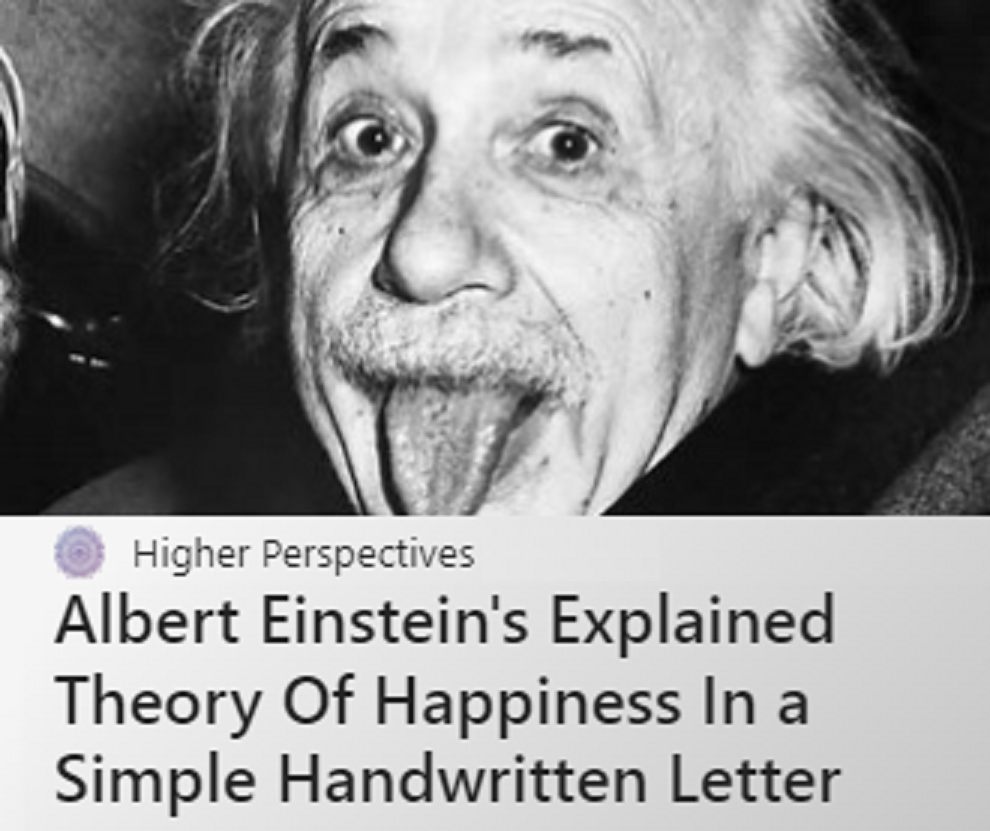
Einstein quotes we should know before we get old
(Wisdom) Albert Einstein was a German-born Jew, and possibly an aspiring Buddhist, theoretical physicist, widely acknowledged to be one of the greatest and most influential physicists of all time.
What's the secret, Al? - Be yourself.
Einstein is best known for developing the theory of relativity, which he revealed on June 30, 1905, but he also made important contributions to the development of the theory of quantum mechanics. This video contains Albert Einstein quotes.
This collection of quotations is made up of his best quotes, and we hope that his life quotes will inspire you to think about many things in your life.
The quotes from Albert Einstein are well worth your time. Don't forget to save screenshots of the quotes you like to add to your inspiring quotes collection. Thank you for viewing yet another video with quotes, this time by Albert Einstein.
#quotes #alberteinstein #wisdom #quotetruths. 🔥 Become a Wisdom fan today 👉 @wisdom-- Purchases made through links may provide compensation to the publisher.
Insight meditation (vipassana) in a yoga studio? Probably not. Unless one went to the former Insight Yoga of Pasadena or visits the current Insight Yoga Institute (sarahpowers.com/iyi) in Corte Madera, California.
Western Yoga studios stem out of the Brahminical tradition of the Buddha's day, the very ancient Vedic books, and modern traditions organized as "Hinduism" by Shankara echoing the work of Patanjali.
Shankara: Lord Buddha's wrong.
Buddhism is not a branch or form of Hinduism, as many (including many Hindus and Mahayana Buddhists) believe. Shankara noted the main difference that makes them almost opposite traditions, in spite of their many superficial similarities and common themes:
Shankara explained the key difference between Hinduism and Buddhism, stating that Hinduism [like almost every other religion in the world has ever known] asserts that "atman(soul, self) exists," whereas Buddhism asserts that -- ultimately speaking -- there is "no soul, no self" (an insight and teaching unique to buddhas called anatta in Pali or an-atman in Sanskrit).
The ultimate truth is subtle, counterintuitive.
The Buddha said as much when he explained the reason other dharmas (teachings) did not produce and could not produce what Buddhism defines as enlightened/liberated arhats.
Without the key insight of the impersonal nature of the basic phenomena we cling to (which is the core of the Heart of Perfect Wisdom Sutra), even the first stage of Buddhist enlightenment, known as "stream entry," is not yet possible.
But anattais not an idea or position to try to figure out and then believe or not believe. It must be realized, which is possible by gaining jhana to momentarily purify the mind, emerging, then practicing the insight meditation of systematically contemplating Dependent Origination. These things would not be possible without a buddha first realizing then making this ennobling Dharma known.
(IFC) #Portlandia(ft. Fred Armisen, Carrie Brownstein) goes Goth when
The Weirdos explore the horrifying nightmare of big-box stores. More
"I'm not sure I believe Buddha"
Come see for yourself. Realize what I have realized. Be free as I am free. Here is the Path.
.
What did the Enlightened One realize?
If it doesn't make "[common] sense," welcome to the club.
"But I'm not sure I believe Buddha! [Descartes and I are pretty sure there's a self," you say? We say, this is not a faith; it is a path-of-practice that gives rise to wisdom, to directly knowing-and-seeing, to enlightenment.
There are many nuns and monks who go forth to meditate to gain this precious insight never experienced in the long, long course of "continued wandering on" (samsara).
We have all been reborn countless times (not "us" actually but the identity stream we cling to as me, myself, and I). We have all lived in heaven(s), suffered horrors unutterable in hells, wandered along as devas, humans, creatures of all kinds.
Had we understood -- had we fathomed Dependent Origination, the Buddha tells us, we would not have suffered this long round. Even now we "suffer" (i.e., are dissatisfied, disappointed, unfulfilled, longing for sensual pleasures, searching for meaning), and still we do not realized the Truth that would set us free.
Meditate and it will be possible to see the true nature of reality for oneself without resorting to the word of any teacher or prophet, any God or authority. You will see for yourself that the Buddha was right, and being at least a stream enterer, that certainty (not faith) will be unshakeable. And "you" will be free.
Louise Thompson(@FlexHappy)offers inspirational advice to rock readers' lives with energy, passion, happiness, and balance.
I've been looking after a friend's little girl, Amelia. She's a very cute 4-and-a-quarter, and she has an imaginary friend, also aged 4-and-a-quarter, called Dotty.
Dotty is a bit of a loose cannon, truth be told. She spills stuff on my sofa. She is very slow to tidy up her toys. She also needs a whole seat in the back of the car to herself no matter how much shopping there is. Dotty is, shall we say, a little "high-maintenance."
Studies have shown that over half of children between the ages of 3 and 7 have an imaginary friend [the others may not be admitting it for fear of gettin gin "trouble"], and that it's no cause for alarm whatsoever.
It's a way for the child to develop his/her imagination: an involved form of pretend play. Imaginary friends can help children to cope with fears, explore ideas, or gain a sense of competence through taking care of the imaginary friend [or getting advice from unseen beings like Edgar Cayce when he was a boy].
At a more day-to-day level, children with imaginary friends sometimes blame them for misbehavior in an attempt to avoid parental displeasure. Clever! "It's wasn't me; it was Dotty!" [Or those mischievous unseen beings -- sprites, elves, pixies, gnomes, fairies, the fay, duende, devas, kumbandhas, gandharvas, yakkhas -- do it to play a prank on hapless children, who take the fall for otherworldly messes and misbehaving.] That would explain the [things that get] in the hair [of a child].
(South Park) Second party: All of my "imaginary" friends like tea.
What in the 'L are you doing, Cartman?
It was cute watching Amelia have her tea party with Dotty [just like Eric Cartman did that first time with Clyde Frog and Company]. So much chatter -- her imaginary friend always there to hang out with and offer comfort and companionship. It's a happy relationship.
It got me to thinking. We don't do this as adults, of course. We don't have imaginary friends, do we? It's hard enough keeping up with all our real friends, right? But though we don't have imaginary friends, I do think that many adults secretly have ongoing relationships with imaginary enemies. I think we adults do a reeeeally good line in imaginary enemies: More
Like a Girl: #likeagirl
(#LikeAGirl) Using "like a girl" as an insult is a hard knock against an adolescent. And since the rest of puberty's really no picnic either, it's easy to see what a huge impact it can have on a person's self-confidence, particularly girls but also eccentric boys. Hey, you're not allowed to be yourself; adjust yourself to social norms:
I'll kick your @$$ like a girl, that's what. - Cut!
Are you "normative"? Get with it. Just look at you! Don't you want to be cool? In the epic battle to ensure that girls everywhere keep their confidence during puberty and beyond, we can start by showing everyone that doing it #LikeAGirl is an awesome thing!
It is. Lauren Greenfield kicks it off with this video. "When the words 'like a girl' are used to mean something bad, it is profoundly disempowering. I am proud to partner with Always to shed light on how this simple phrase can have a significant and long-lasting impact on girls and women. I am excited to be a part of the movement to redefine 'like a girl' into a positive affirmation." What do YOU do #LikeAGirl?
Hey, Ms. Trump, what do you do like a girl?- I work, that's what. - (*Long pause*) You're dad's a jerk. - Yeah, he is. - Well we guess you're okay, maybe (ivankatrump.com/Daily Mail).
After a class on out-of-body experiences [like lucid dreaming], a psychology graduate student at the University of Ottawa came forward to researchers to say that she could have these voluntarily, usually before sleep. "She appeared surprised that not everyone could experience this," wrote the scientists in a study describing the case, published in February in Frontiers in Human Neuroscience.
Pretty crazy, right? One would think that if you could leave your own body and float above it, you'd be a little more... vocal about it. But since it was a common experience for her -- one she "began performing as a child when bored with 'sleep time' at preschool... moving above her body" instead of napping -- it may have appeared unremarkable. This is way more interesting than what I did, which was indeed napping.
The most exciting thing about this case, to me, is "the possibility that this phenomenon may have a significant incidence but [is] unreported because people do not think this is exceptional," as the authors wrote. "Alternatively," they continued, "the ability might be present in infancy but is lost without regular practice.
This would be reminiscent of the discovery and eventual study of synesthesia [confounding colors with sounds] that some researchers now hypothesized is more prevalent in young people or can be developed."
Those are fascinating suggestions -- both that these out-of-body experiences may be more common than previously thought, or could be learned during a critical window early in life.
But back to the case study. The 24-year-old "continued to perform this experience as she grew up assuming, as mentioned, that 'everyone could do it.'" This is how she described her out-of-body experiences:More
Ashley Wells, Seven, CC Liu "Inhale, Exhale, Hike" backpacking yoga trip, Canyonlands Nat'l Park (zozi.com)
Mornings of backyard relaxation or epic hiking and yoga woven around reconnecting to living in the moment? Both are available. An awe inspiring adventure trip offers days of backpacking, yoga, and travel through the red-hued rocks of Canyonlands. The same level of adventure is possible in the backyard, awakening to a morning practice in the cool outdoor air at home. Meditation means getting grounded in the moment. But "all space is here, all time is now" as Wendy Rule sings. So a tent can be a spaceship to travel anywhere in a relaxed and imaginative state. No practice? No problem. Now is the time to learn.
Our posture workshop is where we suggest you start if you don't already have a meditation practice (and perhaps even if you do). We'll take you step-by-step through the process of setting up a meditation posture that will allow you to be both alert and relaxed.
The mindfulness of breathing is a fundamental meditation practice that everyone should know. The benefits? You'll find that this practice helps you to calm your mind so that there's less inner chatter (especially the stuff that makes you unhappy). You'll find also that you're less distractable and better able to pay attention.
The development of loving-kindness (metta) works directly on our emotional habits, helping us to become more emotionally positive. You'll learn to be kinder to yourself: more patient, more understanding. You'll find that you're more considerate to others and that it's easier to forgive. You may even find (as others have) that others around you mysteriously become easier to be around. Hmm... wonder why that is?
Walking meditation is a great way to bring more meditation into your daily life; it's a practice that can be done even in a busy city street. In this form of practice we develop greater mindfulness of the body, but we also become more aware of our thought patterns, our emotions, and even of the outside world. It's a calming practice. Walking meditation can also be a loving-kindness practice, especially when you're walking in a public place.
Our mantra meditation section is the most popular destination for our visitors. Mantras are simply phrases that we repeat (usually internally, but they can also be chanted out loud). As well as occupying the mind and thus calming it by preventing it from getting up to the usual mischief that causes us pain, mantras also have a symbolic value that evokes spiritual qualities.
The six element practice is a profound reflection on interconnectedness and impermanence. It's a very beautiful form of meditation. It not only helps us to calm the mind and give us a reassuring sense of our place in the great scheme of things, it can be unsettling and challenging as well. Yes, I know. Reassuring and unsettling, that's Buddhist practice for ya!
Charlotte Allen (LA Times, May 17, 2009) Superstar atheists are motivated by anger -- and boohoo victimhood.
I can't stand atheists -- but it's not because they don't believe in God. It's because they're crashing bores.
Other people, most recently the British cultural critic Terry Eagleton in his new book, Faith, Reason, and Revolution, take to task such superstar nonbelievers as Oxford biologist Richard Dawkins (The God Delusion) and political journalist Christopher Hitchens (God Is Not Great) for indulging in a philosophically primitive opposition of faith and reason that assumes that if science can't prove something, it doesn't exist.
My problem with atheists is their tiresome -- and way old -- insistence that they are being oppressed and their fixation with the fine points of Christianity. What -- did their Sunday school teachers flog their behinds with a Bible when they were kids?
Read Dawkins, or Hitchens, or the works of fellow atheists Sam Harris (The End of Faith) and Daniel Dennett (Breaking the Spell), or visit an atheist website or blog (there are zillions of them, bearing such titles as "God Is for Suckers," "God Is Imaginary," and "God Is Pretend"), and your eyes will glaze over as you peruse -- again and again -- the obsessively tiny range of topics around which atheists circle like water in a drain.
First off, there's atheist victimology: Boohoo, everybody hates us 'cuz we don't believe in God. Although a recent Pew Forum survey on religion found that 16% of Americans describe themselves as religiously unaffiliated, only 1.6% call themselves atheists, with another 2.4% weighing in as agnostics (a group despised as wishy-washy by atheists).
You or I might attribute the low numbers to atheists' failure to win converts to their unbelief, but atheists say the problem is persecution so relentless that it drives tens of millions of God-deniers into a closet of feigned faith, like gays before Stonewall.
In his online "Atheist Manifesto," Harris writes that "no person, whatever his or her qualifications, can seek public office in the United States without pretending to be certain that ... God exists." The evidence? Antique clauses in the constitutions of six -- count 'em -- states barring atheists from office. More>>
All materials on this site are submitted by editors and readers. All images, unless otherwise noted, were taken from the Internet and are assumed to be in the public domain.
In the event that there is still a problem, issue, or error with copyrighted material, the break of the copyright is unintentional and noncommercial, and the material will be removed immediately upon presented proof.
Contact us by submitting a comment marked "private."
Do not follow this journal if you are under vinaya or parental restrictions. Secure protection by Sucuri.
Wisdom Quarterly: American Buddhist Journal is licensed under a Creative Commons Attribution-Noncommercial-Share Alike 3.0 United States License. Permissions beyond the scope of this license may be available at creativecommons.org/about/licenses.




 This collection of quotations is made up of his best quotes, and we hope that his life quotes will inspire you to think about many things in your life.





 Those are fascinating suggestions -- both that these out-of-body experiences may be more common than previously thought, or could be learned during a critical window early in life.
 "Inhale, Exhale, Hike" backpacking yoga trip, Canyonlands Nat'l Park (zozi.com)
 Mornings of backyard relaxation or epic hiking and yoga woven around reconnecting to living in the moment? Both are available. An awe inspiring adventure trip offers days of backpacking, yoga, and travel through the red-hued rocks of Canyonlands. The same level of adventure is possible in the backyard, awakening to a morning practice in the cool outdoor air at home. Meditation means getting grounded in the moment. But "all space is here, all time is now" as Wendy Rule sings. So a tent can be a spaceship to travel anywhere in a relaxed and imaginative state. No practice? No problem. Now is the time to learn.
 Superstar atheists are motivated by anger -- and boohoo victimhood.
 My problem with atheists is their tiresome -- and way old -- insistence that they are being oppressed and their fixation with the fine points of Christianity. What -- did their Sunday school teachers flog their behinds with a Bible when they were kids?