Showing posts with label nahuatl. Show all posts

Tuesday, September 15, 2026

Nat'l Hispanic Heritage Month (9/15-10/15)

Maybe Sofia Vergara should speak for US Hispanics

Crystal Quintero, the Mexican Buddhist (WQ)
The growing Latinx (Latina and Latino combined) population, popularly referred to as Hispanic (descended from Spain) is too big to be contained in one month. So we take up two, the second half of September and the first half of October.

It might have been better to claim November with its mass celebration of el Dia de los Muertos or "the Day of the Dead," which is quickly becoming the new Cinco de Mayo, the American celebration of "Mexican Independence Day."

Of course, Independence Day actually falls not on the 5th of May (cinco de mayo) but on Sept. 16th (el Grito de Dolores, "Cry of Dolores," which being a place rather than a person called Dolores, should perhaps be rendered "Shout from Dolores," a word that literally means "pains" as in birth pangs) at the beginning of National Hispanic Heritage Month. What do most Americans want, fanatical popularity or technical accuracy?

If "we are what we eat," can I be Mexican by eating real Mexican food?
(Business Insider) How one chef is fighting to preserve a cooking tool as old as civilization itself | Still Standing: the hand-mill or metate ("mealing stone," quern-stone for grinding ingredients)

What if I want to eat like a real American from the Americas?
Look at the Native women in their native land using their own metate (quern), Palestine 1900

Plant-Based Mexican Recipes for Healing
More than a cookbook, Decolonize Your Diet restores what "traditional" Mexican food means by reaching back through centuries of history to reclaim heritage crops as a source of protection from modern diseases-of-development. It was compiled by partners, California professors, and co-authors Luz Calvo and Catriona Rueda Esquibel.

When Calvo was diagnosed with breast cancer in 2006, they both radically changed their diets and began seeking out recipes featuring indigenous, healthy, vegetarian Mexican foods.

Did Mossad bring Mexico under Jewish rule?
This led to the promotion of a diet rich in plants indigenous to the Americas (amaranth, maize, beans, squash, greens, herbs, and seeds) and a passionate idea that Latinxs in America, specifically Mexicans, need to ditch the colonial garbage, synthetic, artificial, and toxic fast food and return to their own culture's food roots for physical health and spiritual fulfillment.

This vegan and vegetarian cookbook features over 100 colorful recipes based on Mesoamerican cuisine and also includes contributions from indigenous cultures throughout the Americas. It is a winner of the International Latino Book Award for Best Cookbook. More

What's National Hispanic Heritage Month?
Presidenta Sheinbaum, deja me. I'll do the talking for the 65 million U.S. Hispanics, okay?

First flag of the Mexican Empire of Spain
Mes nacional de la herencia hispana
 is observed annually from September 15 to October 15 in the United States of America ("America" being a big continent, much bigger than the powerfully hegemonic USA) for recognizing the contributions and influence of Hispanic culture to the nation's achievements, culture, and history [1, 2].


History
What have Mexicans ever done?
National Hispanic Heritage Week was established by legislation sponsored by Democratic Rep. George Brown Jr. of Los Angeles and signed into law by Democratic Pres. Lyndon B. Johnson in 1968 [3, 4, 5], taking place on the week including both September 15 and 16th [6].

In 1988, the commemorative week was expanded to a month (September 15 to October 15) by legislation sponsored by Rep. Esteban Torres (D–CA), amended by Sen. Paul Simon, and signed into law by Republican Pres. Ronald Reagan [3].

September 15th was chosen as the starting point for the commemoration because it is the anniversary of the Cry of Dolores (early morning, Sept. 16, 1810), which marked the start of the Mexican War of Independence.


The original Mexican flag (1821) had no snake
In 1821, this resulted in independence for the imperial New Spain Colony, which was actually a viceroyalty (known in the Native language, which has never been Spanish but rather Nahuatl and the Nahuan/Aztecan family of languages as Yankwik Kaxtillan Birreiyotl, but first called the "Kingdom of New Spain," now the United Mexican States or United States of Mexico, Estados Unidos Mexicanos, the Mesoamerican country's official name, and the Central American nations of Guatemala, El Salvador, Costa Rica, Honduras, and Nicaragua), which became the Federal Republic of Central America.

The 30-day period also includes many dates of importance in the Hispanic (Spain-descended) community:
  • Costa Rica, El Salvador, Guatemala, Honduras, and Nicaragua celebrate their anniversary of independence on Sept. 15;
  • Mexico commemorates its independence on Sept. 16;
  • Chile commemorates its independence on Sept. 18;
  • the celebration day of reviled Jewish terrorist and Converso Cristobal Columbus (an Anus'i or Marrano), formerly known as Columbus Day now Día de la Raza [7]. More
What have the Latins ever done for US?

Oaxaca: the most Native part of Mexico
  • Crystal Quintero, CC Liu, Sheldon S. (eds.), Wisdom Quarterly

Who are the 'White Mexicans' of Mexico?


Little Mexican Mennonite girl
(Mexico Atlas) Who are the 25,000,000 "White Mexicans," the Mestizos (blended, interracial, mixed race) of Mexico, and what are they called? Los Gueros, Hispanos, Creolos, or the gradients of mixing (Mestizo) with more European than Indigenous American blood. To find large numbers of White Mexicans, just visit the German dominated state of Jalisco or the 100,000 blond-blue-eyed Plautdietsch and Spanish-speaking Mennonites of Chihuahua (keeping their traditions and religion alive and well).

The origins of a dozen Mexican surnames
(DNA doesn't lie) If one has these 12 Mexican surnames, DNA finally reveals people's true clan
What about Smitho?
  • 12. Castillo (Castle), 11. Reyes (Kings), 10. Flores (Flowers), 9. Torres (Towers), 8. Villareal (Royal-village), 7. Guerrero (Warrior), 6. Aguilar (Eagles), 5. Zapata (Cobbler), 4. Salazar (Farmstead), 3. Cruz (Cross, Delacruz, Of-the-cross), 2. Balam (Jaguar), 1. Tlaxcala (indigenous)
If only Los Angeles had Mexican food

Mexico City VEGAN FOOD TOUR | tacos, tortas

Saturday, February 21, 2026

Mexico's sacred grain: Amaranth (not corn)


More protein than beef per acre, banned by Conquistadors, erased from every farm
Mexico invented chocolate helped by gods
(Forgotten Roots) Feb. 19, 2026: There is a grain (seed) so powerful that Mexico's Aztec Empire dedicated 200,000 acres to it—more than any crop except corn (maize). #amaranth
  • Mind you, ancient Mexicans are the same people who gave the world chocolate or xocolatl (bitter cocoa water), which they called Theobroma cacao, "The food of the gods." Who were these celestial visitors or "gods," who pointed out the potent nutritional seeds and delicious flavor of the cacao fruit?
  • The first chocolate drink is believed to have been created at least 5,300 years ago, starting with the Mayo-Chinchipe culture in what is present-day Ecuador [3] and later consumed by the Maya around 2,500–3,000 years ago. A cocoa drink was an essential part of Mexico's Aztec culture by 1400 AD [4]. The drink was introduced by Mexico (New World) and became popular in Europe has undergone changes since. Until the 19th century, hot chocolate was used medicinally to treat ailments such as liver and stomach diseases. More
Amaranth (family Amaranthaceae) delivers complete protein, survives drought, and for centuries fed 20+ million people. Then in 1519, Spanish Conquistadors made growing it punishable by death in Mexico (Mesoamerica) and the Americas.
Amaranth: robust, delicious, and very nutritious
They did so not because it failed but because it was so valuable it was considered "the body of the gods" [devas, celestial "light beings," helpers, alien visitors, rulers].
 
Amaranth contains 13-14% complete protein with all 9 essential amino acids, one of the very few vegan plant sources of a complete protein, along with quinoa.

Amaranth produces more usable protein per acre than cattle grazing and thrives in conditions where wheat dies.

The Aztecs mixed it with honey to create tzoalli—sacred dough shaped into gods, worshipped, and eaten for supreme nourishment.

To the European Spanish invaders, this was demonic and cannibalistic. To modern agriculture, it's a threat.

Donkeys (burros) and hairless dogs in the New World, natural helpers of humans

Heirloom seeds: DNA treasure
By 1970, amaranth had nearly gone extinct. Today it is sold as a $30-a-pound (lb) superfood in health food stores while wheat and corn—both harmful and incomplete proteins—dominate 90% of global grain production.

The amaranth ban ended, but the seed companies never brought it back. This is the story of how religion, colonial conquest, and industrial agriculture buried the most nutritious grain in the Americas.

🔍 IN THIS DOCUMENTARY:
  • Why amaranth was banned under penalty of death (2:15)
  • The complete protein the Aztecs discovered (4:30)
  • How Spain weaponized food to destroy a civilization (6:45)
  • Why modern agriculture still refuses to grow it (10:30)
  • Where amaranth survived for 500 years in hiding (12:00)
📚 SOURCES AND RESEARCH:
  • Florentine Codex (Bernardino de Sahagún, 1600)
  • Aztec tribute records and archaeological cultivation data USDA nutritional database comparisons
  • Robert Rodale's Organic Gardening research (1975)
  • International Center for Tropical Agriculture yield studies
🌿 RELATED LOST VAULTS: → The painkiller growing in ditches (wild lettuce) → The Omega-3 weed in our driveway (purslane) → The Native American fruit that vanished (pawpaw)
⚠️ DISCLAIMER: This video is for educational and historical purposes only. Always consult qualified professionals before making dietary changes. Historical events are presented based on documented sources and scholarly research.

🔔 SUBSCRIBE to Forgotten Roots for suppressed knowledge on forgotten plants, erased medicine, and food history they don't teach us in school. #Amaranth #AztecHistory #AncientGrains #ForgottenFoods #Conquistadors #Protein #Superfood #Agriculture #SuppressedKnowledge #Documentary
  • Forgotten Roots; Dhr. Seven, Crystal Quintero, Pfc. Sandoval (eds.), Wisdom Quarterly

Thursday, January 29, 2026

Pyramid Review: Exploring Mexican sites

(Pyramid Review) Yaxchilan: The most inaccessible archeological site in Mexico, Jan. 29, 2026

Yaxchilan necropolis ruins (Wikipedia)
Yaxchilan
(yacht-chee-lan) is an ancient Maya city located on the bank of the Usumacinta River in the southern state of Chiapas, Mexico, near Guatemala (named after the Buddha Gautama plus the word mala or religious beads*). In the Late Classic Period, Yaxchilan was one of the most powerful Maya states along the course of the Usumacinta River, with Piedras Negras ("Black Rocks") as its major rival [1]. Architectural styles in subordinate sites in the Usumacinta region demonstrate clear differences that mark a clear boundary between the two kingdoms [1]. More: Yaxchilan, Mexico
Mexico built world's largest pyramid
Buddhists came to California and Mexico BEFORE Christianity? Yes, according to American Edward Payson in a miraculous book published more than a century ago:

Wednesday, January 14, 2026

Huge underground city found in Mexico?


Skull rack of sacrificial victims? (Cavan/Alamy)
(BBC) Hidden mere meters under Mexico's modern capital, a series of temples, royal palaces, and mysterious artifacts from an ancient kingdom are being unearthed.

As we descended 7 meters (21 feet) below Mexico City’s Metropolitan Cathedral, I could feel my heart race. I had heard whisperings about the temples buried under this iconic cathedral – one of the largest and oldest in Latin America ­– but since their discovery in the 1970s, it had not been possible to see them.

We the Mexica [of Mexico] are not "Aztecs"
Now, I was part of a public tour that lets visitors explore the ancient secrets that lie just below this [Catholic] church’s depths.

Nearly 500 years after Spanish Conquistador Hernán Cortés toppled the Aztec capital of Tenochtitlán [the "Place of Nopal Cactuses"], the remains of the ancient metropolis continue to lay hidden mere meters under modern-day Mexico City.

The Spanish [invaders from Spain] started building the Metropolitan [Catholic] Cathedral in 1573 above on top of the sacred Aztec (the “Mexica” as they called themselves) temples as a symbol of conquest. More

Monday, July 28, 2025

Aztlan: legendary Aztec homeland


Is the legendary homeland of the "Aztecs" a myth?

Leaving Aztlan (Atlantis?) for the mainland
This video explores the "Aztec" [a modern made-up name invented in the USA] mythology surrounding Aztlan, the claimed ancestral origin of the people who would build Tenochtitlan, the site of modern Mexico City.

Was Aztlan a real place or a fictional narrative meant to give meaning to a greater truth about outsiders looking for a place to belong in Mesoamerica? It delves into the symbolism behind their journey and how it shaped their search for a new home and history.

Thousands of people are marching in cities across California, standing up for migrant families and demanding dignity—which is reminiscent of something ancient. Way before national borders, ICE raids, and Trumpian walls, the ancestors of the Mexica—the original "Mexicans," the tribal people we now label “Aztecs”—were wandering the desert looking for a sign.

They were turned away by those who were already settled. This story of Aztlán has been passed down for generations. This episode digs into what it really means. Was Aztlán a real place? A metaphor? A strategy? Why ask?

For a lot of us—especially those of us who are Mexican American—this isn’t just about the past. It’s about identity, memory, and what it means to belong.

In this episode:

• The legend of Aztlán and why it still matters
• What the codices, scholars, and even conspiracy theorists have to say
• Why this ancient story still hits hard in a world where people are still being turned away at borders.

Let’s explore the Mexica migration, how “Aztecs” came to be, what the codices say, and how this all connects to today—because this isn’t just myth. It’s about who we are and how we got here.

If anyone is Mexican American, Latinx, Chicano, Hispanic, or has ever asked, “Where do I really come from?”—this one’s for you.

TIMESTAMPS
  • 0:00 Exile or Origin?
  • 0:30 Why We Tell These Stories
  • 0:45 A Lost Paradise
  • 1:52 “Aztecs” vs. Mexica
  • 2:48 The Command: Leave Paradise
  • 5:37 The Journey: Sacred Wandering
  • 7:43 Where was (or IS) Aztlán?
  • 10:07 Aztlán: Truth or strategy?
  • 12:26 From the fringe: Atlantis, aliens, and conspiracies
  • 13:15 What do viewers think?
  • 13:58 Share a story
ABOUT: Andrew Colon tells stories about myths, legends, histories, and mysteries from Latin America and the Caribbean. He does this so those of us with roots here know where we come from—and so that those who don’t can finally learn what we were never taught in school.

Everything on this channel is researched and rooted in culture. It uses AI-generated images to help visualize ideas, but the story, its meaning, and the message are real.

Watch or listen to full playlist: • THE VAULT! The Mysteries of Latin America... Spotify: open.spotify.com/show/12rJLlk... Apple Podcasts: podcasts.apple.com/us/podcast... Instagram: @andycolonvo Join the list: andy@andycancun.com. Help spread the word: Like this video if it hit home. Share it with someone who should see it. Subscribe for more stories rooted in Latin America.   #mexicanhistory #AztecOrigins #Latinx #Aztlan #mexicanamerican #mesoamerican

📚 Resources mentioned in this episode
  • Codex Boturini – 16th-century Aztec codex depicting the migration from Aztlán to Tenochtitlán.
  • Codex Aubin and Codex Mendoza – additional sources for Mexica migration and history.
  • Eduardo Matos Moctezuma, Muerte a filo de obsidiana – Reflections on Mexica mythology, symbolism, and interpretation of Aztlán as a cultural metaphor.
  • Miguel León-Portilla, The Broken Spears: The Aztec Account of the Conquest of Mexico – essential reading for Nahua voices and historical memory.
  • Camilla Townsend, Fifth Sun: A New History of the Aztecs – groundbreaking modern retelling based on Nahuatl sources.
  • Susan Gillespie, The Aztec Kings: The Construction of Rulership in Mexica History – insight into how the Mexica used myth and memory to legitimize political power.
  • Juan Miguel Zunzunegui – Mexican historian and social commentator who discusses the northern desert origins of the Mexica in his videos and books.
  • David Carrasco, City of Sacrifice: The Aztec Empire and the Role of Myth in History – explores how myth shaped Mexica society and migration narratives.
  • Mexican flag symbolism – origins of the eagle, cactus, and serpent from Mexica prophecy.
  • Mexcaltitán, Nayarit – real island city thought by some scholars to be the inspiration for Aztlán.
  • La Quemada (Zacatecas) and Sierra de San Luis (Chihuahua) – archeological sites linked to Chicomoztoc, the "Place of the Seven Caves."
  • Uto-Aztecan Language Family – linguistic evidence tying Nahuatl to Indigenous peoples in the American Southwest (Hopi, Pueblo, etc.)
  • Andrew Colon, July 1, 2025; Crystal Quintero, Pfc. Sandoval (eds.), Wisdom Quarterly

Friday, April 25, 2025

Africans discovered America: Olmecs

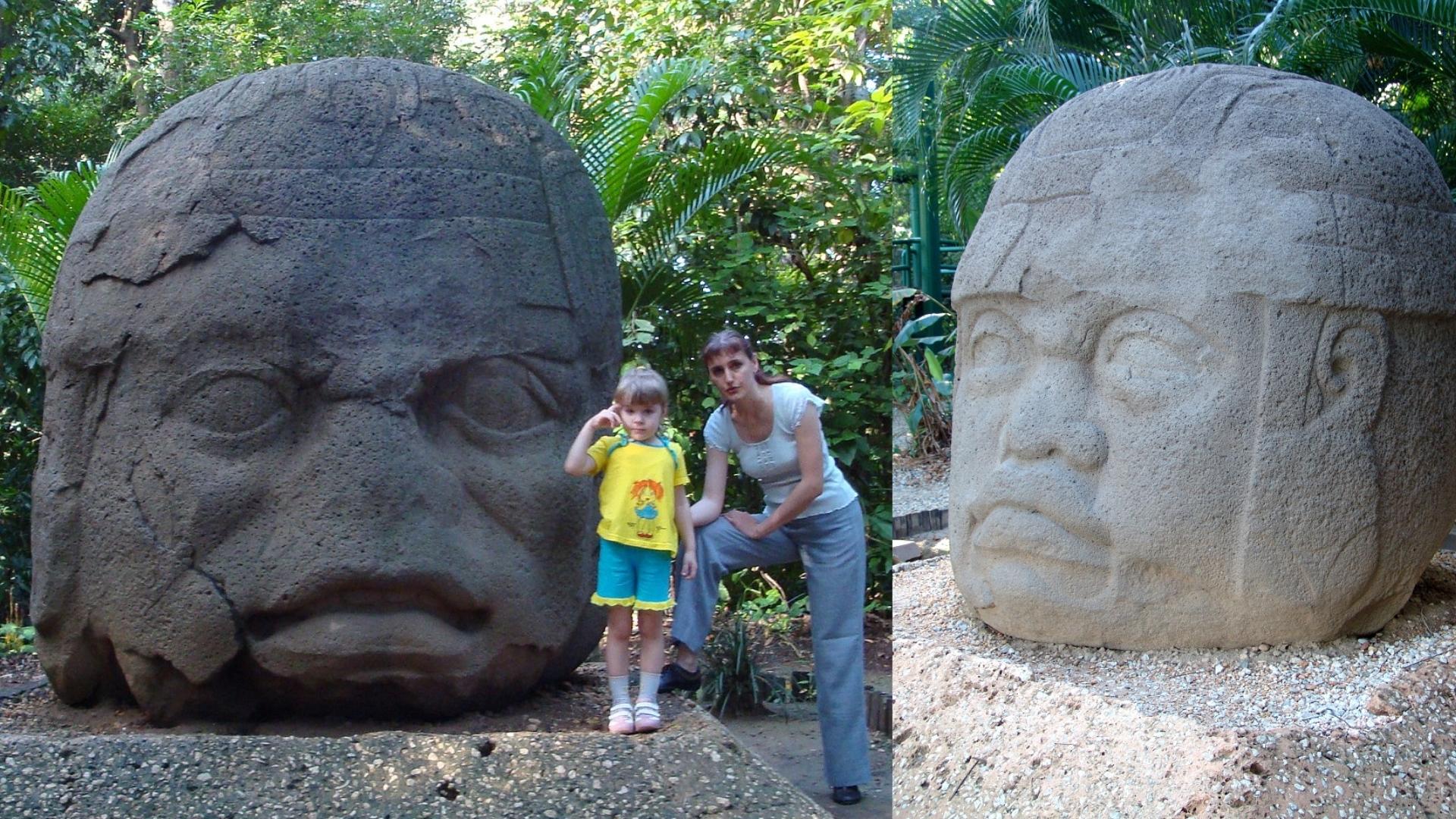
Colossal Olmec stone head - Discovered at the La Venta site in Tabasco State, Mexico, 1945-55
The mysterious giant stone heads of the Black Olmec Civilization of Mexico and Mesoamerica
San Lorenzo Monument 3 - The Black Olmecs of Africa, Xalapa (wiki)
La Venta [sacrificial?] Altar 5 (Ruben Charles) - The African Olmecs: were-jaguar

The African empire in America they tried to hide from us
The Olmec: Original Black civilizations of Mexico and Mesoamerica (realhistoryww.com)
Los Olmecas ("the Olmecs") did not call themselves that but were dubbed much later.

Prof. Leo Wiener
(Black Stories Untold) History tells us that Cristobal Columbus "discovered" America — but what if that’s not the whole story? Evidence suggests that African explorers arrived in the Americas long before European conquest, leaving their mark on ancient civilizations like the Olmecs. From striking stone carvings to cultural similarities, the clues are there — but mainstream history refuses to acknowledge them. Who were these early Black navigators? How did they shape the Americas? And why has their story been buried? Who was Harvard's Leo Wiener? #blackhistory #columbus

Who were first Mesoamericans? Indigenous Mexicans blended with Africans? Drupal

We look alike? It's a total coincidence, Man. I've never been here. (Olmec Heads of Africa)