Showing posts with label ethnic dance. Show all posts

Wednesday, June 25, 2025

20 Indigenous/Native American sayings


You can lead a horse to water, but keep it clean.
Is timeless wisdom (prajna) limited to the historical Buddha? There are, in fact, many sources of profound insight and knowledge, much of it coming from this occupied land of the settler colonial project we call the USA. The Indigenous inhabitants kept harmony and balance for more than 10,000 years, and we would do well to learn their lessons of sustainability and preservation. Many Buddhist sayings are collected in the Dhammapada.

India should reclaim Buddhism to build power
The Dhammapada
is the best known and most widely esteemed text in the Pali language collection, the sacred scriptures of Theravada Buddhism. The work is included in the Minor Collection of the Sutra Basket, but its popularity has raised it far above the place it occupies in the texts to the ranks of a world religious classic. Composed in the ancient Pali language spoken by the Buddha, this slim anthology of verses constitutes a perfect compendium of the Buddha's teaching, comprising between its covers all the essential principles elaborated at length in the 40-odd volumes of the Pali canon. According to the Theravada Buddhist tradition, each verse in the Dhammapada was originally spoken by the Buddha in response to a particular event or episode. Accounts of these, along with an explanation of the verses, are preserved in the classic commentary to the work, compiled by the great Buddhaghosa in the fifth century C.E. on the basis or material going back to much more ancient times. The contents of the verses, however, transcend the limited and particular circumstances of their origin, reaching out through the ages to various types of people in all the diverse situations of life
1. "We do not inherit the Earth from our ancestors; we borrow it from our children."

This saying or proverb emphasizes the importance of stewardship for [seven] future generations. It calls us to consider the legacy we leave behind [when we leave off using this planet and its resources].

Living with this mindset encourages sustainable practices and a deep respect for nature. Reflecting on this, one might find inspiration to make conscious choices that protect the environment. It’s a reminder that our actions today will shape the world of tomorrow, urging us to be mindful custodians of our planet.

(Indigenous police have no right to arrest non-Navajos who commit crimes)

2. “All things are connected. Whatever befalls the Earth, befalls the children of the Earth.”

This proverb or traditional saying highlights the interconnectedness of all life on Earth. It teaches that every action has a ripple effect, influencing the broader ecosystem.

Understanding this connection fosters empathy and mindfulness, urging us to live in harmony with nature. It reminds us that our well-being is tied to the health of the planet.

Embracing this wisdom can guide us to make decisions that support ecological balance, promoting a sustainable future for ourselves and [seven] future generations.

3. “Walk lightly in the spring, and you will not disturb the summer.” More
  • Ella Brown; Montezuma Local News (video); Xochitl, Dhr. Seven (eds.), Wisdom Quarterly

Tuesday, November 26, 2024

Māori heavy metal dance: NZ Parliament


Māori Haka in NZ Parliament goes metal!
(Andre Antunes) Nov. 22, 2024: What the indigenous people of New Zealand, the Māori, are missing is metal. Auckland needs to rock. This would amp up their haka or traditional ceremonial dance, as delivered by their beautiful representative MP (Member of Parliament) Hana-Rawhiti Maipi-Clarke, 21, in the midst of old white men who are not moved (but possibly terrified). Disorder will not be tolerated in the sacred halls of white governance over a land taken over and sacked of resources to profit Europe and Europeans.


(Cogito) The Māori are the indigenous people of Aotearoa (New Zealand). Famous for their haka, poi, and face tattoos, they're descended from Polynesians, the greatest voyagers the world has ever known. They hunted gigantic like mega-birds, terrified European colonialist invaders, and built a rich culture while isolated from the rest of the world. But who are they, what is their history, and what exactly is a Trojan Whale? #newzealand #maori

To help amplify their message, let's turn New Zealand's MP Hana-Rawhiti Maipi-Clarke's haka into a heavy metal song to add power to the message, starting with her maiden speech and culminating with the recent Māori parliament protest by supportive locals.  

Tuesday, December 26, 2023

Kwanzaa Week begins: Black celebration, LA

Daily News; Crystal Q., CC Liu (eds.), Wisdom Quarterly
Back in pre-Columbian times, islanders in the America s enjoyed many rich traditions
Truth and Mother Temple exhibits a sanctuary of Kemetic Orthodoxy (wiki)


Submit (blackculturalevents.com)
Kwanzaa [a newer American holiday tradition] celebrates African American and Pan-African culture, history, family, and community.

The holiday was created in 1966 by Dr. Maulana Ron Karenga, a professor of Africana Studies at Cal State Long Beach, Los Angeles, and is typically observed on the week between Christmas and New Year’s, starting on Dec. 26.
Dreams of the Mother Continent call to me.
The holiday has roots in both traditional and modern celebrations throughout Africa and promotes values including unity, self-determination, purpose, faith, and creativity — known as part of the Seven Principles of Kwanzaa.

In a letter published this week in the Los Angeles Sentinel, Prof. Karenga delivers an annual message wishing Africans peace and solidarity, particularly in the ongoing struggle for freedom and equality:

Woman worships Ra-Horakhty who blesses her with rays of light (Taperet stele, Africa/Kemet)

They'll have you siding with oppressors (MX)
“Kwanzaa was conceived and born in the womb, work and transformative struggles of the Black Freedom Movement…shaped by that defining decade of fierce strivings and struggles for freedom, justice and associated goods waged by Africans and other peoples of color all over the world in the 1960s,” Dr. Karenga writes.

“Kwanzaa thus came into being, grounded itself and grew as an act of freedom, an instrument of freedom, a celebration of freedom and a practice of freedom.”

The name “Kwanzaa” is derived from the Swahili phrase, “matunda ya kwanza.” At home, families can also celebrate with feasts, daily activities, reading books, or watching films that relate to the seven principles.

Tuesday, August 30, 2022

What if I could learn to dance? (video)


(Body Groove) What if there was a fitness program that everyone could do and experience incredible results? Thousands of 5 Star reviews ⭐️⭐️⭐️⭐️⭐️ Join over 742,883 women who love Body Groove. Here are seven reasons why people love Body Groove and why it'll work:

1. Start slowly. 2. It can't be done wrong. 3. It's not just exercise. 4. Confidence will soar! 5. Fresh new workouts every day. 6. It's so much fun. 7. The results are amazing each day.

Each day sees a new release, a new collection of dance routines, approximately 30 minutes long. These routines are hand-selected from a massive library of dances, and they give a complete dance workout, with warm-ups, strength training, flexibility improvements, cardio conditioning, and a unique method of cooling down that keeps the feel-good hormones flowing.

Since each Body Groove workout is designed to be doable but challenging for everybody, today’s workout of the day is perfect. Want to keep on grooving? There are hundreds of additional workouts at Body Groove On-Demand. Body Groove works because it's totally different, completely doable, and outrageously fun. More

If System of a Down (SOAD) were from India

WISDOM QUARTERLY: If we're dancing, we're already likely not meditating, so we might as well start singing, too. Meditation, while not limited to sitting, is about touching stillness (samadhi) and nobly silent. This is absorption (jhana, zen, dhyana). Then this purified mind can take up insight-practices (vipassana) for liberation of mind.

(Andre Antunes) What if System of a Down were from India? August 10, 2022. The Nooran Sisters plus SOAD and the Patakha Guddi remix is based on these SOAD songs: "I-E-A-I-A-I-O," "Revenga," "Chop Suey," and "B.Y.O.B."  Like it? Maybe buy me a coffee: buymeacoff.ee/andreantunes.

Monday, April 22, 2019

Navajo dancer Ben Hale, Pasadena (4/24)

CityOfPasadena.net; PasadenaWeekly.com; Xochitl, Dhr. Seven (eds.), Wisdom Quarterly


Navajo tribe member from Arizona, Ben Hale demonstrates North American tribal dances within their cultural context, music, and brilliant regalia. Dancing and storytelling are an integral part of Native American life as a means of expression and perception of self. Hale’s parents taught him the importance of culture and traditions through customs passed down through the generations [over 10,000 years of inhabiting what came to be the USA]. He is dedicated to dispelling misinformation and misconceptions many people hold toward American Indians. More + MAP

Ohlone Pow Wow, Pomona (Apr 26-28)

Rumsen (costanoanrumsen.org); Xochitl, Dhr. Seven (eds.), Wisdom Quarterly


Come out to the 27th Annual Ohlone "Big Time" Gathering and Pow Wow 2019 starting Friday, April 26, 6:00-10:00 PM, running through Saturday, April 27, 11:00 AM-10:00 PM, and culminating Sunday, April 28, 10:00 AM-dusk. It's fun for the whole family with delicious food, native dances, daily raffles and a big Sunday raffle. It's hosted by The Costanoan Rumsen Humaya Carmel Tribe singers and dancers. ALL drummers and dancers are welcome. But remember, no drugs or alcohol allowed anywhere on site, but do bring portable chairs.
  • Tony Cerda Park
  • 400 W. Grand Ave.
  • Pomona, LA County, 91766
  • Info: rumsen@aol.com

Friday, April 6, 2018

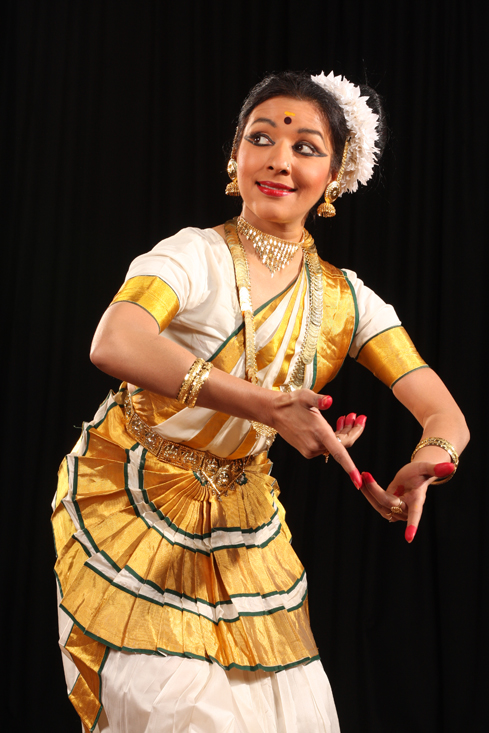
Dance of the Divine Enchantress (Norton Simon)

NortonSimon.org, Pasadena, California; Ashley Wells (ed.), Wisdom Quarterly
Mohiniyattam: Dance of the Divine Enchantress
  • Dance Performance
  • DATE:
  • TIME: 6:00-7:00 pm
  • Performer: Vijayalakshmi
Triad of key Buddhist figures
Award-winning dancer and choreographer Vijayalakshmi from India performs Mohiniyattam, a classical form of Indian dance from Kerala state, in the southern region. It is deeply rooted in the sacred feminine and celebrates energy, power, and strength  (shakti, viriya, parvati) by using graceful movements and dramatic expression. Visit the museum's massive permanent Buddhist art collection downstairs, featuring treasures from India, Southeast Asia, Tibet, Japan, Korea, and China with Jain and Hindu items as well.

Wednesday, September 13, 2017

Native American Ghost Dance religion (audio)

; (Goodreads); Xochitl, CC Liu (eds.), Wisdom Quarterly
Disposal of the corpses in a mass grave after Wounded Knee Massacre. U.S. Soldiers put away frozen Indians after slaughter, South Dakota (Northwestern Photo Co./Library of Congress).
Wovoka taught Paiutes the Ghost Dance (indigenousleaders.wikispaces.umb.edu).
The Ghost Dance Religious Movement (Letters & Politics, Sept. 4, 2017/KPFA.org)
 
The Ghost Dance Religious Movement
Medicine man and prophet Wovoka taught many tribes how to live (crystalinks.com)
.
God's Red Son
In 1890, on Indian reservations across the West, Native American followers of a new religion danced in circles until they collapsed into trances and saw the other world, the world of spirits next to this one, a dimension over.
In an attempt to suppress this new American faith, the US Army killed over 200 Lakota Sioux at Wounded Knee.

Wovoka (1856-1932), Paiute Medicine Man, charismatic leader (iloveancestry.com)
.
Ghost Dance (legendsofamerica.com)
Louis Warren's God's Red Son offers a startling new view of the religion known as the Ghost Dance, from its origins in the visions of a charismatic Northern Paiute named Wovoka to the tragedy in South Dakota.

To this day, the Ghost Dance remains widely mischaracterized as a primitive and failed effort by Native American militants to resist US imperial conquest and return to their old pre-colonial ways.
 

In fact, followers of the Ghost Dance sought to thrive in modern America by working for wages, sending their children to the white man's schools, and farming the land as farmhands for white landowners, tenets that helped the religion endure for decades after Wounded Knee.

A depiction of the sacred Ghost Dance, chanting and moving in a circle until trance

God's Red Son powerfully reveals how "evangelical" Ghost Dance teachings helped Native Americans retain their identity and reshape the modern world. More

Monday, March 20, 2017

Island lay-Buddhist rituals

A.G.S. Kariyawasam (Buddhist Ceremonies and Rituals of Sri Lanka) edited with expanded explanations by Bhante, Amber Larson, Dhr. Seven, Crystal Quintero, Wisdom Quarterly
Traditional Sri Lankan island harvesting dance (Sri Lankan Friendship Association of BC/W)
.
Flower offering to statue (Pariyatti Press)
Ritual acts undertaken and performed by the Theravada Buddhists of Sri Lanka may be broadly classified under three headings.

Merit
(1) There are acts performed for the acquisition of merit.

Offerings and good actions made with the Buddha in mind) calculated to provide a basis for achieving nirvana, which is release from the otherwise endless Cycle of Rebirths (samsara).

Avalokiteshvara, Weligama (AaA)
Such acts of merit are, at the same time, expected to offer semi-temporal rewards of comfort and happiness here and now as well as in the lesser heavenly worlds in future lives. These supplementary forms of "religious" ritual activity have arisen out of a natural need to augment the more austere way followed by the world-renouncing disciples of the Buddha.

Happiness now
(2) There are acts directed towards securing worldly prosperity and averting the calamities of disease and unseen beings or forces of evil, such as encouraging monastics to utter protective chants or incantations (pirith), making symbolic offerings (bodhi-puja, etc.)

Sri Lankan kings showing hospitality to a "worthy one" (arhat), possibly the great Indian commentator Buddhaghosa, who worked in Sri Lanka, Kelaniya Temple, (denishc/flickr).

 
Rituals
Tovil, "devil's dance," mask from Sri Lanka
(3) There are many rituals that have been adopted from older folk religions. These are mainly semi-religious in character like the "anti-devil dances" called tovil ceremonies.

They derive their power and authority primarily through the superhuman power of the Buddha and also through the hosts of spirits who are, as it were, commanded by invoking the power of the Buddha or of the Three Guides: the Buddha, Dharma, and Sangha.
  • These three guides (not "refuges" as sarana is commonly mistranslated) are the Enlightened One, Enlightening Teachings, and Enlightened Disciples. Enlightened disciples, the arya-sangha, the "Community of Noble Ones," which does not mean all monastics, as the word usually denotes, but only those people, ordained or not, who have achieved at least the first stage of enlightenment.
Almost all the religious activities that have a ceremonial and a ritualistic significance are regarded as acts for the acquisition of merit (called pinkama in Sinhalese from the ancient Pali punnakamma and Sanskrit punyakarma).

Colorful buddhas of the past, Dadagamuwa Raja Maha Viharaya, Sri Lanka (Malka001/flickr).

In this sense, all the religious activities of Sri Lankan lay Buddhism can be explained as being oriented towards that end.

Accordingly, the first two types of rituals basically have a merit-generating character and thereby receive religious sanction.

For instance, the idea of acquisition of merit through a religious act and its transference to the deities (devas) and soliciting their help has the scriptural sanction of the "Greater Final Nirvana Discourse" (Maha-Parinibbana Sutta, DN.ii,88-89).

Here the Buddha says that wise people, when residing in a particular area, first offer alms to spiritual recluses and then transfer the merits of those offerings to the deities of the area, who in return help them. This seems to indicate the early beginning of adoring vatthu-devata or local physical deities in Buddhism.
 
Merit earned by the performance of a wholesome act is regarded as a sure way of obtaining a better life in the future.

The performance of these is also a means of expiation in the sense that the meritorious deeds have the effect of countering and hindering the operation of unwholesome karma (Pali kamma) previously acquired and inherited. Thus the range of merit is very wide.
 
For the ordinary householder, nirvana (Pali nibbana) is an ultimate goal to be achieved through a gradual process of personal evolution extending over many lives. Therefore, until one achieves that sublime and exalted state at some future date one continues to perform these acts in order to lead a happy life. All merit-generating rituals are performed mainly with this end in view. More

Friday, August 12, 2016

Japanese: Nisei Week, Los Angeles (festival)

NiseiWeek.org; CC Liu, Crystal Quintero, Wisdom Quarterly

Nisei Week 2016
Great Buddha, Kamakura, Japan (CP)
Enjoyed by thousands every summer, come join the downtown Los Angeles community at the 76th Annual Nisei Week Japanese Festival in Los Angeles’ Little Tokyo, August 13-21, 2016. One of the nation’s longest running ethnic festivals of its kind, the events will take place August 13-21, 2016. The Festival showcases free Japanese cultural events, activities and exhibits, including music and entertainment, food and fun games spanning two weekends. CLICK to view the festival events. More

The Nisei Week logo
NISEI WEEK is an annual festival celebrating Japanese American culture and history in Little Tokyo, Los Angeles.

Nisei means "second generation," describing the first American-born Japanese, a group which the seven-day festival was originally meant to attract.

Although named for the Nisei generation, Nisei Week is no longer targeted at Niseis, nor is the festival still contained within a week. Nisei Week Foundation president for 2006, Michelle Suzuki, described the festival as "the opportunity for people of all backgrounds to celebrate Japanese heritage and culture" (Nisei Week Kicks Off Annual Festivities)... More

Tuesday, February 16, 2016

Shamans of Alaska and Kamchatka (video)

Amber Larson, Dhr. Seven, CC Liu, Wisdom Quarterly; Isuma.tv; Awakened Indigo

Shakyamuni (Central Asian shraman from Scythia/Indo-Sakastan, modern Afghanistan) thangka with enthroned Vajrayana Buddhist/Bon lamas, Tibet (Earth-Spirit/flickr.com)
Dancing shaman holding a traditional trance-inducing drum (Hamid Sardar-Afkani)
Scene from "The Journals of Knud Rasmussen" (isuma.tv, a website dedicated to indigenous media from around the world with over 2,600 videos in more than 46 languages).
Kalmyk Buddhism: "Shaman Reality: The Other Side" (Christophe Carlier/flickr.com)

(RT) Smoking Beauties: Kamchatka, Land of Stone TorchesEigunichvan National Folklore Ensemble of Kamchatka performing at Festival du Houblon, Haguenau, France, August 18th, 2015.

Shaman masks (oakleafcontracts.com)
Eigunichvan was created by Svetlana and Serguei Beliaeva Kutynkavav. The women wear dresses with Manchu accents sewn into the skin. Through dance the youth reconnect with their history, imitating nature, celebrating life: a bear attack, whale hunt, childbirth, the beauty of the tundra, love, particularly the "gaga" dance, the sacred bird that plunges into the sea and comes back to land. These dances are like prayers expressed in symbolic codes. Dancers are dressed in coats and reindeer skins with traditional "torbosa" shoes made of sealskin. They change with the rhythm of the drums.

Animist Tanya Tagaq: Nanook of the North
Sometimes accompanied by an accordion to build a bridge between tradition and modernity. Perched on the edges of the North Pole, the Koryak communicate with unseen spirits through dance and music. Meanwhile, the sacred reindeer tirelessly seek out lichen and moss under the snow. On earth human life is difficult, but with the help of shaman guides, faithful humans are able to continue their long journey over the snow.

The shaman, like a "Bear-Man" (Almas/Sasquatch) merges with the natural world (HSA).
We cannot live here, exist here. We can only live and coexist with reindeer. The shaman-led Mongolian Duhalar people depend on reindeer like Sami of Sweden (Hamid Sardar-Afkhami)
Ayahuasca is a medicine, not a drug of abuse.
A day-long workshop at Claremont College in Southern California addressing the Jung Society of the greater LA area, was an unusual setting to instruct and enchant a group "with a rich inner life" that was not necessarily psychedelic. McKenna stretched to accommodate Jungian fans. McKenna's plant psychology scenarios meander through symbols dear to Jungians including Jung's theory regarding UFOs. Do UFOs originate as psychic projections from our own minds? Also explored are the mysteries of time, nature of language, techniques of ecstasy developed in non-Western societies to navigate invisible worlds, and the role of hallucinogenic plants. McKenna is the author of Food of the Gods, Archaic Revival, and the 9-CD set True Hallucinations, an underground classic (Sound Photosynthesis).