Bruce Lee, what are the martial arts? Are they combat for war, a lack of peace, or something more?
Poet philosopher Bruce Lee was born Lee Jun-fan on Nov. 27, 1940, passing away at 32 on July 20, 1973. He was an American and Hong Kong mixed martial artist, teacher, actor, Hollywood superstar, and filmmaker.
He was the founder of Jeet Kune Do, a hybrid martial arts philosophy ["Lee-ism"?], which was formed from his experiences in unarmed fighting and self-defense—as well as eclectic, ZenBuddhist, Taoist, and Confucian philosophies—as a new school of martial arts thought [2, 3].
With a career spanning the United States and Hong Kong [4, 5, 6], Lee is regarded as the first global Chinese film star and one of the most influential martial artists in the history of cinema [7].
Known for his roles in five feature-length martial arts films, he is credited with helping to popularize martial arts films in the 1970s and promoting Hong Kong action cinema [8, 9].
Born in San Francisco and raised in Hong Kong, Lee was introduced to the Hong Kong film industry as a child actor by his father, Mr. Lee Hoi-chuen [10].
Lee's early martial arts experience included Wing Chun (trained under Ip Man), tai chi, boxing (winning a Hong Kong boxing tournament), and frequent street fighting (neighborhood and rooftop fights).
Why is Russia so darn BIG? (Johnny Harris) March 24, 2021: The story of moving east and just...not stopping.
Korea in Asia is beautiful and close by
Ways to support: Patreon (johnnyharris). Custom presets and LUTs: https://store.dftba.com/products/john...
Where to find JH:
Instagram (johnny.harris), Tiktok (johnny.harris), Facebook (johnnyharrisvox). Iz's (Johnny’s wife’s) channel (iz-harris). How Johnny makes videos:
Tom Fox makes his music. Work with him here: https://tfbeats.com/. He makes maps using this AE Plugin: aescripts.com/geolayers/?aff=77. All the gear he uses: izharris.com/gear-guide.
His courses:
Learn a language (brighttrip.com/course/language). Visual storytelling: https://www.brighttrip.com/courses/vi...
SPONSOR: The first 1,000 people to use this link will get a free trial of Skillshare premium membership: skl.sh/johnnyharris03211.
ABOUT: Johnny Harris is a filmmaker and journalist. He is currently based in Washington, DC, reporting on interesting trends and stories domestically and around the world. His visual style blends motion graphics with cinematic videography to create content that explains complex issues in relatable ways. He holds a B.A. in international relations from Brigham Young University and an M.A. in international peace and conflict resolution from American University.
Press:
NYTimes: https://www.nytimes.com/2021/11/09/op...
NYTimes: https://www.nytimes.com/video/opinion...
Vox Borders: • Inside Hong Kong’s cage homes
Finding Founders: https://findingfounders.co/episodes/j...
NPR Planet Money: https://www.npr.org/transcripts/10721...
Soviet Union, empire, Russia, Central Asia, Far East, Vlad Putin, Czar, communist regime, capitalism, European, country, size, largest, Canada, Moscow, Mongols, Turkey, Korea, China
Alan Watts, Something's Happening, KPFK.org, March 9, 2025
Zen as Taoism and Mahayana-Hinduism
I'd rather talk about Taoism than Dhamma
The Tao is not Buddhism, but it has been made into Buddhism (at least the version of Buddhism called Zen) by incorporating Taoist philosophy into the Buddhism of Japan, China, Korea, and Vietnam. It is far from the only form of Buddhism, in some ways straying so far from the historical Buddha's Teaching or Dharma that one could call it into question as a syncretism or apocryphal Mahayana doctrine. Who has time for the sutras the Buddha spoke when we can look at koans ("public cases") and puzzle over them to get out of our intellectual minds? They're funnier, more surprising, paradoxical riddles and entertaining stories. We might never learn what the Buddha taught, but hey, come on, life is short, and we have all the time in the world to waste. Plus, Zen looks cool, and that's half the battle right there. We might even get a cool Japanese name. Right, Doggone?
Can I get the name Kwan Chan Kane?
The Japanese term kōan is the Sino-Japanese reading of the Chinese word gong'an (Chinese 公案, pinyin gōng'àn, Wade–Giles kung-an, lit. "public case"). The Zen term is a compound word, consisting of the characters 公 ("public; official; governmental; common; collective; fair; equitable") and 案 ("table; desk, altar; [law] case; record; file; plan; mandate, proposal.") More
It's funny in that, if it leads to a sudden realization (kensho, epiphany, satori), the way a joke is funny because we are led down one road in the setup and down another in the punchline, it's like someone hitting a gong, at least in the sitcom world of our imagination and American TV shows depicting Asian or "Oriental" way of speaking, full of deep wisdom and a sudden change of perspective. For example, Douglas Adams was famous for his ability to turn a phrase, one time depicting the ET character Ford Prefect (Hitchhiker's Guide to the Galaxy) complaining to the human Arthur Dent:
FORD: "It feels unpleasantly like being drunk."
ARTHUR: "Well, what's so unpleasant about being drunk?"
FORD: "You ask a glass of water."
We thought "drunk" referred to being intoxicated then suddenly find out Ford meant the past tense of drink. This kind of turning led to a whole class of Orientalisms (intended in the pejorative sense of Westerners stereotyping an Asian manner of speaking), leading to a famous class of jokes like:
"Man who fart in church sit in his own pew" where pew is pronounced phew!
This is significant because the Tao is translated as "the Way," but the Buddha taught that "Way" or "Path" was magga, the Noble (Ennobling, Enlightening) Eightfold Path, not following the Tao or "path of least resistance," going with the flow, just doing whatever.
Soto Zen monk in meditation pose
Alan Watts knows that, but do his listeners realize he is most of the time talking about Taoism and Vedic Hinduism rather than what the Buddha taught, for that is what Mahayana concerns itself (the former, not so much the latter). Ask a Mahayana Buddhist what the historical Buddha taught, and they won't know much of anything beyond lists, which they imagine are very rudimentary and obvious, whereas they extol their apocryphal texts as being "the real thing" Siddhartha Gautama meant but never said. The most famous Buddhist sutras are not the Buddha's teaching but derivative works of clever invention: the Heart Sutra, Diamond Sutra, Platform Sutra, Flower Adornment Sūtra, all kinds of nice-sounding Sanskrit texts, leaving to the wayside what the Buddha taught as key to enlightenment and progress in wisdom and compassion. Alan Watts hardly ever mentions Theravada (Pali canon) or Sarvastivada Buddhism, preferring instead the Eastern philosophy of India, China, and Japan. As long as listeners know that, he is a great "philosophical entertainer." If they do not realize that, he must be very confusing.
It might be good if Ananda's student, the struggling American meditator "Doggone," not to be confused with Ven. Dōgen, could learn from former soldier in the U.S. military Ven. Scott, who has found peace through Zen practice, which includes a lot of Taoist philosophy (and probably a sizeable amount of Confucianism and Shinto, too).
It's hard if not impossible to get a "pure Buddhism" as the Dharma is always steeped in a culture colored by shamanic and other preexisting spiritual traditions and philosophies.
Look, Everybody, I'm being mindful and Zen.
The West is a good example. We color the heck out of Buddhism to make it understandable, not realizing how much we're distorting what the Buddha taught. Early Buddhism was colored by Saka/Scythian (Central Asian) and Vedic proto-Indian (Brahminical, Magadhi, subcontinental views) customs and cultural baggage.
Instead of muscling through everything, efforting and straining, there's a better way that bends with the wind, goes with the flow, and thereby follows "The Way," the Tao.
Western translator and spiritual entertainer Alan Watts speaks of a great divide in outlook in Japan that developed in Buddhism: self-power (jiriki) versus other power (tariki).
Can we do the impossible and pull ourselves up by our own bootstraps? Or must we rely on some higher power, an outside source, to pull us out of the mire?
In practice, the latter may make more sense or seem much easier. The former may work, but it will take subtlety and great mindfulness (sati-patthana) so that ego is not just leading ego around, self-willed as it has so long been, thinking it's getting anywhere worth going.
Let's shut up and stop talking to ourselves to see
Is Pure Land Buddhism even still Buddhism?
Will faith in something outside ourselves us save us? Yes, there are the Three Treasures, the Three Jewels to whom we can go for enlightened guidance: the historical Buddha, the early Dharma, and the noble Sangha.
It is important to qualify these words as nowadays there are lots of buddhas or alleged "supremely enlightened teachers, and many latter-day interpretations of the Dharma (the Buddha's Teaching or Doctrine), and it is not the monastic Sangha ("spiritual community") that serves as this ultimate guide but rather the "noble" (Aryan/Ariya) or enlightened community, which refers to these eight people, who may or may not be Buddhist monastics.
Or must we take responsibility for our behavior and cultivate our own direct wisdom? (Of course we must do this, but the former may help in doing it).
Two Buddhisms have developed in Japan over this vital question of tariki versus jiriki. Shall we follow the example of the historical Buddha or the later (possibly make believe) "Cosmic Buddhas," who seem more like old time Vedic/Hindu gods (brahmas and devas) than the buddhas the Buddha talked about as having taught in the distant past.
There is Amitabha, Ksitigarbha, Avalokiteshvara (Guanyin, Kwan Yin, Kwannon), Budai, or whoever. It is the Kali Yuga (the "Decadent Age") after all, as Hinduism's holy books, the Vedas, tell Mahayana Buddhists. In these dark times, blind faith will seem far more attractive to faith-types full of attachments than the letting go asked of us by wisdom, confidence (saddha, reasoned and verifiable faith, conviction), and a persevering-practice.
Sit a little every day; that is far more powerful thana marathon effort every so often. Practice is key. Even trying to sit once will make this tariki vs. jiriki debate suddenly make sense. In the meantime, listen to Alan Watts. He, though irascible with an irreducible rascality, knows a thing or two.
(TheUwagaPies) American Scott Mangis is a former US Marine who now lives life as a Zen Buddhist monk near Tokyo, Japan.
Let's explore Scott's daily life and the path that lead him to completely change his way of living. Video by Tofu Media Production, Krzysztof Gonciarz and Kasia Mecinski (tofu.media).
Look, I'm a Zen nun, mindful and demure!
Shot on Canon 5D Mark III (amzn.to/2rChZ2H). Lenses:
Tamron 24-70 IS 2.8 (amzn.to/2q45ADx). Zeiss 50 1.4 (amzn.to/2rCCVXh). Canon 100 IS 2.8 USM (amzn.to/2qBWOiw). Stabilizing:
DJI Ronin (amzn.to/2qF2QzB). Manfrotto monopod and tripod. Slidecamera slider. Edited in Adobe Premiere, graded in Magic Bullet Looks.
(WQ) It would be good if Ananda's student, Doggone, could learn from Ven. Scott, the former U.S. soldier who found peace through Zen, which includes a lot of Taoist philosophy and practice.
Instead of muscling through everything, efforting and straining, there's a better way that bends with the wind, goes with the flow, and follows the Way known as the Tao.
Alan Watts speaks of a great divide in outlook, self-power (jiriki) versus other power (tariki). Can we do the impossible and pull ourselves up by our own bootstraps, or must we rely on a higher power, an outside source of energy or intelligence, to pull us out?
In practice, the latter may make more sense or be much easier. The former may work, but it will take subtlety that ego is not just leading ego around, self-willed as always, thinking it's getting anywhere. Will faith in something outside us save us, or must we take responsibility for our own behavior and own wisdom?
Two Buddhisms have developed in Japan over this vital question. Shall we follow the example of the historical Buddha or Cosmic Buddhas (gods) like Amitabha, Ksitigarbha, Guanyin (Avalokiteshvara), Budai, or whoever? It is the Kali Yuga (the "Decadent Age") after all, as the Hindu Vedas tell Mahayana Buddha.
Let's repeat this basic message in the next post with an added video of Watts making the great distinction in religious endeavor: self-power vs. other-power.
Men versus Women: Survive the Wilderness for $500,000
(MrBeast) Sept. 7, 2024: Some of these strategies are wild!
Contestants featured and their prior experience
WOMEN: • Phaedra: Was on Naked and Afraid • Julia: Was on Naked and Afraid • Talia: 10 days in the Everglades • Hannah: a weekend camping • Izzy: couple days camping
MEN: • Joshua: 20 days solo backpacking • Patrick: weekend camping • TJ: backpacking guide: (15 years of outdoor experience), a week consecutive outside living off land • Cameron: been camping • Sami: On Survivor: 21 days
Wet things clean better than dry things, so ditch the toilet paper and get confidently clean with XL Flushable DUDE Wipes. Try them here, DUDES: amazon.com/dudewipes.
SUBSCRIBE or Mr. Beast takes your dog. For any questions or inquiries regarding this video, please reach out to chucky@mrbeastbusiness.com. Music provided by extrememusic.com. Follow all of these or Mr. Beast will kick you • Facebook: mrbeast6000 • Twitter: mrbeast • Instagram: mrbeast • Mr. Beast is hiring: mrbeastjobs.com.
Why are men JERKS? Solutions for boys
.
What is gender, what are gender roles, sexism?
(Awaken with JP) What if there were a way for poor dumb men to get with the program, read between the lines, decode, codeswitch, understand, and figure it out already? For that, there's the Manslater. But whether they do or do not get their heads out of their [blanks], there are now Man Scripts to help them. Finally, get those pretty little head out of the clouds and down to this earth. There are words, and there are meanings, and they are not the same, Guys. Geez, get a clue! Read these to your partners, and you'll be just fine. Our tough meditation student, Doggone, was always learning. And what he learned was to always get the last word when arguing with his girlfriend. How do you think that went? Actually, it went great...but that may have something to do with what he said. Sure, he always got the last word in, but that word was, "Yes, dear." Now you, too, can be like Doggone and heel. 🤐
AwakenwithJP, YouTube, 2020; I. Rony and the men of Wisdom Quarterly
QUESTION: When I meditate, which has both the words "me" and "I," I feel so selfish and self-absorbed, like it's all about me. So shouldn't I stop? I would rather be an explorer [astronaut] than a selfish seeker [psychonaut]. You can't argue with my logic, admit it, and let me get off this mat.
We've just scratched the surface in this direction.
Space cadet gets bored with own distractions
ANSWER: Well, Doggone, with logic like that, you really have us in a bind. I mean, we don't want you to be selfish or self-absorbed. In fact, it would be good to be selfless and fully absorbed [in the object of meditation]. With killer logic like you've laid out, we realize that we are wrong, and by "we" we mean all of us -- the Buddha, the sages, the arhats, the sadhus and sadhvis (godmen and godwomen), the rishis (seers), the jinas (pathfinders), the shamans (wandering ascetics or shramanas). We've been doing this all wrong. So what you propose is that we launch our own Asian space program out in Afghanistan or Northwest India, maybe in Mohenjo-Daro or in any case somewhere near Gandhara?
Q: I don't know what those places are.
A: Of course not, yet you're sure of which direction to head, out not in?
Q: Well, no, but...
10, 9, 8, 7, 6, 5, 4, 3, 2, 1, lift off
A: So without knowing even the general direction, you've let your mind talk you into doubt, skepticism, and more discursive thinking?
Q: Discursive?
A: Monkey Mind, going from branch to branch to branch, ceaselessly jumping around.
Q: Oh yeah, that.
A: Yet without knowing, you've never noticed how enlightened scientists are? Everyone who comes back from "space" is awake. Everyone who spends her time drinking coffee, reading data printouts, fashioning explanations is well behaved, serene, in control of their minds, inspiring, happy...
Q: No, they're none of that. They're the opposite!
A: Of course, what else would they be? Neither purifying their own minds nor encouraging others to purify theirs, they strengthen their rational powers and let everything else go to pot. They use the power of a streetlamp the way a drunk does, for support rather than illumination. They debate, they argue, they aggrandize their own theories while belittling others'. What a way to go about in search of wisdom.
Q: Yeah, well.
Calm down, Monkey. - Play with me, Homer!
A: Yeah well, what? They're harried, confused, leading others to confusion, cantankerous, amenable to nothing but argument and besting others in debates, to more and more data, rarely recognizing the biases that secretly guide their (mis-)interpretations of that "data." There is this world. Look around. Loot at it. Your lenses (all three eyes) are covered in dust, but you hope to accurately discern and make sense of what you're seeing. You have no conception of the assumptions you arrive with, like that of a "seer." That you take for granted and leave unquestioned. The suitability of the apparatus (the eye and its focus), that you leave unquestioned, with no access to assessing it.
Q: I'm starting to see.
A: Sit, turn inward, and the next time the mind misleads you to look the other direction, the direction you spent your whole life looking and trying to make sense of, note it and remain with the subject.
Q: What subject?
"Space" like dinosaurs is for kids.
A: Your subject of meditation, like the breath, or if that has been mastered (and it has not), the Elements, or the others laid out in the Four Foundations of Mindfulness Sutra. Trust that the Buddha and the arhats who confirmed his findings had something useful to say about the way to peace and enlightenment. It isn't by thinking, for if it were, all the thinkers would already be there and, by their thinking, would have talked others into seeing things their way. "Thinking" is not the way. We are really going from the ground up (rather than the top down, from experience to knowledge rather than thinking and theorizing to knowledge). It's already been done. Follow the Path.
Q: But how? It doesn't work no matter how I try!
A: Stop "trying." Start doing. Leave expectations and angst behind. The very problem you are running into is efforting, attempting to muscle it. Relax. LET GO. Let it be. You're only task is to watch. Don't think about it. See it. There it is. That is reality. Watch it unfold. What happens to a thought?
Q: It comes.
A: What else?
Q: It makes me think.
A: It makes you think? Isn't it a byproduct of your thinking?
Q: Well, yeah, but...
A: You said, "it comes." Have you ever noticed that "it goes"?
Q: Well, sure, after it hangs out a while.
Oh, this is easy. Now what? What else?
A: So don't welcome it. Simply see it. And you will see that although it comes whenever it wants to, it also goes whenever it wants to. You're not in control. When you're sitting, you're full of thoughts. But when you stand up to make sense of them, where are they? They are hardly dependable or useful. They've ruined your meditation (that is, welcoming them, conversing with them, and following them has ruined it) and then, their job done, they go away. You can't even account for them, find them now, or get back your peaceful meditation. You created this great argument against sitting and did no sitting still. The theory immediately fell apart when you ask about it, yet you cling to it as a "really good thought."
Q: I see now it wasn't.
A: And the next one won't be either. Billions have thought these thoughts, made these assumptions, thoughtlessly followed thought. Stop all that. Let it go. There's something better on the other side of confidence (the faith to believe this is not all for naught). In Zen some say, "Just be." Sort of be like that. Be content in the moment, be with the moment, just be (with it). Stop abandoning yourself. If you need inspiration for sitting, reading the lives of those who previously succeeded is inspiring, although those stories can set up expectations, hopes, and lead to frustration and a sense of futility if magic doesn't happen. Let magic happen, let it not happen, let it be.
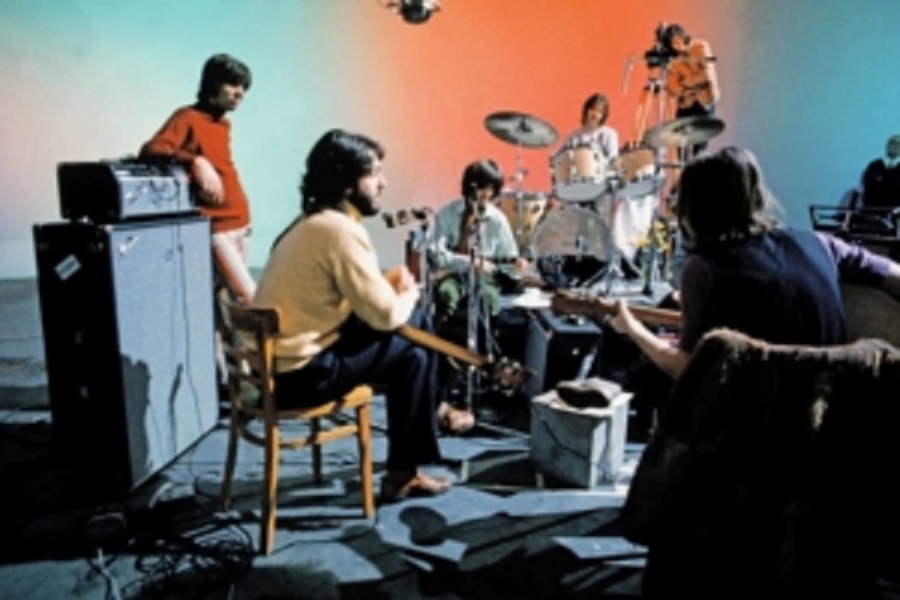
Q: So like the Beatles.
Let's make more songs to distract everyone.
A: No, but okay. Like anything. It is. Let it be. Let it be just as it is. Don't fix it. Observe it. Your strength of observation will strengthen. Beyond sitting, there are practices the whole rest of the time to make the next sit more solid. Ever be mindful. Stay with the moment. Stop abandoning this moment and attention to it. Then, when sitting, that can be done much better. Exhale. Let the inhale happen all by itself. Just watch it. Don't "do" it.
Q: I might suffocate!
A: You won't if you relax. Most of "your" breathing is being done without you most of the time. When you notice it at the beginning of the sit, it should occur to you that "you" haven't been breathing yet breathing has been happening just fine, in fact, better than if you had.
(RTÉ News) RTE is an Irish public broadcast service (Wiki) April 22, 2022: A dedicated centre for Zen Buddhism in the Republic of Ireland officially opens in Dublin city centre. The new sanctuary is located in the heart of Temple Bar, where Reverend Myōzan Kōdō, who has been practicing Zen Buddhism for decades, is the guiding teacher.
Zen Buddhism is a Japanese school of Buddhism with an emphasis on Shikantaza or "just sitting" meditation. It can be challenging for newer members because it involves sitting in silence for what may seem like a lengthy period [almost an hour, but often an eternity of 20 minutes]. Head monk at the Dublin Zen Centre Hōdo Gomoku said the practice grounds him, enabling him to "stay awake" in the world and sit in the moment.
Keep up to date with all the latest Irish and international news and current affairs with rte.ie/news Follow us on twitter @rtenews and on Facebook: rtenews.RTÉ News
There's a time and place for joyful exertion.
Once upon a time there was a man who thought he knew better. He was going to muscle his way to meditation. Why listen to Zen Master Dōgen when you can just achieve the same thing by force of will and exertion, effort and strength of manly energy (viriya)? That man, let's call him "Doggone," found out.
Pure Heart, Enlightened Mind
What happened, DG?
"Uh, I guess it's harder than it looks. Punching something is easy, benching your body weight is easy, screaming [and grunting] is easy. But relaxing, no, softening, no, staying quiet, no."
Now, maybe, you'll listen. Let's put an Irish spin on it. Once upon another time, there was a soft spoken but willful lass named Maura O'Halloran.
She was dissatisfied living in and around Boston. She was meant to do something in this life. So she traveled to Japan to go Zen. There she became "Soshin" and so impressed the Sensei (Zen teacher) that she was dubbed a Western bodhisattva.
(Myozan Kodo) How to Sit Zenis a series that begins with what to do with the body, our smart vehicle to awakening. Rather than overcoming it, we celebrate it and make it comfortable enough to relax but not so comfortable we are lulled into sleepiness or sluggishness. It's a fine balance. "Zen" means dhyan' or jhana, "meditative absorption." One need not set it as a goal or ambition, which could ruin it by creating expectations and stress. It is enough to relax, let go, and stay on the breath, which is the next step after understanding what we do with the body. Rev. Myozan Kodo is an instructor at Zen Buddhism Ireland (zenbuddhism.ie).
"Lisa, can you teach me Japanese. I said, 'Hai, hai'!"
All materials on this site are submitted by editors and readers. All images, unless otherwise noted, were taken from the Internet and are assumed to be in the public domain.
In the event that there is still a problem, issue, or error with copyrighted material, the break of the copyright is unintentional and noncommercial, and the material will be removed immediately upon presented proof.
Contact us by submitting a comment marked "private."
Do not follow this journal if you are under vinaya or parental restrictions. Secure protection by Sucuri.
Wisdom Quarterly: American Buddhist Journal is licensed under a Creative Commons Attribution-Noncommercial-Share Alike 3.0 United States License. Permissions beyond the scope of this license may be available at creativecommons.org/about/licenses.


.jpg)